Filters

380 filtered results

Clear all filters
Favorites
With answer key
Interactive

380 filtered results

Difficulty Level

Grade


Check out this FREE Trial Lesson on Addition for age 3-5!

P

Favorites
With answer key
Interactive
  • 3-5
  • Number Recognition
  • Addition
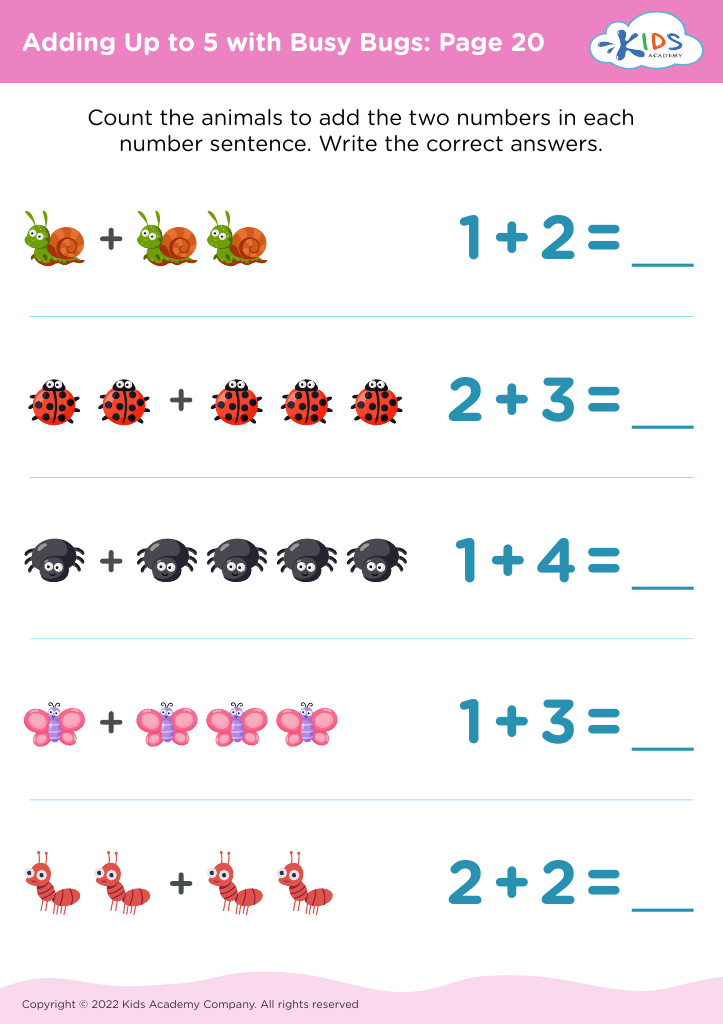
Adding Up to 5 with Busy Bugs: Page 20
Worksheet
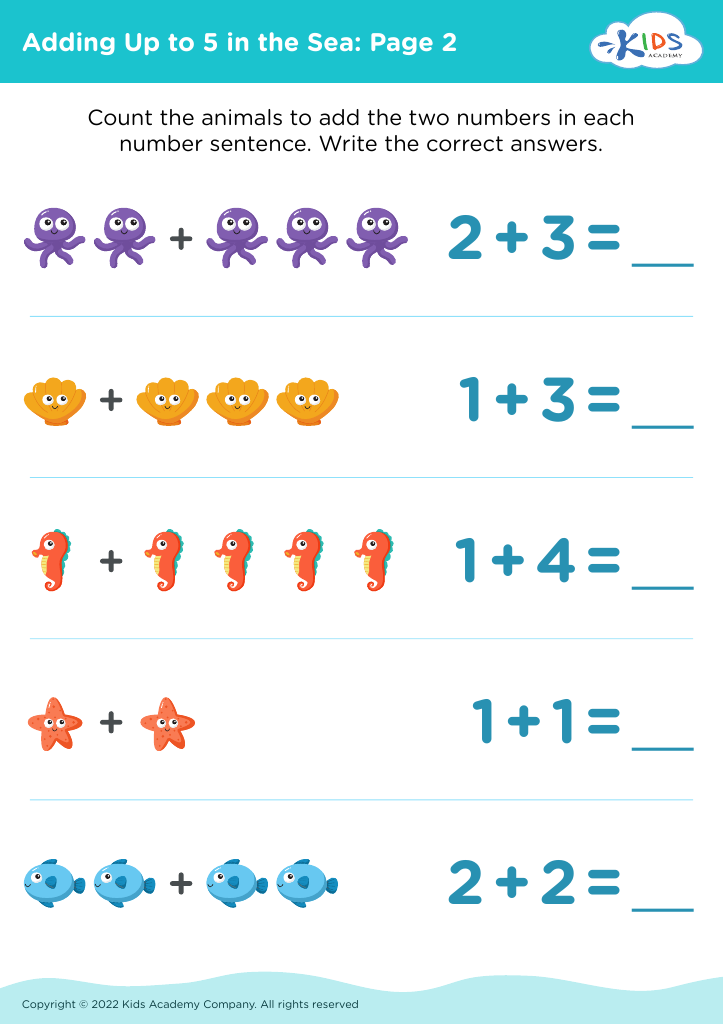
Adding Up to 5 in the Sea: Page 2

Adding Up to 5 in the Sea: Page 2

Adding Up to 5 in the Sea: Page 2
Worksheet
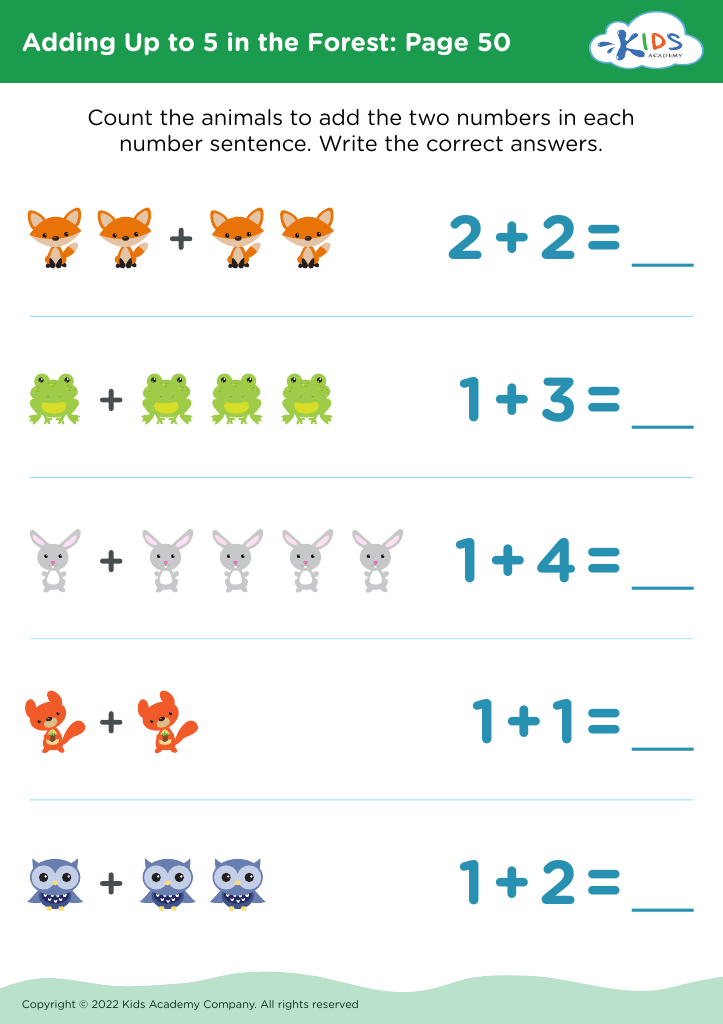
Adding Up to 5 in the Forest: Page 50
Worksheet
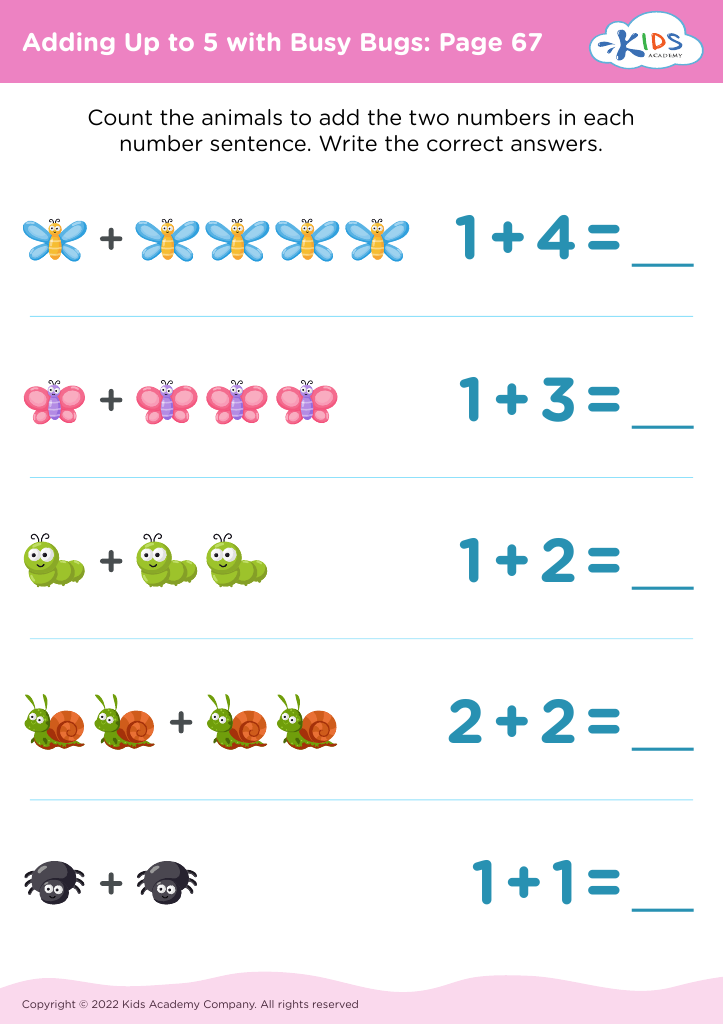
Adding Up to 5 with Busy Bugs: Page 67
Worksheet
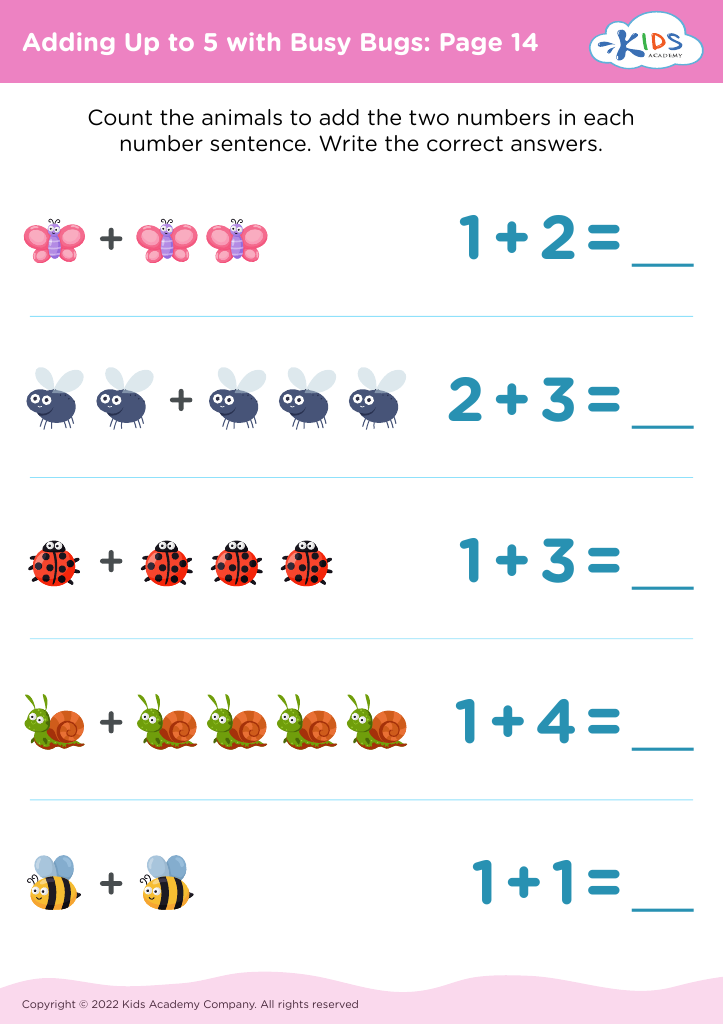
Adding Up to 5 with Busy Bugs: Page 14
Worksheet
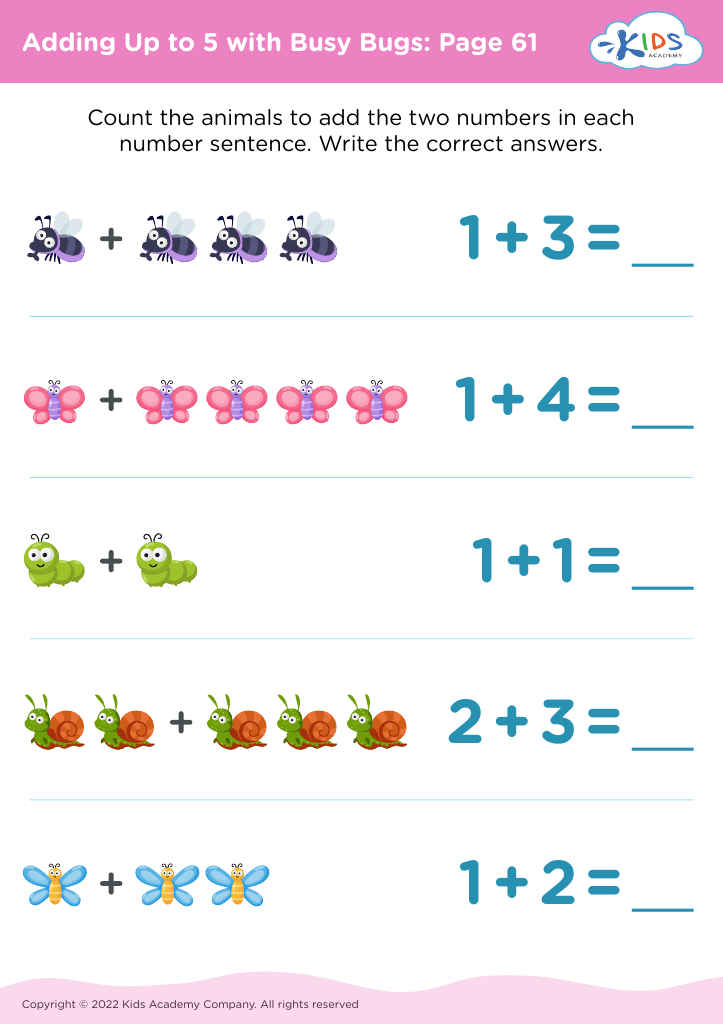
Adding Up to 5 with Busy Bugs: Page 61
Worksheet
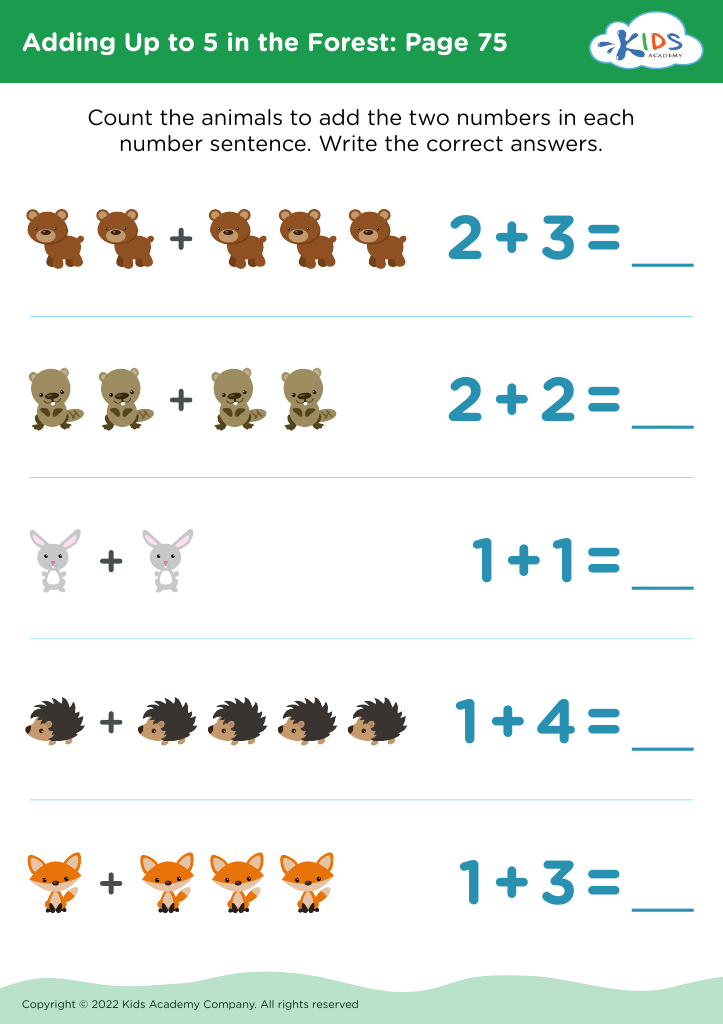
Adding Up to 5 in the Forest: Page 75
Worksheet
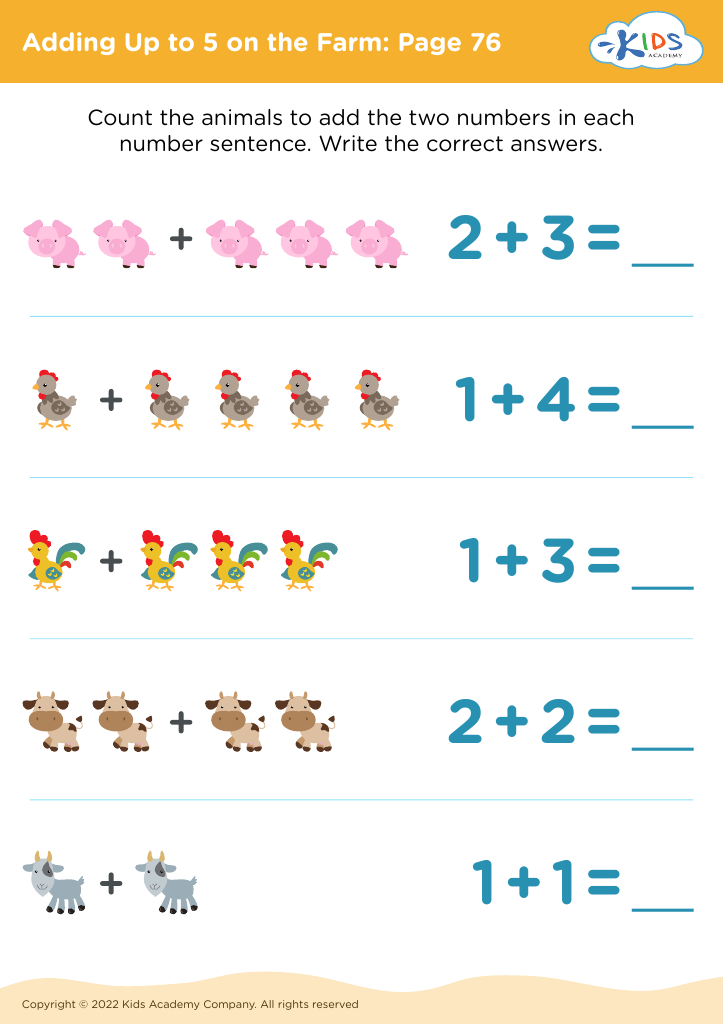
Adding Up to 5 on the Farm: Page 76
Worksheet
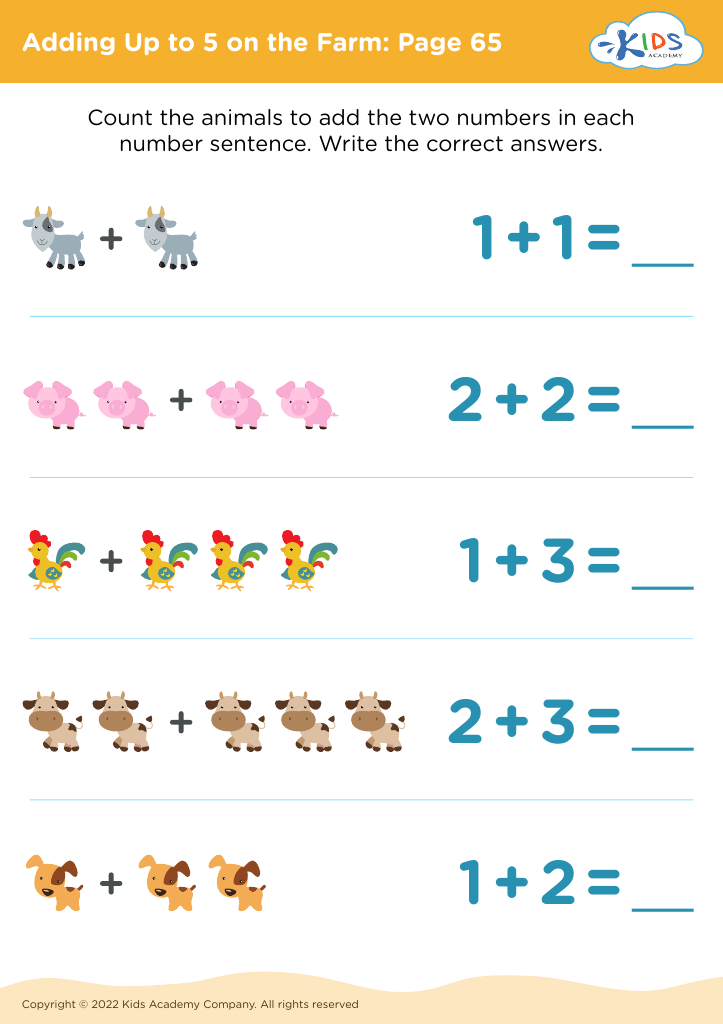
Adding Up to 5 on the Farm: Page 65
Worksheet
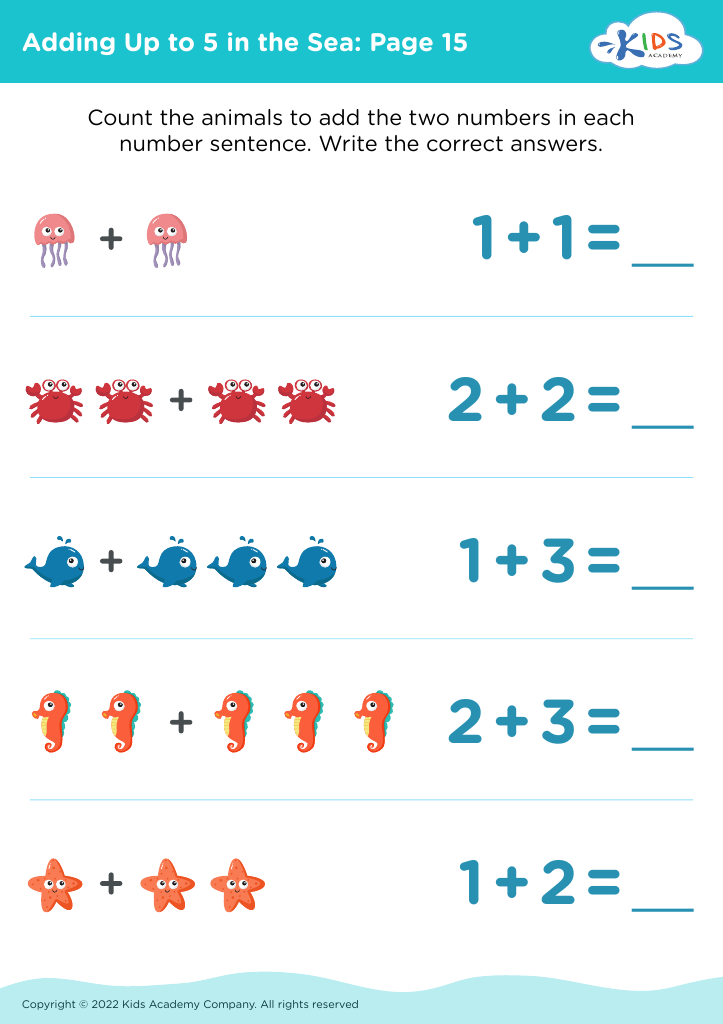
Adding Up to 5 in the Sea: Page 15
Worksheet
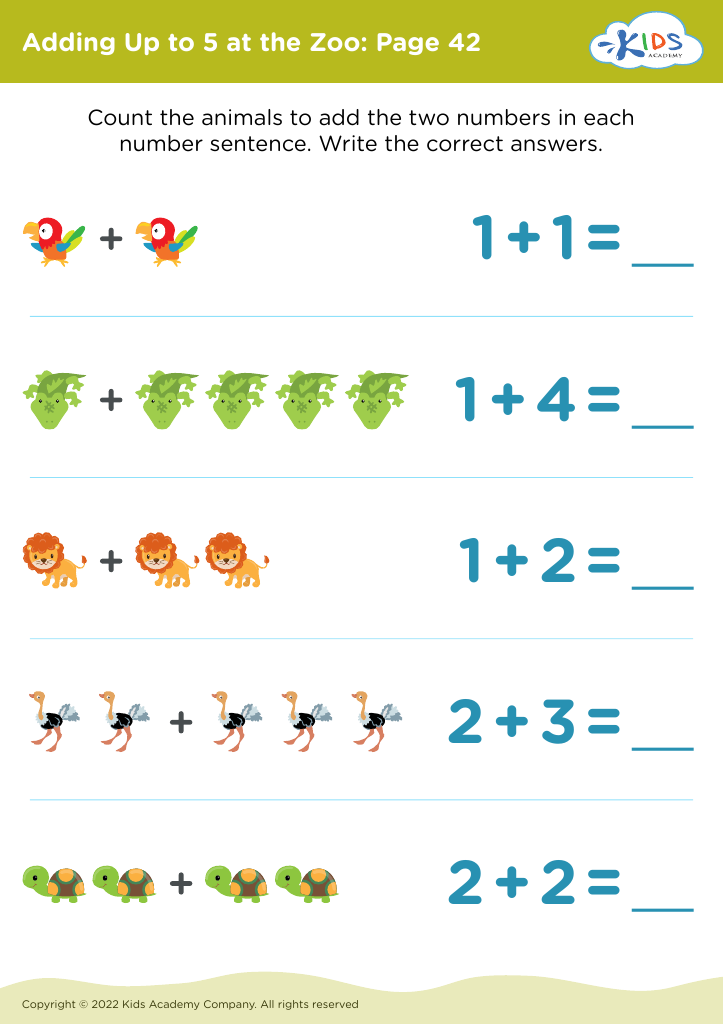
Adding Up to 5 at the Zoo: Page 42
Worksheet
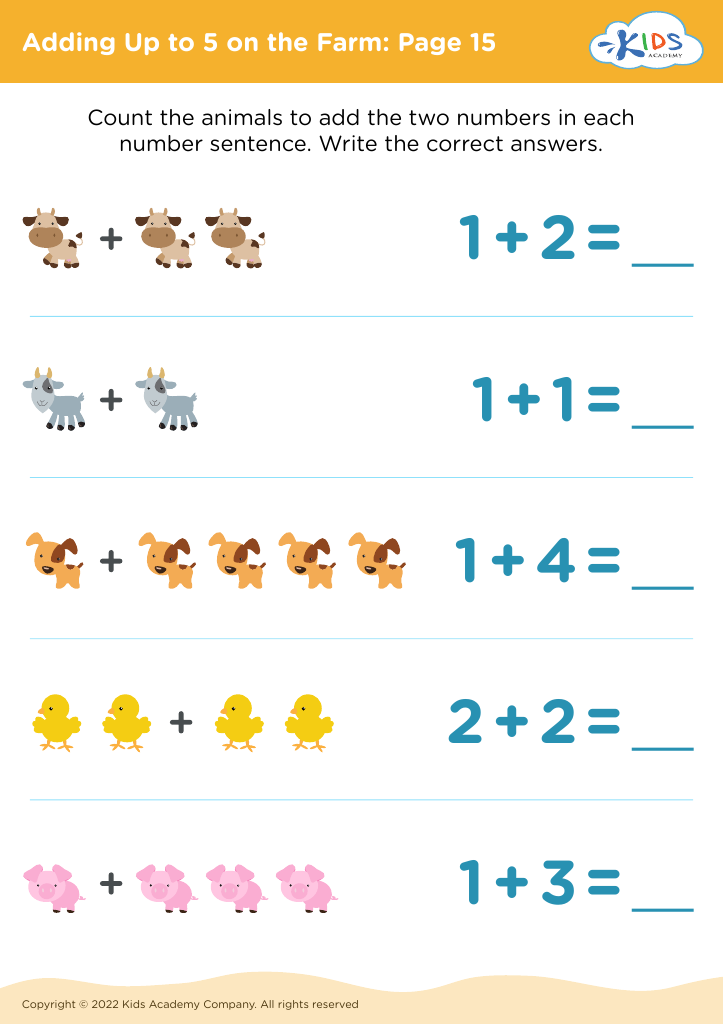
Adding Up to 5 on the Farm: Page 15
Worksheet
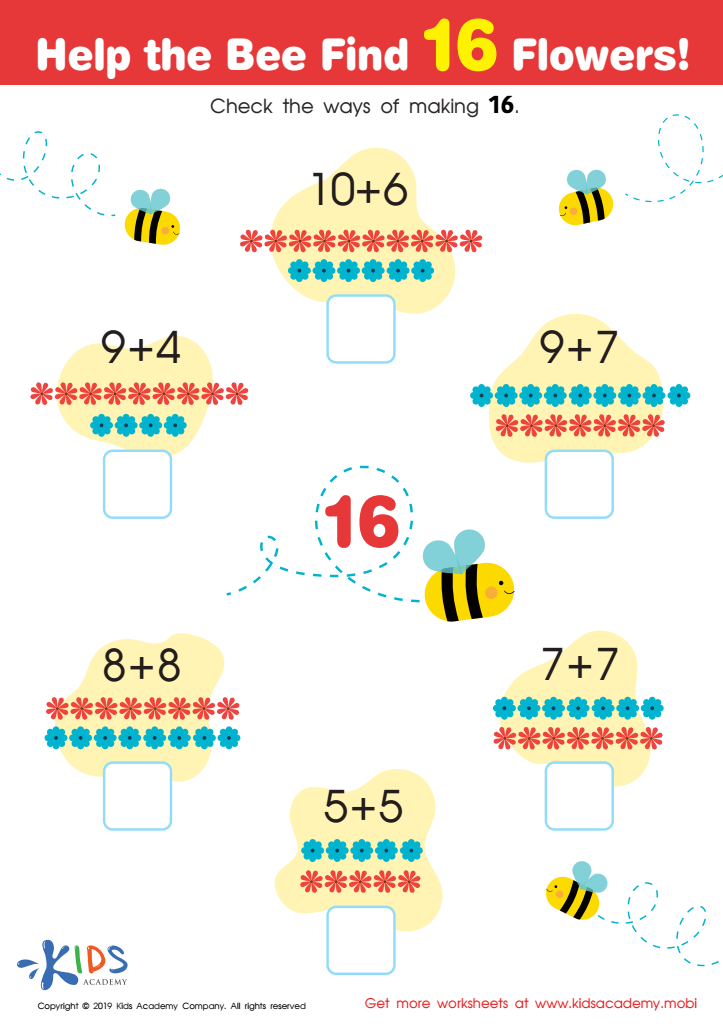
Help the Bee Find 16 Flowers Worksheet

Help the Bee Find 16 Flowers Worksheet

Ask your students to count as high as they can. Show them that different numbers can equal the same figure with examples like 2+2=4 and 3+1=4. Ask for more examples, then help the bees find 16 flowers by checking the ways of making 16.
Help the Bee Find 16 Flowers Worksheet
Worksheet
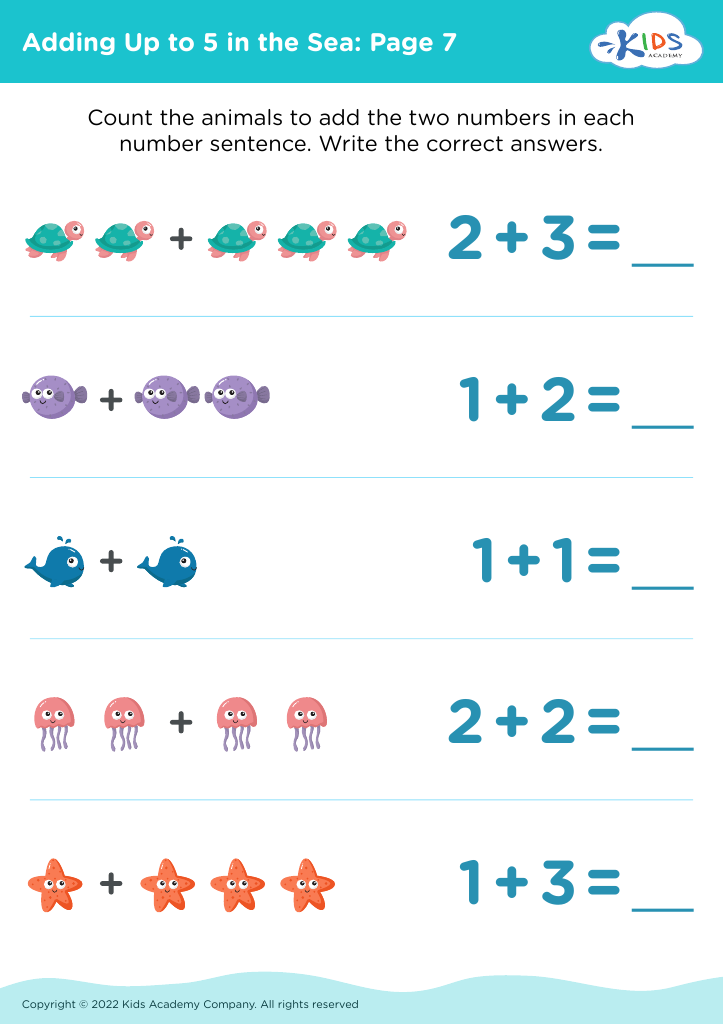
Adding Up to 5 in the Sea: Page 7

Adding Up to 5 in the Sea: Page 7

Adding Up to 5 in the Sea: Page 7
Worksheet
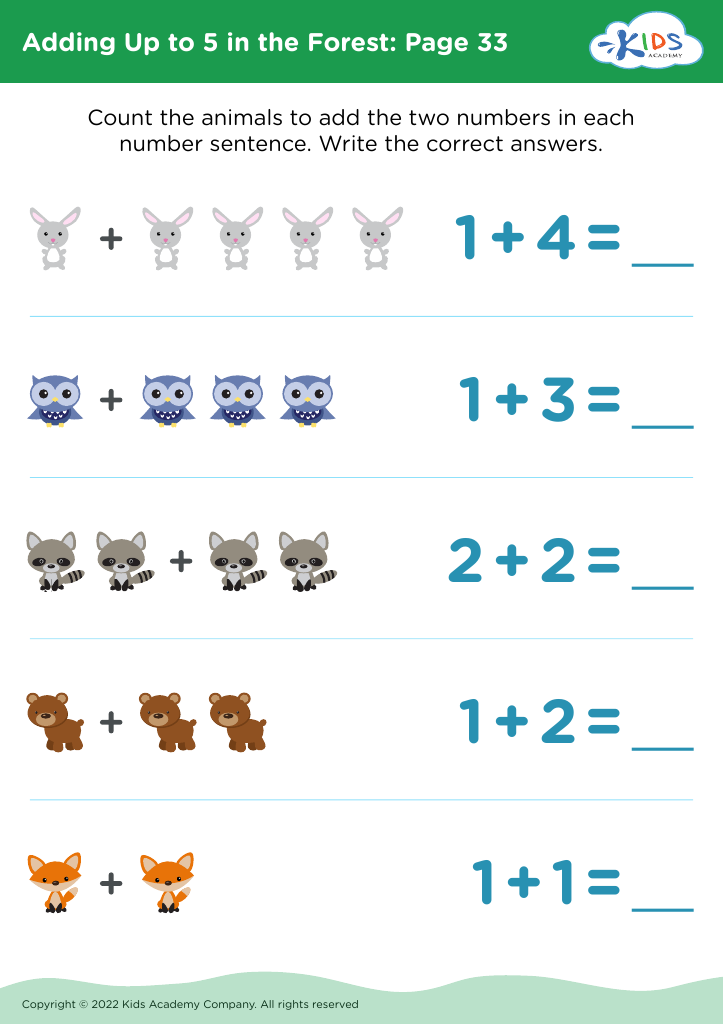
Adding Up to 5 in the Forest: Page 33
Worksheet
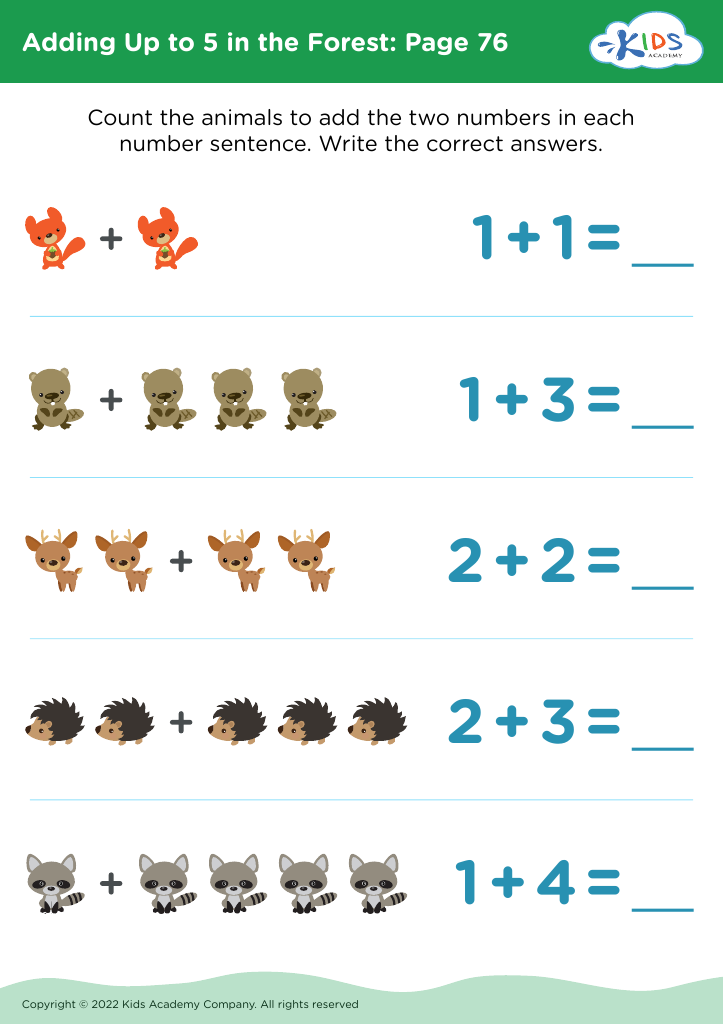
Adding Up to 5 in the Forest: Page 76
Worksheet
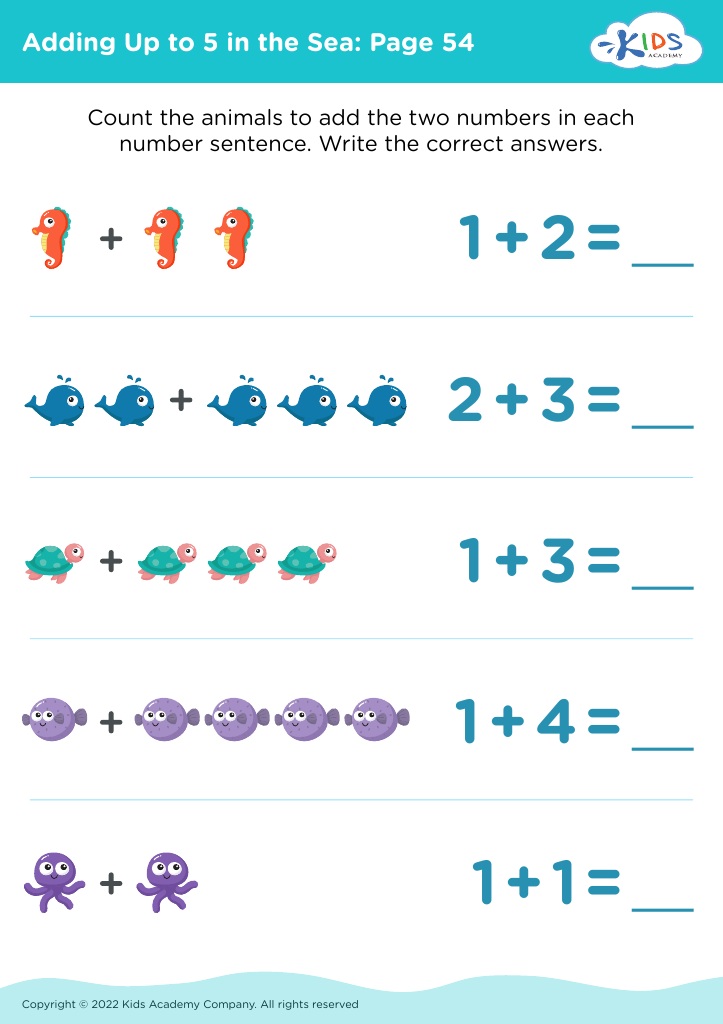
Adding Up to 5 in the Sea: Page 54
Worksheet
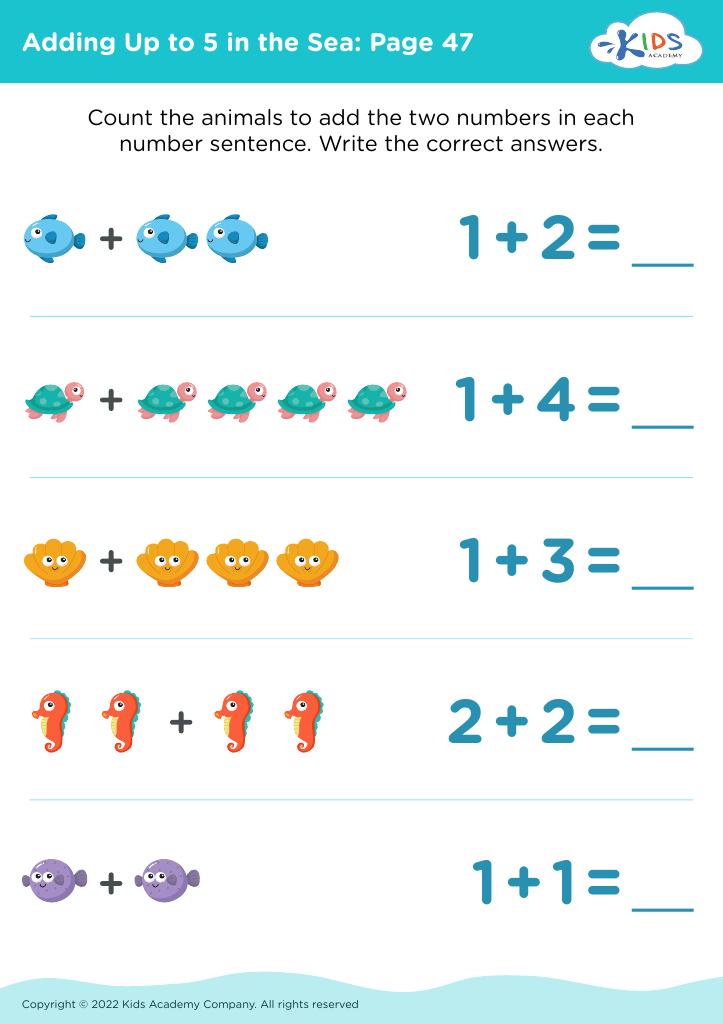
Adding Up to 5 in the Sea: Page 47
Worksheet
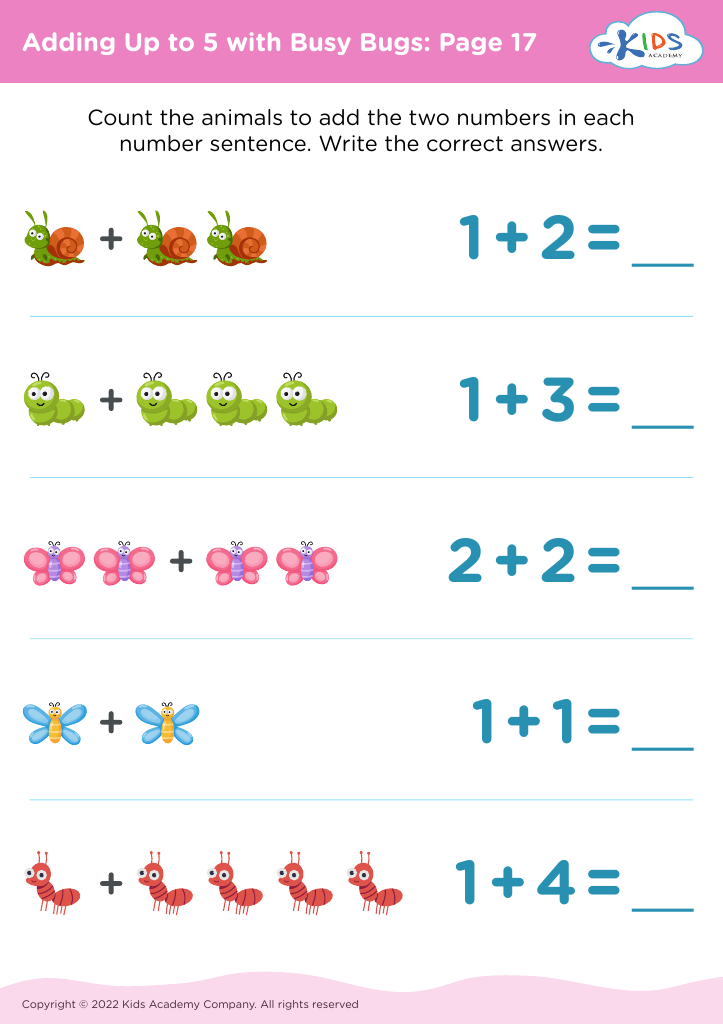
Adding Up to 5 with Busy Bugs: Page 17
Worksheet
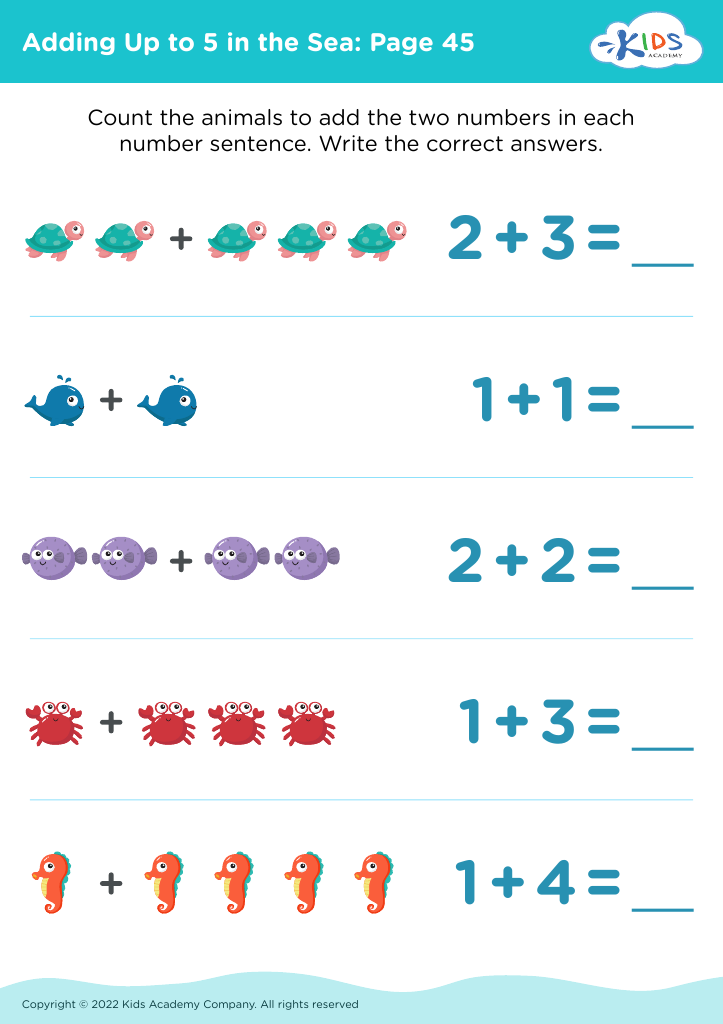
Adding Up to 5 in the Sea: Page 45
Worksheet
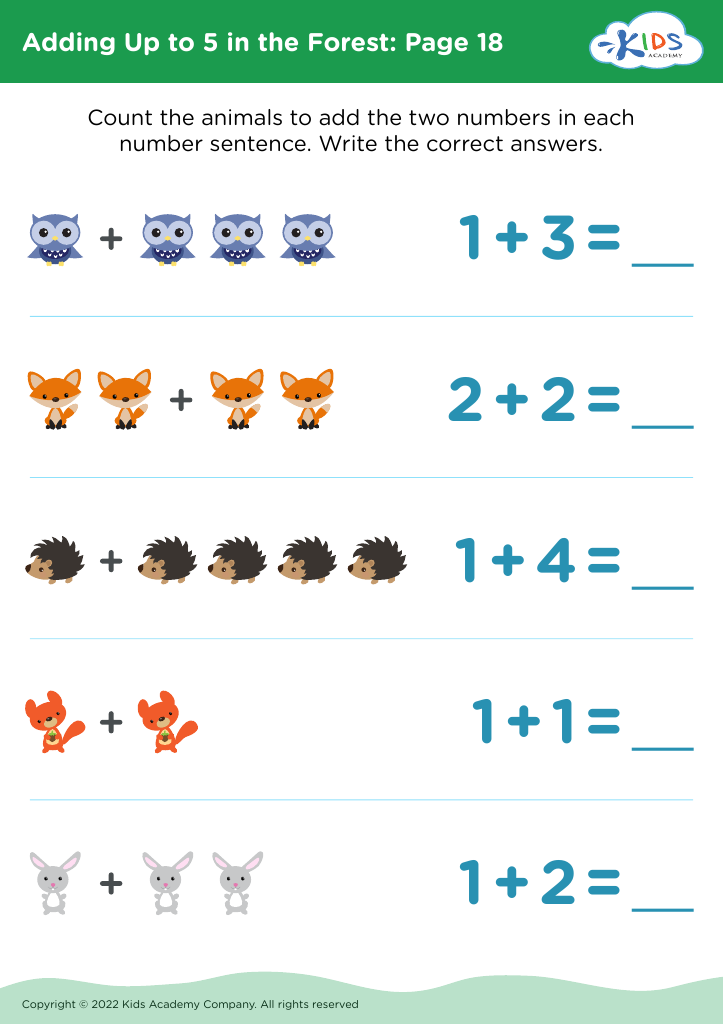
Adding Up to 5 in the Forest: Page 18
Worksheet
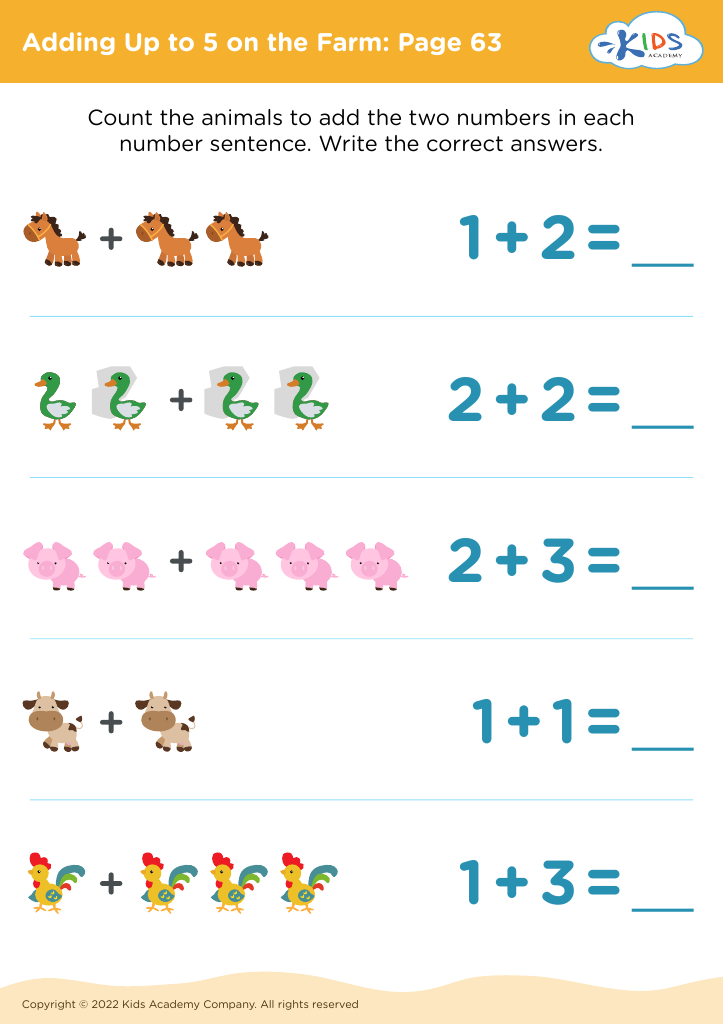
Adding Up to 5 on the Farm: Page 63
Worksheet
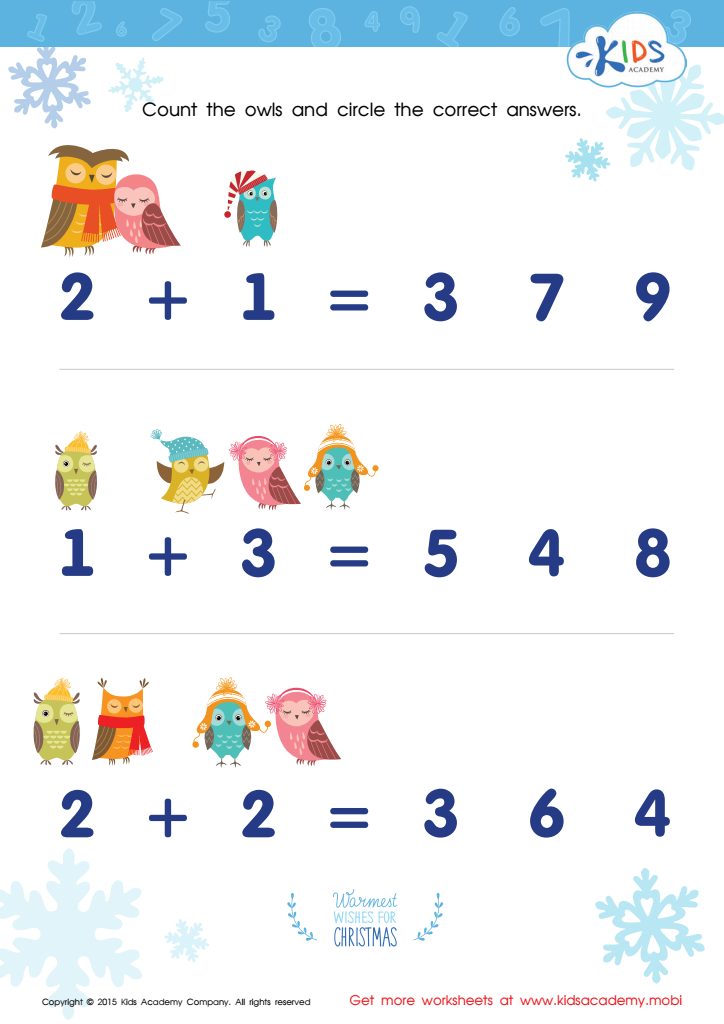
Math PDF Worksheet: Count Little Owls

Count Little Owls Worksheet
Math fun awaits! Count the cute little owls and practice adding single digits up to three indoors. Bright pictures help kids solve these simple problems. Get the free worksheets and enjoy the holiday season with Kids Academy!
Count Little Owls Worksheet

Worksheet
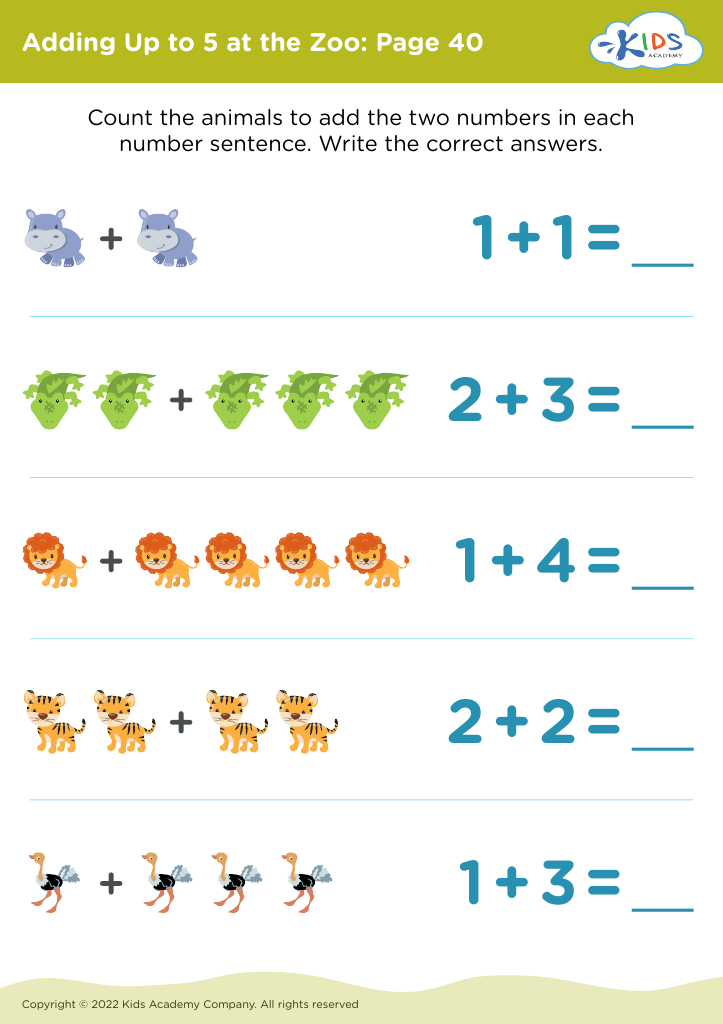
Adding Up to 5 at the Zoo: Page 40
Worksheet


Number recognition and basic addition are foundational skills for young learners, especially for children aged 3-5. Developing these skills at an early age is crucial for several reasons. First, number recognition helps children understand their world; they begin to identify numbers in their environment, such as on signs, in books, and as part of everyday activities. This familiarity builds confidence and lays the groundwork for more complex mathematical concepts.

Additionally, introducing basic addition in a fun and engaging way primes young minds for critical thinking and problem-solving. Activities like counting toys, using fingers, or incorporating songs can make learning interactive and enjoyable, fostering a positive attitude towards math at a young age.

Moreover, these skills are essential for academic success. Early math competence correlates with future math achievement and lays the foundation for literacy skills, as both subjects involve pattern recognition and critical analysis. Parents and teachers must nurture this development, promoting early numeracy through games, activities, and conversations about numbers.

Ultimately, investing time in number recognition and addition for this age group not only supports cognitive growth but also instills a love of learning, empowering children to excel in their educational journeys.