Problem-solving practice Addition Worksheets for Ages 3-5
3 filtered results
-
From - To
Explore our engaging Problem-Solving Practice Addition Worksheets designed for children aged 3-5! Perfect for young learners, these worksheets focus on building essential addition skills through fun and interactive activities. Each worksheet encourages problem-solving, critical thinking, and number recognition, ensuring a solid foundation in early mathematics. With colorful illustrations and age-appropriate challenges, your child will develop confidence and enjoyment in solving math problems. Whether at home or in the classroom, these worksheets offer a valuable resource for parents and educators. Start your child's mathematical journey today with our exciting addition worksheets and watch their skills grow!
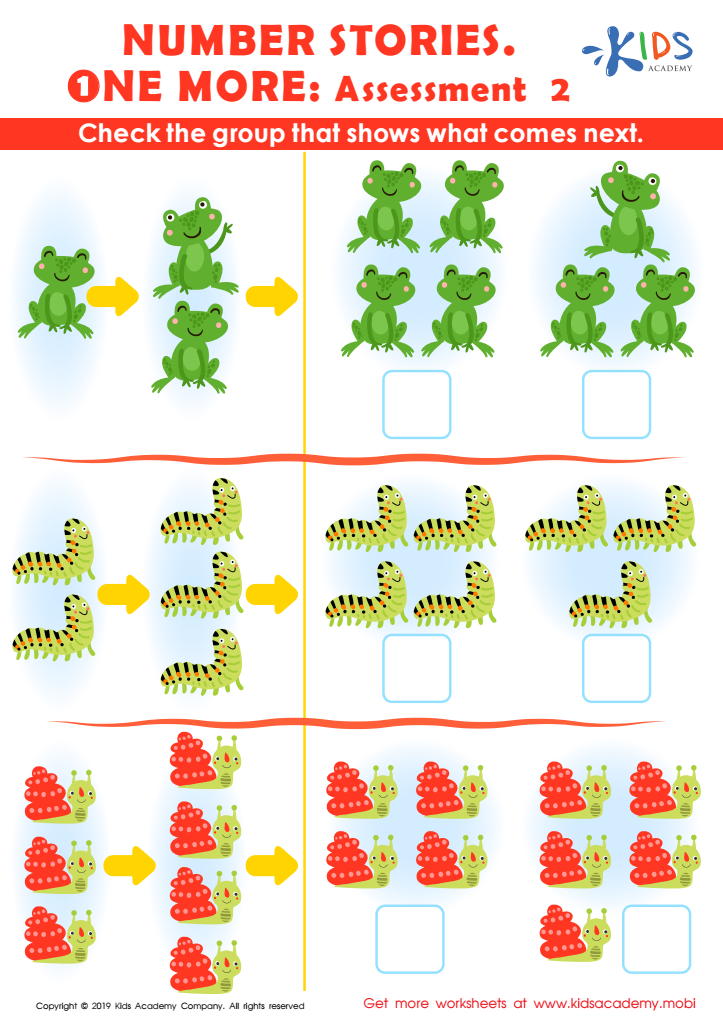
Number Stories One More – Assessment 2 Worksheet
 Assign to My Students


.jpg)





Problem-solving practice in addition for ages 3-5 is crucial for several reasons. Firstly, this foundational skill fosters early mathematical understanding, allowing children to grasp basic concepts such as numbers and quantities. Engaging young learners in addition activities helps them develop critical thinking and cognitive skills as they work through challenges and explore different methods to solve problems.
Moreover, problem-solving practice encourages perseverance and resilience. Children learn that sometimes an answer doesn’t come immediately and that effort and persistence are vital for success, skills that are beneficial across all areas of learning and life. It also promotes curiosity, as young children are naturally inquisitive; giving them the tools to ask questions and find answers nurtures their love for learning.
Additionally, incorporating play and hands-on activities into addition practice makes learning enjoyable and engaging, allowing children to interact socially with peers. This interaction enhances communication skills and teamwork, laying the groundwork for collaborative efforts later in life.
Ultimately, parents and teachers should care about problem-solving practice in addition because it facilitates holistic development, equipping children with essential skills that support both academic success and personal growth throughout their educational journey and beyond.








