Problem-Solving Skills Division Worksheets for Ages 3-5
3 filtered results
-
From - To
Enhance your child’s math abilities and critical thinking with our Problem-Solving Skills Division Worksheets for ages 3-5. Designed to make learning an adventure, these engaging worksheets are perfect for young learners beginning their mathematical journey. Each sheet is filled with interactive exercises that simplify division concepts through fun and relatable scenarios. Ideal for nurturing problem-solving skills, our worksheets transform challenging division problems into exciting games, boosting your child's confidence and enthusiasm for math. Download today and watch your child's skills flourish as they play and learn, laying a strong foundation for future academic success.
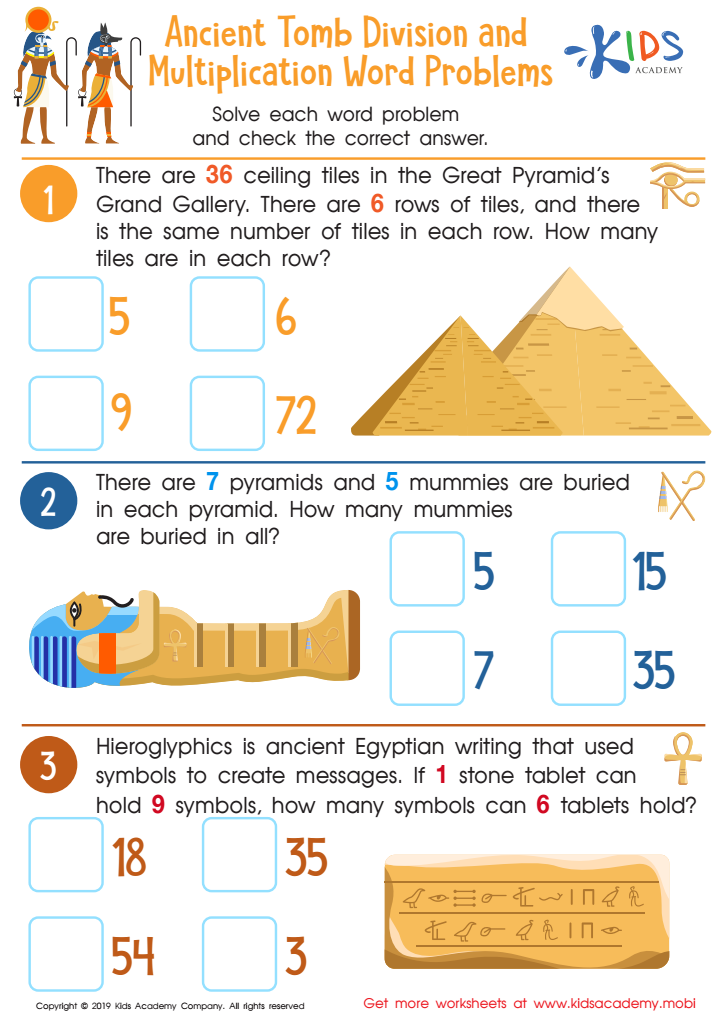
Ancient Tomb Division and Multiplication Word Problems Worksheet
 Assign to My Students
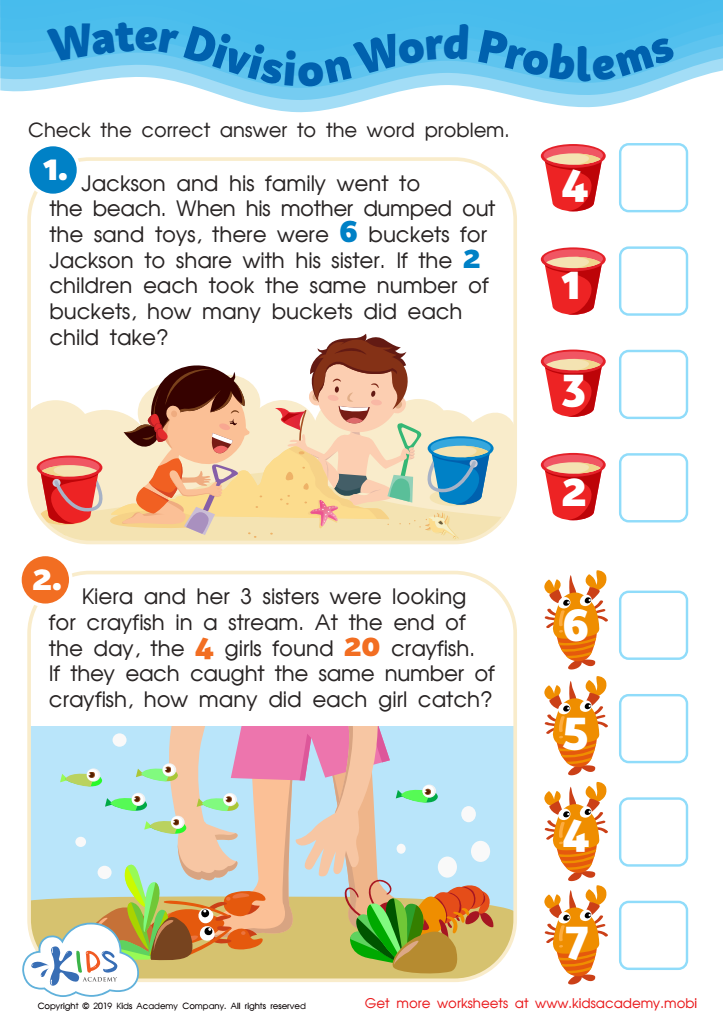
Water Division Word Problems Worksheet
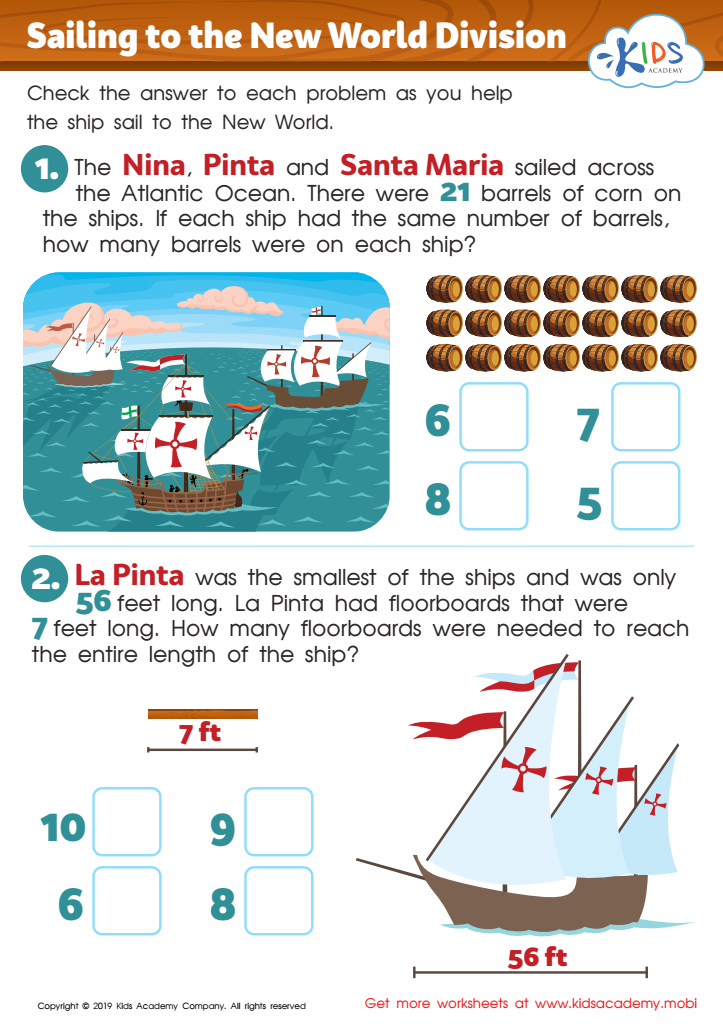
Sailing to the New World Division Worksheet








Fostering problem-solving skills in children aged 3-5 is critically important for their cognitive and social development. At this early stage, children are naturally curious and continuously learning about their environment. Encouraging problem-solving helps harness this curiosity in productive ways. By introducing simple challenges and puzzles, children learn to think critically, make decisions, and understand cause and effect. These skills form the foundation for complex reasoning and analytical thinking.
Moreover, problem-solving activities enhance children's emotional resilience. When kids encounter and overcome small problems, they build confidence and learn perseverance. They also become more adaptable, which is crucial for navigating life's inevitable ups and downs. Socially, cooperating with peers on problem-solving tasks teaches valuable interpersonal skills such as sharing, negotiating, and communicating effectively.
Teachers and parents who incorporate problem-solving exercises into daily activities help children develop a growth mindset. This perspective encourages the belief that abilities can be developed through effort and learning. Engaging young minds in problem-solving lays the groundwork for academic success, social competence, and overall mental well-being. In sum, prioritizing problem-solving skills during these formative years prepares children not just for school, but for lifelong learning and adaptation.








