Problem-solving abilities Geometry Worksheets for Ages 3-5
3 filtered results
-
From - To
Discover our engaging Problem-solving Abilities Geometry Worksheets designed specifically for children aged 3-5! These worksheets help young learners explore basic geometric concepts while developing essential problem-solving skills. Our interactive activities encourage critical thinking, enhance spatial awareness, and promote creativity in a fun, educational environment. From identifying shapes to understanding spatial relationships, these worksheets make foundational geometry exciting and accessible for early learners. Perfect for at-home learning or classroom activities, our resources foster curiosity and a love for mathematics. Download our Problem-solving Abilities Geometry Worksheets today and empower your child's journey in the world of shapes and space!
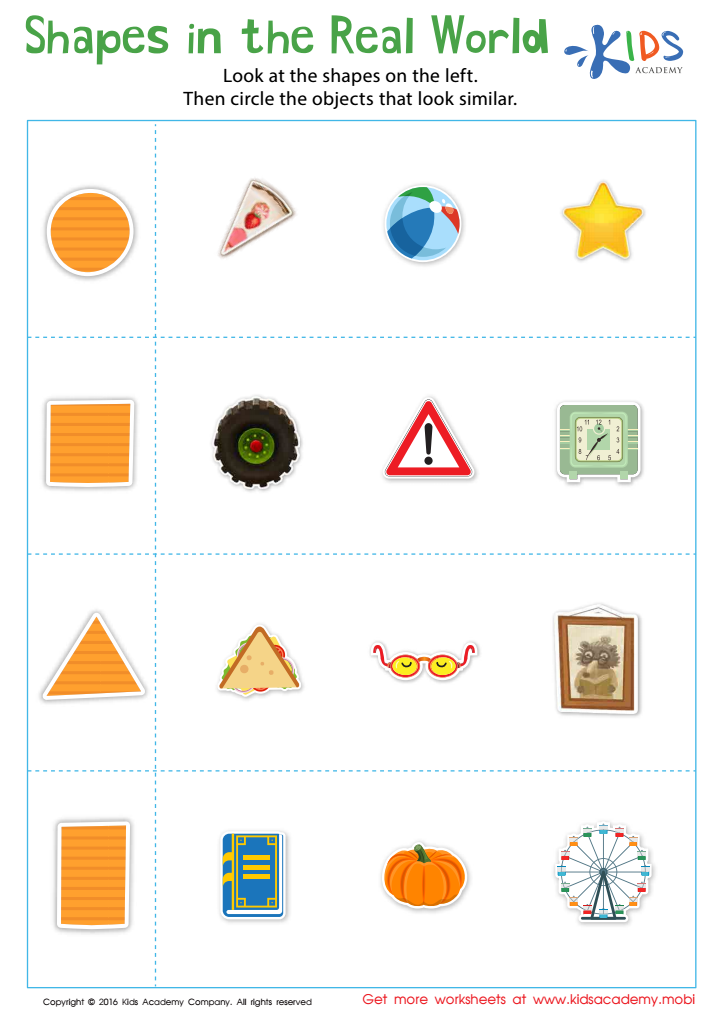
Shapes in the Real World Worksheet
 Assign to My Students











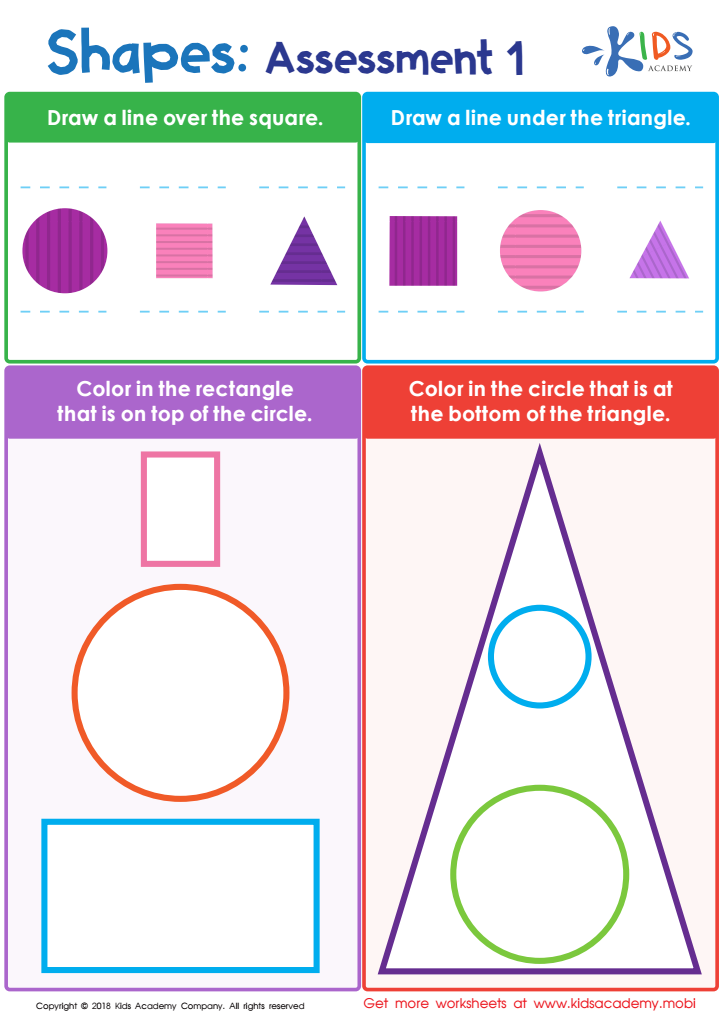
Shapes: Assessment 1 Worksheet
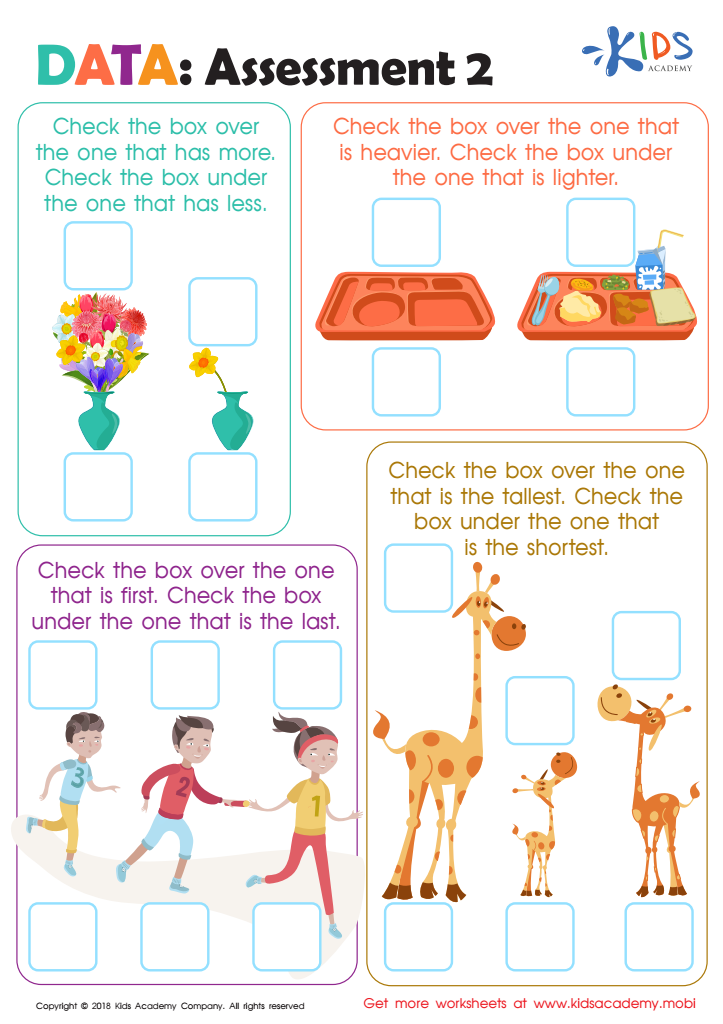
Data: Assessment 2 Worksheet








Developing problem-solving abilities in geometry for children ages 3-5 is crucial for their cognitive and social development. At this age, children are naturally curious and eager to explore the world around them. Introducing geometric concepts promotes spatial awareness, critical thinking, and the ability to recognize and manipulate shapes—skills essential for future learning.
Geometry lays the foundation for advanced math, science, and engineering concepts. By engaging in activities like sorting shapes, building with blocks, and exploring patterns, children develop vital reasoning skills. Problem-solving in geometry also encourages perseverance; children learn how to approach challenges, rethink strategies, and find solutions, fostering a growth mindset that is beneficial throughout their academic journey.
Furthermore, these activities enhance fine motor skills and boost creativity as children visually and physically manipulate objects. As they engage in fun, hands-on tasks, they learn to communicate their thought processes and work collaboratively, building social skills. Teachers and parents play a critical role in creating rich learning experiences that promote these abilities. By recognizing the importance of geometry and problem-solving at an early age, they can better support children in mastering these key skills that will serve them for years to come.








