Basic Arithmetic Numbers Worksheets for Ages 3-5
5 filtered results
-
From - To
Welcome to our Basic Arithmetic Numbers Worksheets designed specifically for children aged 3-5! These engaging worksheets introduce the fundamental concepts of addition and subtraction in a fun, interactive way. By using colorful visuals and playful activities, little learners will enhance their number recognition, counting skills, and basic math abilities. Our worksheets are perfect for parents and educators looking to reinforce early math skills at home or in the classroom. Whether it’s matching numbers, solving simple problems, or counting objects, these resources are tailored to make learning enjoyable. Start your child’s mathematical journey with our exciting worksheets today!
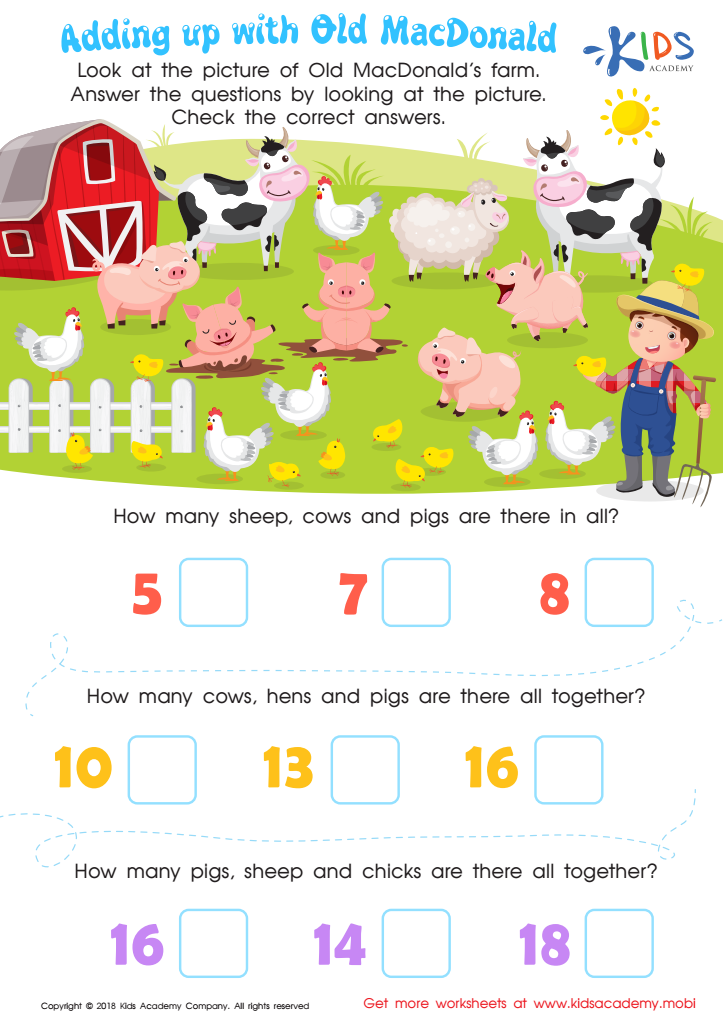
Adding Up with Old MacDonald Worksheet
 Assign to My Students
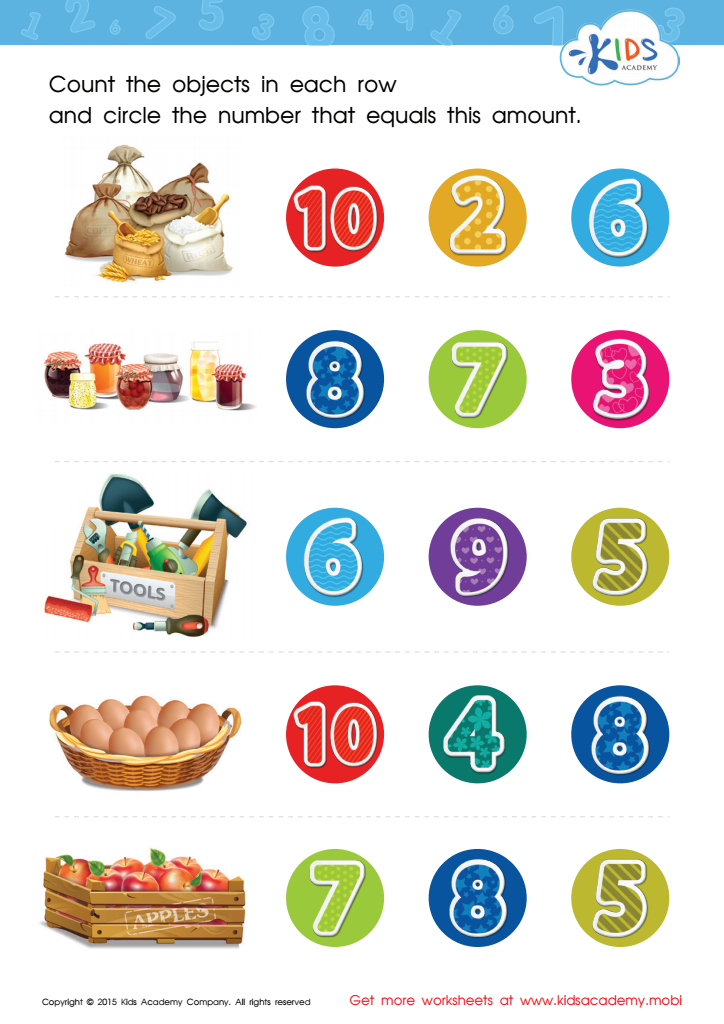
Count and Match 6 – 10 Math Worksheet
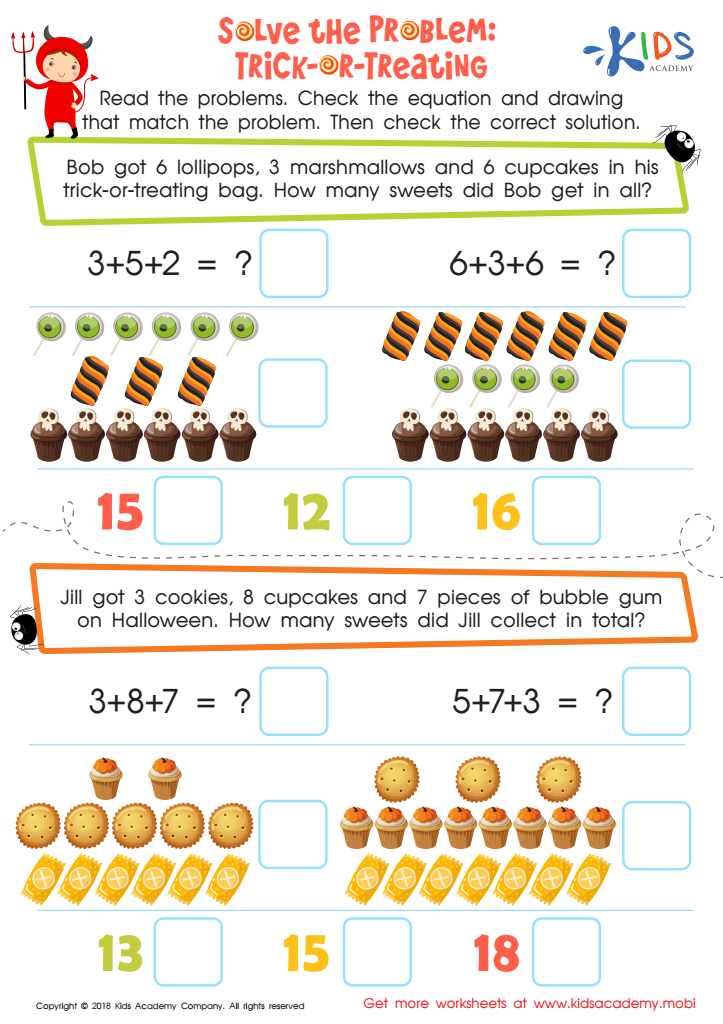
Solve the Problem: Trick–or–treating Worksheet
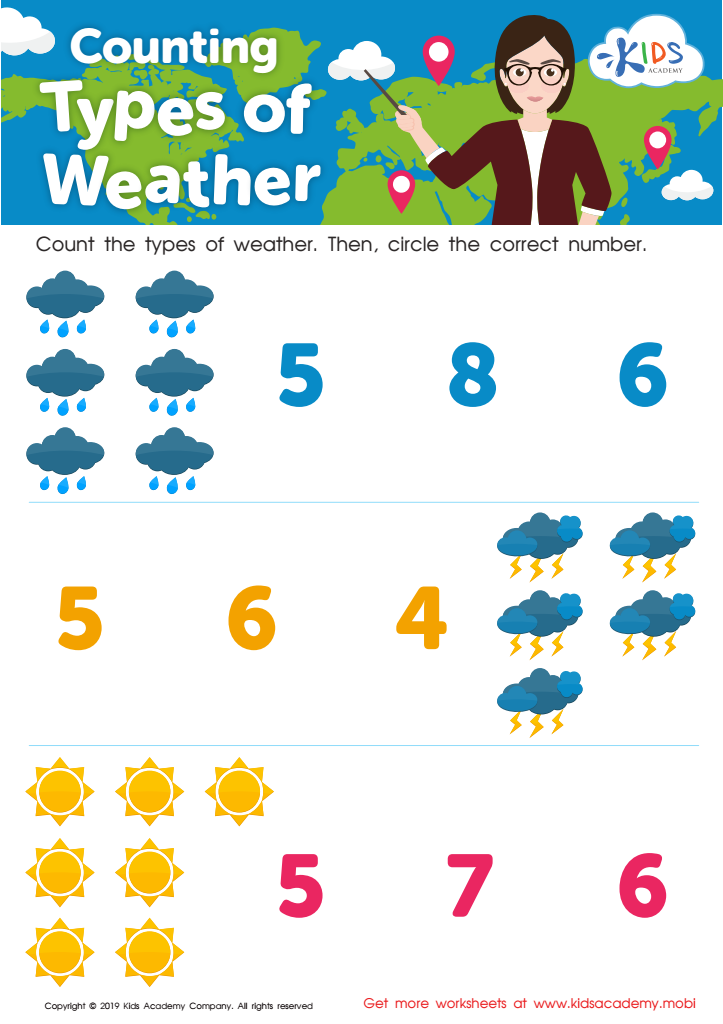
Counting Types of Weather Worksheet
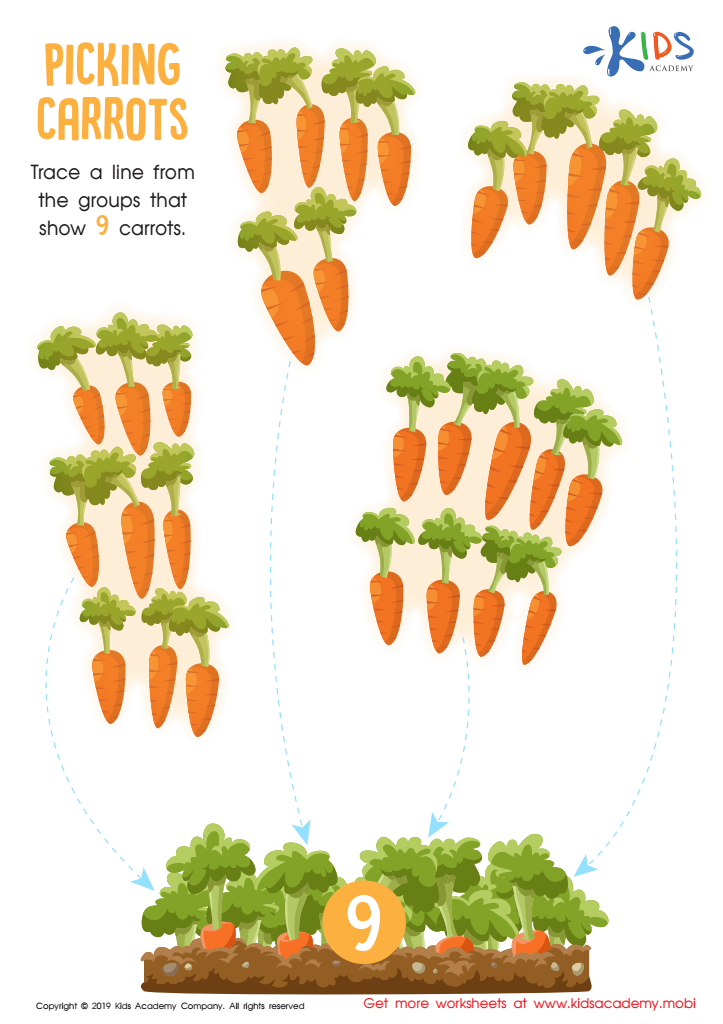
Picking Carrots Worksheet








Parents and teachers should prioritize basic arithmetic numbers for children ages 3-5 because these foundational skills form the building blocks for lifelong mathematical understanding. Early exposure to numbers helps children develop critical thinking skills and promotes cognitive development. At this stage, children learn through play and exploration, making it essential to introduce concepts such as counting, one-to-one correspondence, and simple addition or subtraction in engaging ways.
Moreover, mastering basic arithmetic enhances a child's confidence and motivation in learning. As they grasp these concepts, they become problem solvers, learning to identify relationships and patterns in their environment. This early mathematical understanding not only supports future academic success but also prepares children for real-world scenarios such as budgeting, measuring, and time management as they grow.
Encouraging a playful approach to arithmetic can also strengthen parent-child or teacher-student relationships through interactive games and activities. Additionally, focusing on basic numbers builds a foundation for literacy skills by connecting counting to language development, reinforcing both areas simultaneously. Overall, nurturing numerical awareness in early childhood lays the groundwork for more complex mathematical thinking and encourages a positive lifelong relationship with learning.








