Comparing quantities Numbers Worksheets for Ages 3-5
3 filtered results
-
From - To
Our "Comparing Quantities Numbers Worksheets for Ages 3-5" provide young learners with engaging and interactive activities that enhance their foundational math skills. These worksheets focus on helping children understand the concept of more, less, and equal as they compare quantities in a fun and educational way. Through colorful illustrations and appealing exercises, kids learn to identify and differentiate between various amounts, paving the way for a strong mathematical foundation. Ideal for preschool and kindergarten students, these worksheets support visual learning and critical thinking, ensuring a smooth transition into more complex math concepts. Perfect for both classroom and at-home practice!
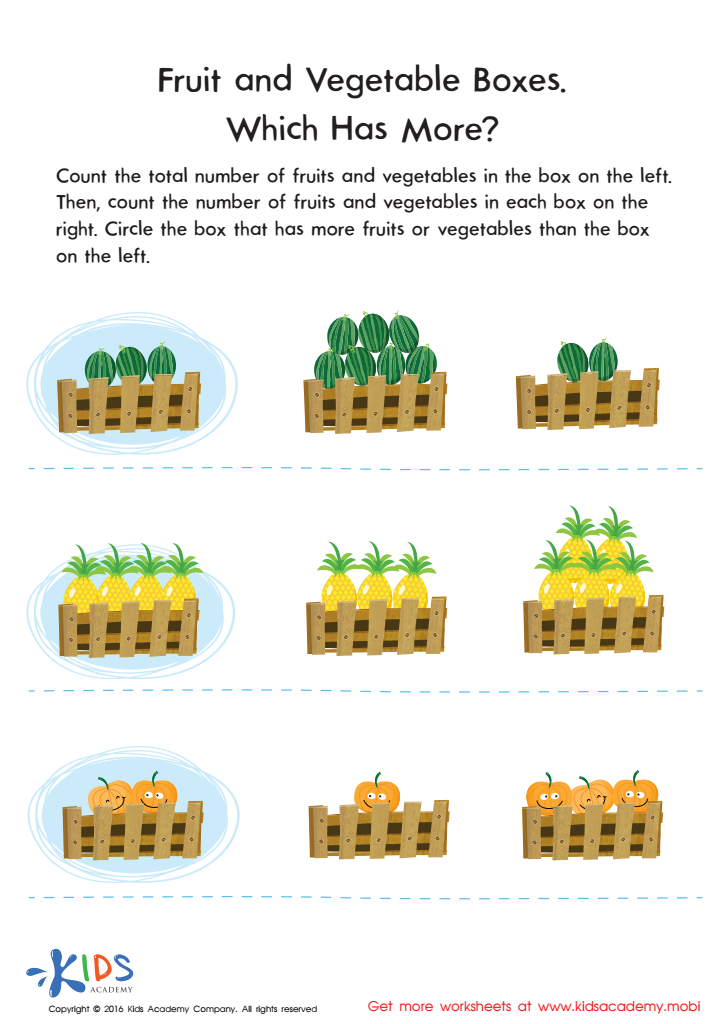
Which Has More? Size Worksheet
 Assign to My Students
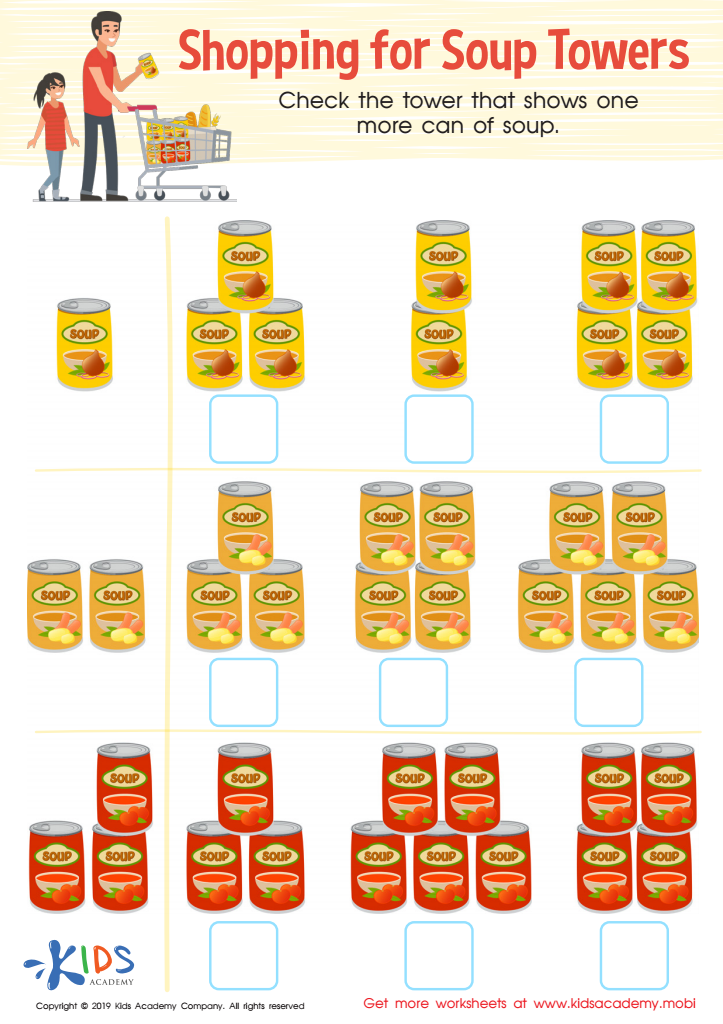
Soup Towers Worksheet
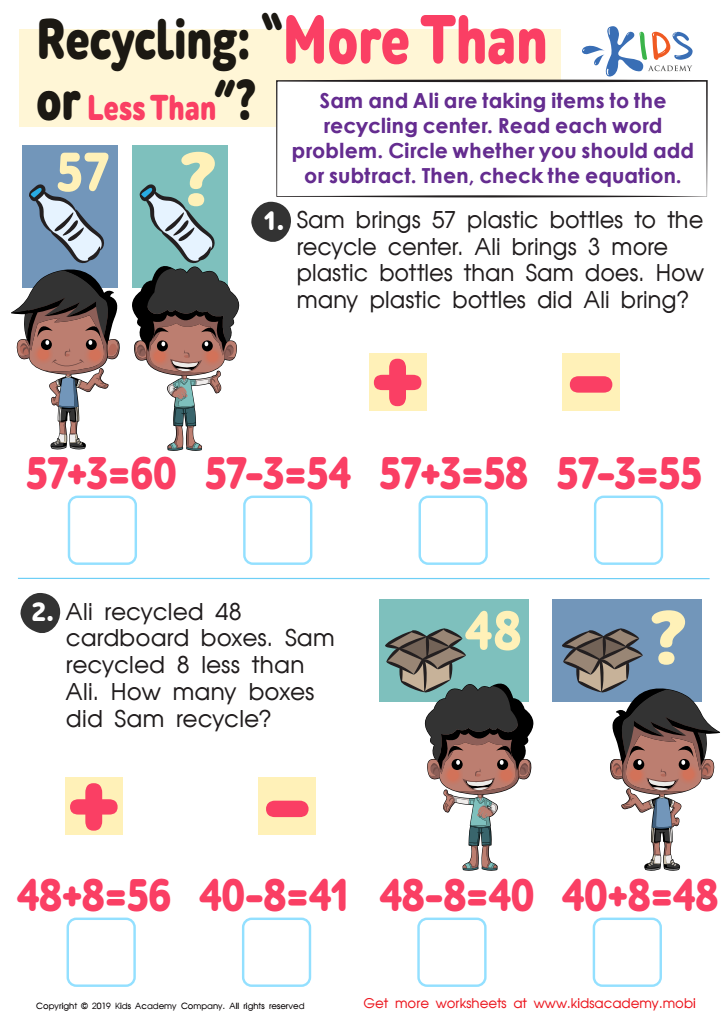
Recycling - More or Less Worksheet








Parents and teachers should pay attention to teaching children ages 3-5 about comparing quantities and numbers because these foundational skills are critical for their future mathematical understanding. During early childhood, children's brains are exceptionally receptive to new information, making it the ideal time to introduce basic mathematical concepts. Comparing quantities helps young children develop an intuitive sense of numbers, also known as "number sense," which is a crucial skill that will support more advanced mathematical learning later on.
When children learn to compare quantities, they start to understand important mathematical principles such as greater than, less than, and equal to. This understanding forms the basis for operations like addition and subtraction. Moreover, these skills promote logical thinking and problem-solving abilities, as children learn to categorize, categorize, and evaluate differences and similarities between groups of objects.
Also, comparing quantities often involves hands-on activities that are not only educational but also engaging and enjoyable for young children. Such activities foster positive attitudes towards math and learning in general. By nurturing this curiosity and enthusiasm early on, parents and teachers set the stage for lifelong educational success, building confidence that will help children tackle more complicated aspects of mathematics as they grow. Overall, recognizing the importance of comparing quantities at an early age lays a strong foundation for academic achievement in mathematics and other related disciplines.








