Counting practice Numbers Worksheets for Ages 3-5 - Page 2
28 filtered results
-
From - To
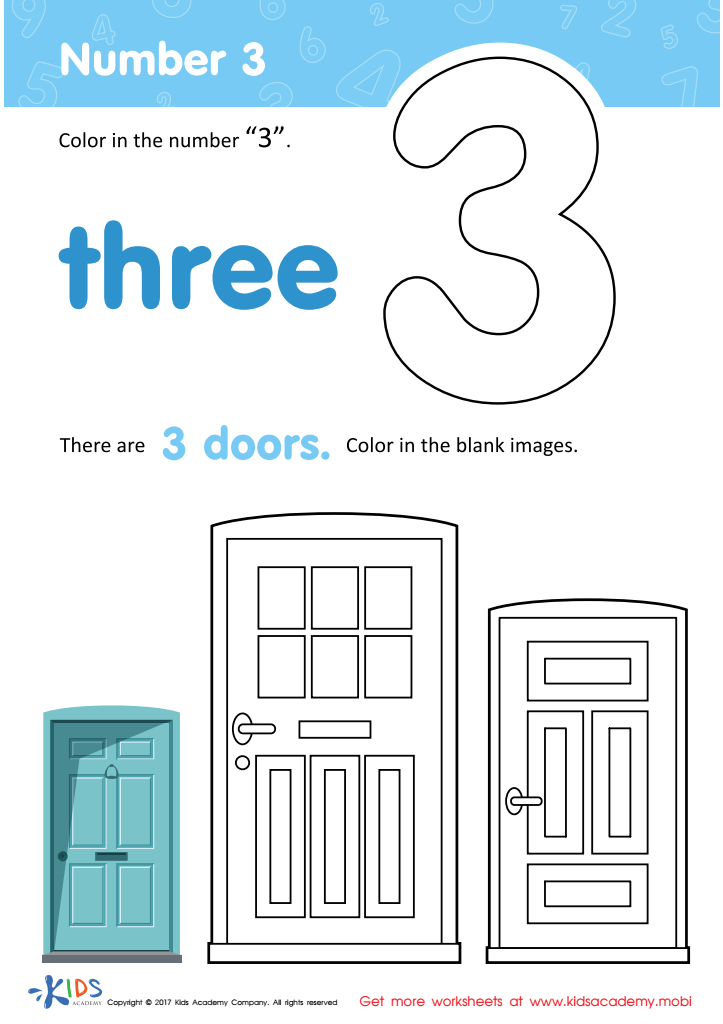
Number 3 Worksheet
 Assign to My Students
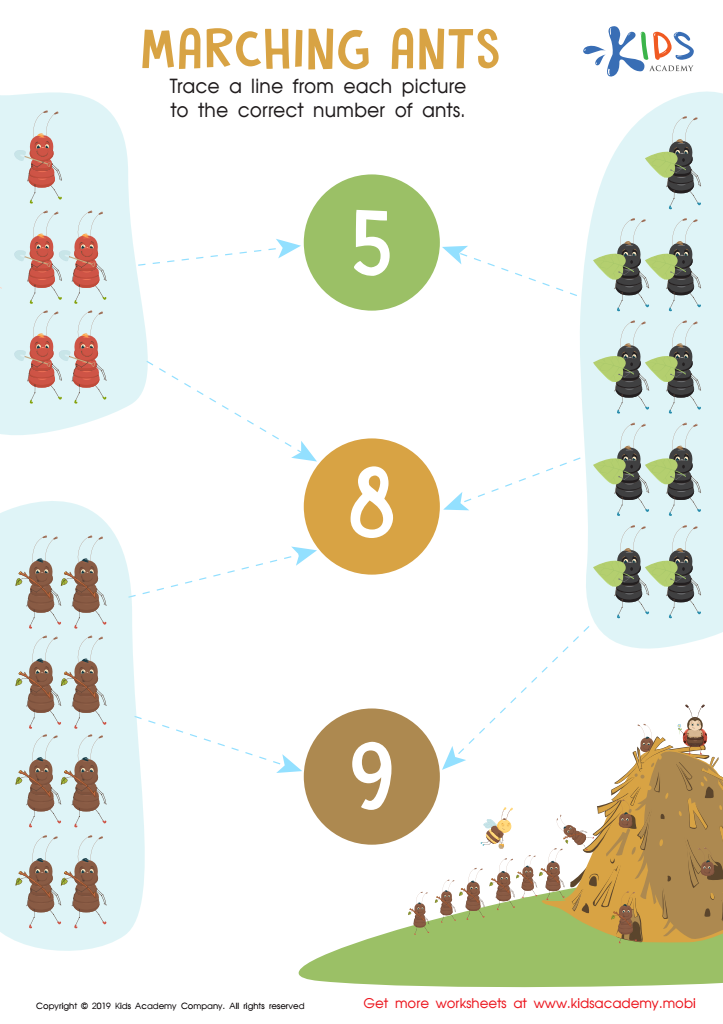
Marching Ants Worksheet

Counting on the City Skyline: Dot-to-Dot Worksheet
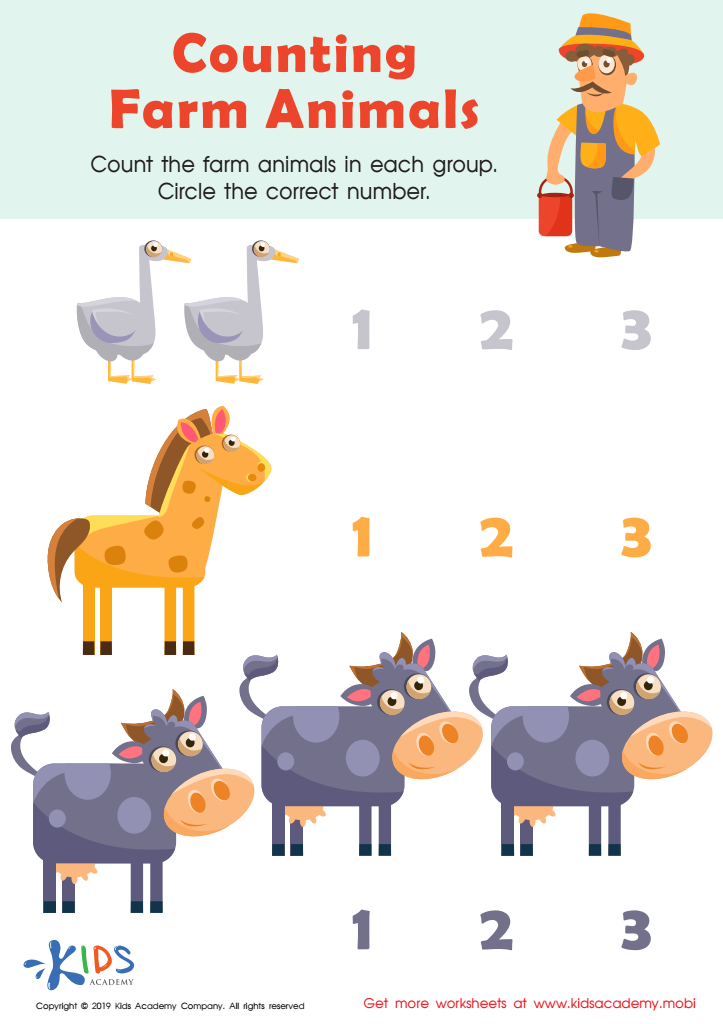
Counting Farm Animals Worksheet








Counting practice for children aged 3-5 is critical for cognitive development, laying the foundation for mathematical skills they will use throughout their education. At this young age, children are naturally curious, and engaging them in counting helps promote number recognition, sequencing, and basic arithmetic. These skills foster logical thinking, problem-solving abilities, and cognitive growth which are essential not only in math but across various subjects.
Moreover, counting activities are often interactive and can enhance fine motor skills through hands-on practices, like using objects or fingers to count. This multi-sensory approach keeps children engaged and supports varied learning styles. Additionally, counting can provide opportunities for language development as children learn to verbalize numbers and concepts while communicating what they are doing.
Social and emotional skills can also benefit from counting practice; participating in group activities promotes teamwork and sharing. Furthermore, encouraging counting at home or in the classroom builds a positive attitude towards learning and fosters a lifelong love for mathematics. Ultimately, regular counting practice equips children with fundamental skills essential for future academic success and helps instill confidence in their abilities.








