Understanding quantity Numbers Worksheets for Ages 3-5
4 filtered results
-
From - To
"Understanding Quantity Numbers Worksheets for Ages 3-5" are designed to help young learners grasp the concept of number quantities in a fun and engaging way. These printable worksheets from Kids Academy feature activities that focus on counting, comparing, and recognizing numbers, providing a strong foundation in early math skills. Perfect for preschoolers and kindergarteners, these resources incorporate colorful illustrations and interactive tasks to enhance learning and retention. Whether for classroom use or at-home practice, these worksheets make mastering number quantities an enjoyable journey for young minds, fostering both confidence and a love for math.
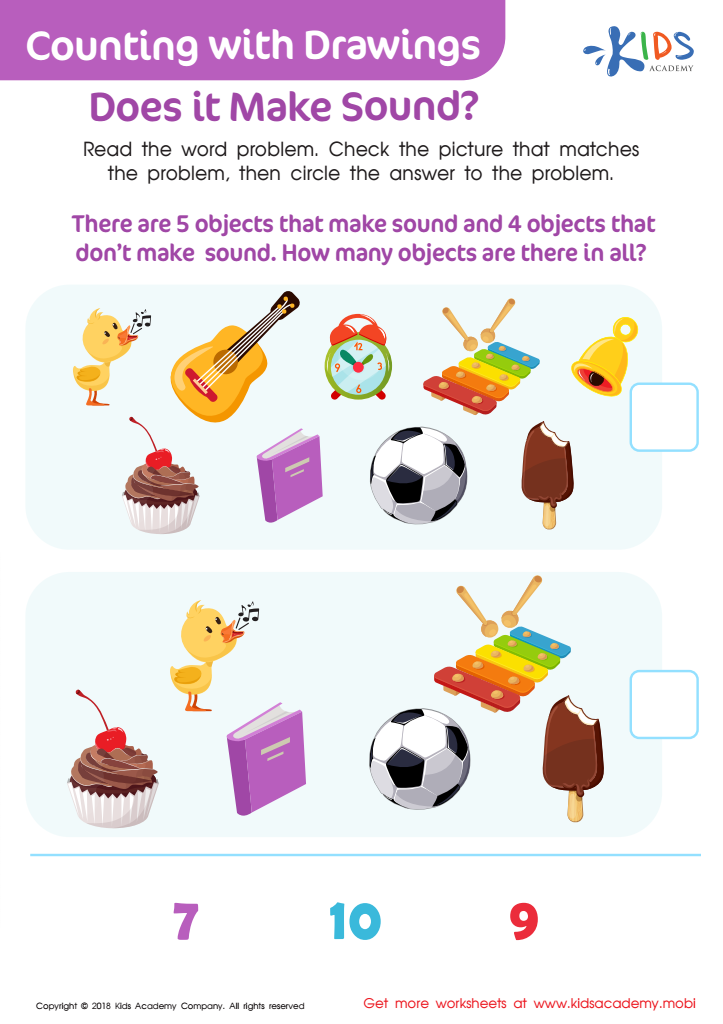
Counting With Drawings. Does It Make Sound? Worksheet
 Assign to My Students
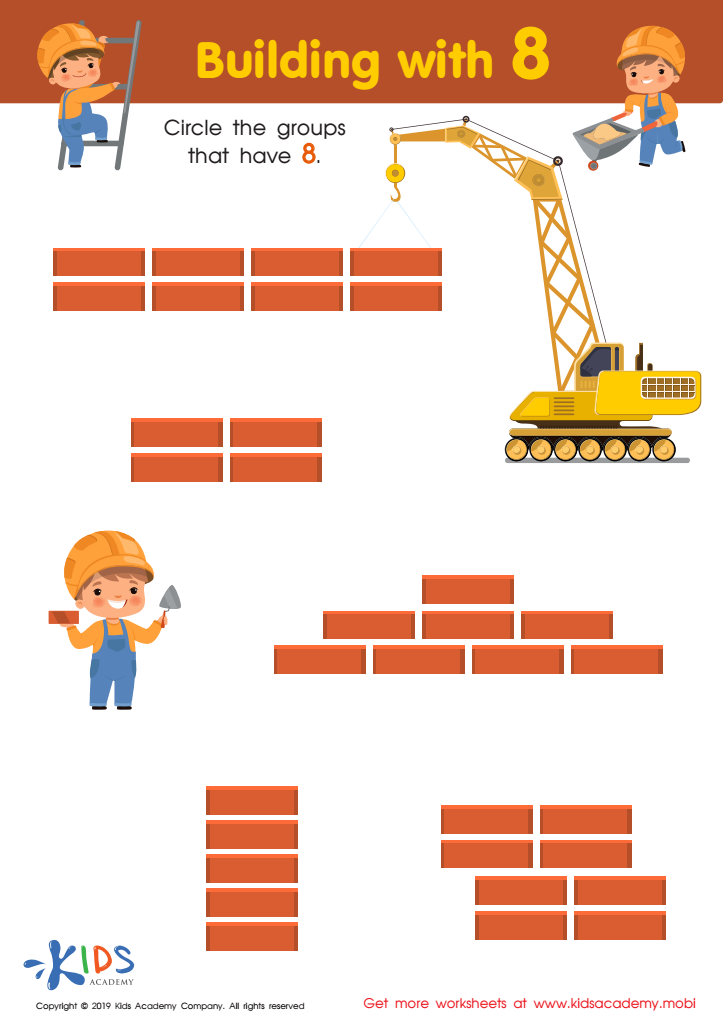
Building with 8 Worksheet
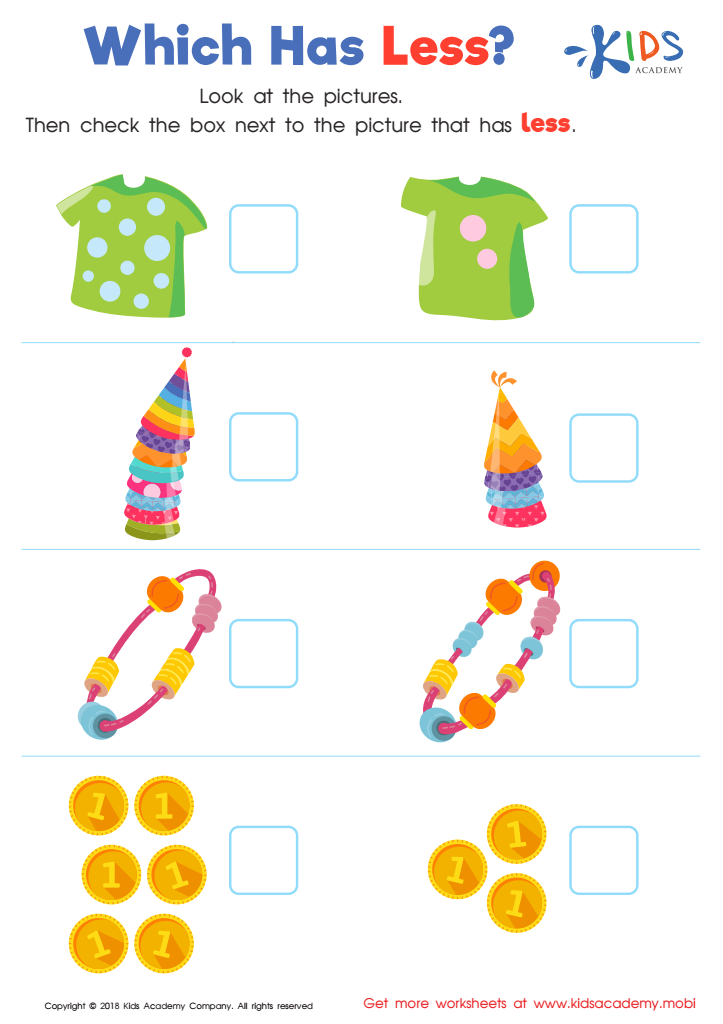
Which Has Less? Worksheet
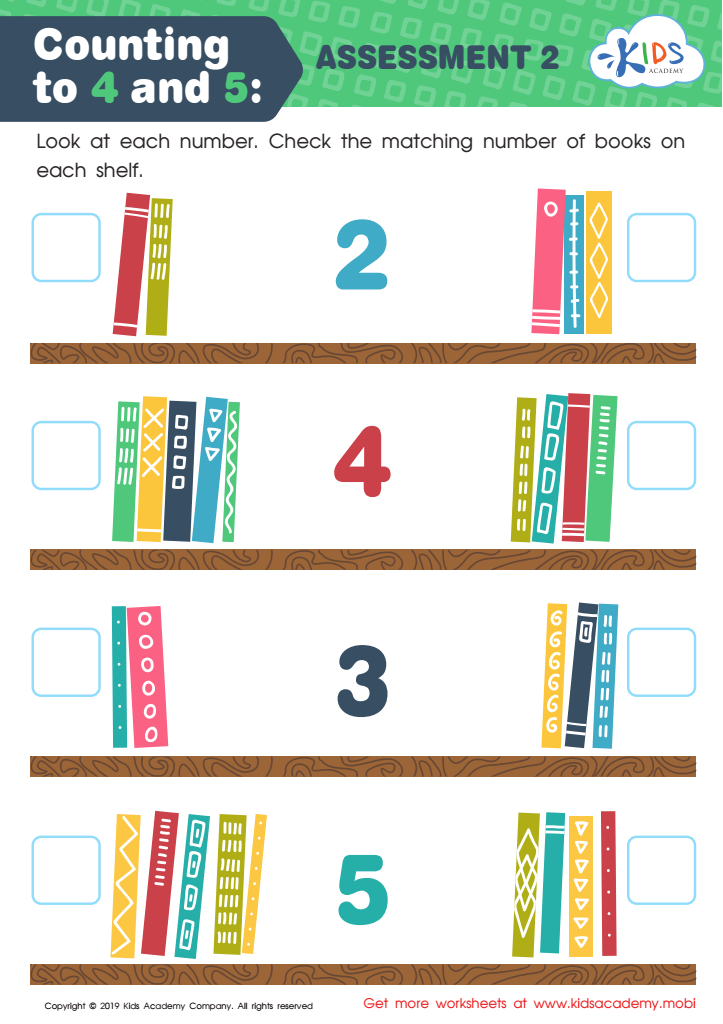
Counting to 4 and 5: Assessment 2 Worksheet








Understanding quantity numbers at an early age, specifically between ages 3-5, lays a critical foundation for a child’s future success in mathematics and overall cognitive development. Early number sense involves recognizing and comparing quantities, counting objects, and understanding basic numerical concepts. These skills are vital as they form the groundwork for more complex mathematical operations like addition and subtraction.
For parents and teachers, fostering an understanding of quantity numbers helps children better grasp the world around them. This understanding translates into everyday activities, such as sharing toys, distributing snacks, or measuring ingredients during cooking. These practical applications make learning both fun and meaningful.
Moreover, early numeracy development is strongly correlated with later academic achievement. Children who master basic numerical concepts early on tend to perform better in school, not just in mathematics but across other subjects due to improved problem-solving and logical thinking skills. Early intervention can also help identify and address any learning difficulties, providing the child with the support needed to excel alongside their peers.
Lastly, promoting numeracy at a young age encourages a positive attitude towards mathematics. Children grow up viewing math as an integral and enjoyable part of daily life, setting the stage for lifelong learning and curiosity. Therefore, both parents and teachers have a significant role in nurturing these essential skills during the critical early years.








