Animal identification Math Worksheets for Ages 3-5 - Page 2
31 filtered results
-
From - To
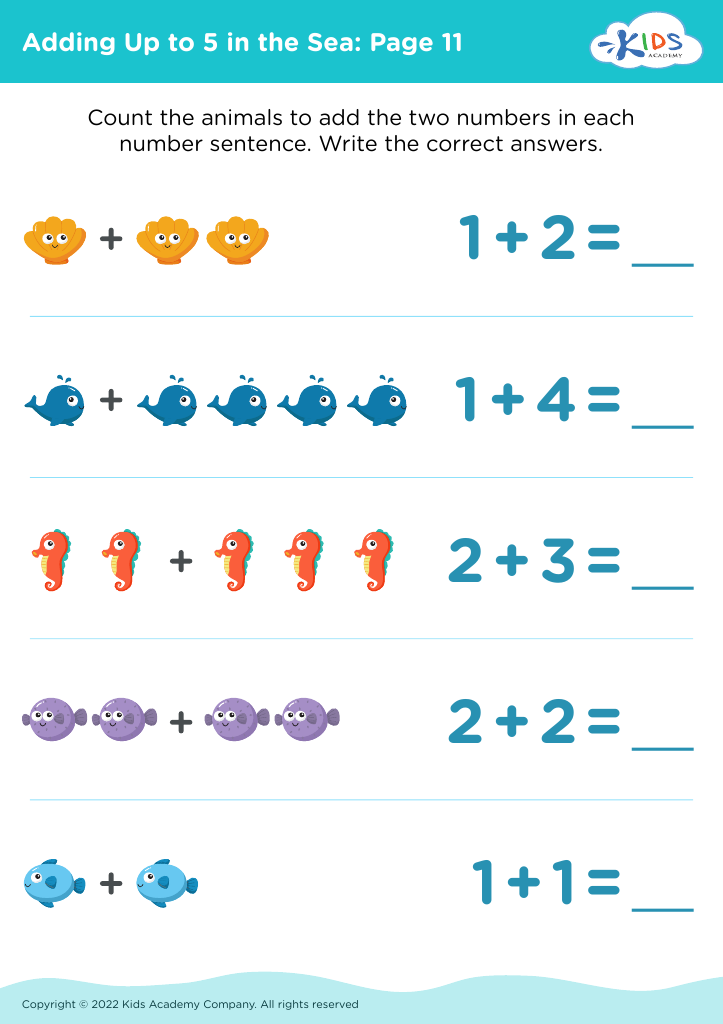
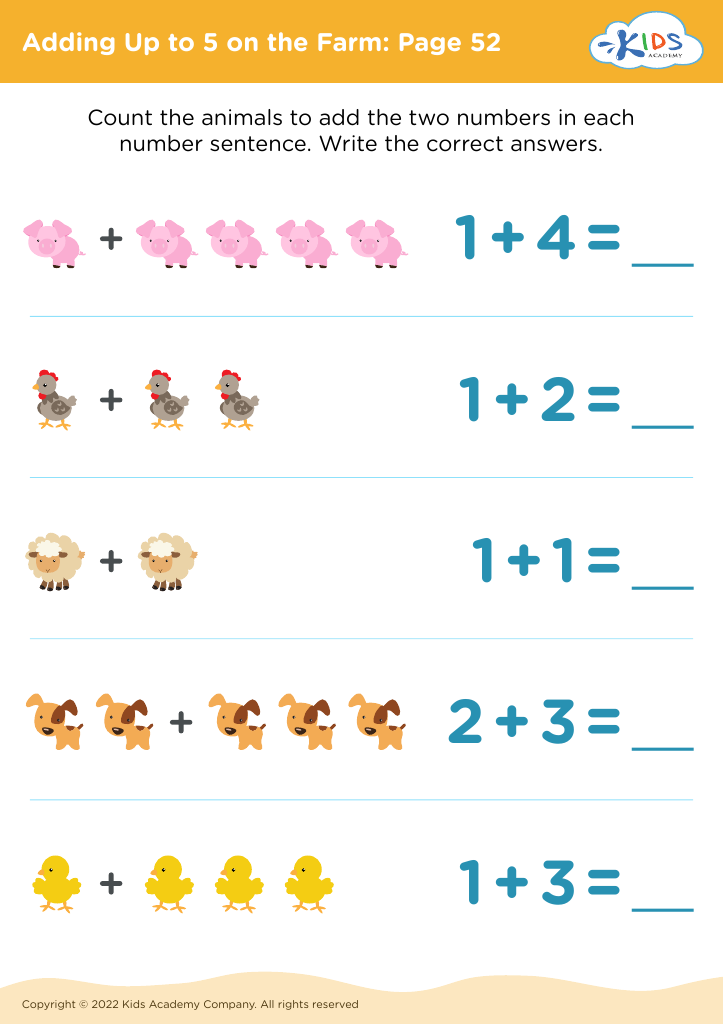
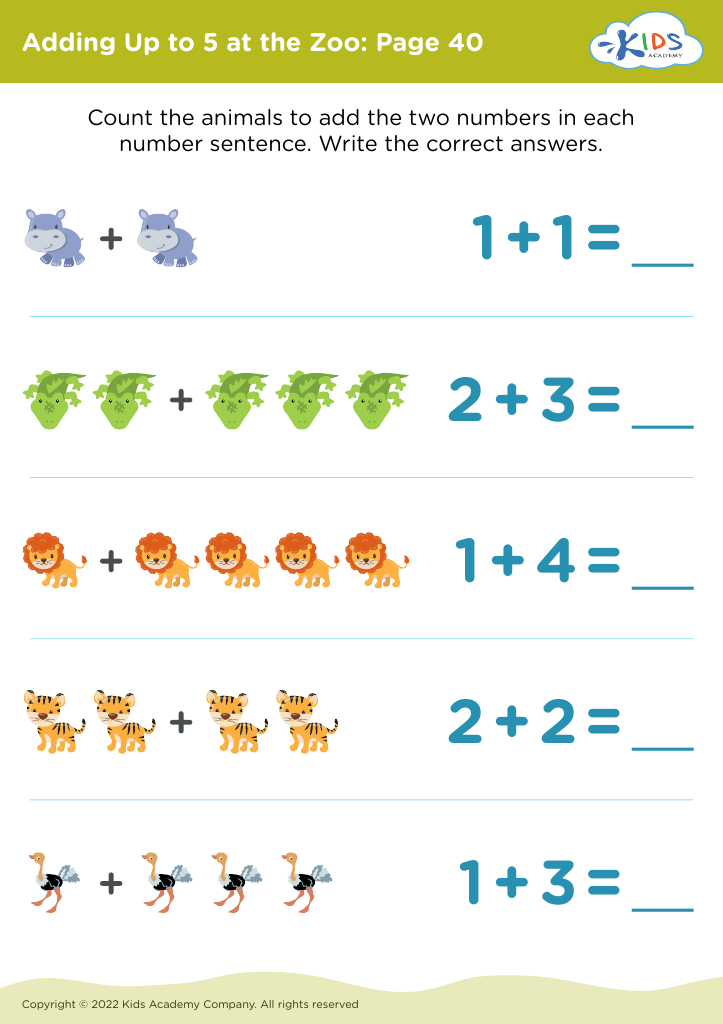
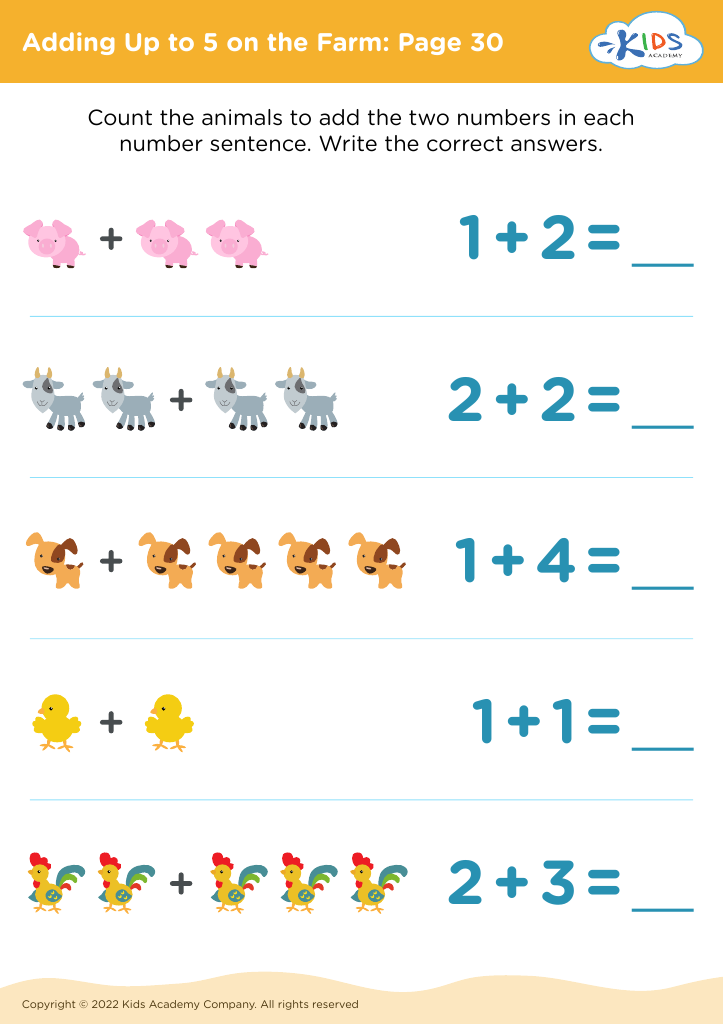
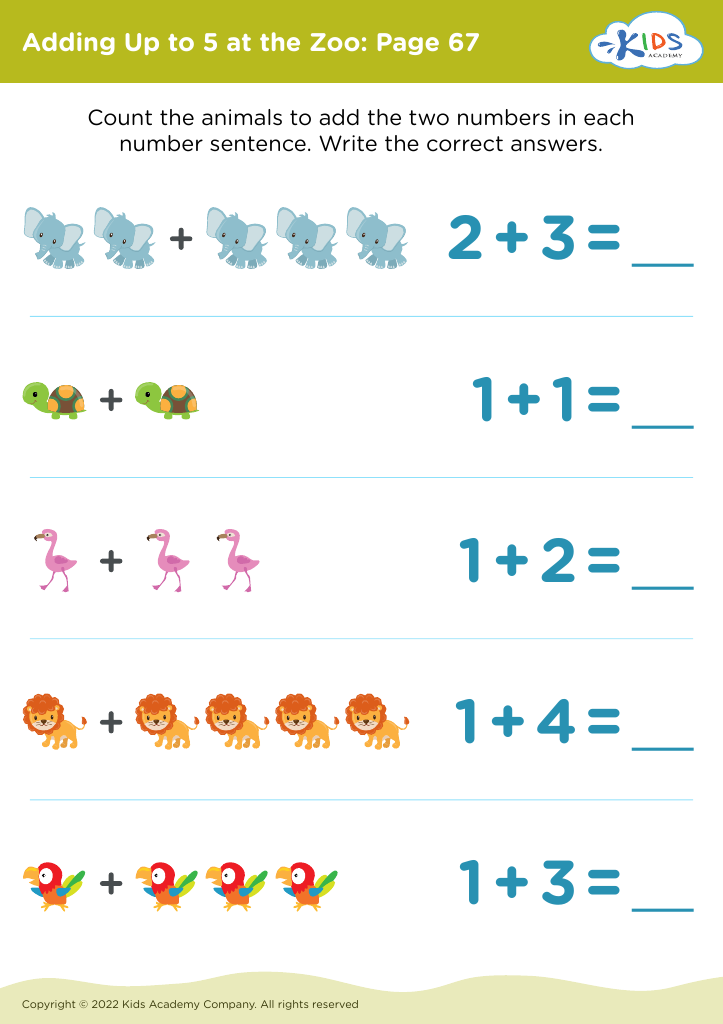
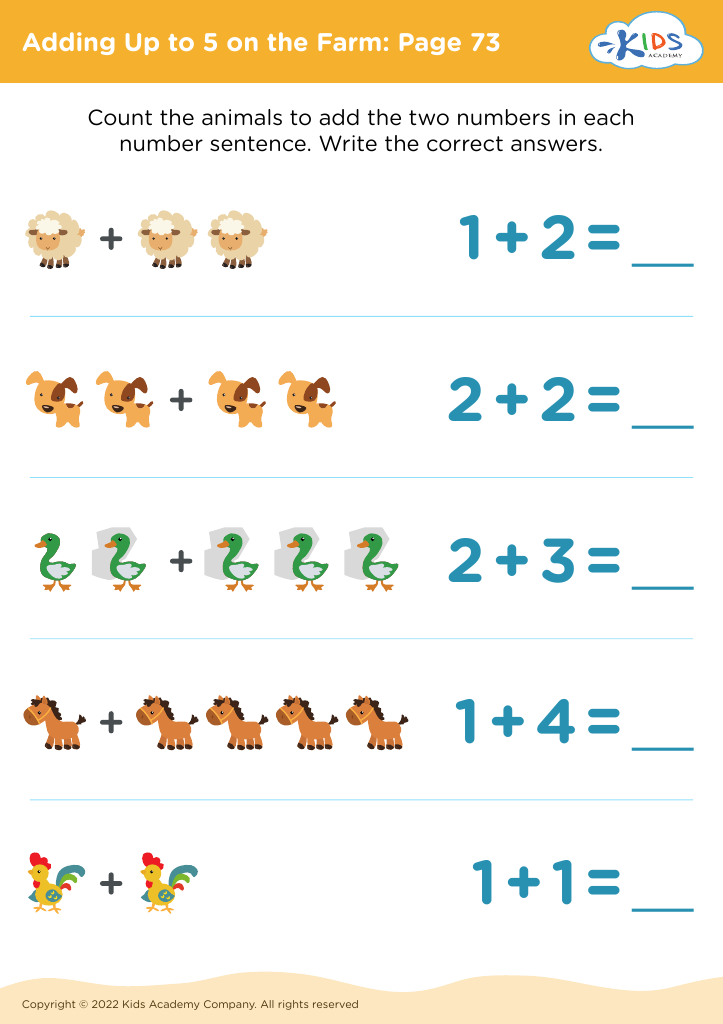
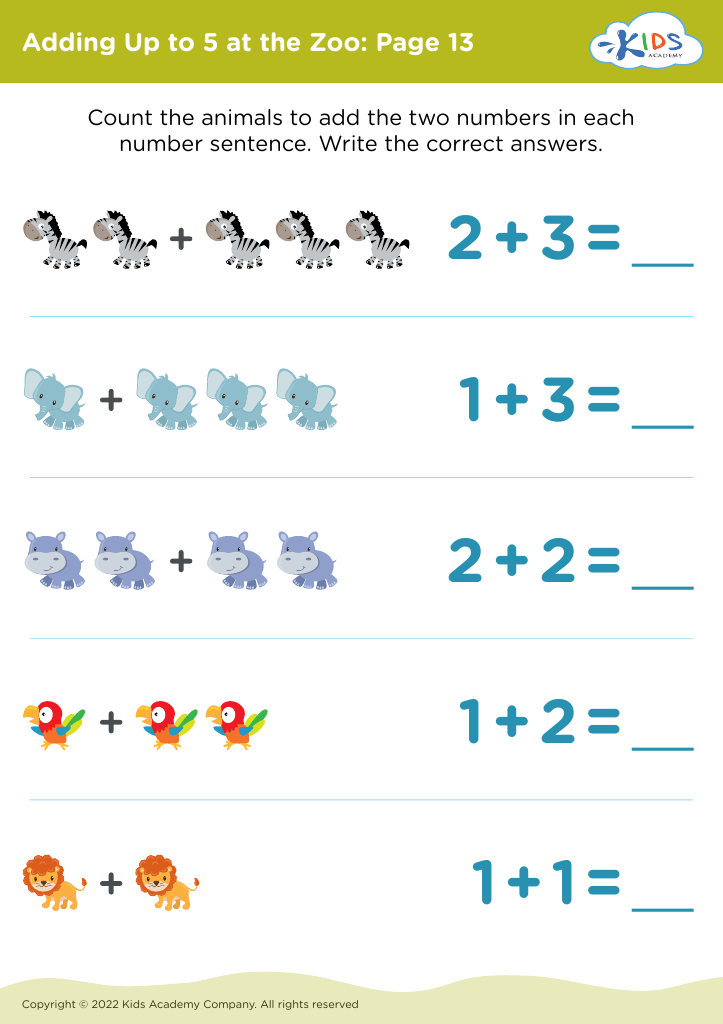







Animal identification alongside math learning for ages 3-5 provides a dual benefit that enriches young children's education in a holistic manner. Firstly, familiarizing children with animals builds their general knowledge and vocabulary, providing a contextually rich baseline for more abstract concepts. Through identifying animals, kids engage in comparison, categorization, and pattern recognition—fundamental skills in both language and math development.
Integrating math enhances cognitive abilities. Counting animals, sorting them by type, size, or habitat, laying the groundwork for emotional intelligence correlations like empathy and understanding. Early exposure to numeracy encourages comfort around numbers, vital for later academic achievement. Concepts of more, less, and equal introduced through animals make abstract math tactile and relatable.
Moreover, such interdisciplinary activities cater to multiple learning styles. Visual learners benefit from pictures of animals, auditory learners from animal sounds, and kinesthetic learners from interactive games. This inclusiveness fosters a love for learning and increases engagement.
In essence, combining animal identification with early math instruction cultivates a broad skill foundation, encourages curiosity, and creates meaningful connections between natural curiosity and academic skills. Both parents and teachers should champion this integrated approach as it addresses core engagement and sets the stage for lifelong learning enjoyment.








