
Improves counting skills Math Worksheets for Ages 3-5
5 filtered results
Difficulty Level
Grade
Age
-
From - To
Subject
Activity
Standards
Nurture your child’s foundational math skills with our "Improves Counting Skills Math Worksheets for Ages 3-5." Designed to captivate young minds, these engaging, printable activities help children practice number recognition, sequencing, and basic arithmetic in a fun, interactive way. Each worksheet is crafted to boost confidence and spark a love for learning by incorporating colorful visuals and simple exercises that gently guide preschoolers and kindergartners. Equip your little one with the tools they need for a successful early math journey! Explore a variety of worksheets tailored to develop essential counting skills at Kids Academy.
Favorites
With answer key
Interactive
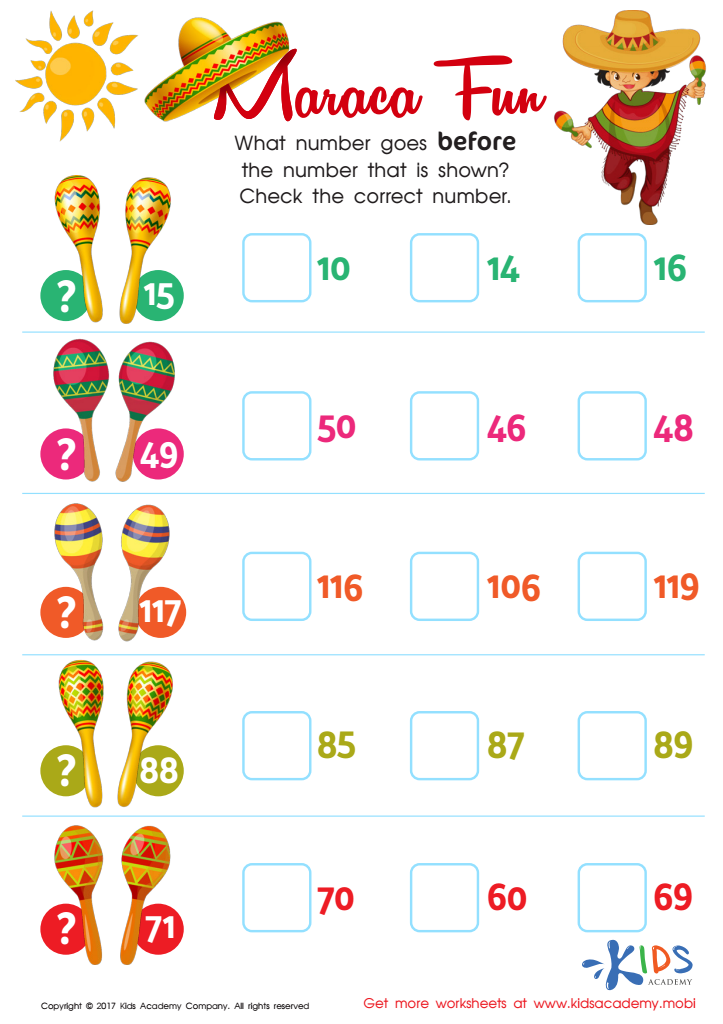
Counting: Maraca Fun Worksheet
Let your child add some Maraca fun to their math lessons by using this printable worksheet! They must figure out the numbers that come before the ones shown. Answers are provided on the other side; all your child needs to do is check the boxes with the correct numbers. Help them improve their counting and have fun along the way!
 Assign to My Students
Counting: Maraca Fun Worksheet
Worksheet
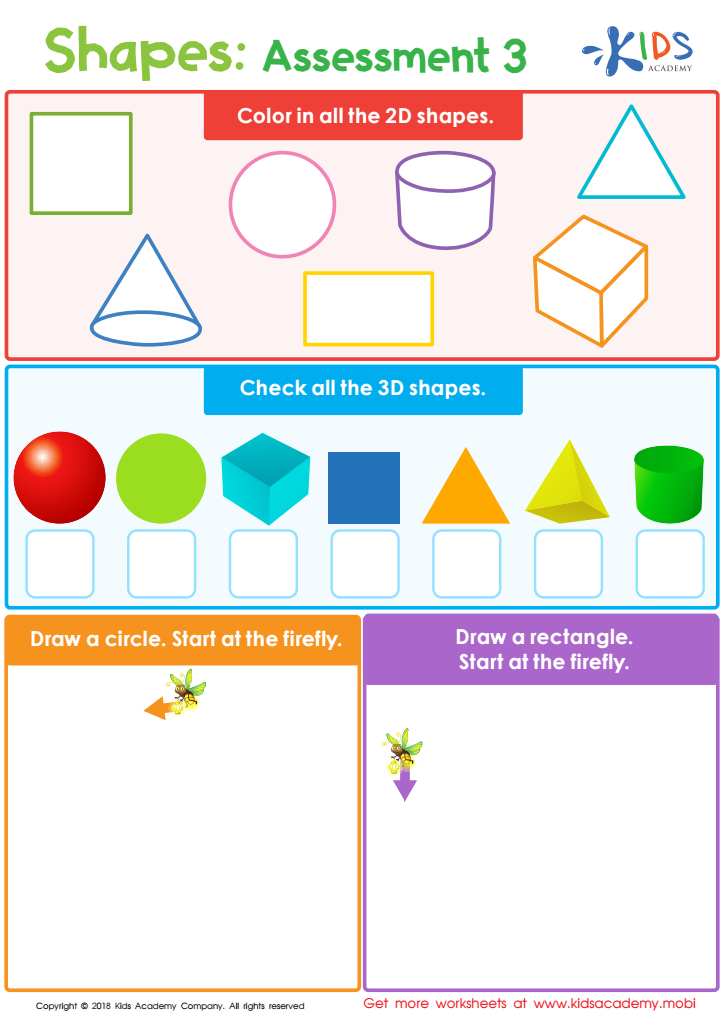
Shapes: Assessment 3 Worksheet
Shapes are everywhere! Help your students differentiate between 2D and 3D shapes. Ask them the difference between a triangle and pyramid, or a circle and a sphere. This worksheet tests their understanding of both types and is a useful assessment tool.
Shapes: Assessment 3 Worksheet
Worksheet
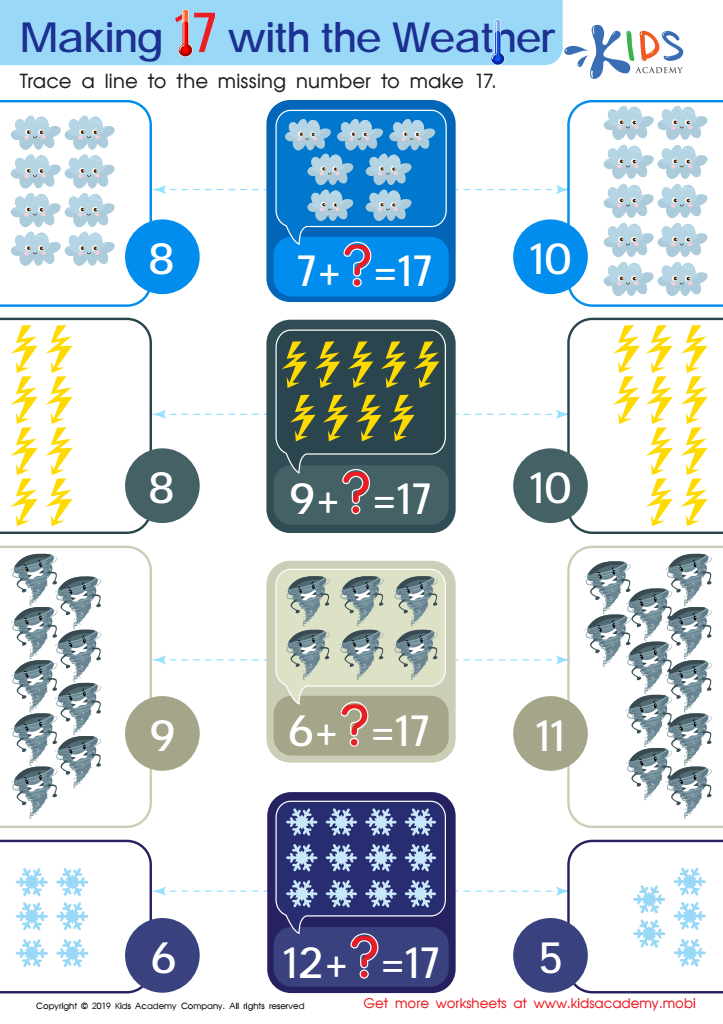
Making 17 with the Weather Worksheet
Show your kids the pictures in the worksheet and identify the weather. This exercise is to help them add simple numbers. There are 4 equations in the printout. Help them figure out the numbers to make 17, then trace a line to the missing number to complete the equation.
Making 17 with the Weather Worksheet
Worksheet
Join Kids Academy for Free
Who is primarily going to use this learning content?








Parents and teachers should prioritize improving counting skills for children aged 3-5 because these foundational abilities are essential for future academic success and everyday life. At this developmental stage, kids are highly receptive and learning rapidly; introducing counting skills enhances their cognitive development and mathematical thinking from an early age. Counting is more than just reciting numbers; it involves understanding quantity, order, and the principle that the last number counted represents the total amount. By mastering these basics, children build a strong mathematical foundation that supports later learning in more complex areas like addition, subtraction, and problem-solving.
Early counting skills also boost patterns recognition, and logical reasoning, and lay the groundwork for geometry and algebraic thinking. Beyond mathematics, counting activities can improve a child's attention span, memory, and fine motor skills. These activities often require manipulation of objects, which refines their dexterity and coordination.
Furthermore, engaging in counting activities fosters parent-child or teacher-student interaction, providing opportunities to bond and communicate effectively, promoting a positive attitude toward learning. By prioritizing counting skills, we equip children with essential tools that foster lifelong learning and confidence in their ability to tackle more challenging mathematical concepts, ensuring sustained academic achievement and daily functional excellence.








