Money counting skills Math Worksheets for Ages 3-5
3 filtered results
-
From - To
Introduce young learners to the world of mathematics with our engaging Money Counting Skills Math Worksheets for Ages 3-5. Designed to help preschoolers and kindergarteners develop crucial counting and money management skills, these fun and educational worksheets offer a variety of activities like identifying coins, understanding values, and simple addition and subtraction using real-life money scenarios. Perfect for both classroom use and at-home practice, these worksheets make learning rewarding and fun. Help your child build a solid foundation in math and financial literacy early on with Kids Academy’s expertly crafted resources.
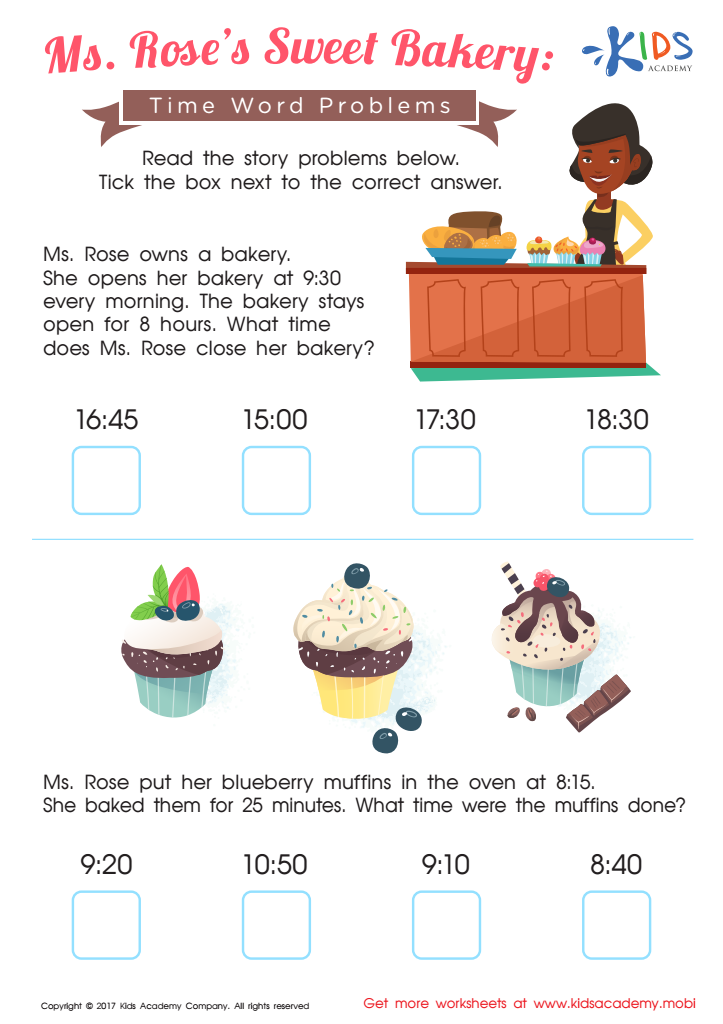
Ms. Roseв's Sweet Bakery Time Worksheet
 Assign to My Students
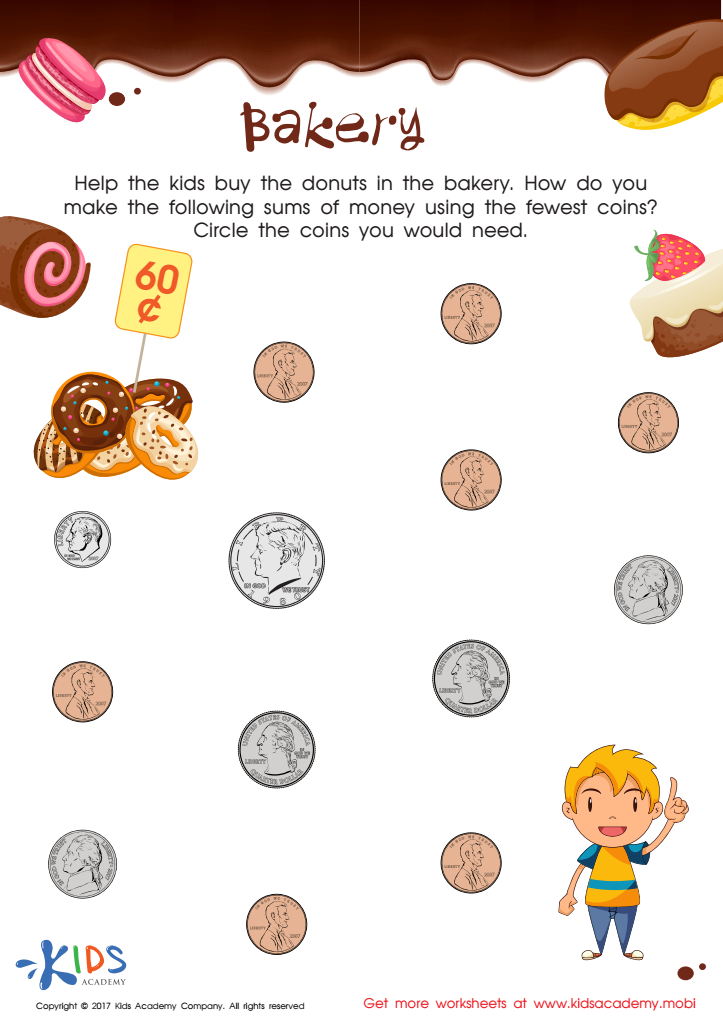
Counting Coins Worksheet
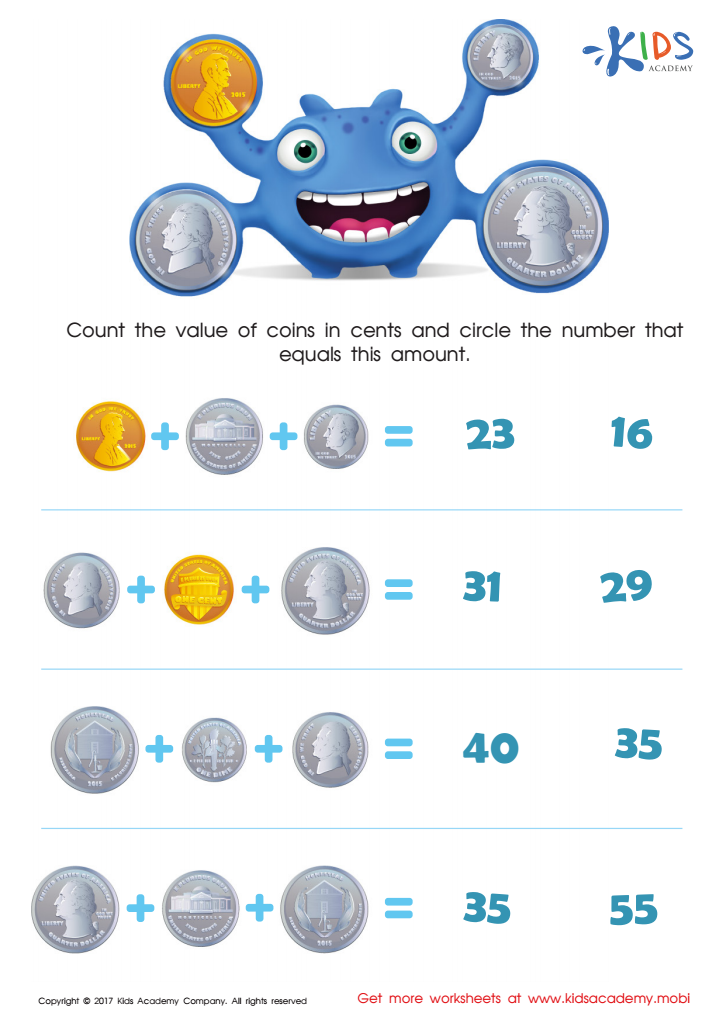
Counting the Coins Money Worksheet





.jpg)
.jpg)

Parents and teachers should care about money counting skills for children ages 3-5 because fostering financial literacy from a young age builds a strong foundation for future economic understanding. Teaching young children to count and recognize money helps them develop essential math skills such as number recognition, addition, and subtraction. These are fundamental building blocks for overall numeracy.
Early exposure to money also introduces the concepts of value and exchange, helping children understand that money is a limited resource that can be earned, saved, and spent. This understanding can lead to better decision-making and budgeting skills later in life.
Moreover, engaging children in money-related activities can enhance cognitive development by encouraging problem-solving and critical thinking. Handling money also promotes fine motor skills as children manipulate coins and notes.
Additionally, teaching money counting in an age-appropriate, interactive manner—such as through play with toy cash registers or pretending grocery shopping—makes learning fun, which can enhance children's enthusiasm for math and improve their retention of the concepts. By prioritizing money counting skills early on, parents and teachers set children on a path toward financial responsibility and academic success, equipping them with the tools they will need in everyday life.








