Observational skills Math Worksheets for Ages 3-5
6 filtered results
-
From - To
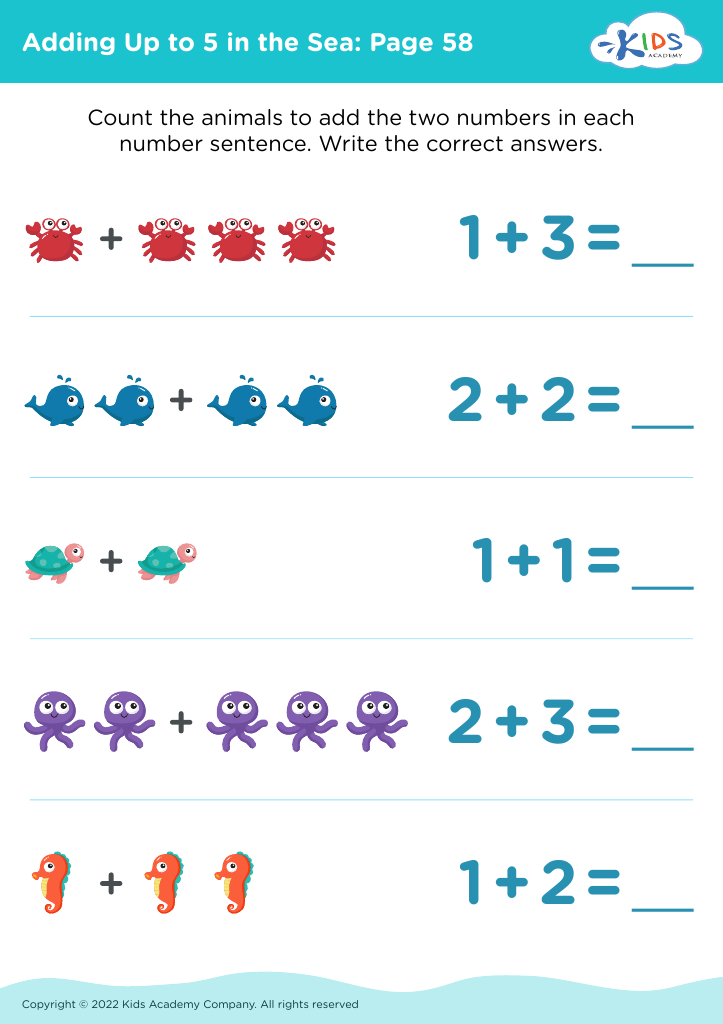
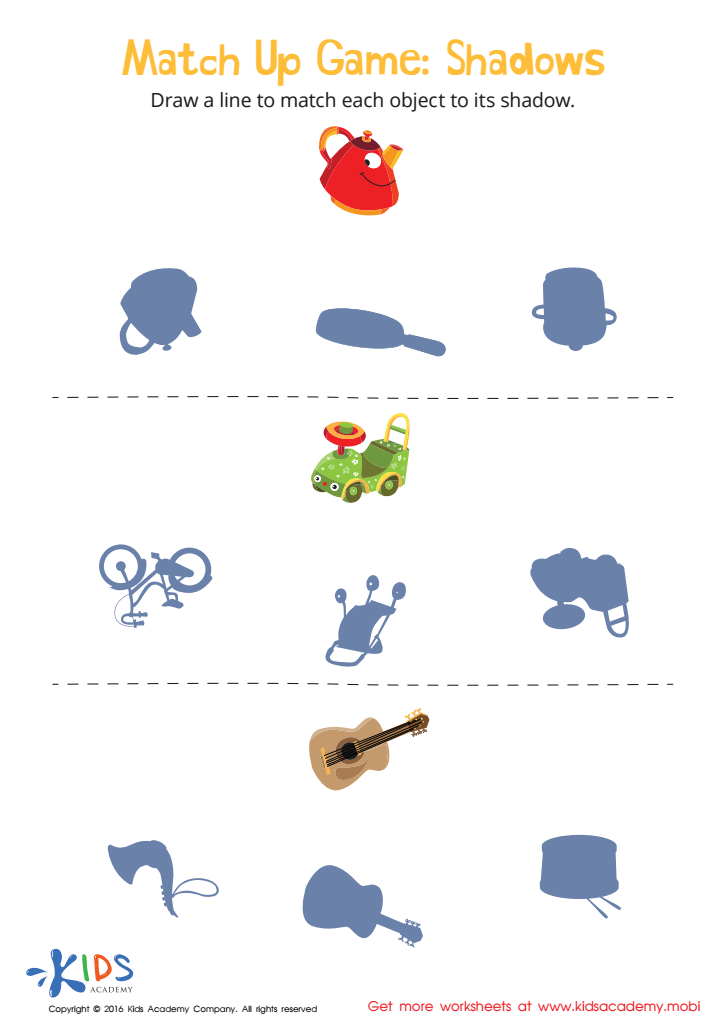
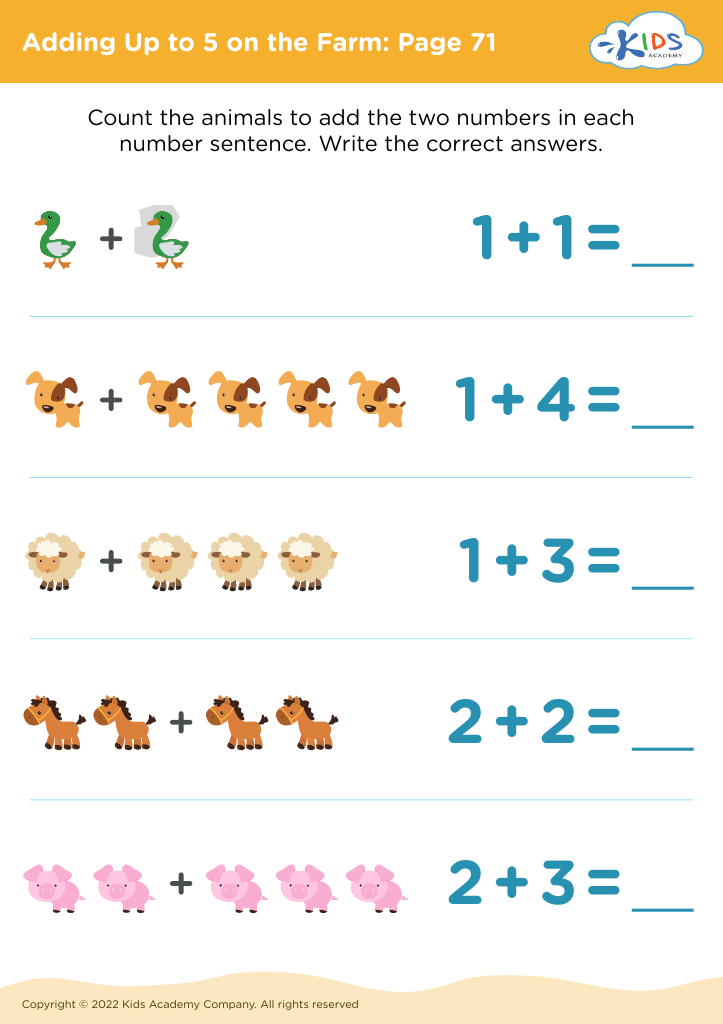
Boost your child's math potential with our engaging Observational Skills Math Worksheets designed for ages 3-5! These expertly crafted worksheets help young learners enhance their critical thinking and problem-solving abilities through fun and interactive activities. By focusing on pattern recognition, matching, and comparing objects, children will cultivate a strong foundation for future math success. Ideal for preschoolers and kindergartners, these printable resources promote early learning in a playful way, fostering both education and enjoyment. Turn everyday moments into valuable learning experiences with Kids Academy's observation-based math worksheets, and watch your child excel in an elementary understanding of math concepts.
 Assign to My Students
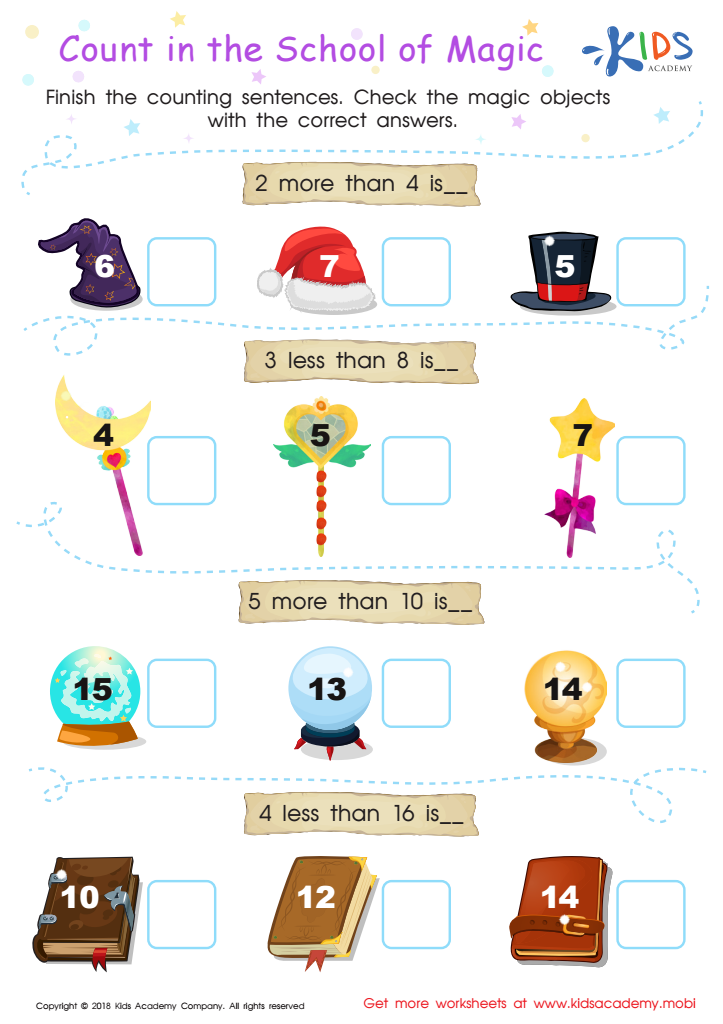
Count in the School of Magic Worksheet
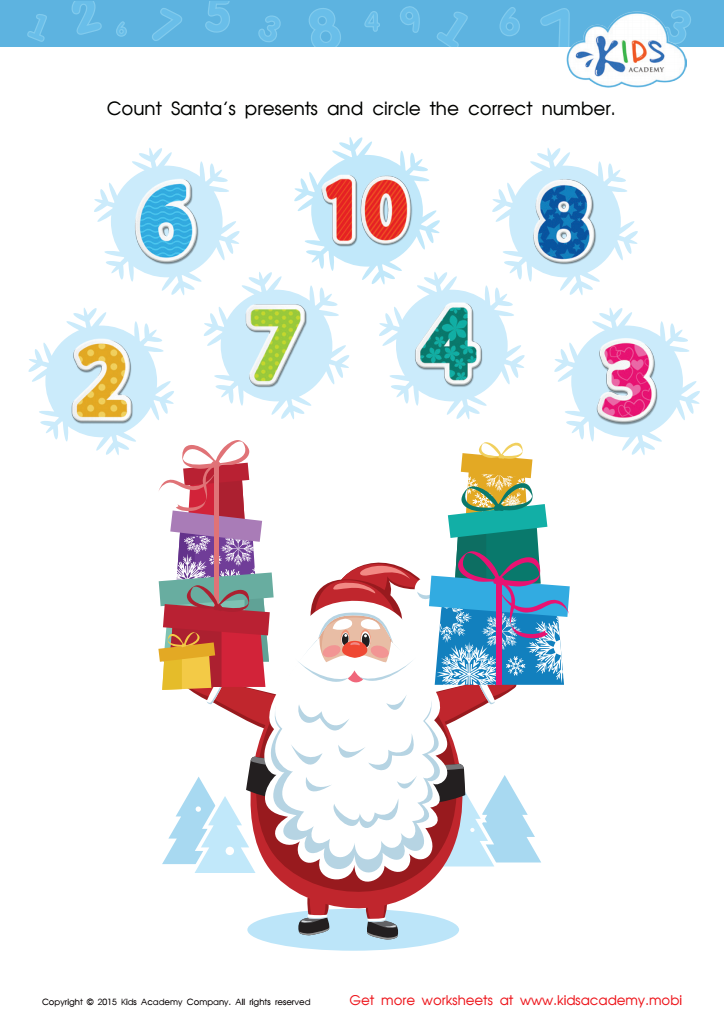
Count Santa's Presents Worksheet
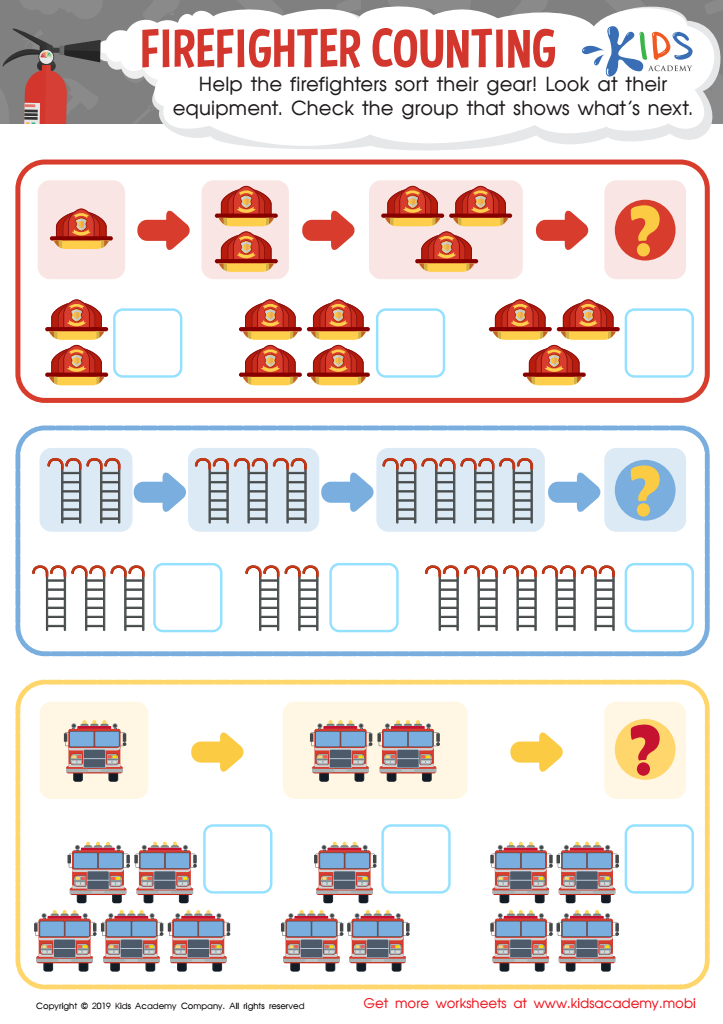
Firefighter Counting Worksheet








Observational skills in math for children ages 3-5 are foundational for their overall cognitive development and future academic success. At this age, children are constantly exploring their surroundings and absorbing new information. Encouraging observational math skills—such as recognizing patterns, identifying shapes, and comparing sizes—helps them make sense of the world around them.
Firstly, developing these skills enhances critical thinking and problem-solving abilities. For example, when a child identifies that one group of blocks is larger than another, they are practicing quantitative reasoning. This forms the basis for more complex mathematical concepts later on, like addition and subtraction.
Secondly, strong observational skills in math foster a natural curiosity and love for learning. Engaging activities, such as sorting toys by color or counting everyday objects, can make math fun and relevant. This positive early experience is crucial, as attitudes towards learning formed during these early years often last a lifetime.
Lastly, boosting observational skills in young children also supports other developmental areas such as language and fine motor skills. When children describe the shapes they see or count objects, they are also enhancing their vocabulary and communication abilities, making them better prepared for school.
Therefore, fostering observational math skills in young children equips them with the essential tools needed for academic achievement and a strong foundation for lifelong learning.








