Problem-solving practice Math Worksheets for Ages 3-5
4 filtered results
-
From - To
Discover our engaging Problem-Solving Practice Math Worksheets designed specifically for children ages 3 to 5. These worksheets encourage young learners to develop critical thinking and reasoning skills while having fun! Each activity is crafted to support early math concepts, including pattern recognition, number sense, and basic operations through colorful visuals and interactive formats. As children tackle age-appropriate challenges, they build confidence and a strong foundation for future math success. Perfect for at-home learning or classroom use, our worksheets make math enjoyable and accessible. Download now to inspire your child's love for problem-solving and set them on the path to academic achievement!
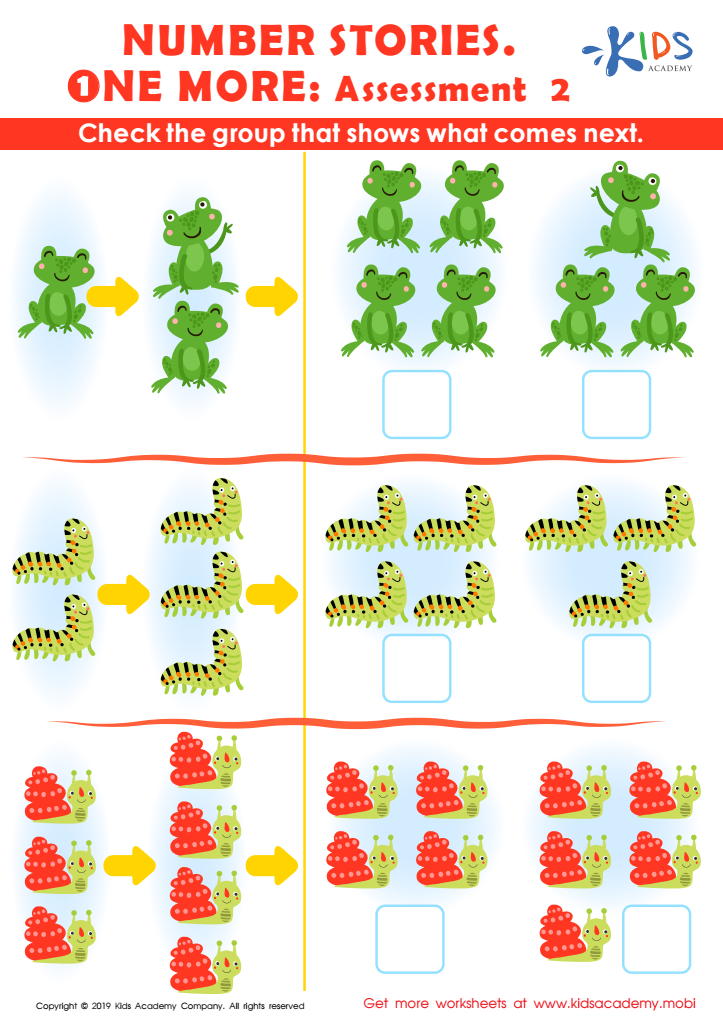
Number Stories One More – Assessment 2 Worksheet
 Assign to My Students
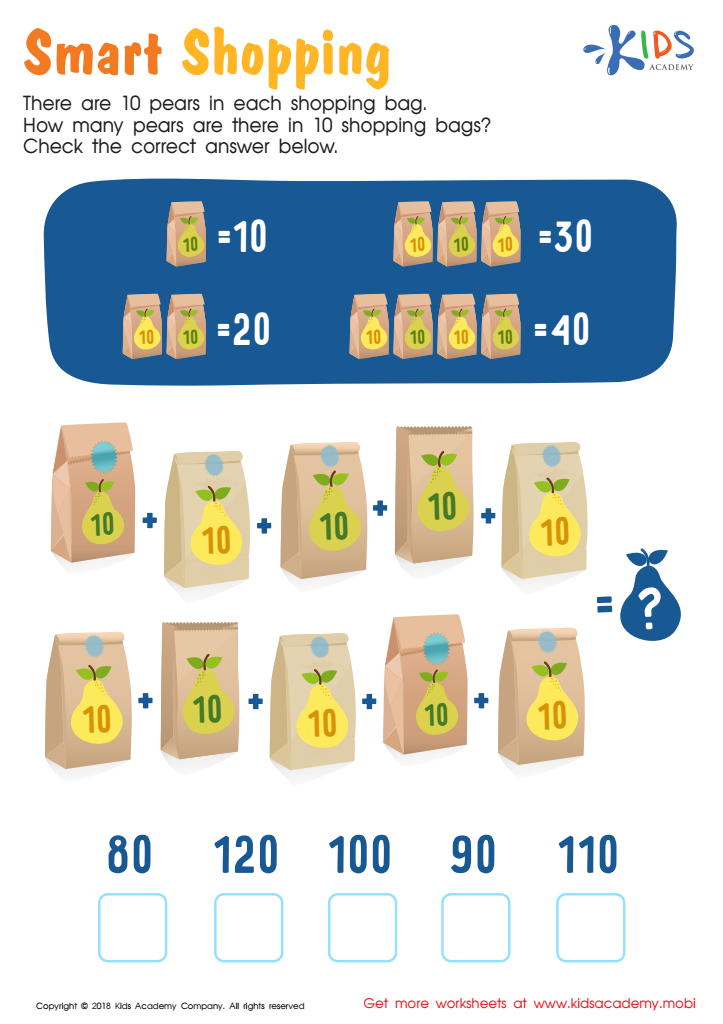
Smart Shopping: Trade Tens for a Hundred Worksheet








Parents and teachers should prioritize problem-solving practice in math for ages 3-5 because this foundational skill lays the groundwork for future academic success. At this age, children are naturally curious and eager to explore, making it an ideal time to introduce mathematical concepts through engaging and interactive activities. Problem-solving enhances critical thinking skills, encouraging children to analyze situations, recognize patterns, and devise solutions.
Moreover, early exposure to math fosters a positive attitude towards the subject. Children who engage in playful problem-solving experiences are more likely to view math as enjoyable and approachable rather than daunting, helping to combat math anxiety later in life. Additionally, such practices support essential cognitive development, including memory, spatial reasoning, and logical thinking.
Incorporating math into everyday situations—like counting objects during a grocery trip or solving simple puzzles—makes learning relevant and contextual. This not only solidifies foundational skills but also promotes communication and vocabulary development as children describe their thought processes. Overall, nurturing problem-solving abilities at a young age equips children with indispensable tools for lifelong learning, enabling them to navigate various challenges confidently, both academically and in daily life.








