Subtraction practice Math Worksheets for Ages 3-5 - Page 3
50 filtered results
-
From - To
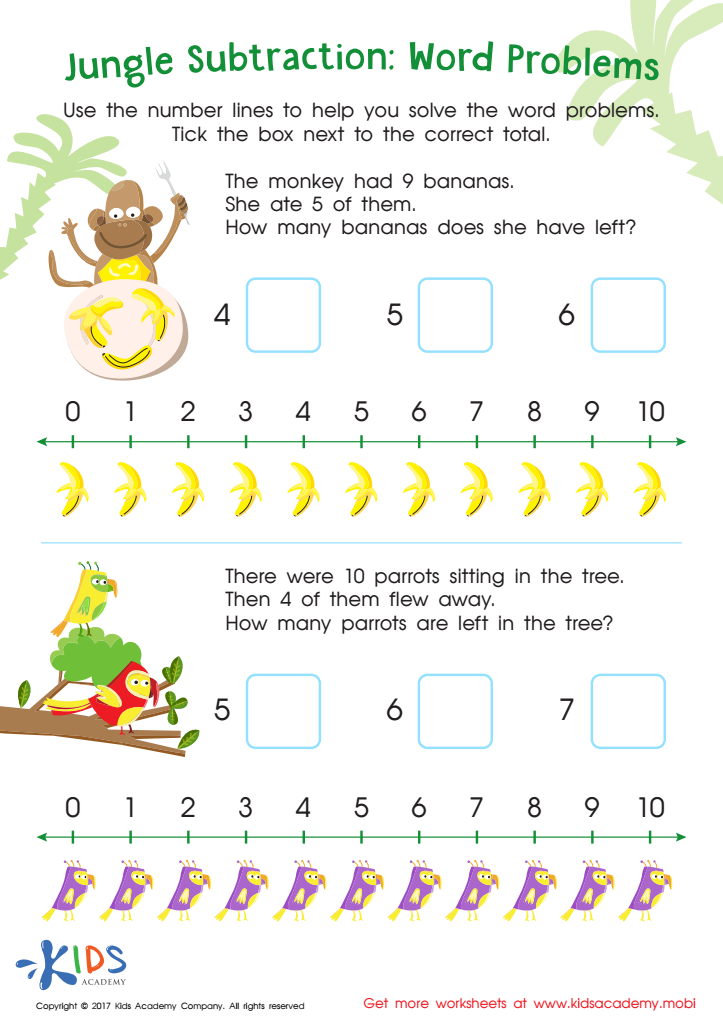
Jungle Subtraction Word Problems Substraction Worksheet
 Assign to My Students
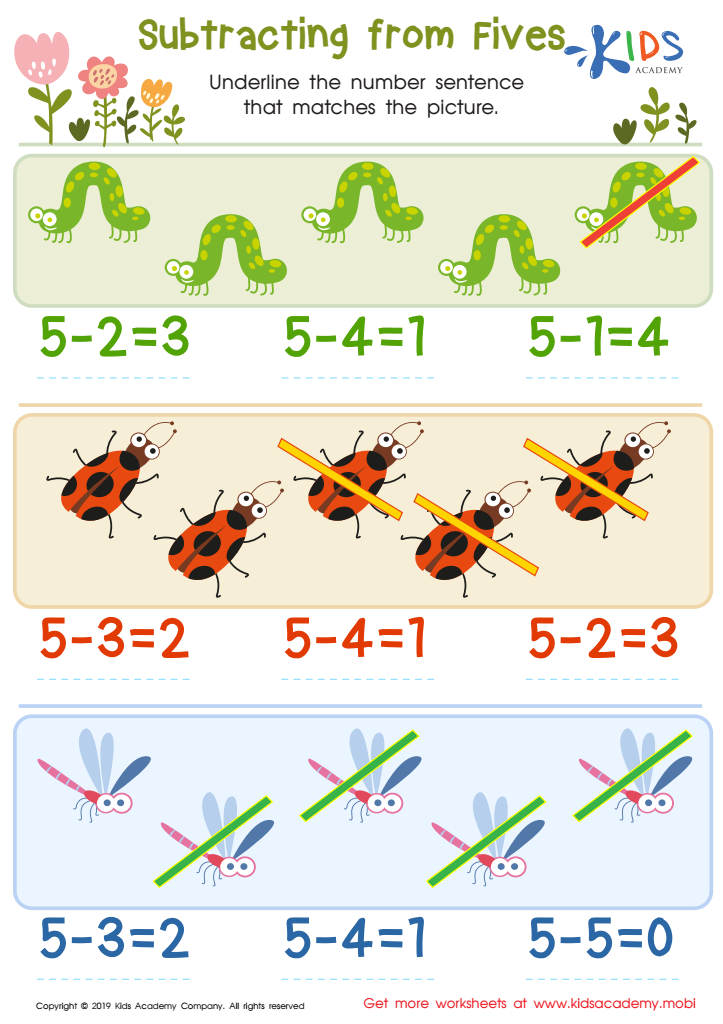
Subtracting From Fives Worksheet






Subtraction practice for children aged 3-5 is essential as it lays the foundation for basic math skills critical for future academic success and everyday life. Young children absorb new concepts quickly, and introducing subtraction early helps develop their problem-solving and critical-thinking abilities. At this age, children are naturally curious and their brains are highly plastic, making it an ideal period for grasping fundamental math principles.
Understanding subtraction is not just about numbers; it builds cognitive skills like sequencing, memory, and attention. Through subtraction practice, children learn about concepts such as "taking away," which can be applied to real-life situations, fostering both their analytical and practical understanding of the world around them.
Parents and teachers should care because early math competence is strongly linked to later academic achievement, not only in math but across other subjects too. Moreover, engaging in subtraction practice boosts a child’s confidence in their abilities, encouraging a positive attitude towards learning and school in general.
Interactive, playful methods of teaching subtraction—such as using toys, storybooks, or educational games—make learning fun and stress-free, ensuring children remain enthusiastic and motivated. By prioritizing subtraction practice, parents and teachers set the stage for a lifetime of mathematical confidence and curiosity, enabling children to approach future challenges with a sense of competence and resilience.








