
Understanding measurement units Math Worksheets for Ages 3-5
3 filtered results
Difficulty Level
Grade
Age
-
From - To
Subject
Activity
Standards
Engage your little ones with our "Understanding Measurement Units" math worksheets, specially designed for children aged 3-5. These fun and interactive activities help young learners explore fundamental concepts of measurement through colorful visuals and relatable examples. Kids will learn to compare lengths, weights, and volumes and develop essential mathematical skills in a playful way. Our worksheets encourage hands-on practice, allowing children to measure everyday objects and foster their curiosity. Perfect for both classroom and home learning, these resources ensure that early learners build a strong foundation in understanding measurement units while having fun. Unleash the joy of learning today!
Favorites
With answer key
Interactive
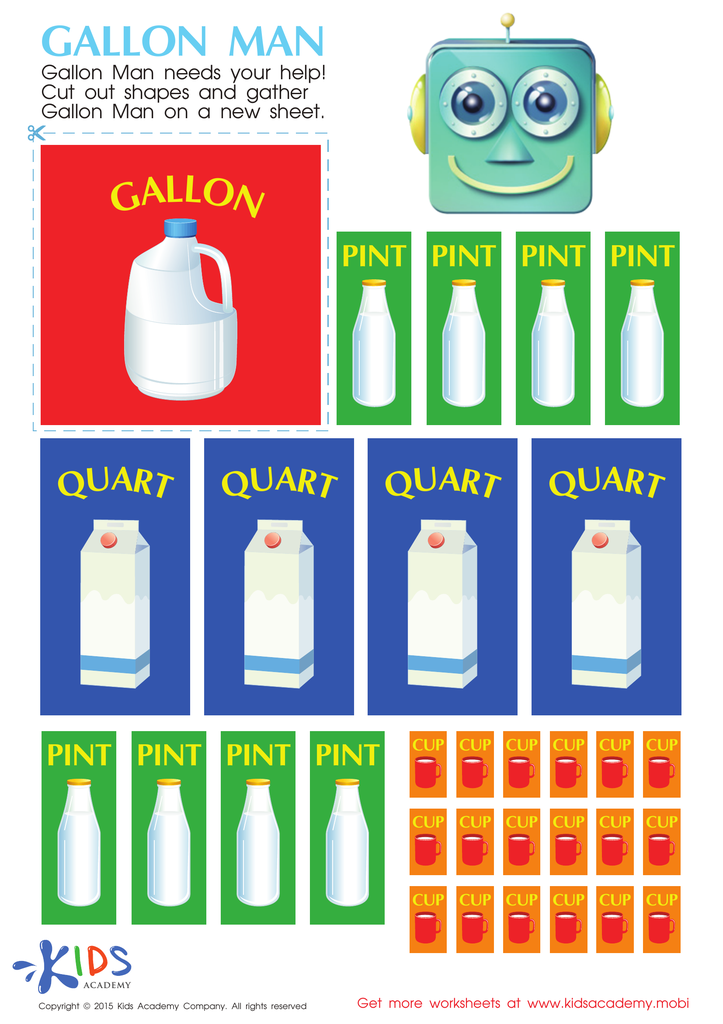
Cups, Pints and Quarts With Gallon Man Worksheet
Measurement in cups, pints, quarts and gallons has never been this fun!
Cups, Pints and Quarts With Gallon Man Worksheet
Worksheet
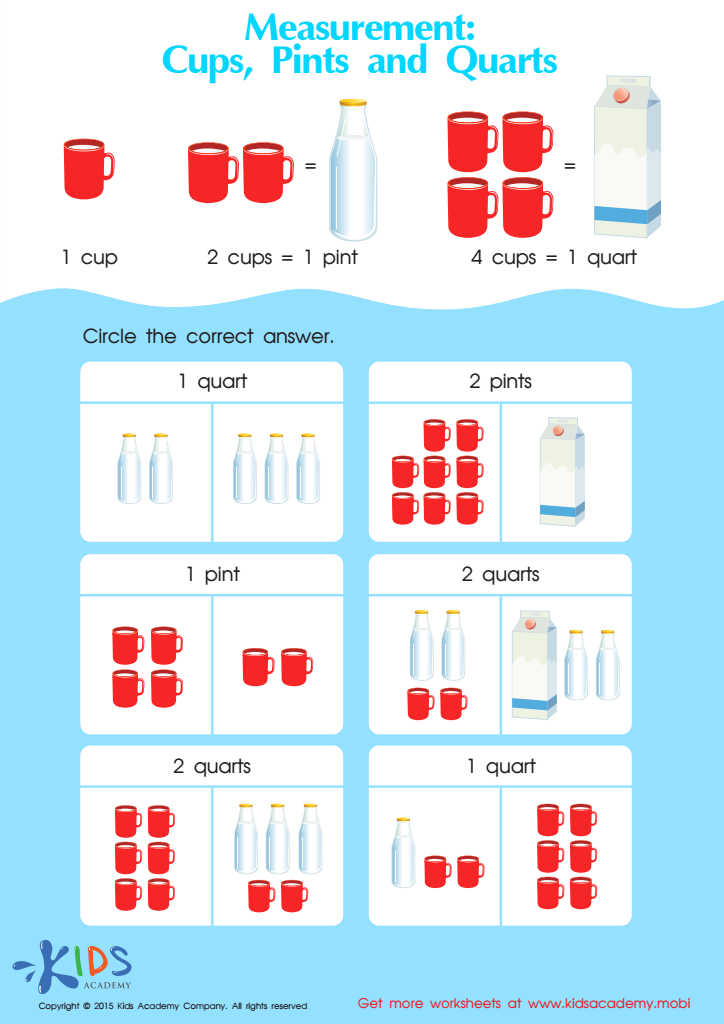
Cups, Pints and Quarts Worksheet
Let your kids explore the world of math with our worksheet! Have them count cups, pints and quarts in pictures and circle the right answer. Get even more free printable math worksheets for kindergarten on our website. Come on, join the adventure!
 Assign to My Students
Cups, Pints and Quarts Worksheet
Worksheet
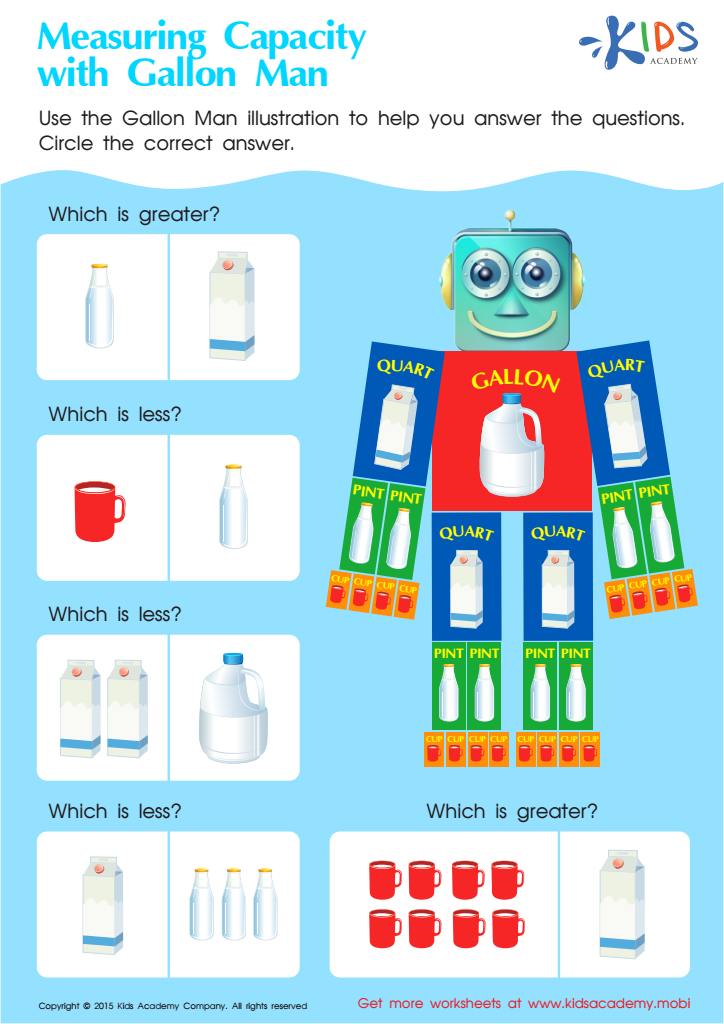
Measurement: Measuring Capacity with Gallon Man Worksheet
Check out Gallon Man to practice measuring capacity with cups, pints, quarts, and gallons. Our worksheet has questions with answers checked against Gallon Man. For more practice, visit our site for free printable math worksheets for kindergarten and learn math with fun!
Measurement: Measuring Capacity with Gallon Man Worksheet
Worksheet
Join Kids Academy for Free
Who is primarily going to use this learning content?





%20(1).jpg)

Understanding measurement units in early childhood is crucial for foundational math skills and overall cognitive development. For children ages 3-5, engaging with measurement concepts helps them relate to the world around them. When parents and teachers introduce concepts like length, weight, and volume, young learners start to recognize differences in size and weight through hands-on activities, such as sorting blocks by length or comparing the weights of fruits.
Furthermore, learning about measurement units supports language development as children describe attributes and compare objects using terms such as “longer,” “heavier,” and “filled.” This early exposure boosts critical thinking and problem-solving skills, vital for sparking curiosity and reasoning abilities.
As they count and measure, children also develop fine motor skills—grasping tools like rulers or measuring cups enhances dexterity. Additionally, measurement activities promote social skills through collaborative play, as children work together to share and compare their findings.
Ultimately, instilling an understanding of measurement units lays the groundwork for more advanced mathematical concepts in later years, allowing parents and teachers to foster a lifelong appreciation for math and its practical applications in everyday life.








