Understanding number relationships Math Worksheets for Ages 3-5
4 filtered results
-
From - To
Unlock the world of number relationships with our engaging Math Worksheets designed for young learners aged 3-5. These worksheets provide a fun and interactive way for preschoolers to explore essential math concepts. Through colorful illustrations and age-appropriate activities, children will develop a strong foundation in understanding quantities, comparing numbers, and recognizing patterns. Our worksheets cater to diverse learning styles, ensuring that every child builds confidence as they master numerical relationships. Ideal for classroom use or at-home learning, our resources make math an enjoyable adventure for your little ones. Start their journey to mathematical discovery today with Kids Academy!
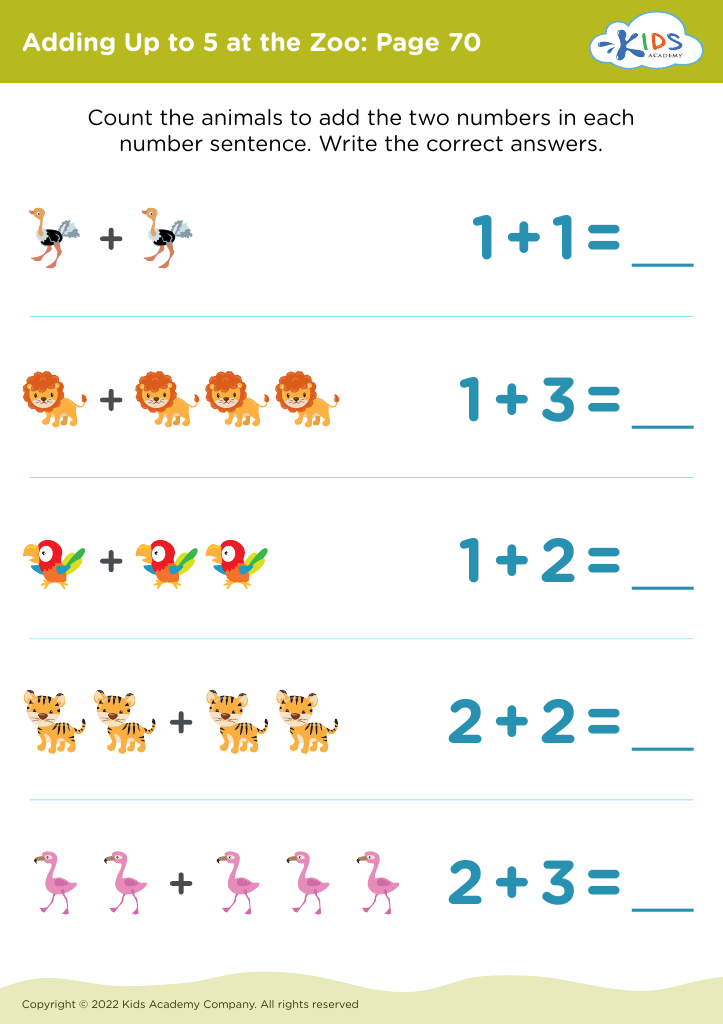
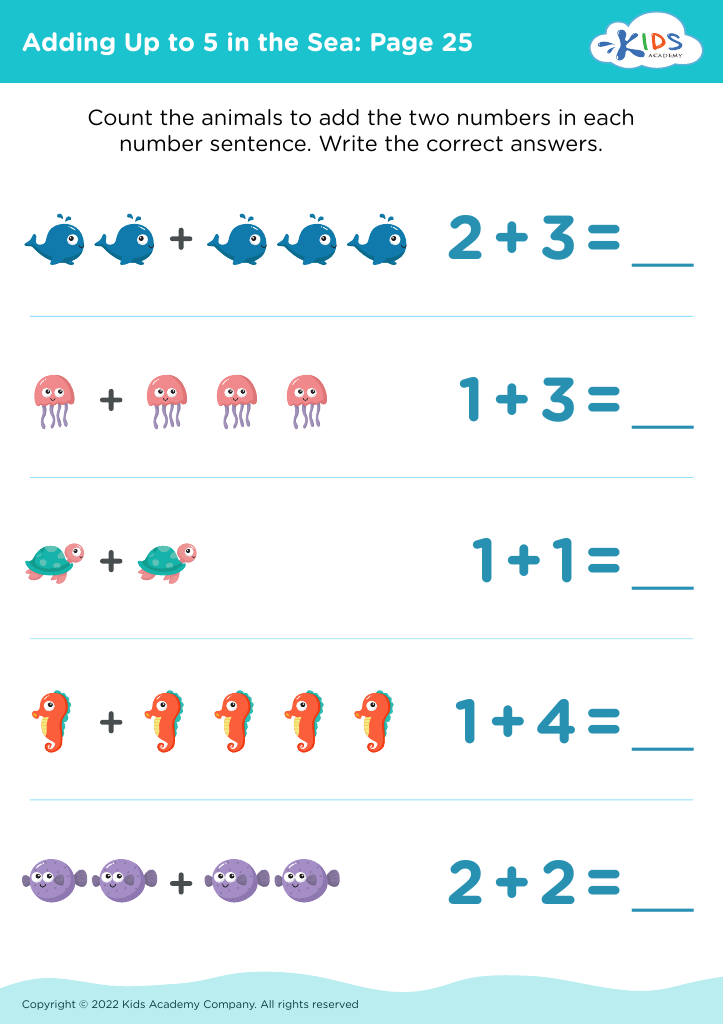
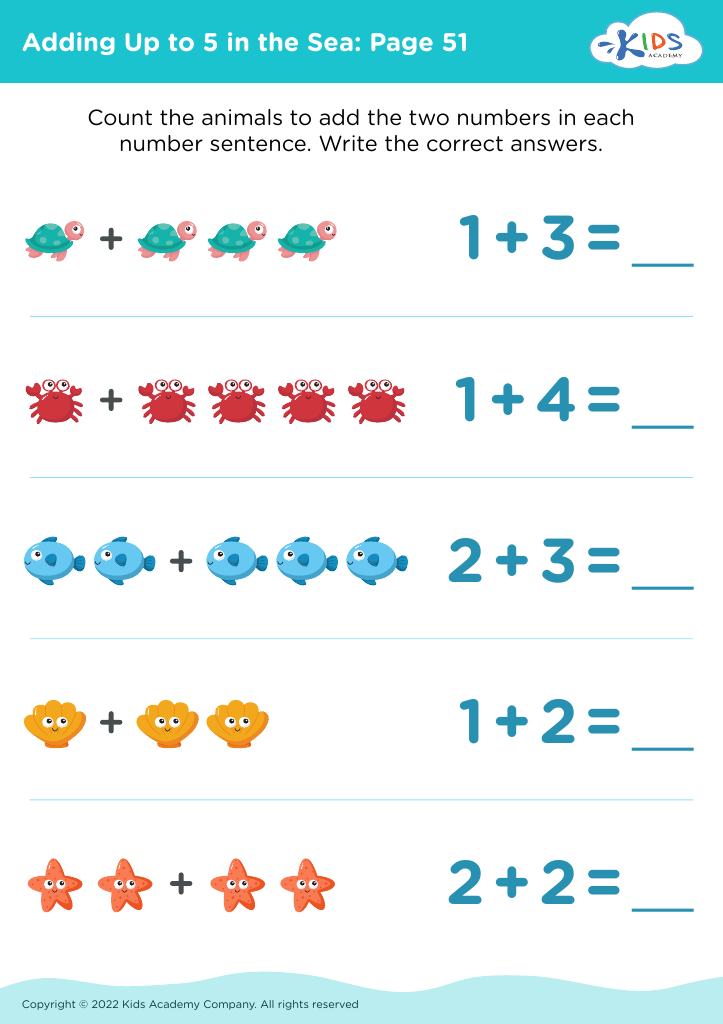
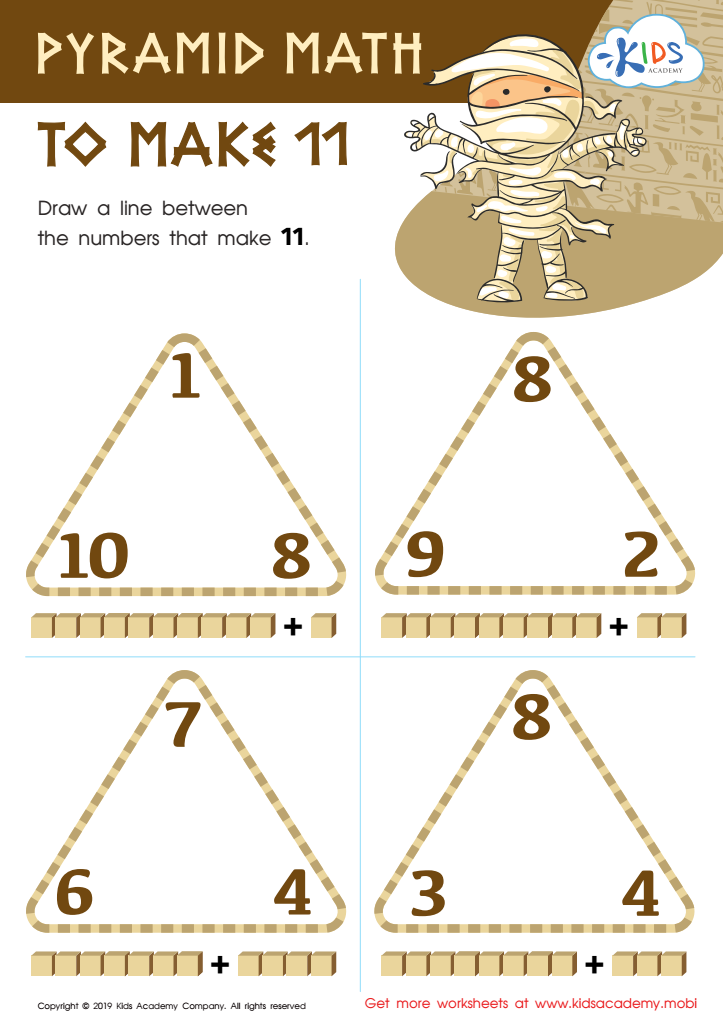
Pyramid Math to Make 11 Worksheet
 Assign to My Students






Understanding number relationships is crucial for children ages 3-5 as it lays the foundation for their mathematical development. At this early stage, children begin to explore basic concepts like quantities, comparisons, and simple operations. Grasping these relationships enhances their problem-solving skills and fosters critical thinking. When parents and teachers emphasize number relationships, children learn to recognize patterns, make connections between numbers, and understand their significance in everyday contexts.
Engaging with number relationships helps develop a positive attitude toward math, making it a less intimidating subject as they grow. This positive foundation translates into better performance in later years, reducing math anxiety and improving overall academic success. Moreover, early exposure can ignite a lifelong interest in math, equipping children with important skills in logic and reasoning that are applicable in various real-world situations.
Additionally, number relationships support cognitive development, enhancing language skills as children learn to articulate their thoughts about numbers. Parents and teachers can facilitate this understanding through fun, hands-on activities that involve counting, sorting, and comparing. By making math enjoyable, caregivers play a vital role in promoting a strong, confident, and capable young learner ready to tackle future challenges in mathematics and beyond.








