
Underwater animal identification Math Worksheets for Ages 3-5
3 filtered results
Difficulty Level
Grade
Age
-
From - To
Subject
Activity
Standards
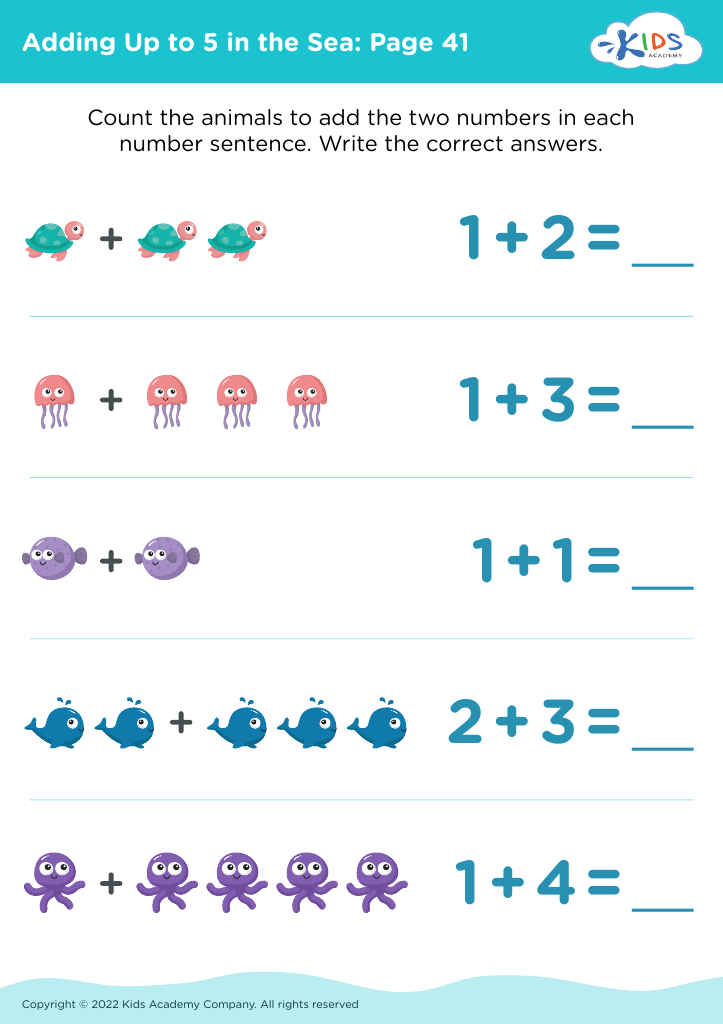
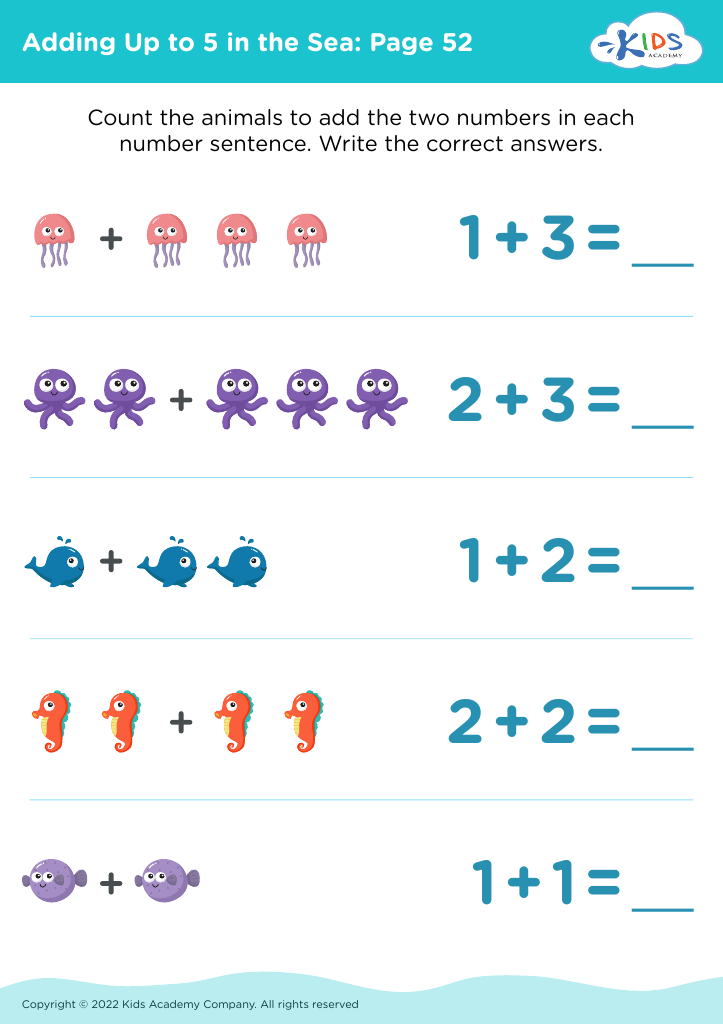
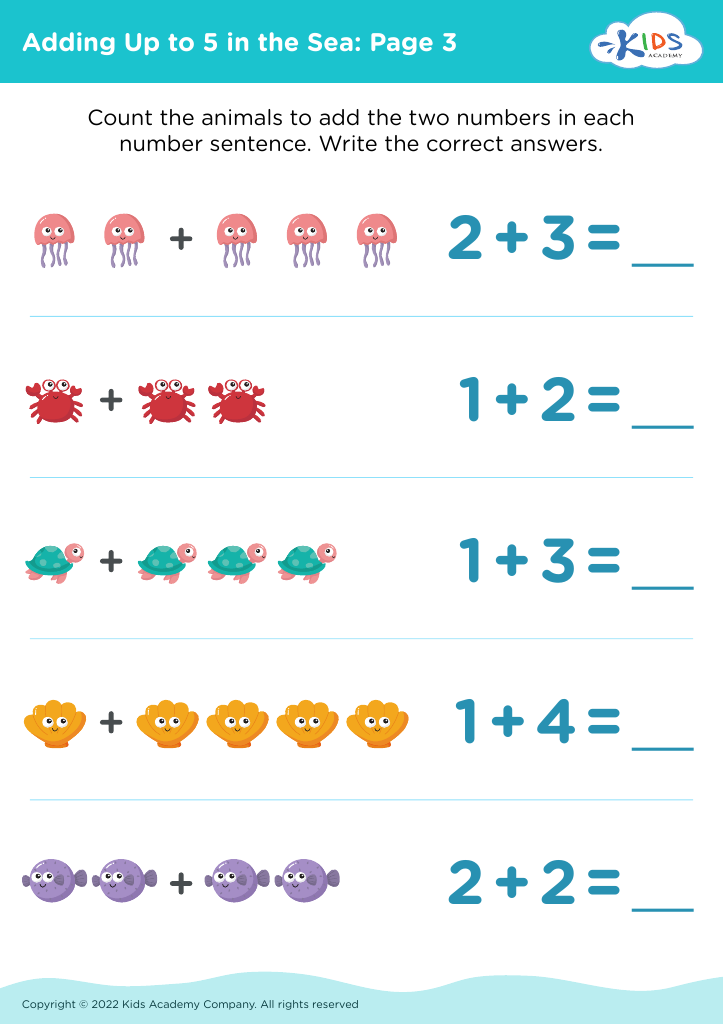
Explore the fascinating world beneath the waves with our "Underwater Animal Identification Math Worksheets" designed for young learners aged 3-5. These engaging worksheets combine underwater animal themes with essential math skills, helping kids develop their number recognition, counting, and basic problem-solving abilities in a playful manner. Each worksheet encourages curiosity about marine life while reinforcing early math concepts through fun activities like matching and counting colorful sea creatures. Perfect for home or classroom use, our worksheets are an ideal way to introduce your little ones to both math and the wonders of the ocean. Dive into learning today!
Favorites
With answer key
Interactive
Join Kids Academy for Free
Who is primarily going to use this learning content?







.jpg)
Underwater animal identification math for ages 3-5 is crucial because it intertwines early math skills with an engaging, real-world context that captures children's natural curiosity about the ocean. At this age, children are eager to explore and learn about the world around them. By introducing them to the vibrant life under the sea, we tap into their imaginations while simultaneously fostering essential skills.
Identifying underwater animals encourages cognitive development as children classify and sort species based on attributes like color, size, and shape—laying the groundwork for understanding categories and terminology in mathematics. Additionally, integrating counting activities related to underwater animals enhances fundamental numeracy skills. Simple exercises like counting fish or comparing groups of animals enrich a child's foundation in arithmetic concepts.
Moreover, this method promotes environmental awareness. Learning about marine life nurtures a sense of responsibility and curiosity about nature, encouraging children to become guardians of our planet. Therefore, parents and teachers should embrace underwater animal identification math as a multifaceted educational approach, blending fun, engagement, and valuable skills that will benefit children's overall development. Recognizing that such playful learning experiences form the backbone of effective early education, investing time in these activities is essential.








