Comparing object weights Measurement Worksheets for Ages 3-5
3 filtered results
-
From - To
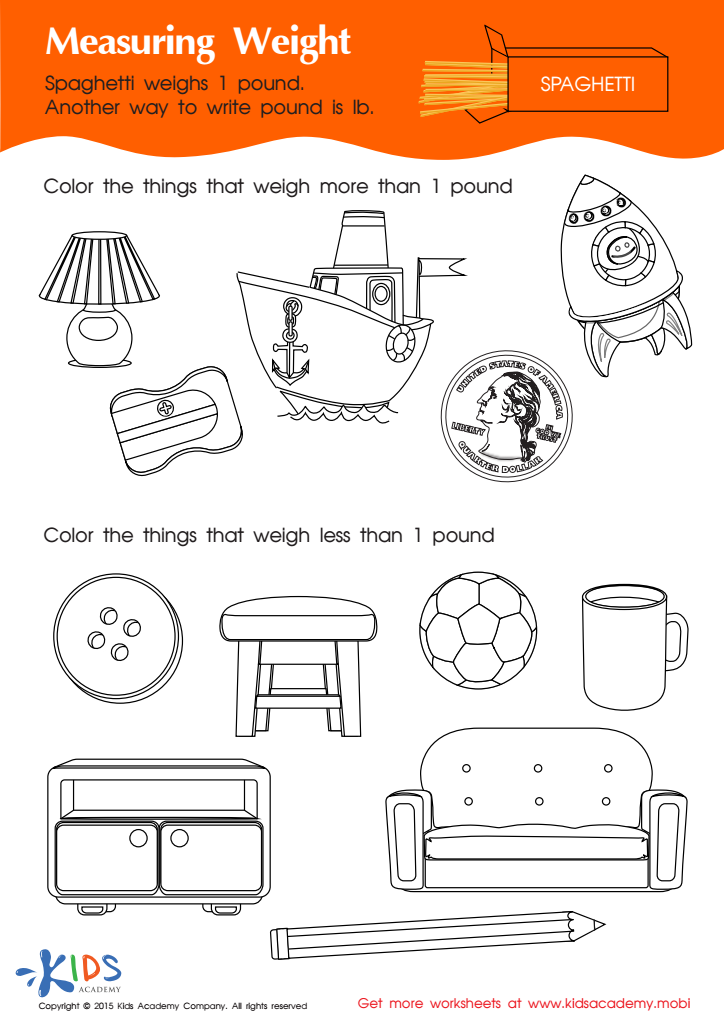
Discover our engaging "Comparing Object Weights Measurement Worksheets" designed specifically for children aged 3-5. These interactive worksheets encourage young learners to explore the concept of weight through hands-on activities. Children will enjoy comparing different objects, identifying their weights, and developing essential measurement skills. Our age-appropriate content fosters critical thinking and helps build a foundation in math concepts while ensuring fun and creativity to keep kids motivated. With colorful illustrations and user-friendly formats, these worksheets are perfect for parents and educators looking to enhance preschool learning experiences. Download now to support your child's journey in understanding weights and measurements!
 Assign to My Students
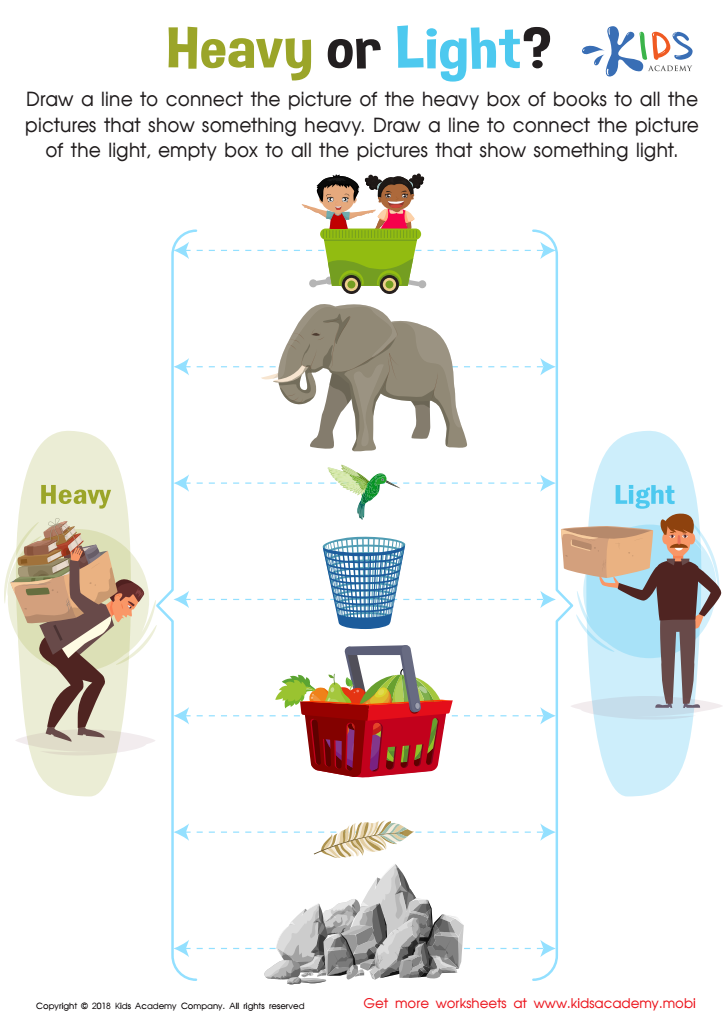
Heavy or Light? Worksheet
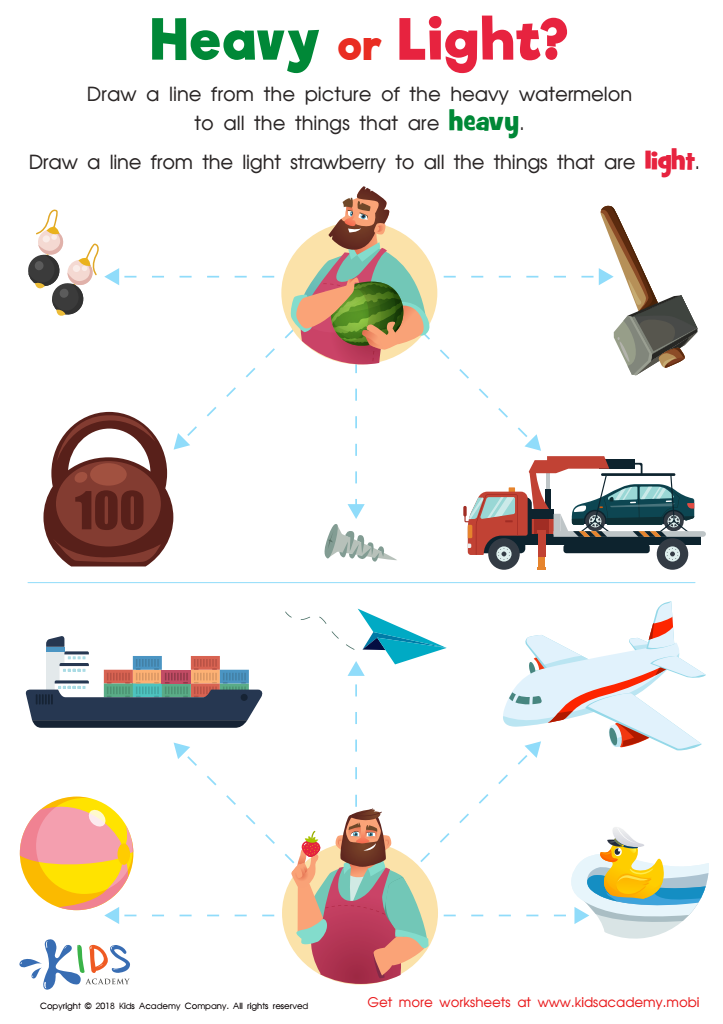
Heavy or Light? Worksheet








Comparing object weights is a fundamental skill that lays the groundwork for early mathematical understanding in young children aged 3-5. At this stage, children are naturally curious about the world around them, making it an ideal time to introduce concepts of weight and measurement through engaging activities. Parents and teachers should care about this topic because it enhances crucial cognitive, physical, and social-emotional development.
Firstly, engaging in weight comparison helps develop critical thinking and problem-solving skills as children learn to predict, observe, and analyze the properties of different objects. By using hands-on activities, such as weighing toys or food items, they also refine their motor skills and coordination.
Moreover, comparing weights fosters language development as children learn and use vocabulary related to heaviness, lightness, and measurement. It's a perfect opportunity for rich dialogue between adults and children.
Finally, collaborative activities involving weight comparisons promote teamwork, communication, and social interaction among peers, helping them build foundational social skills. In summary, prioritizing weight comparison activities can create a solid basis for early numeracy, boosts various areas of development, and ultimately prepares young children for more complex mathematical concepts in later years.








