Subtraction skills Subtraction Worksheets for Ages 3-5
4 filtered results
-
From - To
Welcome to our Subtraction Skills Worksheets, specifically designed for young learners aged 3-5! These engaging and colorful resources help children grasp the foundational concept of subtraction in a fun and interactive way. Through a variety of activities, including visual aids and hands-on exercises, kids can practice subtracting numbers, enhancing their problem-solving skills while boosting their confidence in math. Our worksheets cater to different learning styles and ensure that little ones stay motivated as they learn. Perfect for both classroom and home use, these subtraction worksheets are a fantastic tool to support early math education. Explore our collection and start your child's subtraction journey today!
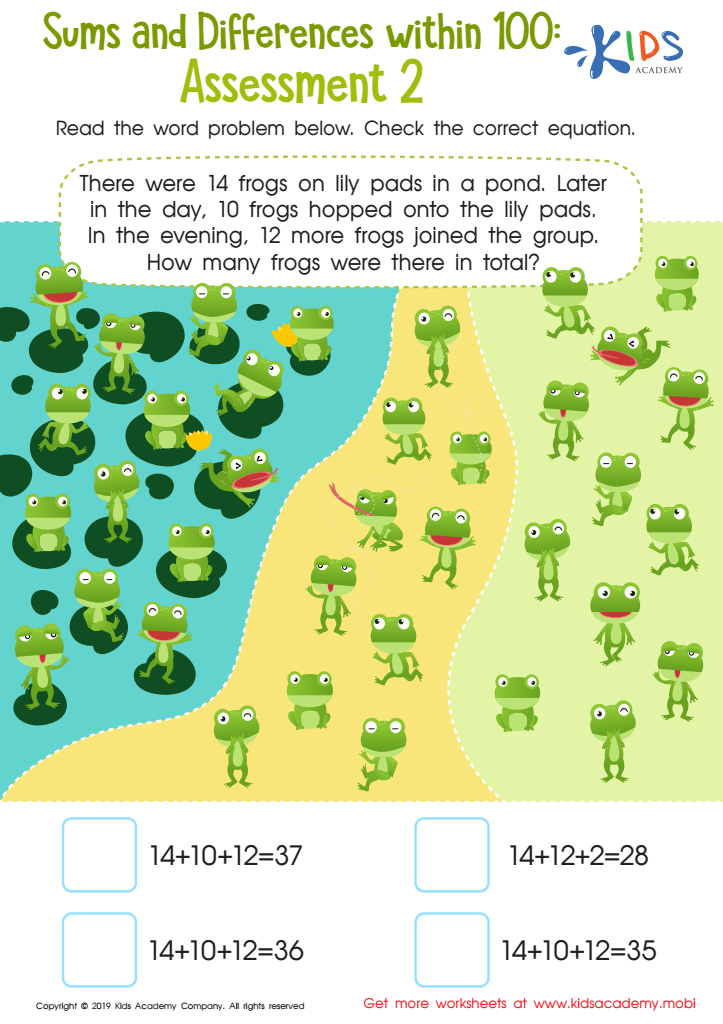
Sums and Differences Within 1 - Assessment 2 Worksheet
 Assign to My Students
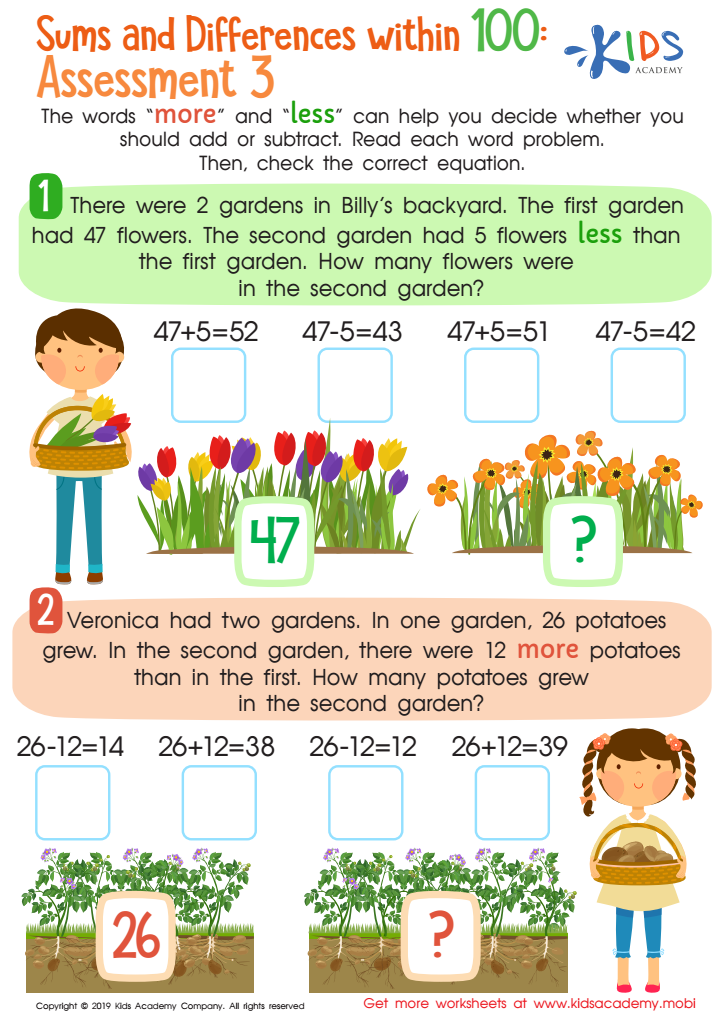
Sums and Differences Within 1 - Assessment 3 Worksheet
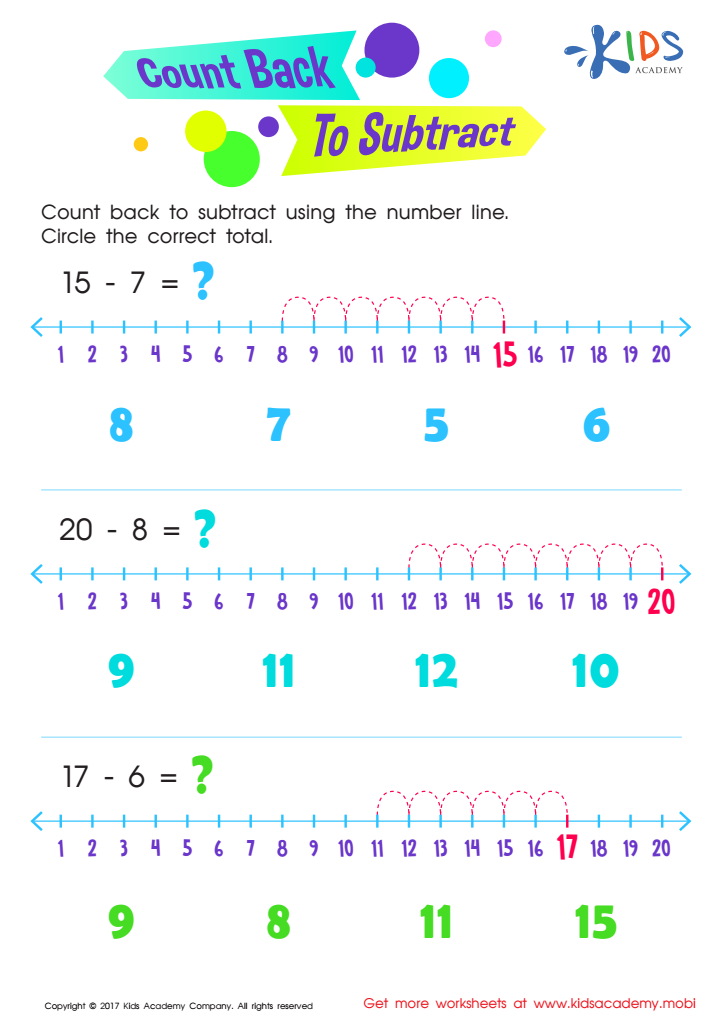
Count Back to Subtract Substraction Worksheet
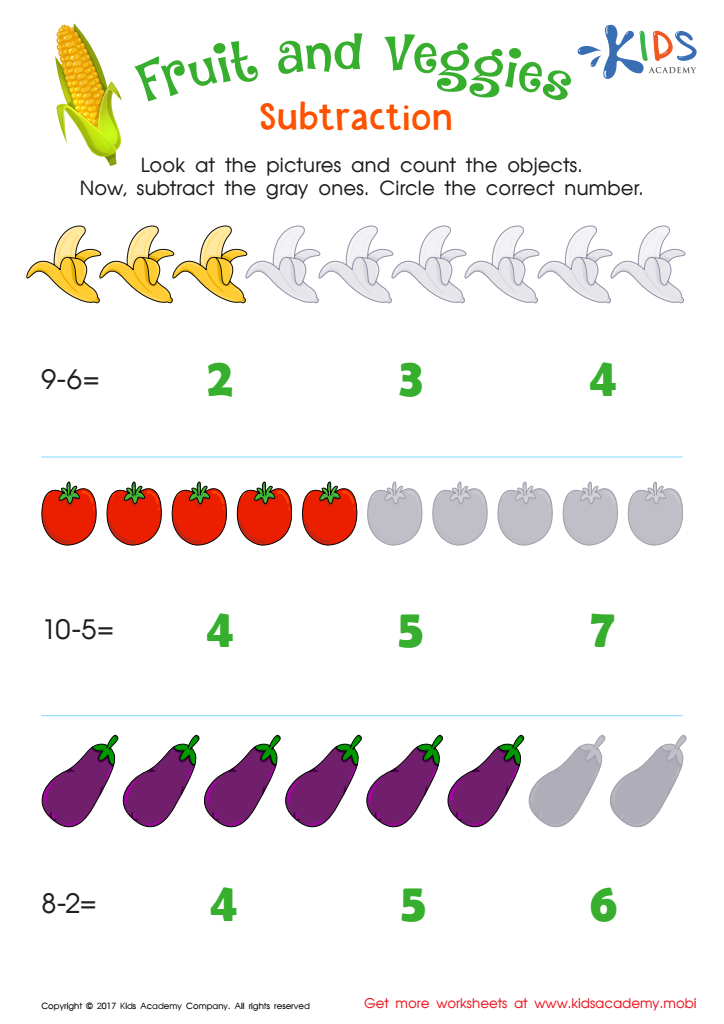
Fruit and Veggies Subtraction Worksheet








Subtraction skills are fundamental for children aged 3-5, laying the groundwork for future mathematical understanding. At this early stage, developing these skills fosters cognitive growth, critical thinking, and problem-solving abilities. When children learn to subtract, they gain a deeper understanding of numbers and how they interact with one another, promoting numeracy confidence.
Parents and teachers should care about subtraction skills because early mathematical competence significantly impacts a child's overall academic performance. Subtraction exercises help children understand the concept of ‘taking away’ and the inverse relationships between addition and subtraction, cultivating a love for learning and intellectual curiosity. Engaging kids in playful, hands-on activities involving subtraction—like counting toys or sharing snacks—makes learning enjoyable and relatable.
Additionally, strong subtraction skills can help children navigate practical life situations, such as managing their allowance or understanding quantities during daily routines. Early intervention and support can bridge learning gaps, ensuring that all children are prepared for more advanced mathematical concepts as they progress in their education. Overall, prioritizing subtraction skills in early childhood is not only essential for immediate learning but also for long-term academic success.








