
Color recognition Building Vocabulary Worksheets for Ages 3-5
11 filtered results
Difficulty Level
Grade
Age
-
From - To
Subject
Activity
Standards
Our "Color Recognition Building Vocabulary Worksheets for Ages 3-5" are designed to enhance early literacy and color-identification skills in young learners. These engaging and interactive sheets blend vibrant visual aids with fun activities, encouraging children to recognize and name colors while expanding their vocabulary. Ideal for children aged 3-5, these worksheets help develop essential reading and cognitive skills by combining color recognition with language development. Perfect for both classroom and home settings, our printable worksheets are an excellent resource for fostering a love for learning in your preschooler. Start your child’s educational journey with fun, colorful activities today!
Favorites
With answer key
Interactive
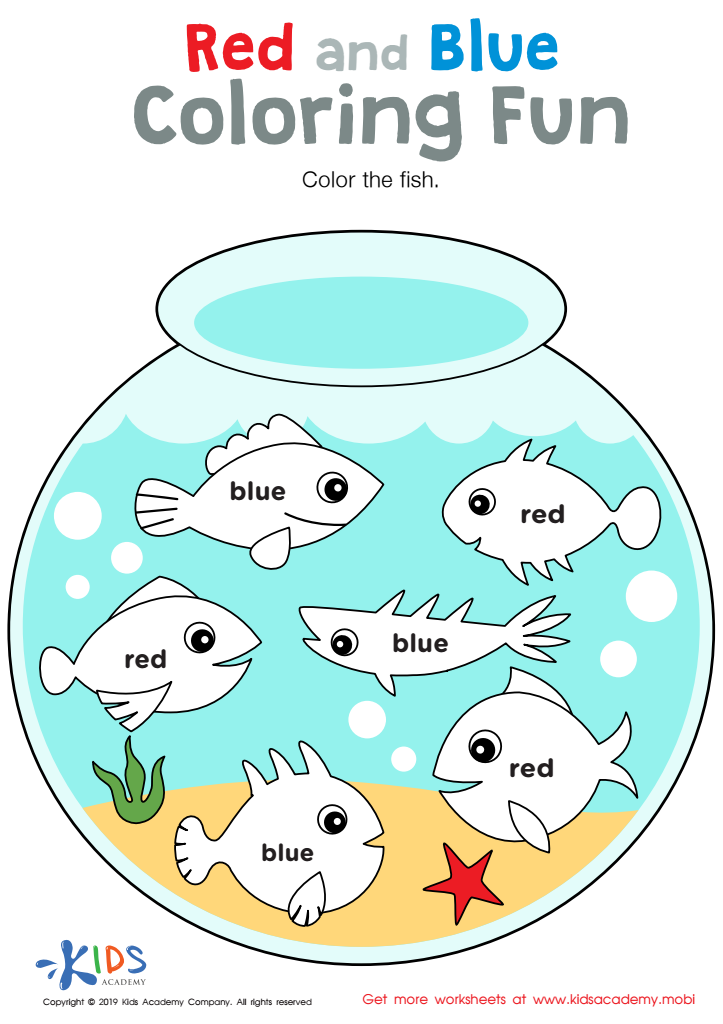
Red and Blue Coloring Fun Worksheet
Kids know colors like red and blue. But can they read these words? Give them practice with this fun fish bowl coloring sheet. They'll look at the fish, then color them the corresponding hue. Home or classroom, they'll be sure to get a kick out of learning colors in this creative way!
Download (PDF)
 Assign to My Students
Assign to My Students
Red and Blue Coloring Fun Worksheet
Worksheet











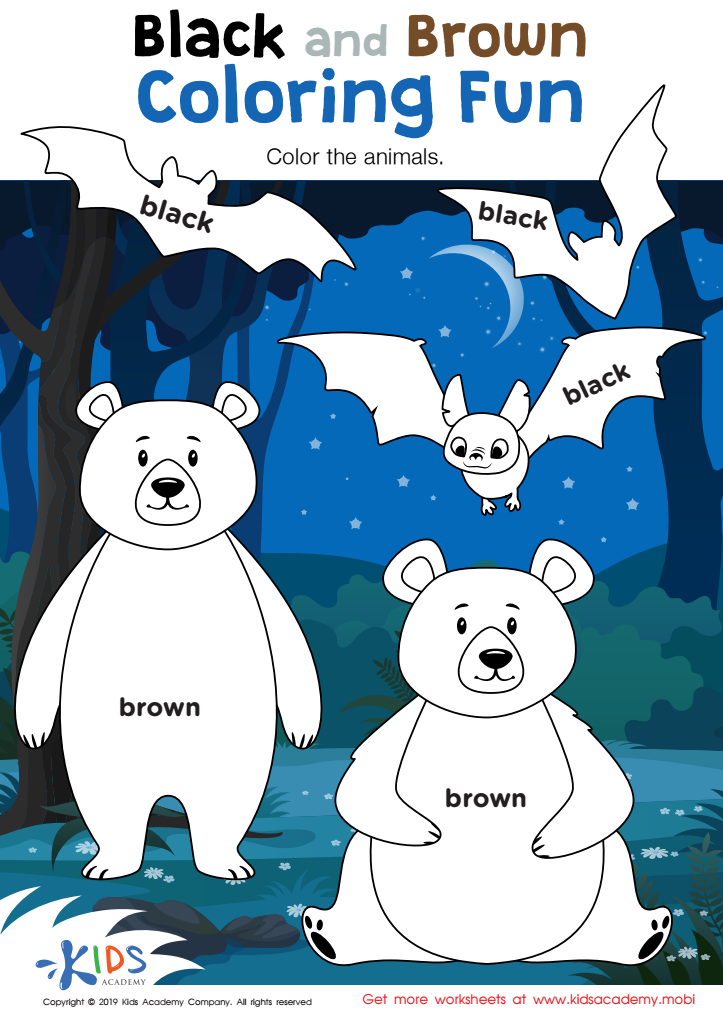
Black and Brown Coloring Fun Worksheet
Young readers can learn the difference between black and brown with this free, downloadable worksheet. The page features coloring activities: students color bears brown and bats black. This helps children learn to read color words by sight, as they are among the first reading experiences for young ones. But black and brown can be tricky as they start with the same consonant sound. This worksheet will help clear up any confusion.
Download (PDF)
Assign to My Students
Assign to My Students
Black and Brown Coloring Fun Worksheet
Worksheet
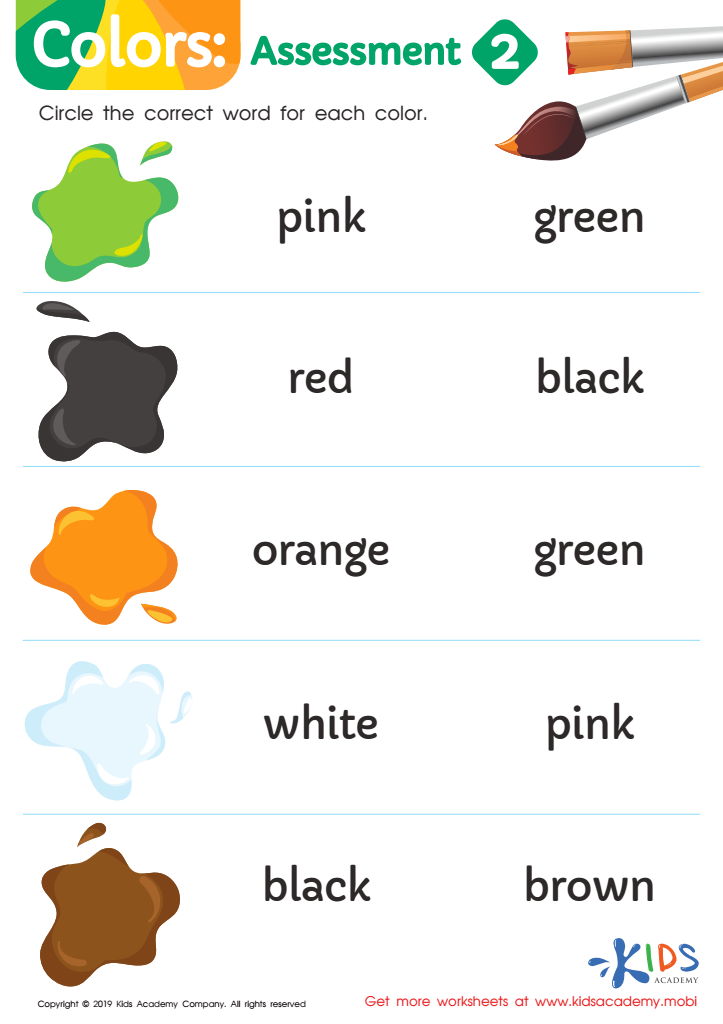
Colors: Assessment 2 Worksheet
Teach color words to young students to build fluency and confidence. Check knowledge with an assessment worksheet. Have students look at paint samples and circle the correct color word. This assessment helps parents and teachers measure a child’s accuracy when reading color words.
Colors: Assessment 2 Worksheet
Worksheet
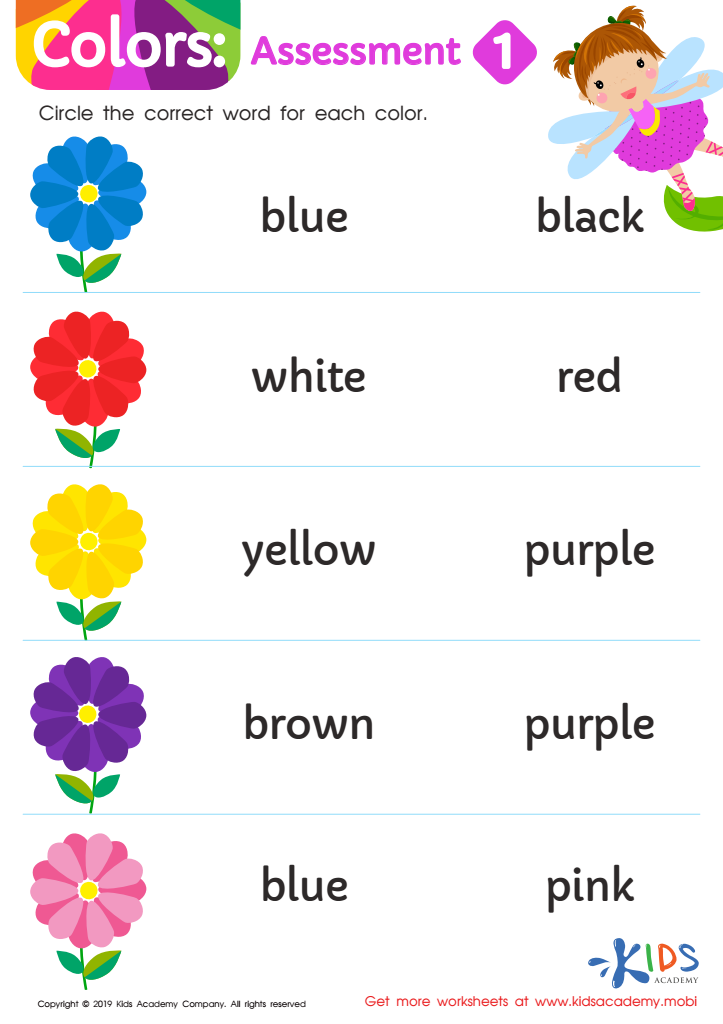
Colors: Assessment 1 Worksheet
Children can decode unfamiliar words by sounding them out or by recognizing sight words. Color words are an important part of sight word knowledge, so add them to your child's list! This color word worksheet is an effective assessment tool for teachers to use with preschool and kindergarten students. It checks their knowledge of five color words - they simply look at the flower and circle the appropriate color word!
Colors: Assessment 1 Worksheet
Worksheet
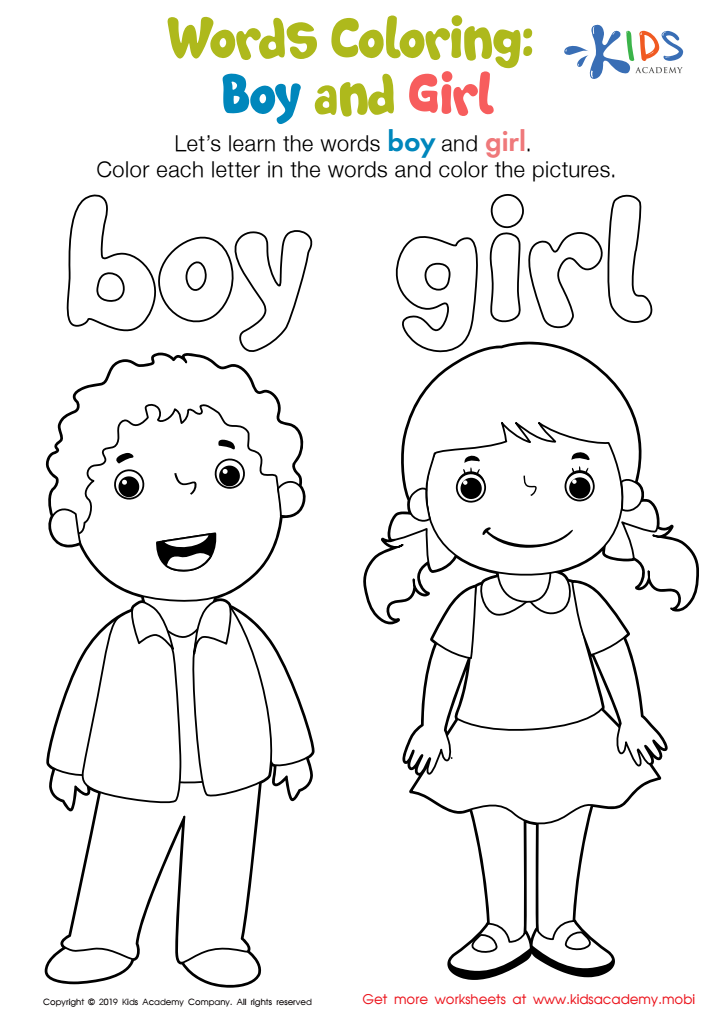
Boy and Girl Words Coloring Worksheet
Help your students build their sight word vocabulary! Early readers may not be able to sound out all words, so this worksheet teaches them to read two important sight words: boy and girl. They will color the letters and a picture of each, making it a fun and educational way to learn. Download the PDF now.
Download (PDF)
Assign to My Students
Assign to My Students
Boy and Girl Words Coloring Worksheet
Worksheet
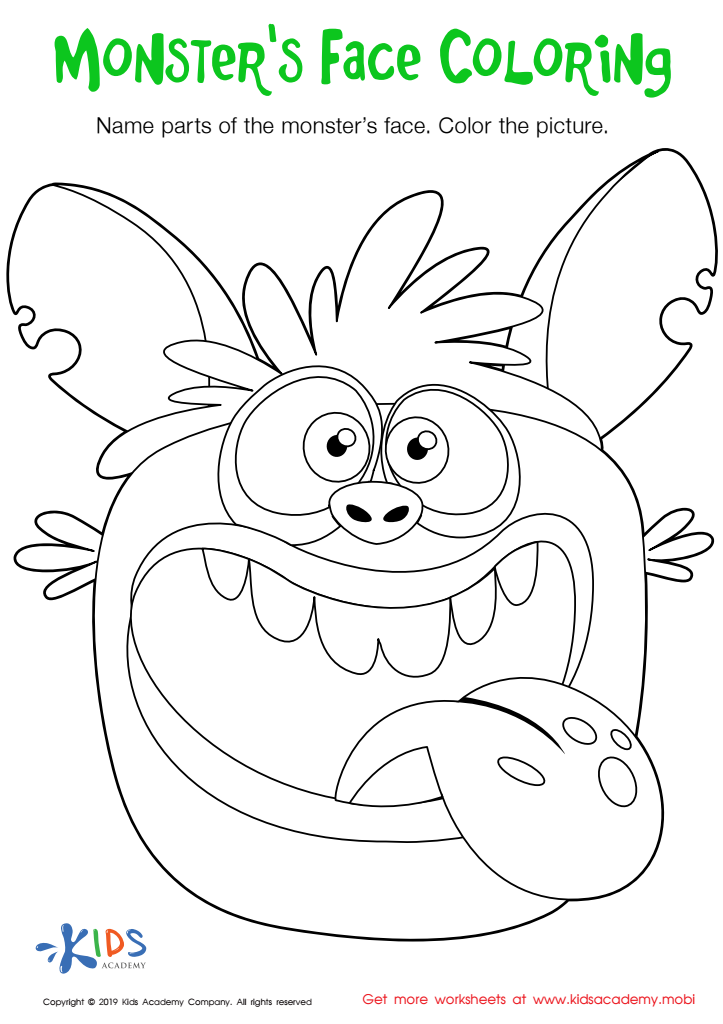
Monster's Face Coloring Worksheet
Have your students practice identifying face parts with this fun worksheet. Teach them how to say eyes, nose, mouth, and ears. Help them master these words so they can express themselves better. And have some fun with the monster coloring page too!
Download (PDF)
Assign to My Students
Assign to My Students
Monster's Face Coloring Worksheet
Worksheet
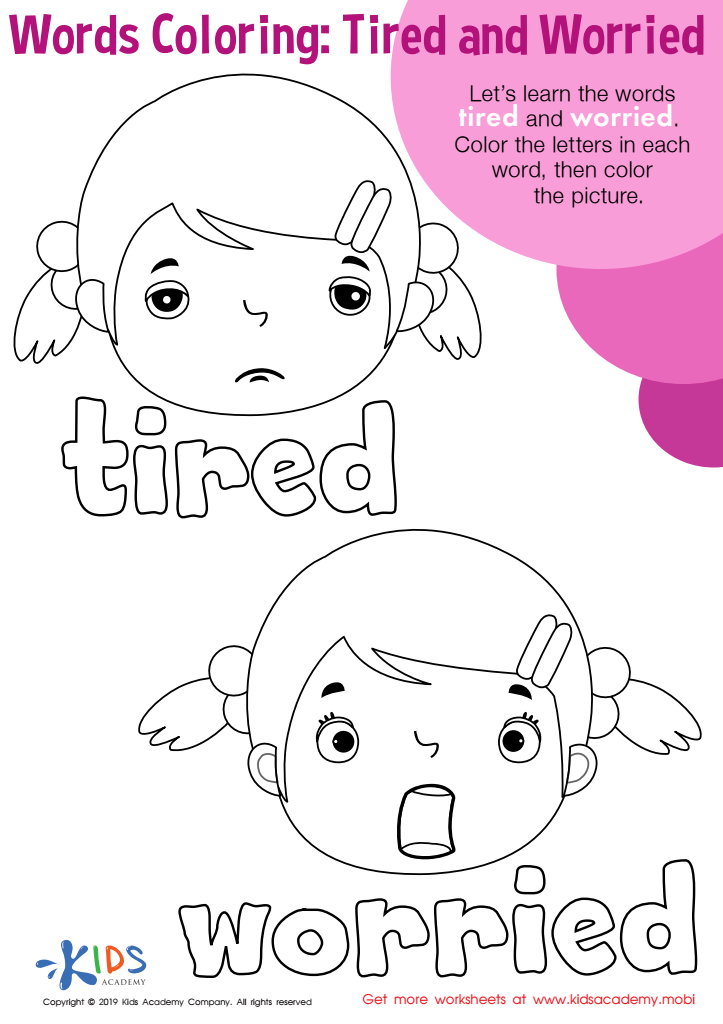
Tired and Worried Words Coloring Worksheet
Teach your students about "tired" and "worried" with this worksheet. Have them read and color the emotion words, then color the pictures of a tired girl and a worried girl. Discuss what makes them tired and worried. Expand their vocabulary with this fun coloring activity!
Download (PDF)
Assign to My Students
Assign to My Students
Tired and Worried Words Coloring Worksheet
Worksheet
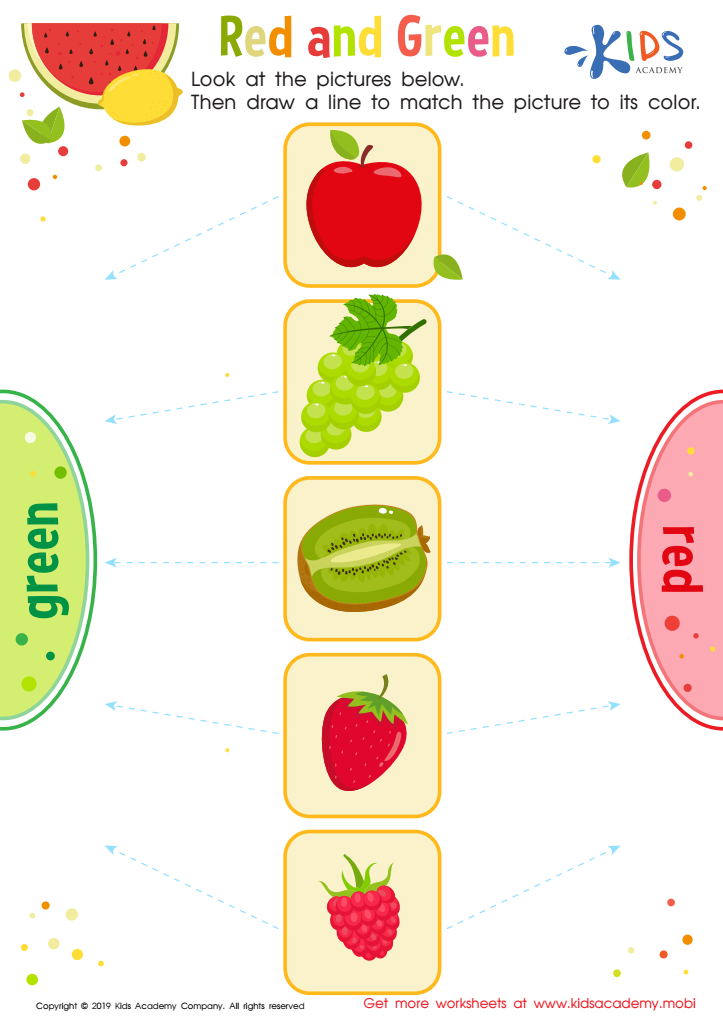
Red and Green Worksheet
Engage your kids in fun exercises and colorful pictures to help build their vocabulary. Start with a colorful worksheet - can they identify the colors? Guide them to draw a line from each picture in the middle to the correct color. It's a great way to boost their vocabulary and have fun at the same time!
Red and Green Worksheet
Worksheet
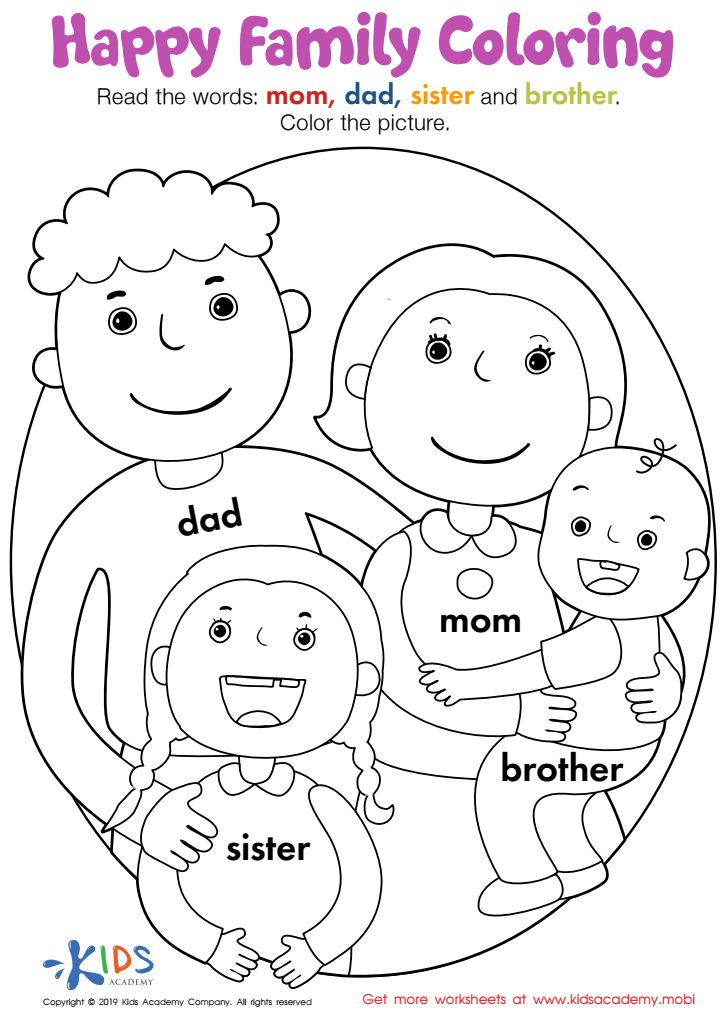
Happy Family Coloring Worksheet
Help your students gain confidence in family vocabulary with this worksheet. Labelled images of a family (dad, mom, sister, brother) are featured, along with an accompanying activity to colour in the picture. Your students will feel a sense of accomplishment after reading and completing the printable.
Download (PDF)
Assign to My Students
Assign to My Students
Happy Family Coloring Worksheet
Worksheet
Join Kids Academy for Free
Who is primarily going to use this learning content?






.jpg)

Color recognition and vocabulary building are crucial developmental milestones for children aged 3-5. For one, identifying and naming colors enhances cognitive skills and problem-solving abilities, as children learn to categorize and differentiate objects based on color. This foundational skill is linked to higher-order thinking, aiding in tasks like sorting, patterning, and sequencing, which are vital for future academic success.
Building vocabulary at this age is equally essential. A robust vocabulary empowers children to express their thoughts, emotions, and needs more accurately, facilitating more effective communication with peers and adults. When children describe colors, they engage in meaningful verbal exchanges that enrich their language skills. This activity boosts their ability to comprehend and follow instructions, an important aspect of learning in classroom settings.
Moreover, incorporating color recognition into daily activities can make learning fun and stimulating. By playing with colorful toys, engaging in art projects, or reading vividly illustrated books, children develop both fine motor skills and creativity. This joyful approach to learning fosters a positive attitude toward education.
Parents and teachers should be invested in these activities because a strong grasp of color recognition and vocabulary lays a solid educational foundation, ensuring children are well-prepared for subsequent learning challenges and opportunities.








