
Letter recognition Building Vocabulary Worksheets for Ages 3-5
5 filtered results
Difficulty Level
Grade
Age
-
From - To
Subject
Activity
Standards
Discover our Letter Recognition Building Vocabulary Worksheets, designed for ages 3-5 to spark a love for reading! These engaging, printable activities help young learners identify and differentiate letters while expanding their vocabulary. Perfect for early learning, each worksheet combines fun exercises with visual aids to promote letter recognition and phonetic awareness. Your child will enjoy playful tasks like tracing, matching, and coloring, all aimed at building a strong foundation for future reading success. Start your child’s literacy journey today with these enriching and educational resources from Kids Academy, fostering confident and capable young readers.
Favorites
With answer key
Interactive
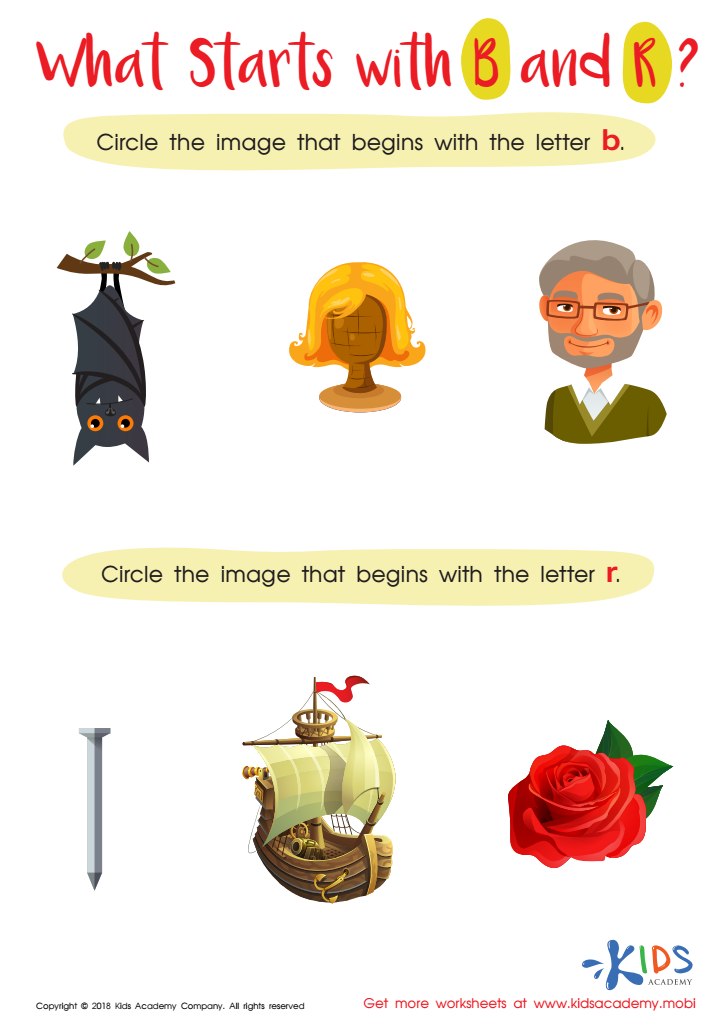
What Starts with B and R? Worksheet
Download this worksheet to help young readers practice visual and motor skills! They'll enjoy matching pictures with "B" and "R" letters while tracing the images. Bright and colorful, this engaging activity will help kids differentiate between words and have fun doing it.
 Assign to My Students
What Starts with B and R? Worksheet
Worksheet











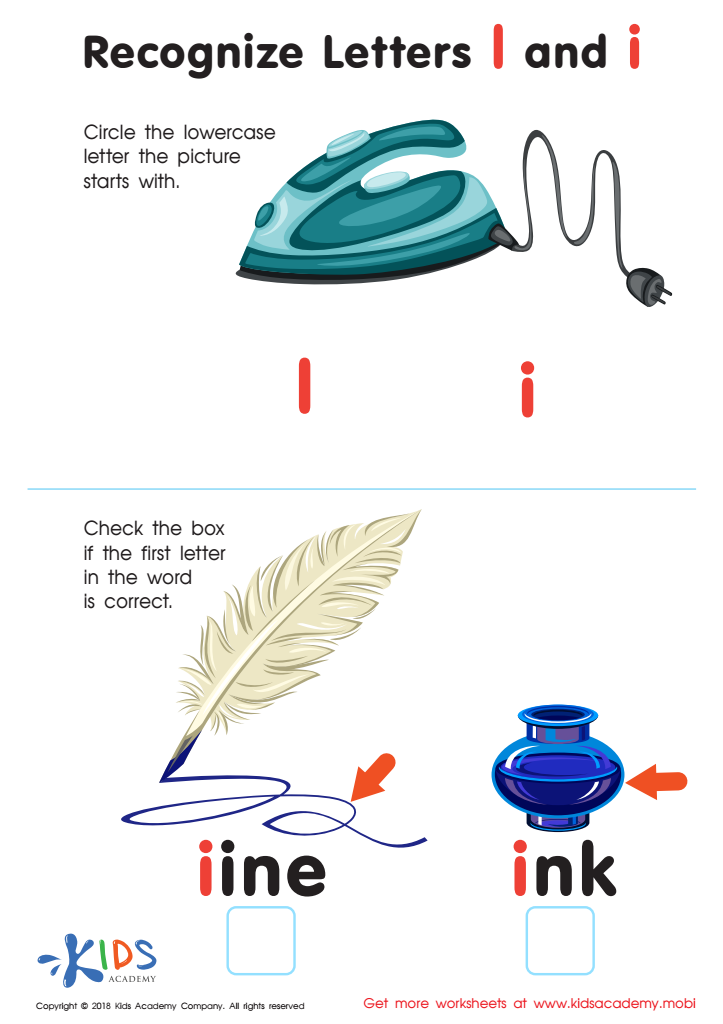
Recognize Letters l and i Worksheet
Help your child become familiar with uppercase and lowercase letters. Have them look at the pictures in the worksheet and circle the lowercase letter the picture starts with. For example: which one is the lowercase "i", the capital "I" or the small "i"?
Recognize Letters l and i Worksheet
Worksheet
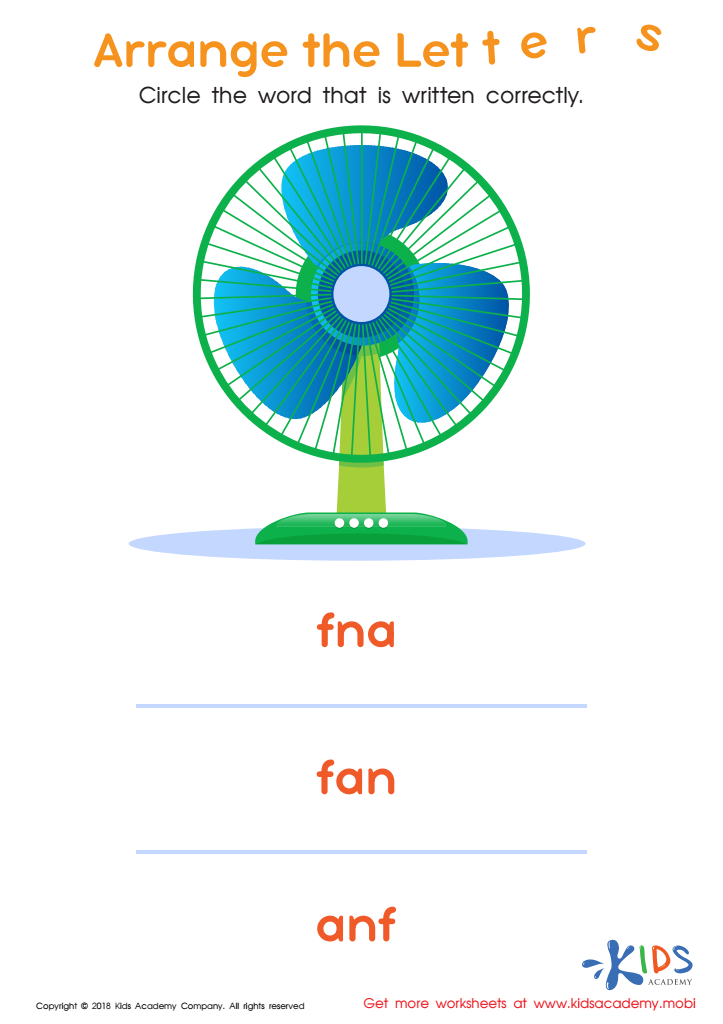
Arrange the Letters Worksheet
Test your kids' spelling skills with this worksheet! Show them the picture and ask what it stands for. Then, have them choose the correct spelling from the options given. Check their answer by circling the right one.
Arrange the Letters Worksheet
Worksheet
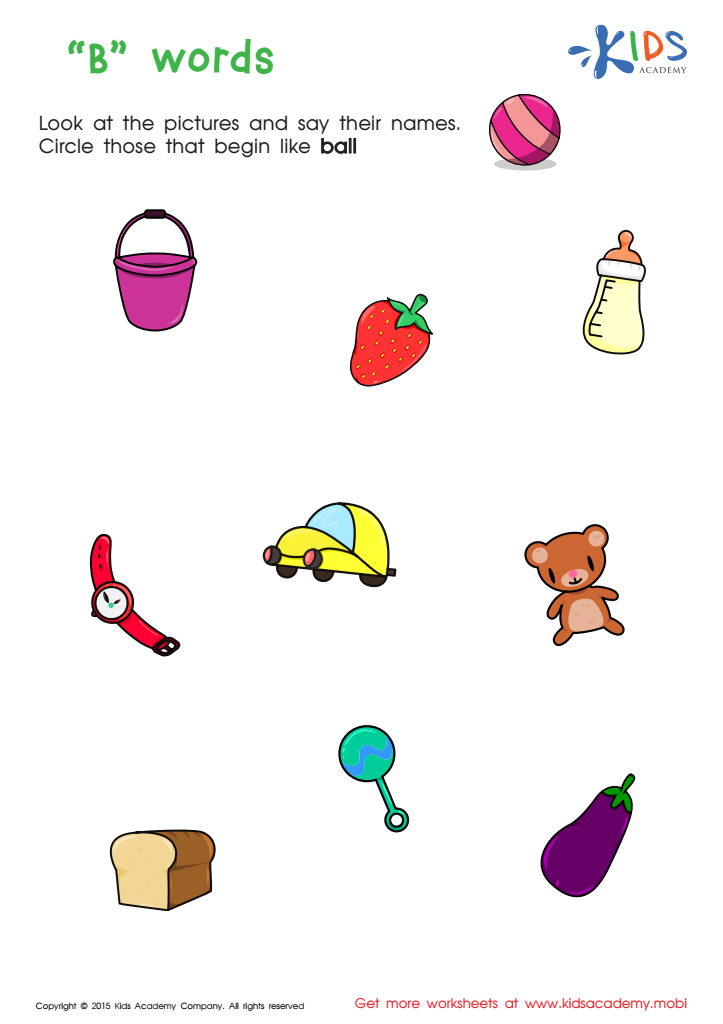
First Words Worksheet
Want to help your preschooler learn to read and write? Start with this 'B' words printable worksheet. It will help your child match pictures to the letters they know, sound out words, and build literacy. Once they understand the concept, they can start sounding out words and building reading skills.
First Words Worksheet
Worksheet
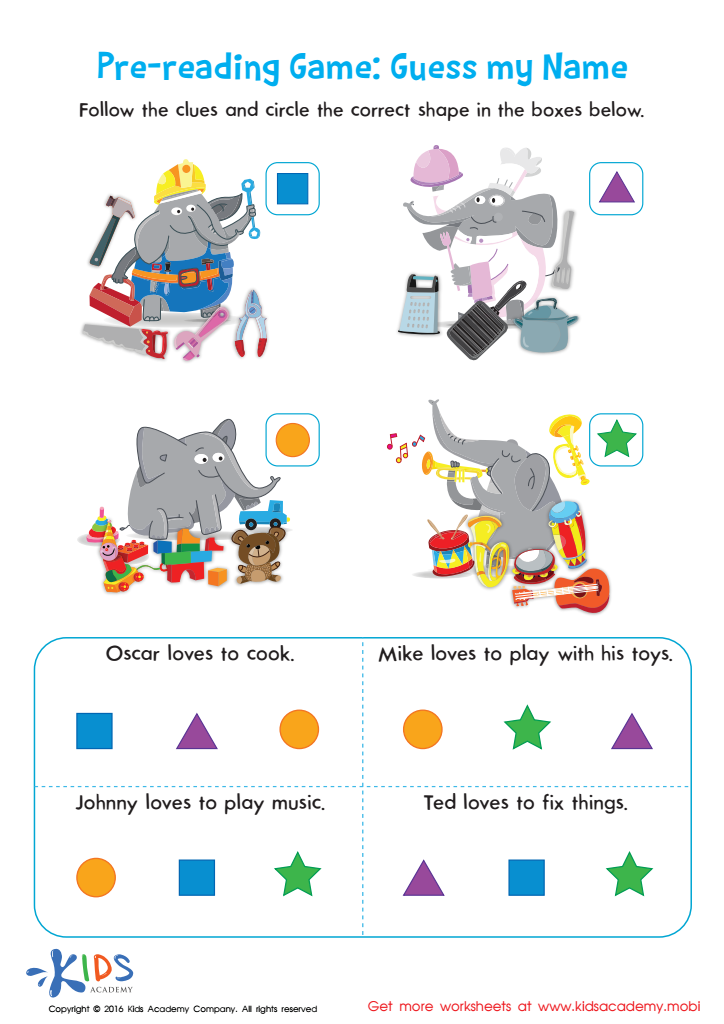
Pre Reading Worksheet Guess My Name
Guess My Name is a fun way to practice inference skills.
Guess My Name is a fun pre-reading game to help your child practice drawing inferences from clues. With colorful illustrations, they'll use clues to match each elephant with its sentence and sharpen their inference skills.
Pre Reading Worksheet Guess My Name
Worksheet
Join Kids Academy for Free
Who is primarily going to use this learning content?







.jpg)
Letter recognition and vocabulary building are foundational skills that set the stage for future reading success and overall academic achievement. For children ages 3-5, these skills are especially crucial as they form the bedrock upon which more complex literacy and language abilities are developed.
Firstly, letter recognition is integral to early literacy. It enables children to understand that letters are symbols representing sounds and words. This understanding is the first step toward decoding, which is essential for reading. Familiarity with letters also assists children in recognizing and reading common sight words, giving them confidence and a sense of accomplishment.
Secondly, vocabulary building at this age boosts not only verbal communication but also cognitive development. A rich vocabulary helps children express their thoughts, emotions, and questions more clearly and effectively. Furthermore, it contributes to better listening and reading comprehension skills, which are critical for academic success in later grades.
Parents and teachers who emphasize letter recognition and vocabulary building provide children with a head start in school. Engaging in playful activities like reading aloud, singing alphabet songs, or playing letter-matching games makes learning enjoyable and effective. Early investment in these skills fosters a lifelong love for reading and learning, setting children on a path toward academic and personal growth.








