Color recognition Reading Worksheets for Ages 3-5 - Page 2
25 filtered results
-
From - To
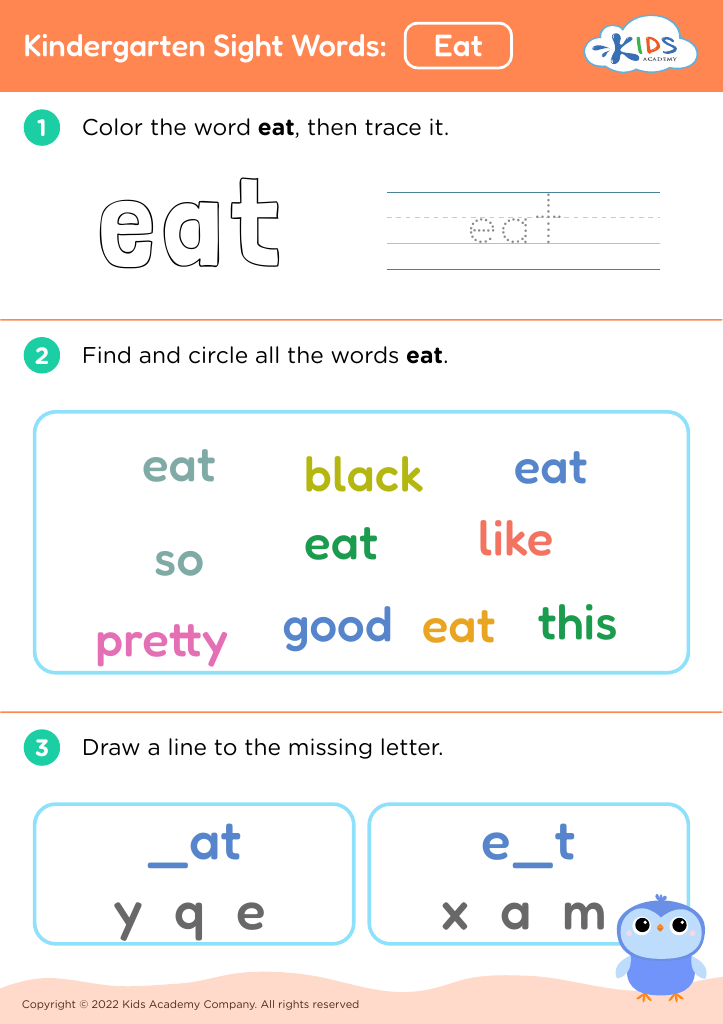








Color recognition is a fundamental skill that plays a crucial role in the development of young children aged 3-5. For parents and teachers, prioritizing color recognition paves the way for enhanced cognitive growth, language development, and learning abilities. Understanding colors helps children to categorize and differentiate objects, fostering critical thinking and observational skills.
Moreover, when children can recognize and name colors, it builds their vocabulary. This expanding language skill not only enhances communication but also aids in their confidence when expressing ideas and engaging in conversations. Several educational activities centered around colors, such as storytelling, arts and crafts, and games, provide joyful learning experiences that cultivate creativity.
Color recognition is also closely tied to reading readiness. Letters and words often appear in various colors, so children who can identify colors are more likely to engage with materials and recognize patterns in reading. Additionally, colors can help children develop emotional connections to stories and characters.
Incorporating color recognition into daily activities creates a rich, engaging environment where children can thrive. By nurturing this foundational skill, parents and teachers set the stage for lifelong learning and curiosity about the world around them.








