Improve counting skills Reading Worksheets for Ages 3-5
3 filtered results
-
From - To
Discover our engaging "Improve Counting Skills Reading Worksheets for Ages 3-5" designed to blend fun and learning seamlessly. These printable resources from Kids Academy foster early math skills through entertaining and interactive activities. Perfect for preschoolers, each worksheet helps children recognize numbers, practice counting, and build foundational math skills while enhancing their literacy and fine motor abilities. Incorporate these worksheets into daily routines to support your child's developing counting proficiency. Boost your preschooler's confidence and prepare them for academic success with our expertly crafted resources. Visit Kids Academy for a treasure trove of educational tools!
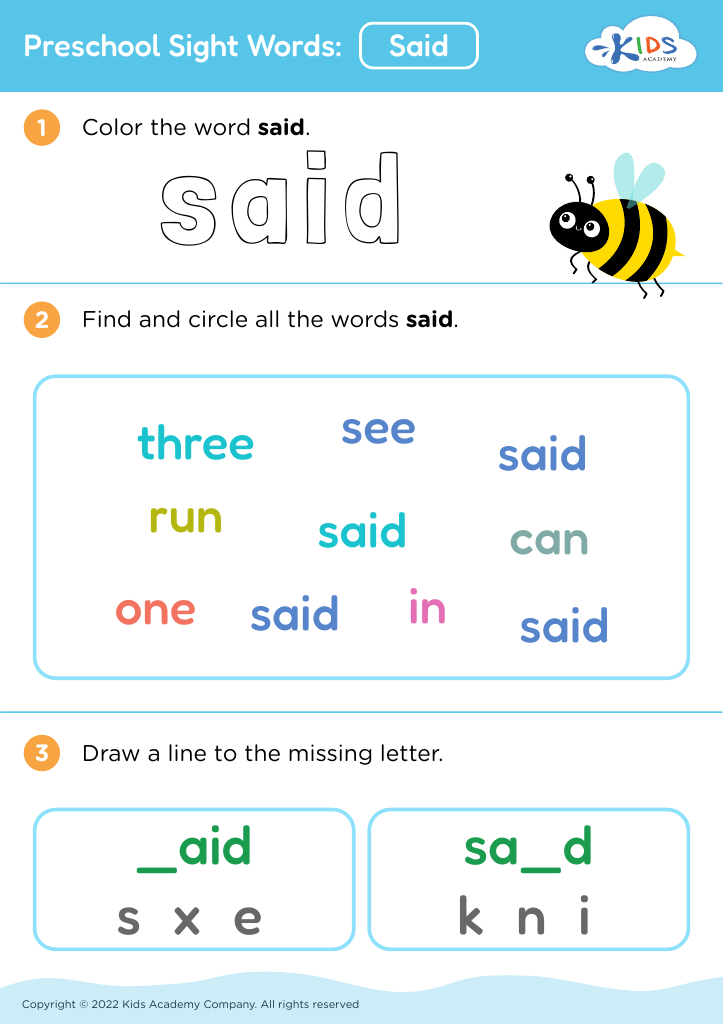
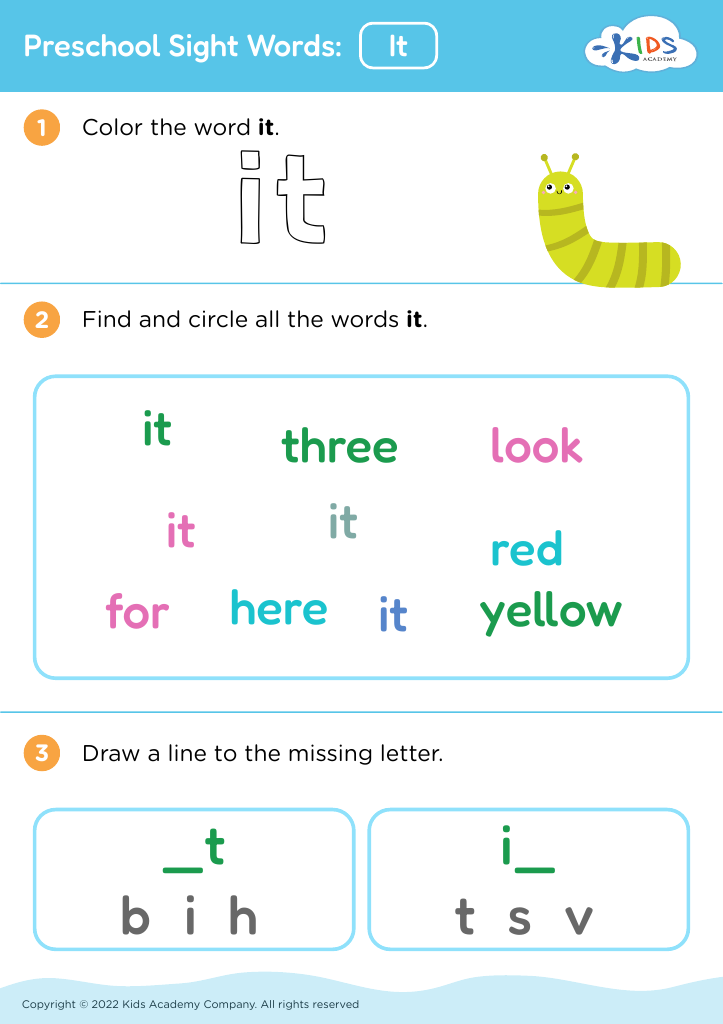
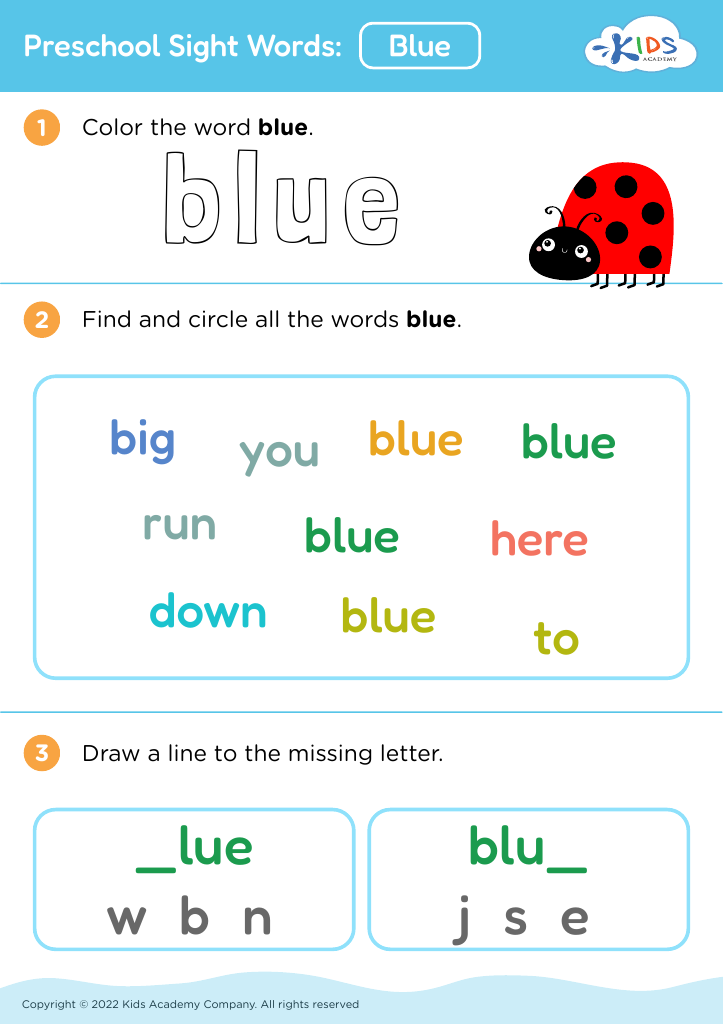








Reading books that focus on counting skills for children aged 3-5 is crucial for their early development. First, numeracy is a foundational cognitive skill. By interacting with counting books, children begin to grasp the basic concept of numbers and sequences, which are vital for more complex mathematical tasks they will encounter later in school.
Secondly, reading and counting together enhance both literacy and numeracy skills simultaneously. Books often incorporate visual elements like colorful pictures and playful characters, which capture a child's attention. These visuals aid in comprehension, making numbers less abstract and more relatable. When parents and teachers read these stories aloud, children also develop vocabulary and listening skills. The repetitive nature of counting books helps reinforce memory retention and number recognition.
Furthermore, such activities foster a positive attitude toward learning. Engaging, fun counting books create a joyful learning environment, encouraging children to enjoy rather than fear arithmetic activities. It sets a strong emotional foundation for their future educational experiences.
Additionally, when parents or teachers participate in these activities, it strengthens the child-adult bond. Guided reading times become moments of interaction, fostering emotional connections and encouraging children to seek support and ask questions freely.
In summary, promoting counting skills through reading for young children nurtures essential cognitive abilities, supports overall academic readiness, and cultivates a lifelong curiosity and enthusiasm for learning.








