Vocabulary expansion Reading Fiction Worksheets for Ages 3-5
5 filtered results
-
From - To
Explore our engaging Vocabulary Expansion Reading Fiction Worksheets designed specifically for ages 3-5! These interactive worksheets promote literacy and develop vocabulary skills through captivating stories and fun activities. By introducing young learners to new words in context, children enhance their language comprehension and expression. Our resources encourage imaginative thinking and foster a love for reading while reinforcing essential phonics principles. Perfect for preschool classrooms or at-home learning, these worksheets are designed to make learning enjoyable and effective. Give your child the tools they need to thrive in early reading by accessing our collection today! Help them embark on a lifelong journey of discovery!
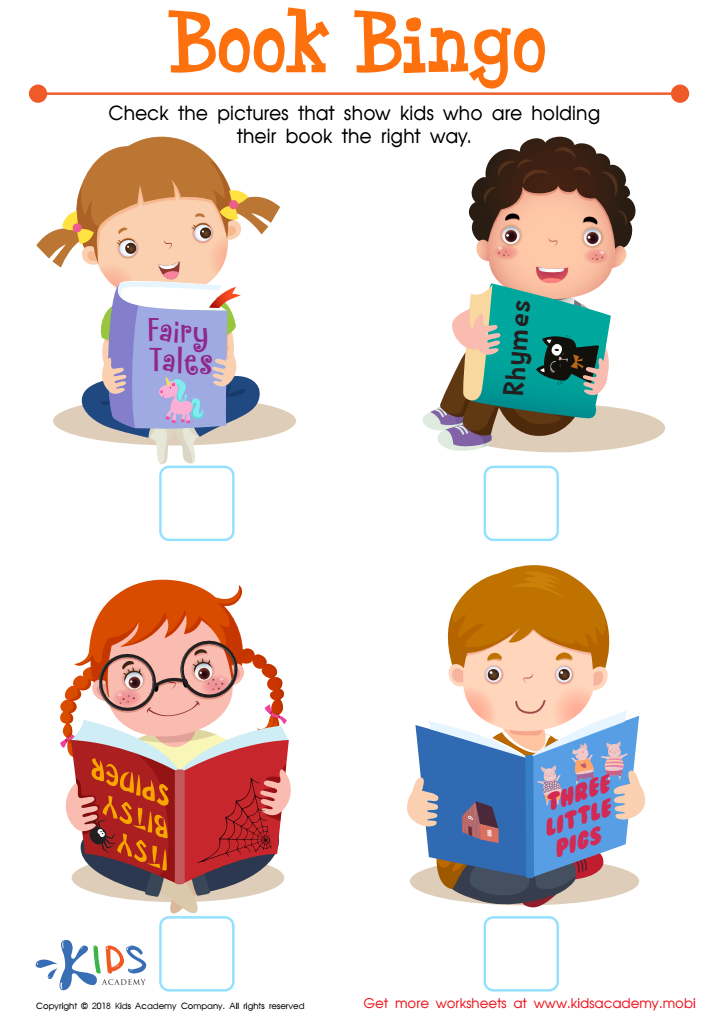
Book Bingo Worksheet
 Assign to My Students
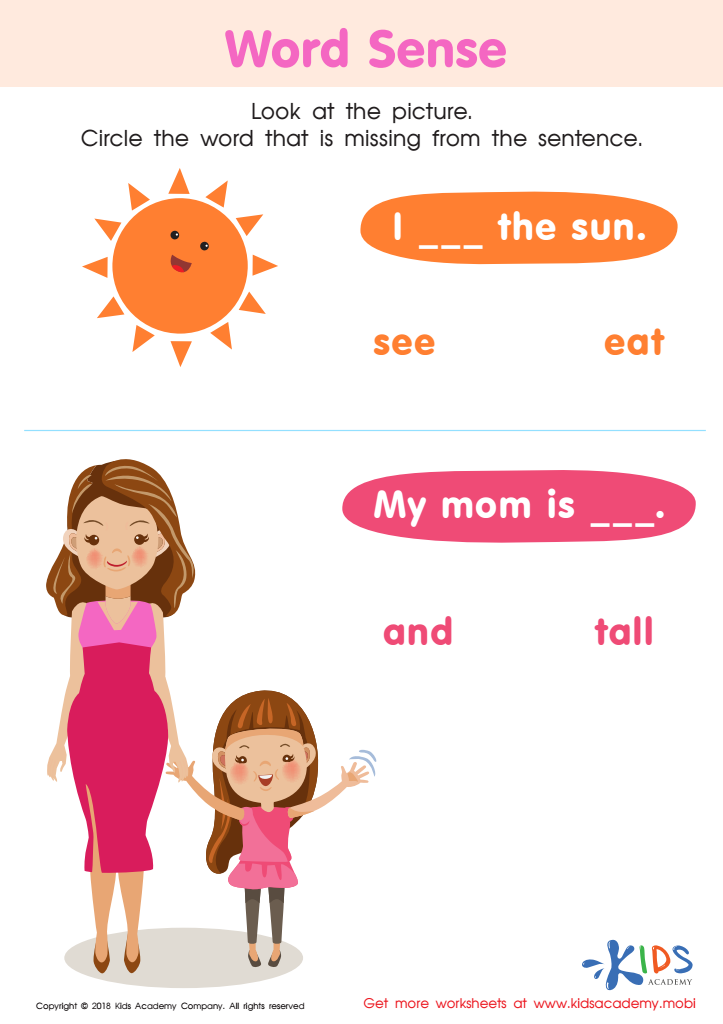
Word Sense Worksheet
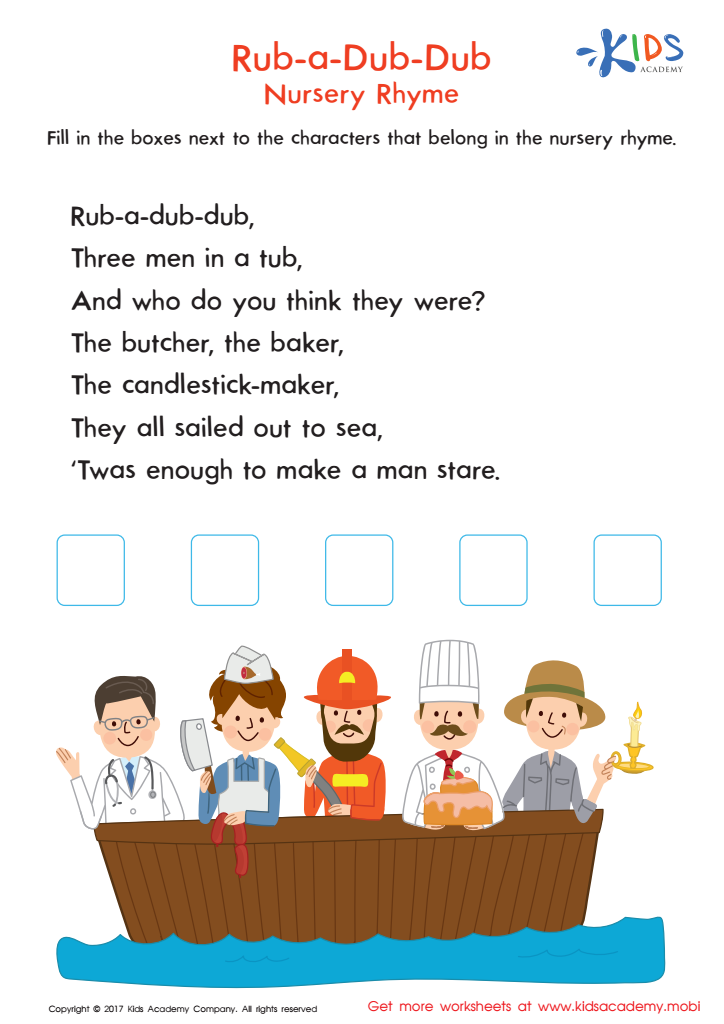
Rub a Dub Dub Printable
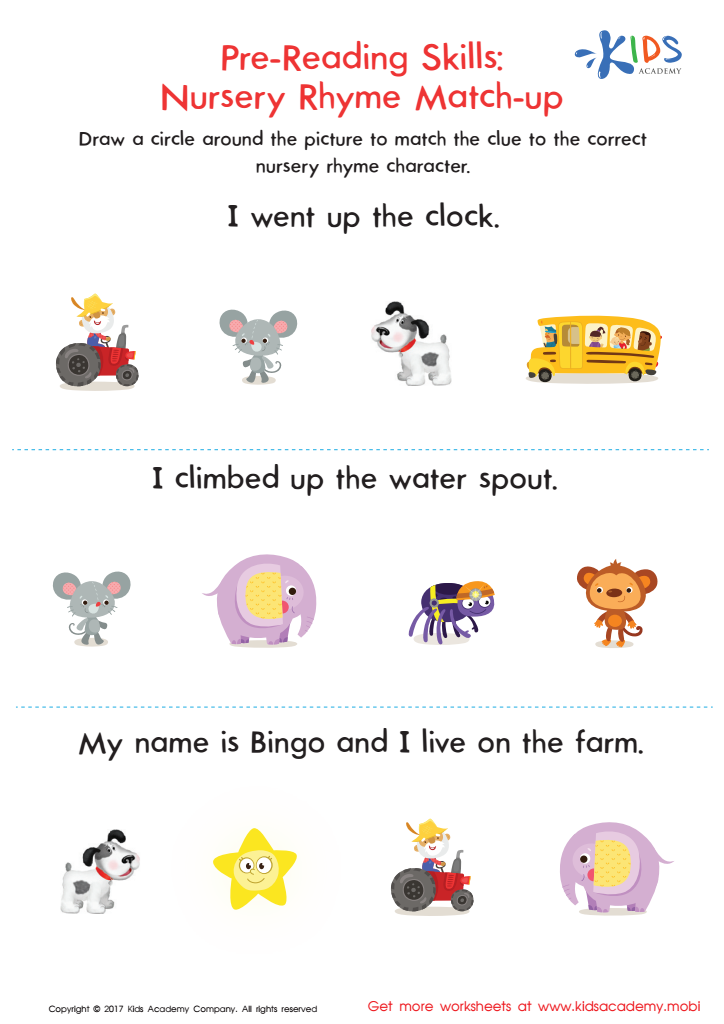
Nursery Rhyme Match–Up Worksheet
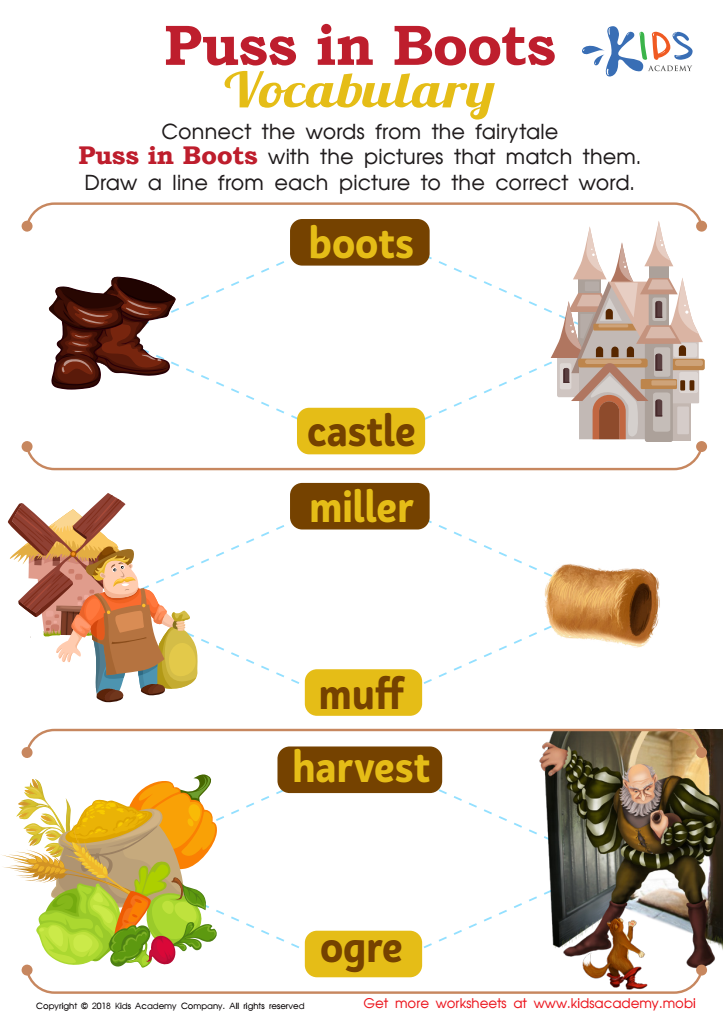
Puss in Boots Vocabulary Worksheet





.jpg)


Parents and teachers should prioritize vocabulary expansion through reading fiction for children ages 3-5 for several compelling reasons. First, early exposure to diverse vocabulary sets the foundation for children's language skills, enhancing their ability to communicate effectively. Fiction provides rich and varied language contexts where children encounter new words in a narrative setting, helping them understand meanings and contexts better than through isolated learning.
Reading fiction also stimulates imagination and creativity, prompting children to visualize characters, settings, and events, which aids cognitive development. Engaging stories capture children’s attention and foster a love for reading, encouraging lifelong learning habits.
Moreover, vocabulary expansion enhances early literacy skills, including comprehension, phonemic awareness, and writing abilities. A strong vocabulary correlates with reading proficiency; the more words a child knows, the easier it is for them to make sense of what they read later on.
Lastly, discussing stories together can strengthen parent-child or teacher-student bonds, creating meaningful interactions that promote emotional development. Fostering an environment where children explore language through engaging narratives nurtures their curiosity and builds a solid base for their educational journey. Therefore, prioritizing fiction in early years is an investment in their future success.








