
Understanding seasons Seasons Worksheets for Ages 3-5
3 filtered results
Difficulty Level
Grade
Age
-
From - To
Subject
Activity
Standards
Introduce young learners to the enchanting world of seasons with our "Understanding Seasons Worksheets" designed specifically for ages 3-5! This engaging resource enhances children's knowledge of the four seasons—winter, spring, summer, and fall—through fun activities that promote observation, critical thinking, and creativity. Carefully crafted to cater to early learners, these worksheets feature vibrant illustrations and simple instructions, making it easy for kids to explore seasonal changes in weather, nature, and activities. Foster a love for learning and help your child recognize the beauty of each season with our enchanting worksheets that encourage interactive and hands-on discovery!
Favorites
With answer key
Interactive
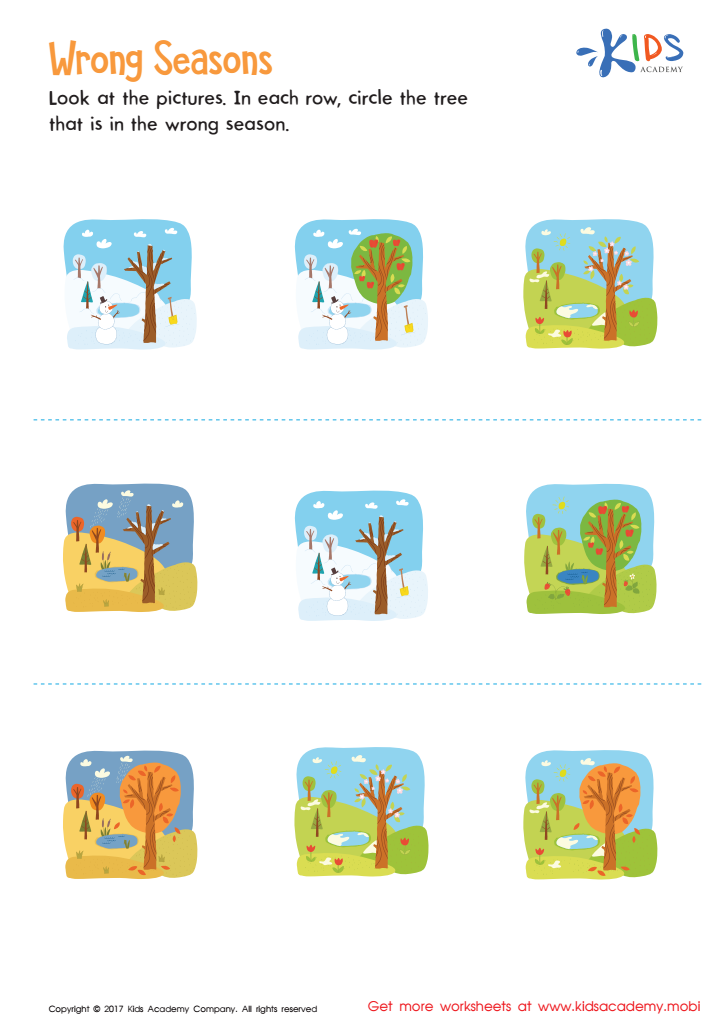
Wrong Seasons Worksheet
Uh oh! Trees are out of place in these vibrant pictures! Use this wrong seasons worksheet to help your child develop observation, analytical, and critical thinking skills. They'll learn about how the seasons change the surroundings, like trees. Print it out today to sharpen your child's eye for spotting the seasons!
Wrong Seasons Worksheet
Worksheet
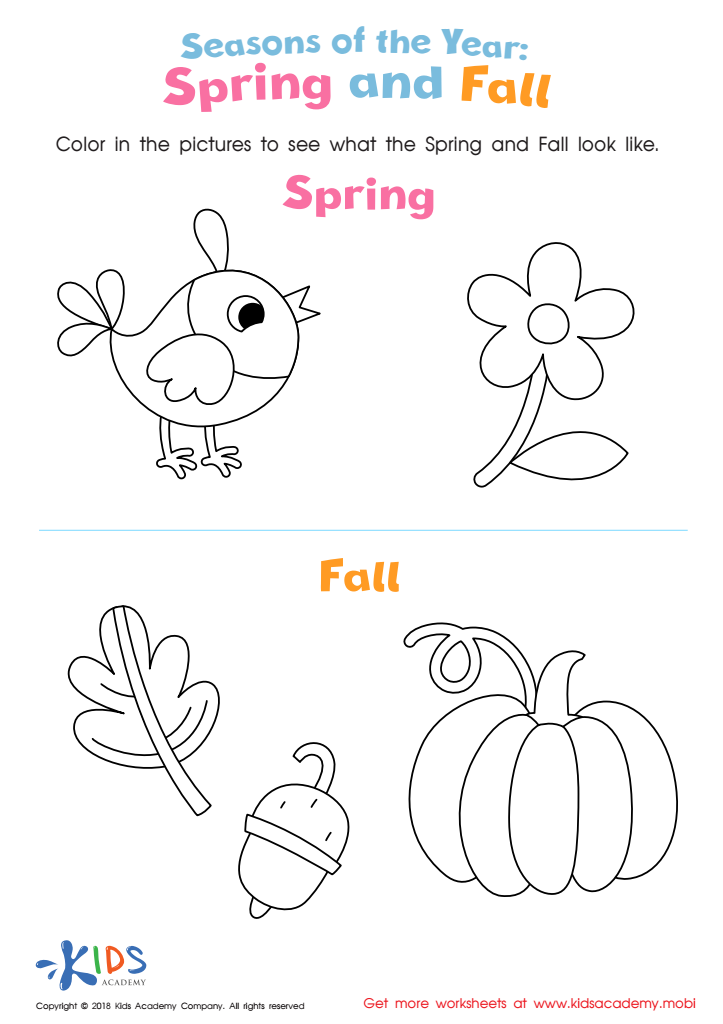
Spring and Fall Worksheet
This coloring sheet is great fun for kids. It features animals, shapes, and asks kids to identify spring and fall. Ask them to name the things in the sheet, and then help choose colors that fit each season. Let their imaginations run wild!
Download (PDF)
 Assign to My Students
Assign to My Students
Spring and Fall Worksheet
Worksheet
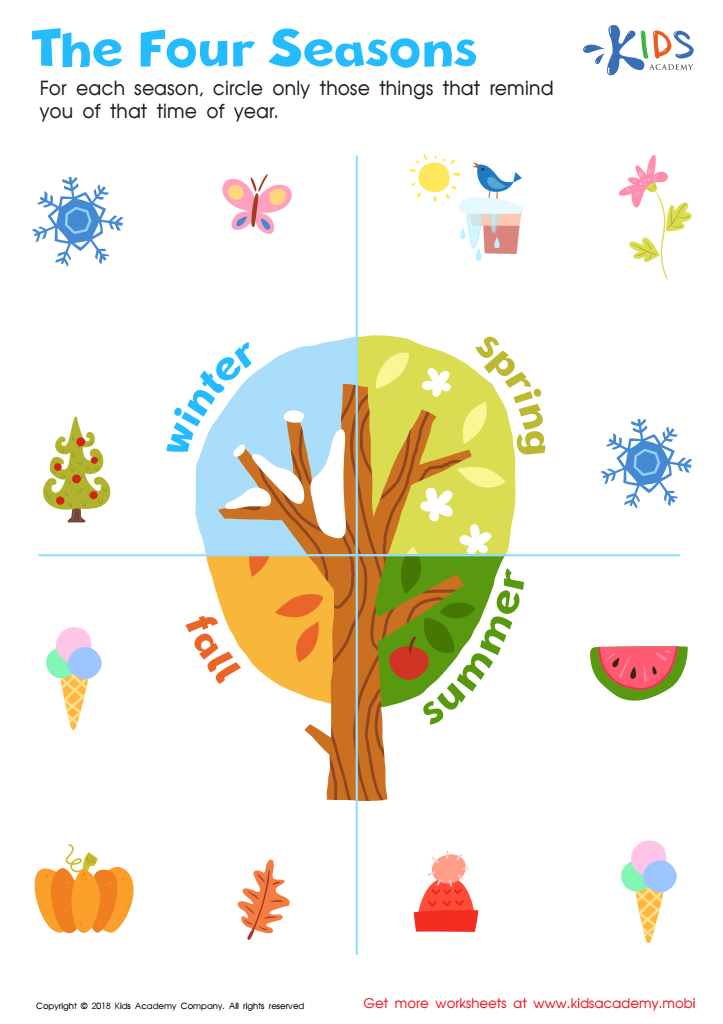
The Four Seasons Worksheet
Tell your child to circle things that remind them of each season. The tree has four squares, one for each season. Some things in each square match the season, others don't. Ask if any are out of place. Help them circle only items that remind them of that season.
The Four Seasons Worksheet
Worksheet
Join Kids Academy for Free
Who is primarily going to use this learning content?



%20(1).jpg)
Understanding seasons is vital for young children aged 3-5 as it shapes their awareness of the world around them. At this developmental stage, children are naturally curious and learning about seasons fosters this curiosity. When parents and teachers explain the changes in weather, plant life, and animal behavior that come with each season, they are providing meaningful, age-appropriate context for children's everyday experiences.
This knowledge nurtures observation skills as small children begin to notice differences in nature—like trees changing colors or the different clothing we wear in summer versus winter. Teaching about seasons also supports early science concepts as children explore ideas such as temperature, sunlight, and environmental changes.
Moreover, seasons present opportunities for cross-curricular learning. Storybooks about seasons can enhance language development, while art projects related to seasonal themes can bolster fine motor skills. Understanding seasons also encourages children to engage in various seasonal activities, promoting physical health through outdoor play.
Lastly, it helps children develop a sense of time, relating to the cyclical nature of the world, thus laying the foundation for a broader understanding of calendar concepts in later years. By fostering this foundational knowledge, parents and teachers significantly contribute to holistic development.







