Filters

11 filtered results

Clear all filters
Favorites
With answer key
Interactive

11 filtered results

Difficulty Level

Grade


Our Cognitive Development Phonics Worksheets for ages 3-6 are tailored to support early learning and literacy skills in young children. Specifically designed to enhance cognitive development, these worksheets engage kids through fun, interactive activities that teach letter recognition, sound matching, and basic word formations. Each activity nurtures fine motor skills and critical thinking, making learning a joyful experience. Ideal for parents and educators, our phonics worksheets lay a solid foundation for future reading success. Explore our comprehensive collection to give your child the best start on their educational journey. Available for instant download and use!

Check out this FREE Trial Lesson on Phonics for age 3-6!

Demonstrate Understanding of Frequently Occurring Verbs and Adjectives by Relating Them to Their Opposites

Favorites
With answer key
Interactive
  • 3-6
  • Cognitive Development
  • Phonics
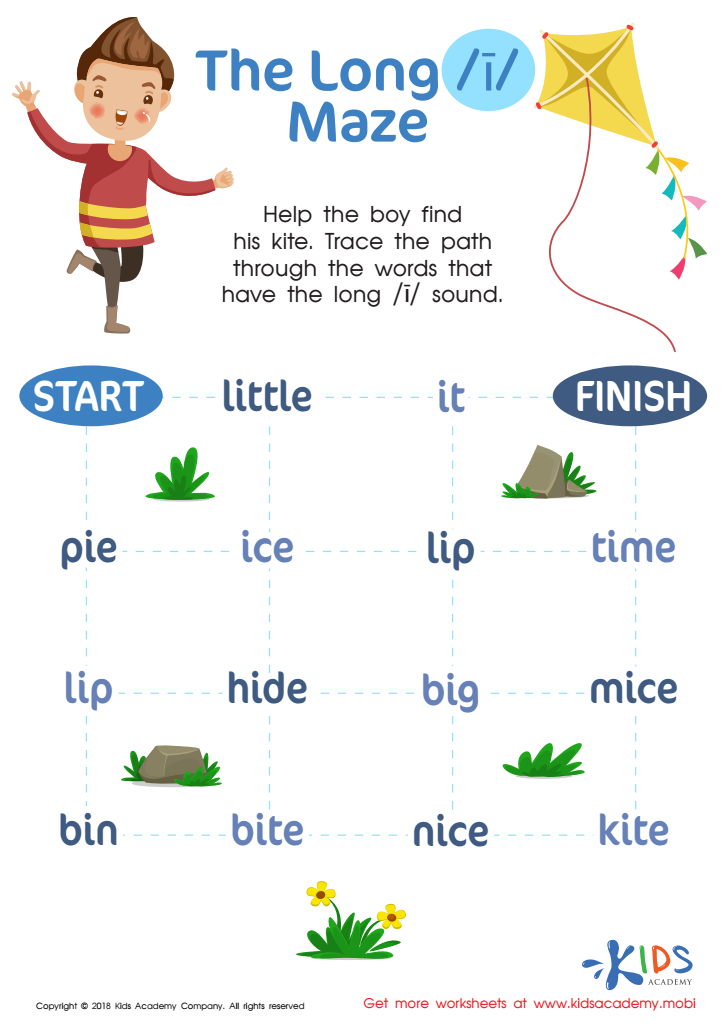
The Long I Maze Reading Worksheet

The Long I Maze Reading Worksheet

Help your child learn phonics to help them read. Show them the difference between long and short "i" sounds. Guide them as they use a pencil to trace words with the long "i:" sound in the "Help the Boy in the Picture" worksheet exercise. This will help them find the kite in the picture.
The Long I Maze Reading Worksheet
Worksheet
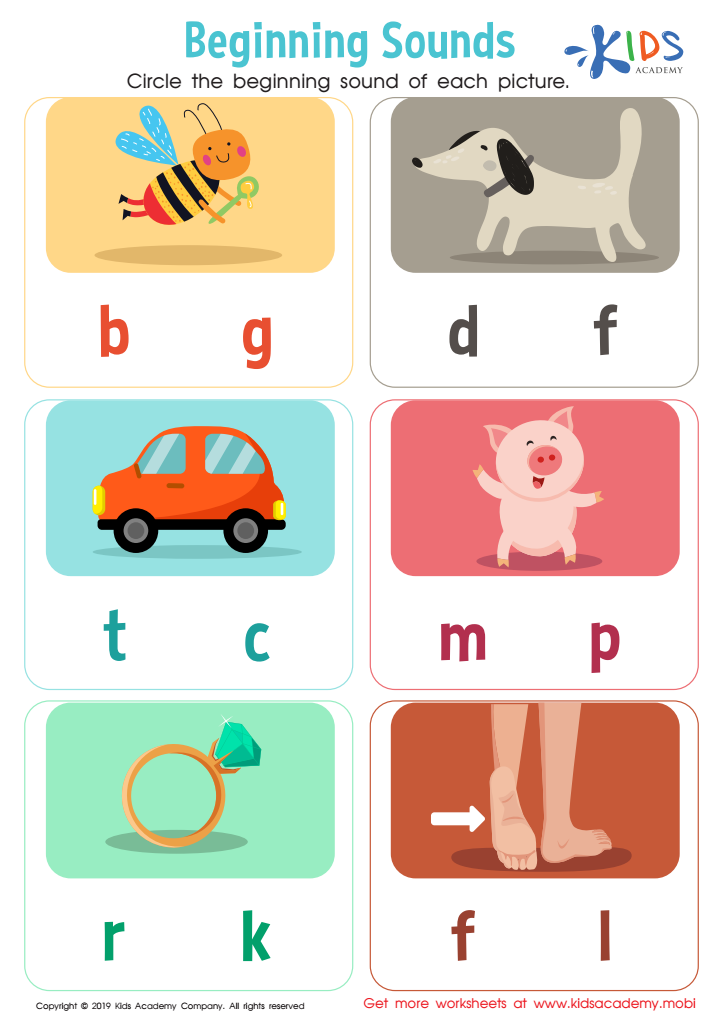
Beginning Sounds Worksheet

Beginning Sounds Worksheet

Test your child's knowledge with this colorful worksheet! Before beginning, have your kids recite the alphabet and sound them off. Give examples and ask them to do the same, then help them circle the beginning sound of each picture to complete the exercise.
Beginning Sounds Worksheet
Worksheet
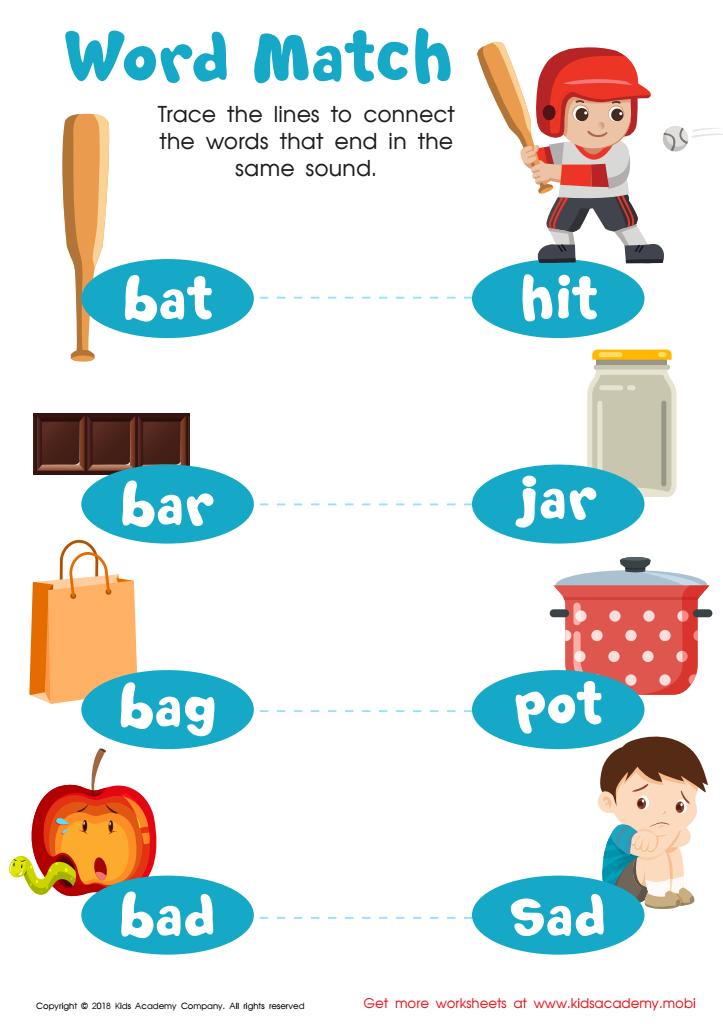
Word Match Reading Worksheet

Word Match Reading Worksheet

This printout helps children learn to read fluently by connecting words with the same sound. Colorful pictures aid understanding and context for kindergarten-level students. Tracing lines, they learn to identify the sounds made by letters of the alphabet and deepen their knowledge of phonics.
Word Match Reading Worksheet
Worksheet
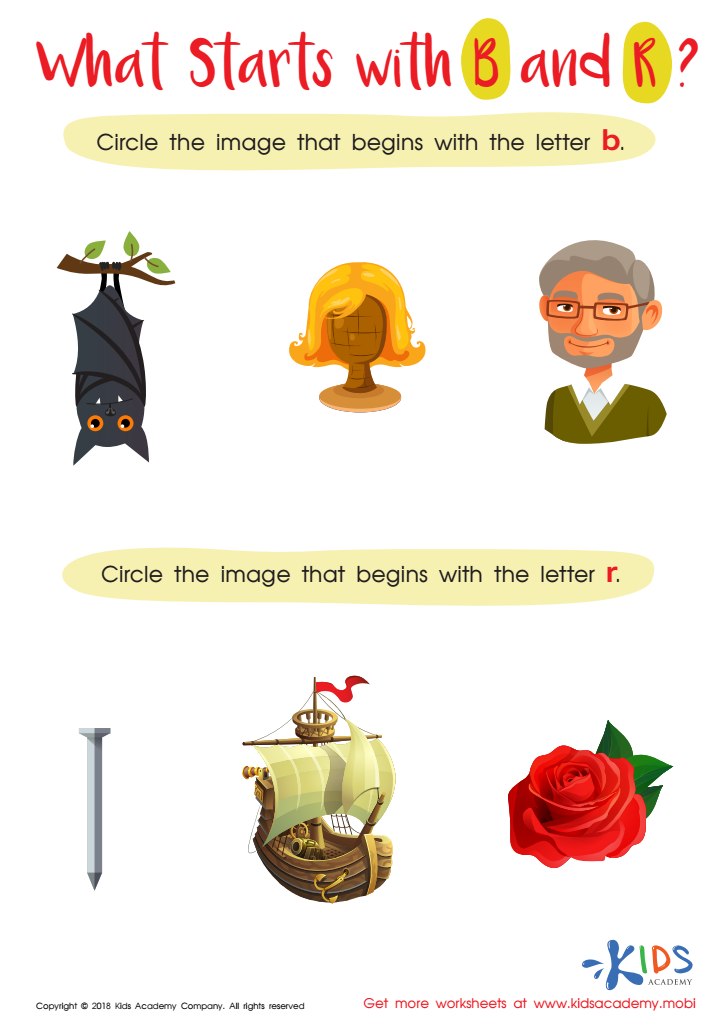
What Starts with B and R? Worksheet

What Starts with B and R? Worksheet

Download this worksheet to help young readers practice visual and motor skills! They'll enjoy matching pictures with "B" and "R" letters while tracing the images. Bright and colorful, this engaging activity will help kids differentiate between words and have fun doing it.
What Starts with B and R? Worksheet
Worksheet
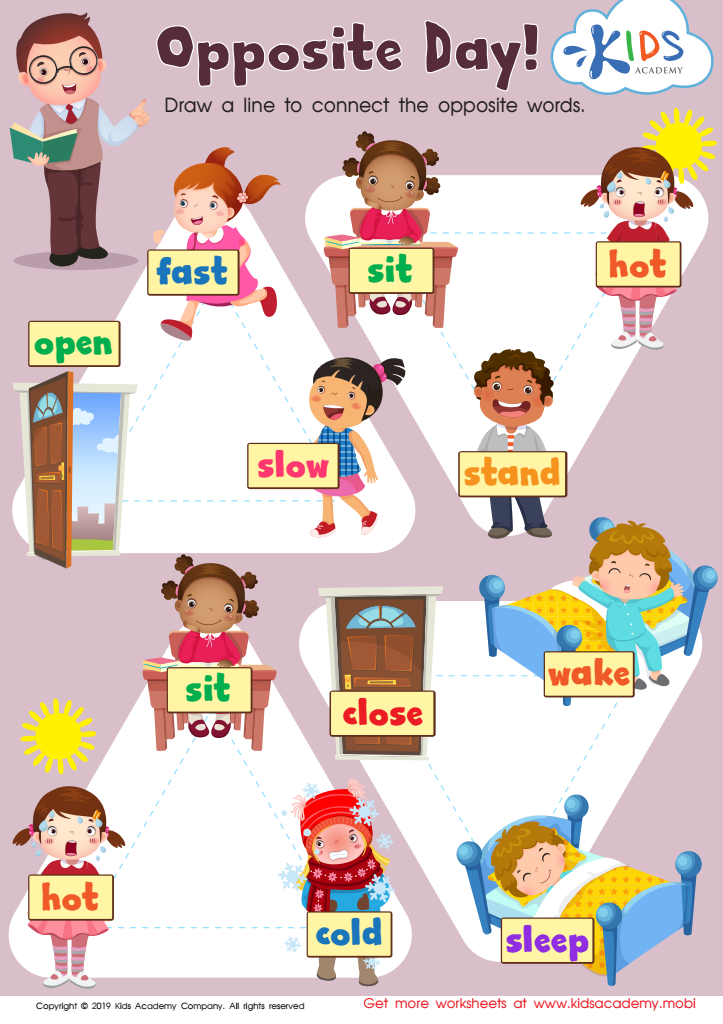
Opposite Day Worksheet

Opposite Day Worksheet

Early learners need to know about opposites to improve their higher-order thinking and critical thinking. This fun worksheet helps them understand the concept, practice opposite words, read high-frequency words and work on fine motor skills. Download the traceable PDF to get started.
Opposite Day Worksheet
Worksheet
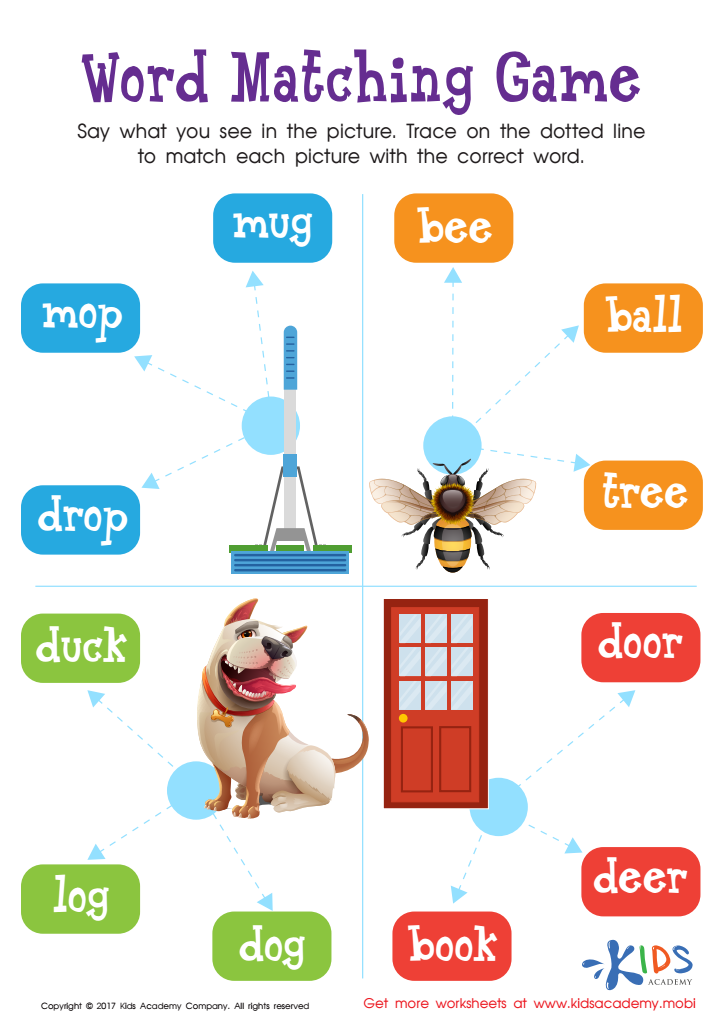
Word Matching Game Worksheet

Word Matching Game Worksheet

Help your early reader develop prereading skills with this fun matching worksheet! Visual cues help them learn sight words, decode words in word families, and identify phonetic patterns. They'll practice discerning sounds past initial consonants while saying the name of the picture and finding the matching word - and reading at the same time!
Word Matching Game Worksheet
Worksheet
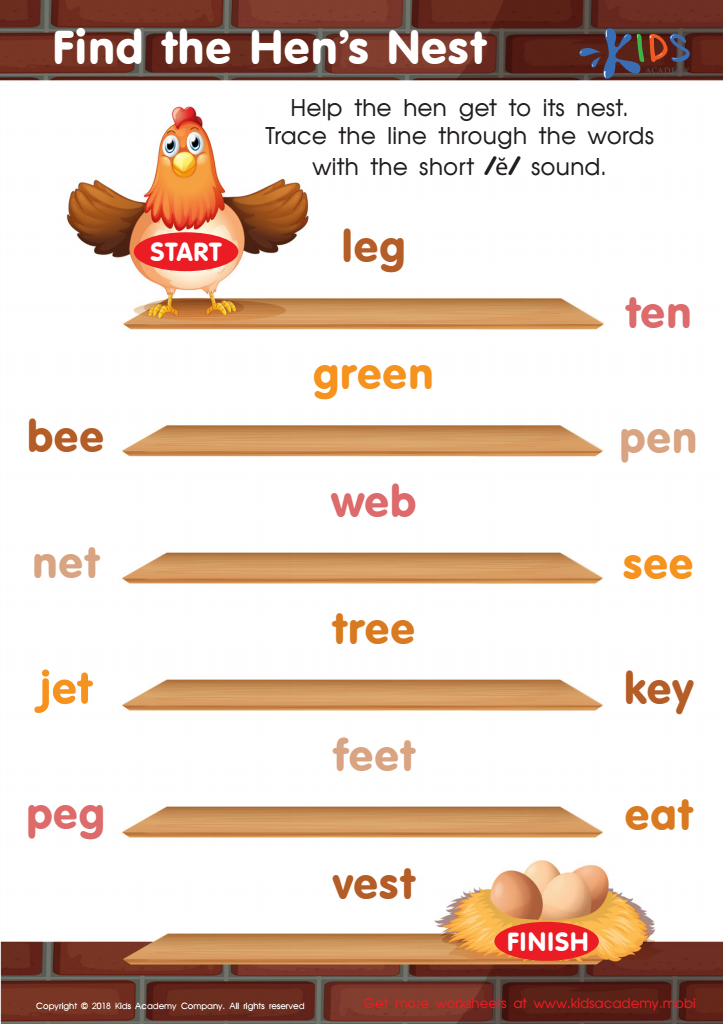
Find Hens Nest Reading Worksheet

Find Hens Nest Reading Worksheet

Learning the short and long «e» sound can be tricky for kids just starting to learn the alphabet. Make it fun with this worksheet: it leads your kindergarten child to a hen's nest by following words with the short «e» sound. They'll be able to identify words with the sound by the end of the exercise.
Find Hens Nest Reading Worksheet
Worksheet
Let's Count the Sounds Worksheet

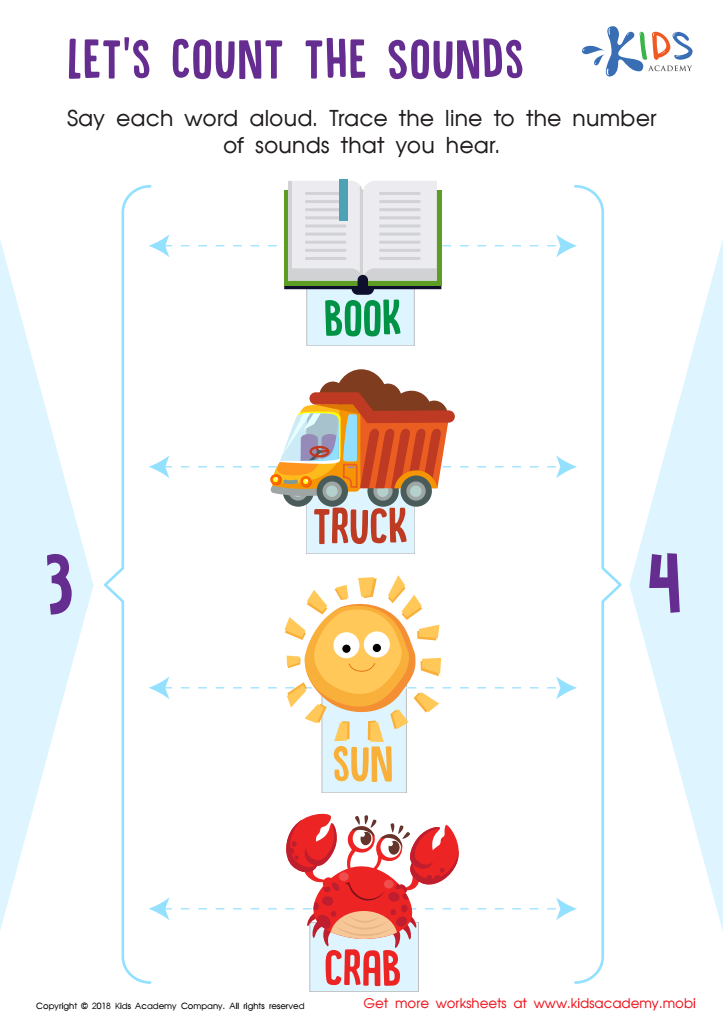
Let's Count the Sounds Worksheet

This bright and cheery traceable worksheet encourages children to practice auditory discrimination and phonological awareness. Using picture clues, they read each word and trace the line that represents the number of sounds heard. This builds decoding skills and helps them become successful readers.
Let's Count the Sounds Worksheet
Worksheet
Consonant Blend Dr and Tr Printable Worksheet

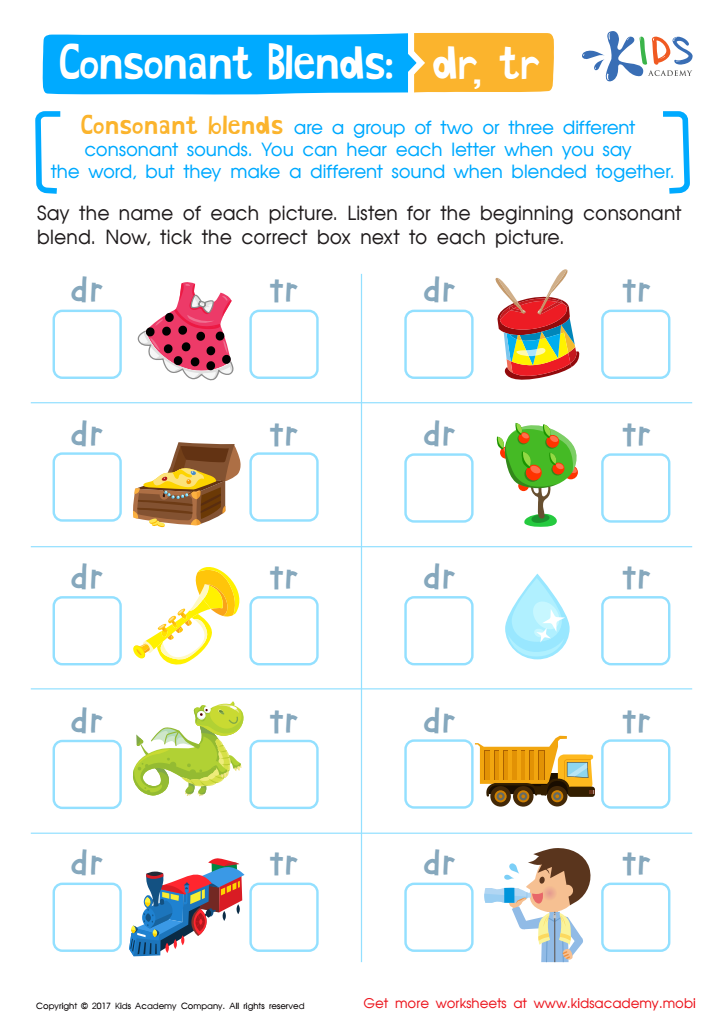
Consonant Blends: "Dr" and "Tr" Printable
Pictures of the words provide a visual cue, and sound-outs help with auditory cues.
Consonant Blends: "Dr" and "Tr" Printable
Worksheet
Make a New Word Worksheet

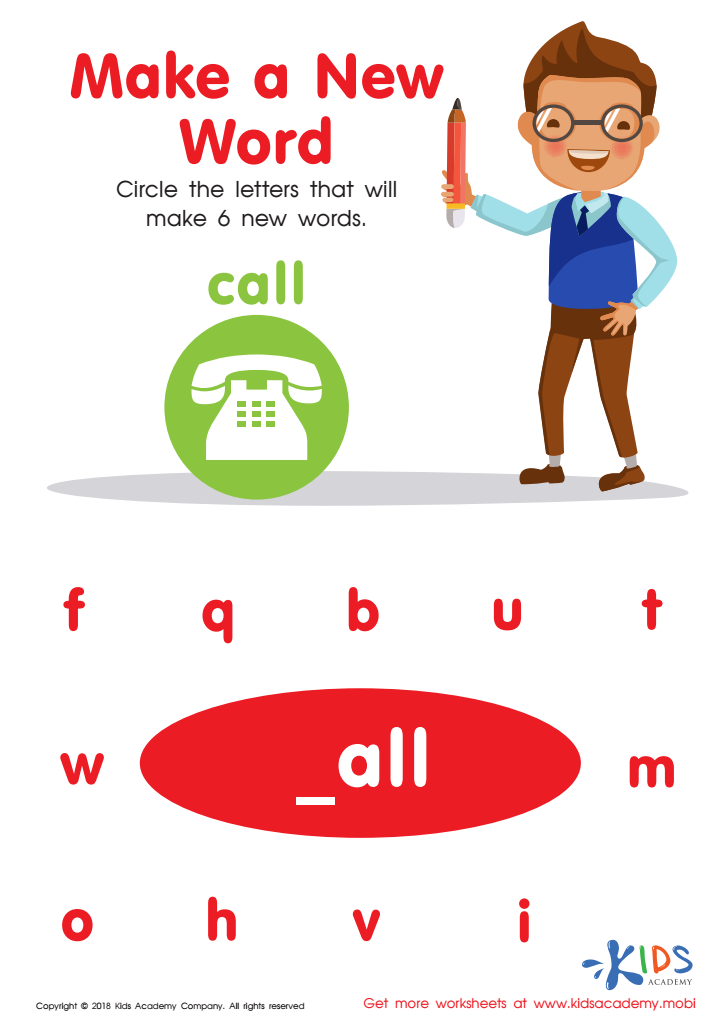
Make a New Word Worksheet

Young readers and writers can enhance their skills with this fun PDF worksheet. They'll trace letters to create new words and feel like super readers and writers after finding six words. They'll also practice building words with the "all" word family.
Make a New Word Worksheet
Worksheet
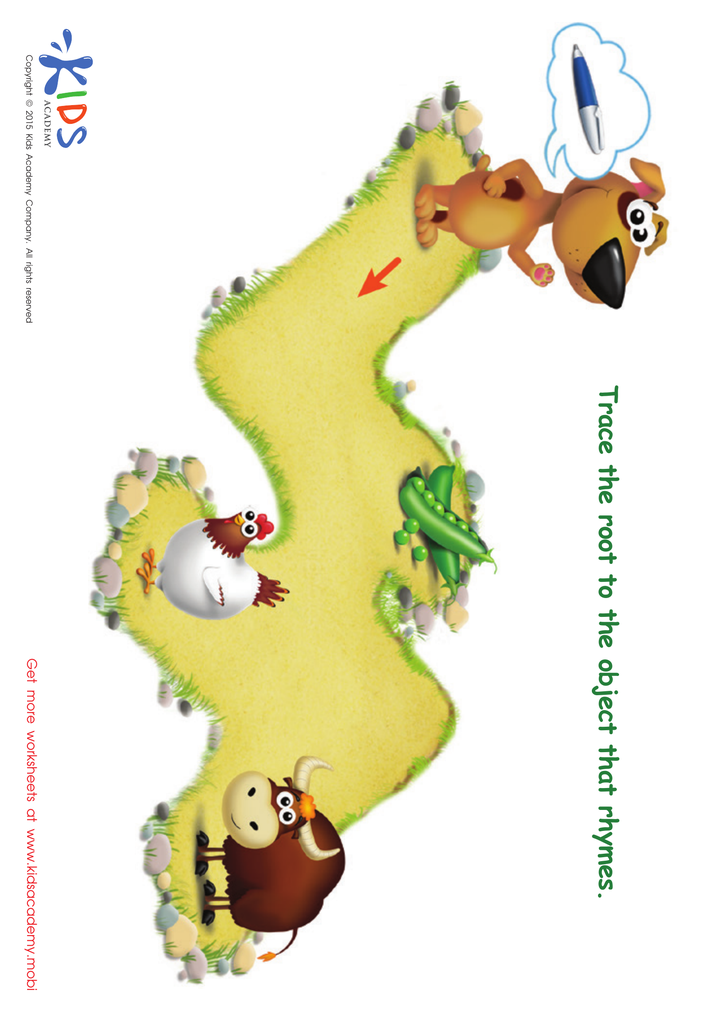
Rhyming Words PDF Worksheets, Pen

Pen Rhyming Words Worksheet

Check out the cute pup, pondering away. He's thinking of a root word - no suffix or prefix. Now check the hen, green beans, and the cow. Can you find the word that rhymes with pen? Draw a line from the root word to its rhyme for this simple yet beneficial worksheet. It helps young learners practice hearing and recognizing rhymes.
Pen Rhyming Words Worksheet
Worksheet


Cognitive development in children aged 3-6 sets the foundational skills for lifelong learning, and integrating phonics is a key component of this crucial stage. Phonics, the relationship between letters and their sounds, empowers young children to decode written language, a skill essential for reading and writing. By engaging in phonics activities, children develop strong language skills, enabling them to recognize words, comprehend texts, and communicate proficiently. This period is marked by rapid brain development, making it the ideal window for them to grasp and master phonetic principles.

Parents and teachers should prioritize phonics for several reasons. Firstly, it enhances reading proficiency, which correlates with academic success across all subjects, giving children the confidence to excel. Secondly, phonics builds cognitive abilities such as memory, attention, and problem-solving by encouraging pattern recognition and phonemic awareness. This early exposure also fosters a love for reading and learning by making the process fun and engaging.

Moreover, phonics instruction can support diverse learners, including those with language delays or non-native English speakers, by providing clear and systematic approaches to language acquisition. Overall, cognitive development through phonics instills strong foundational skills, promoting a trajectory of academic and personal growth, ensuring children can reach their fullest potential.