Addition skills Worksheets for Ages 3-6 - Page 2
116 filtered results
-
From - To
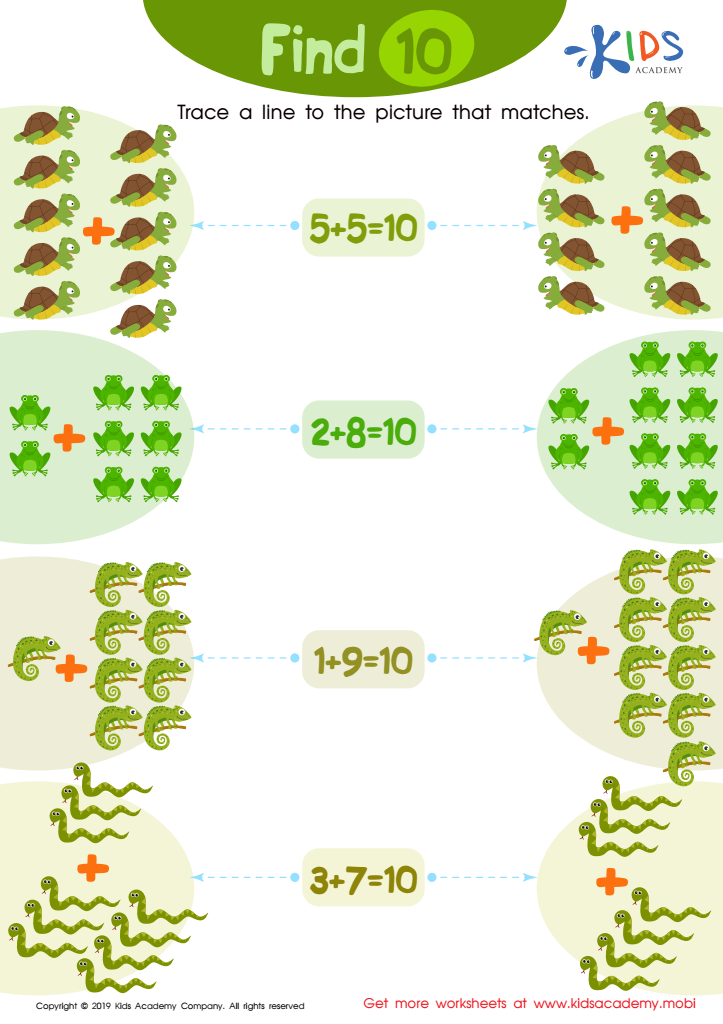
Find 10 Worksheet
 Assign to My Students
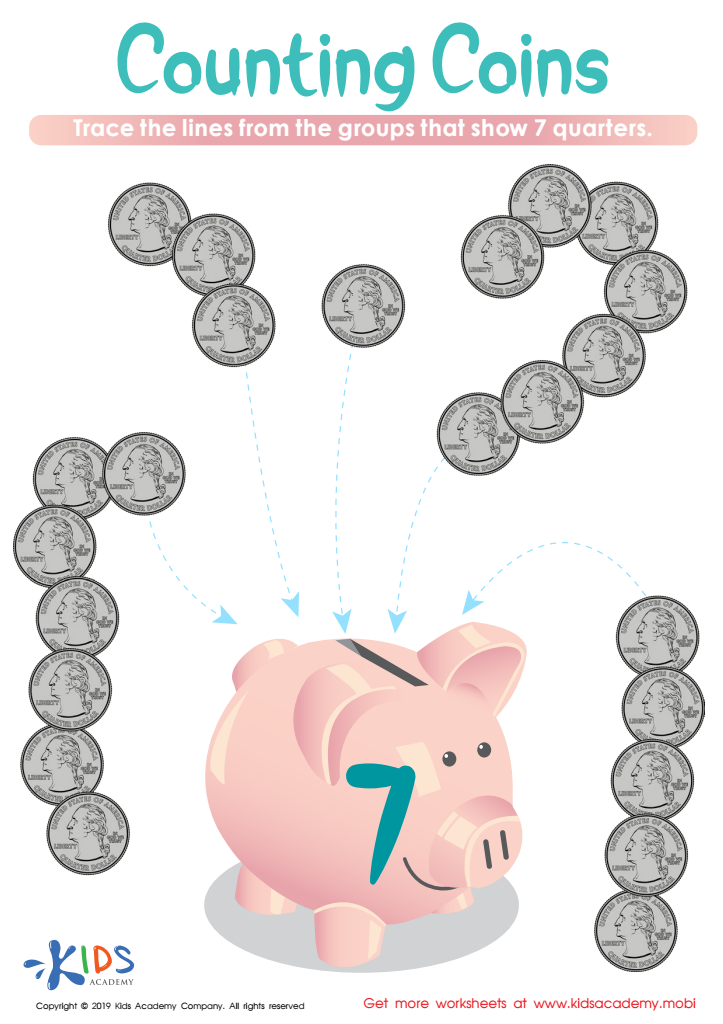
Counting Coins Worksheet
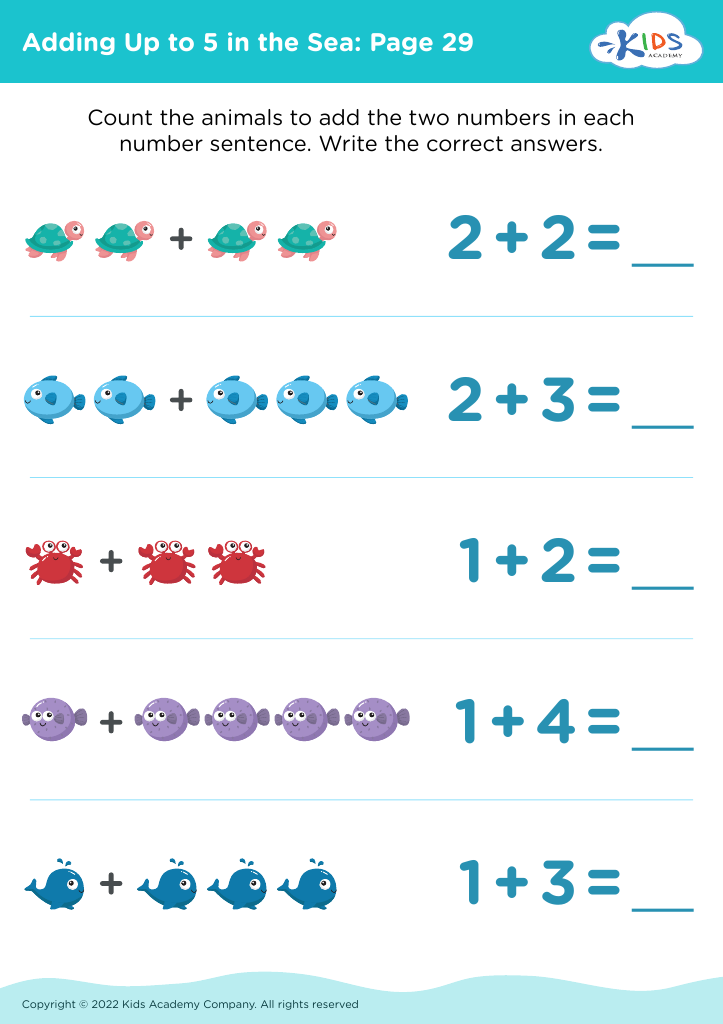
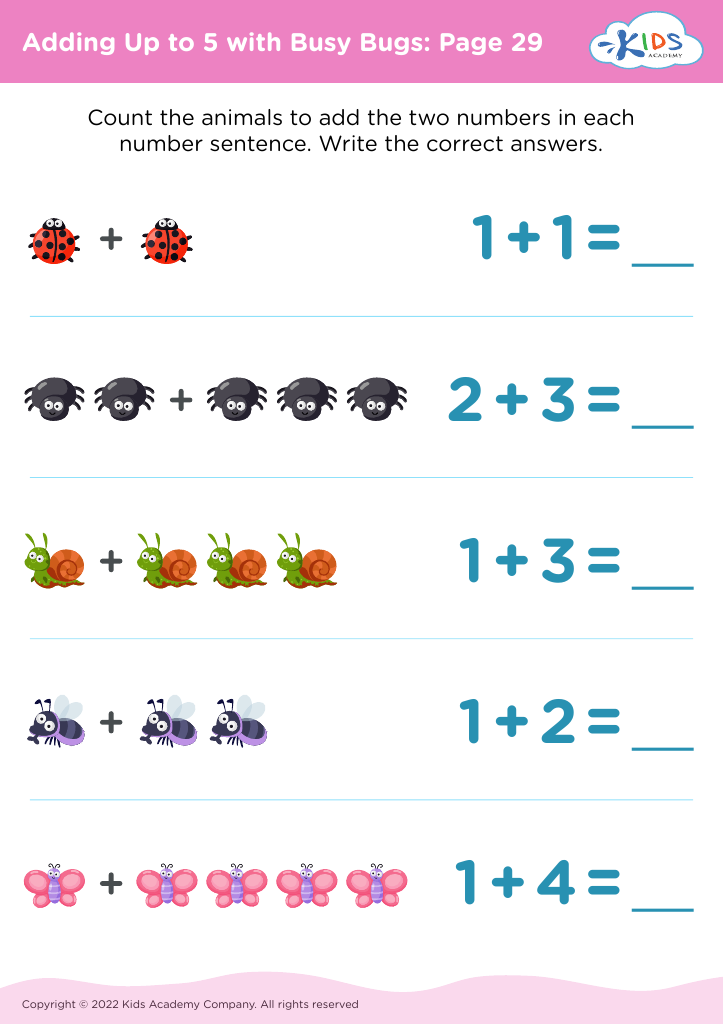
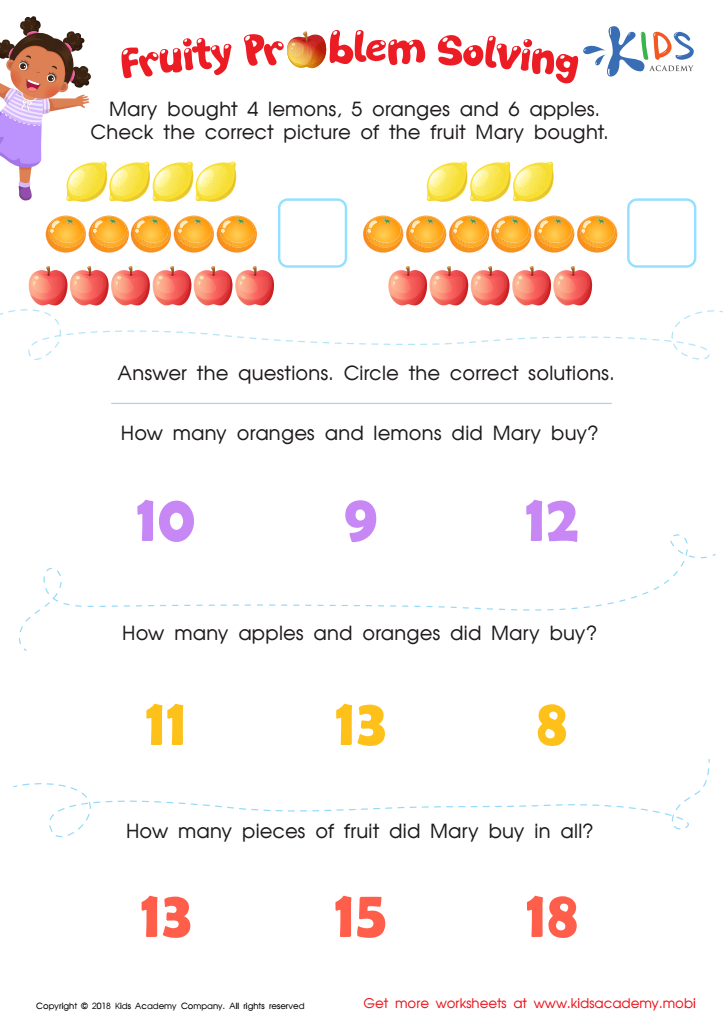
Fruity Problem Solving Worksheet
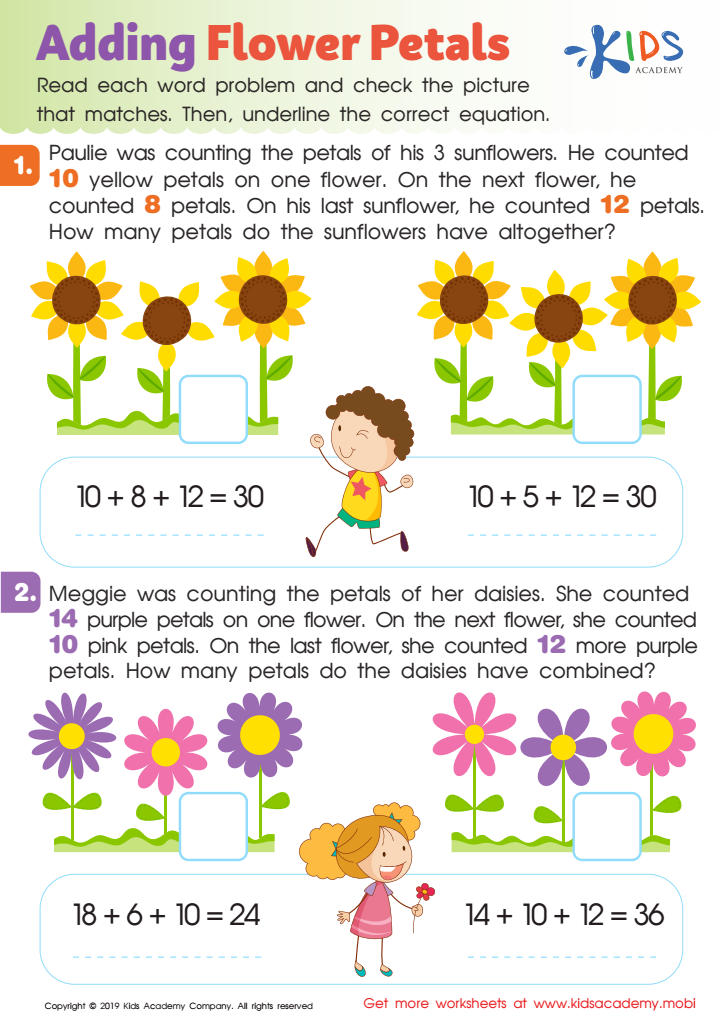
Adding Flower Petals Worksheet
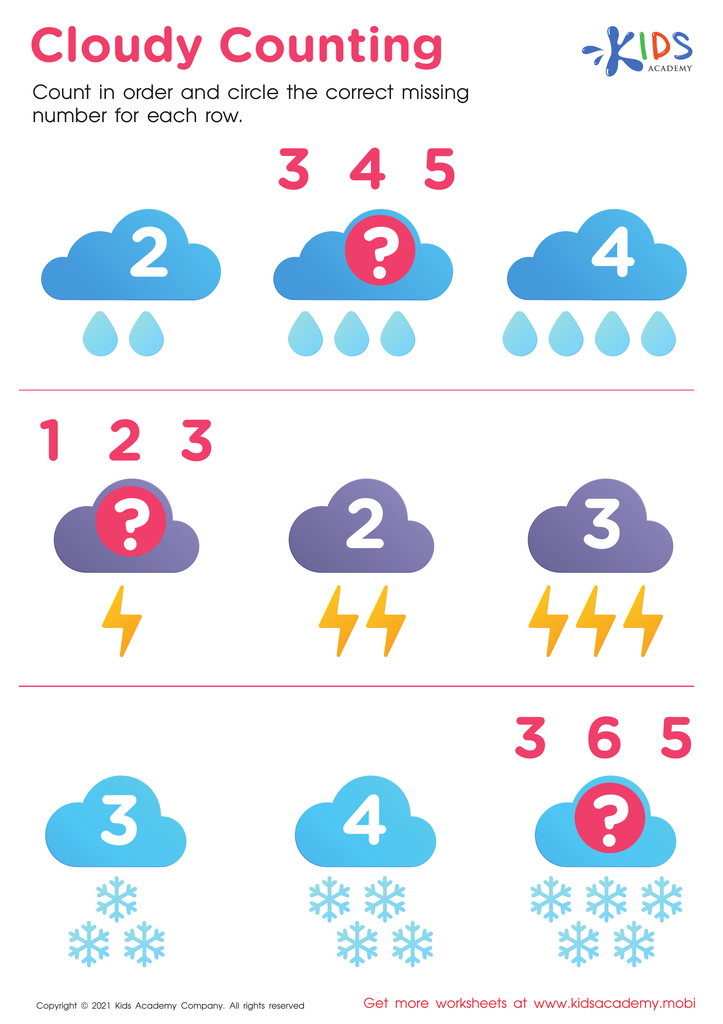
Cloudy Counting Worksheet
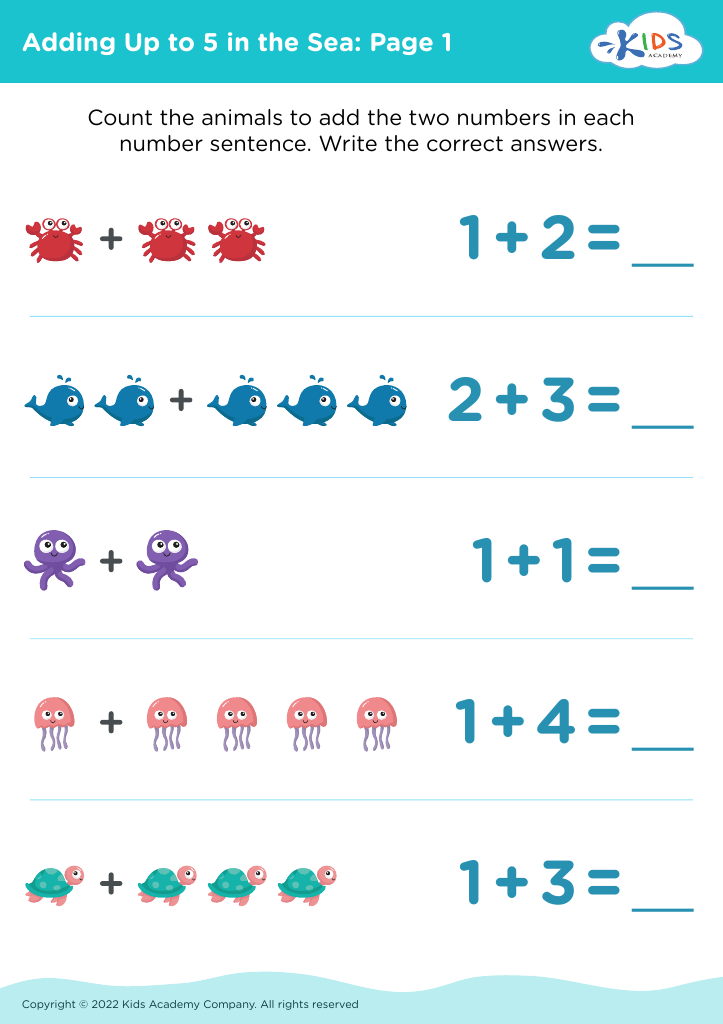
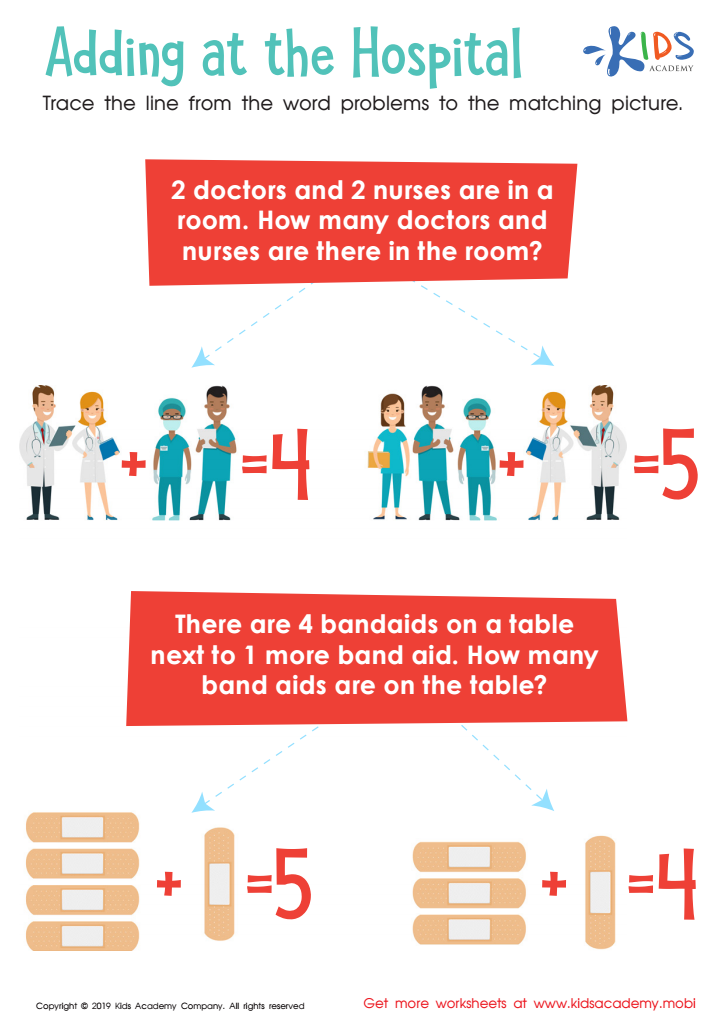
Adding at the Hospital Worksheet
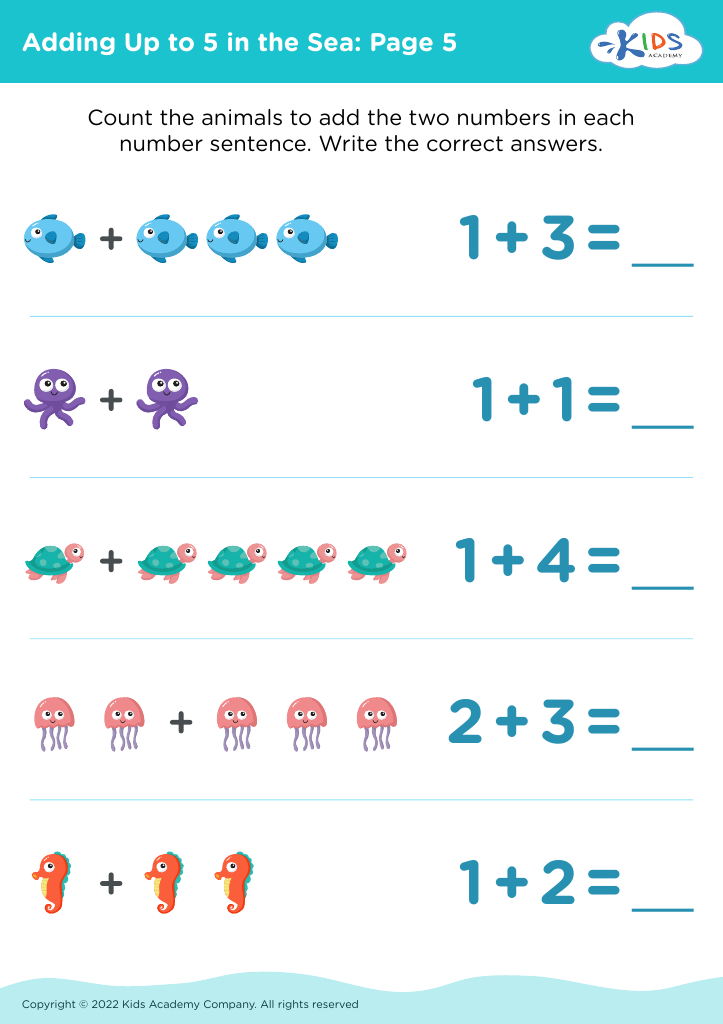
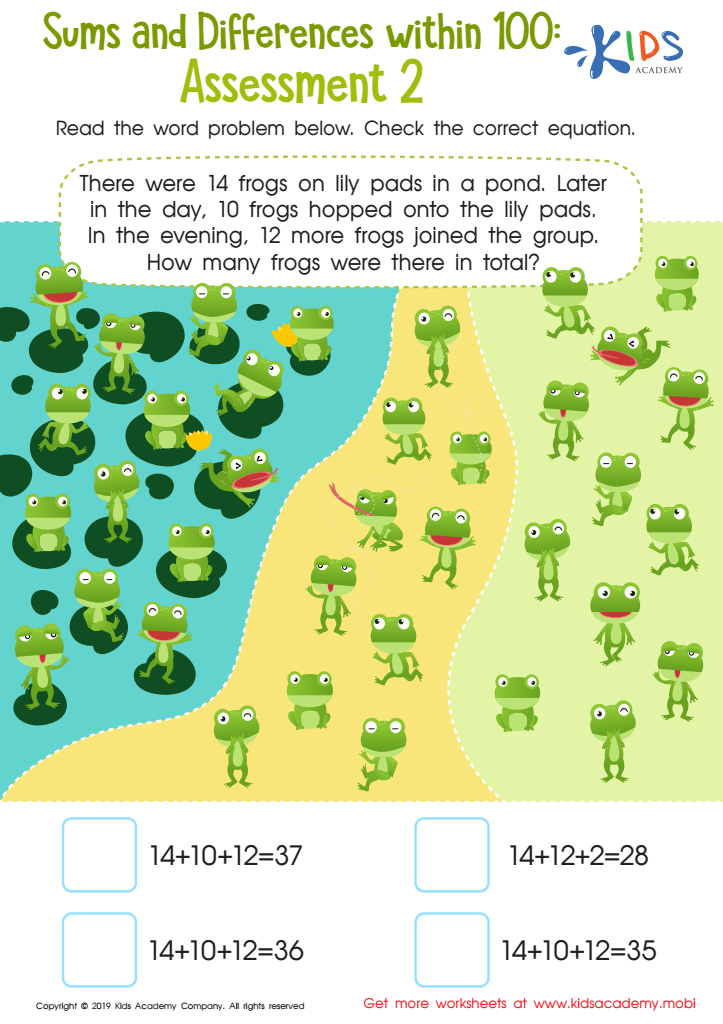
Sums and Differences Within 1 - Assessment 2 Worksheet
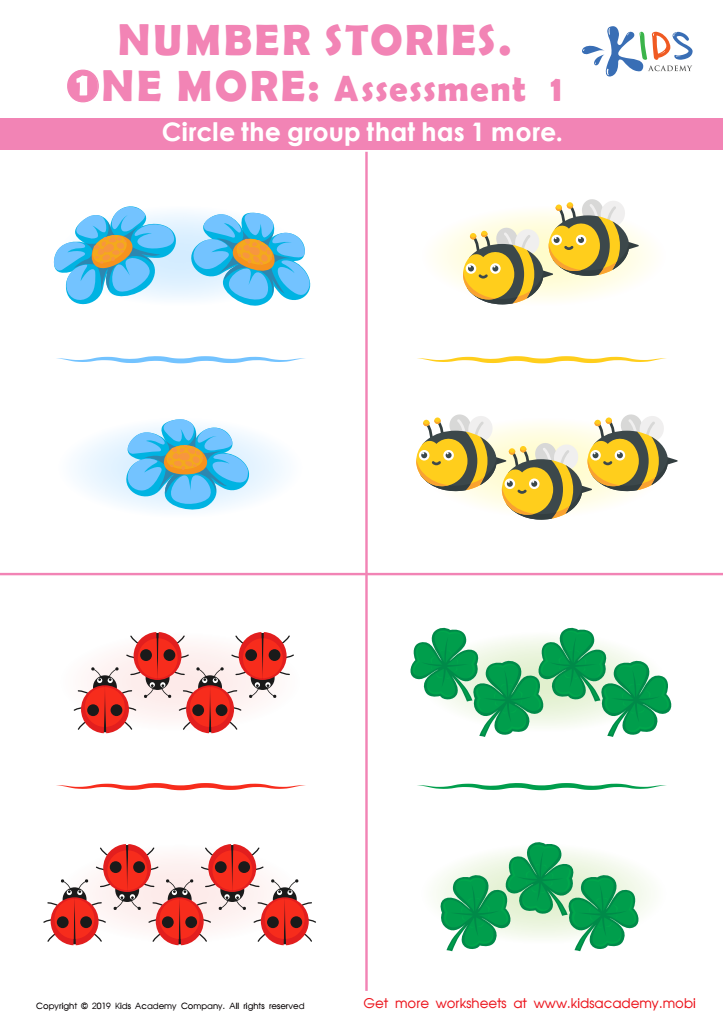
Number Stories One More – Assessment 1 Worksheet
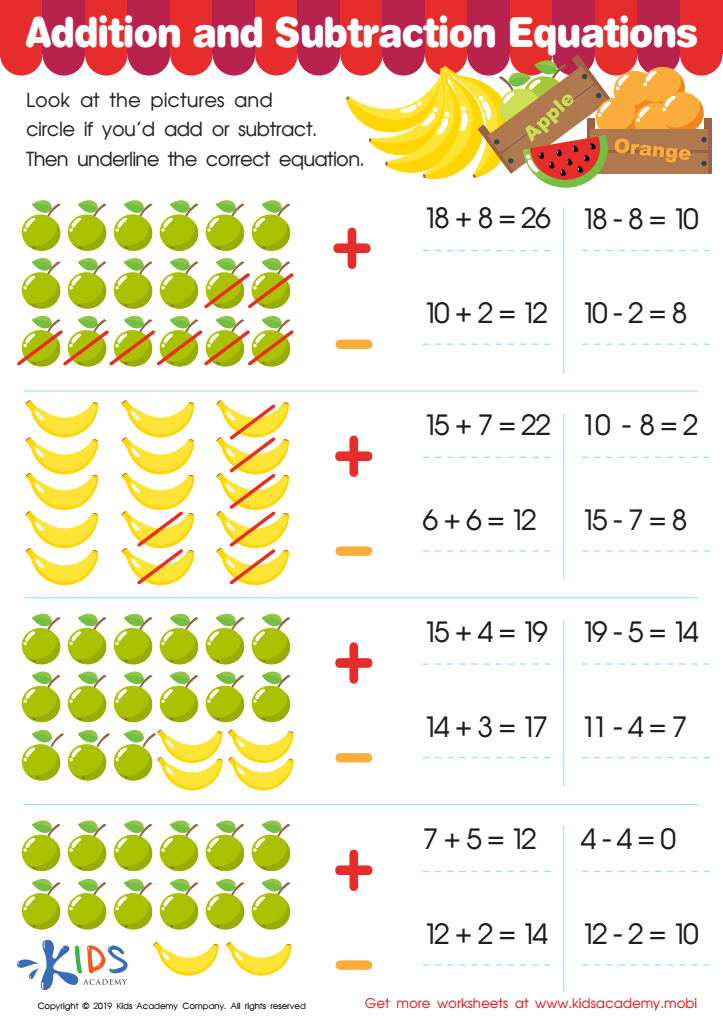
Addition and Subtraction: Equations Worksheet
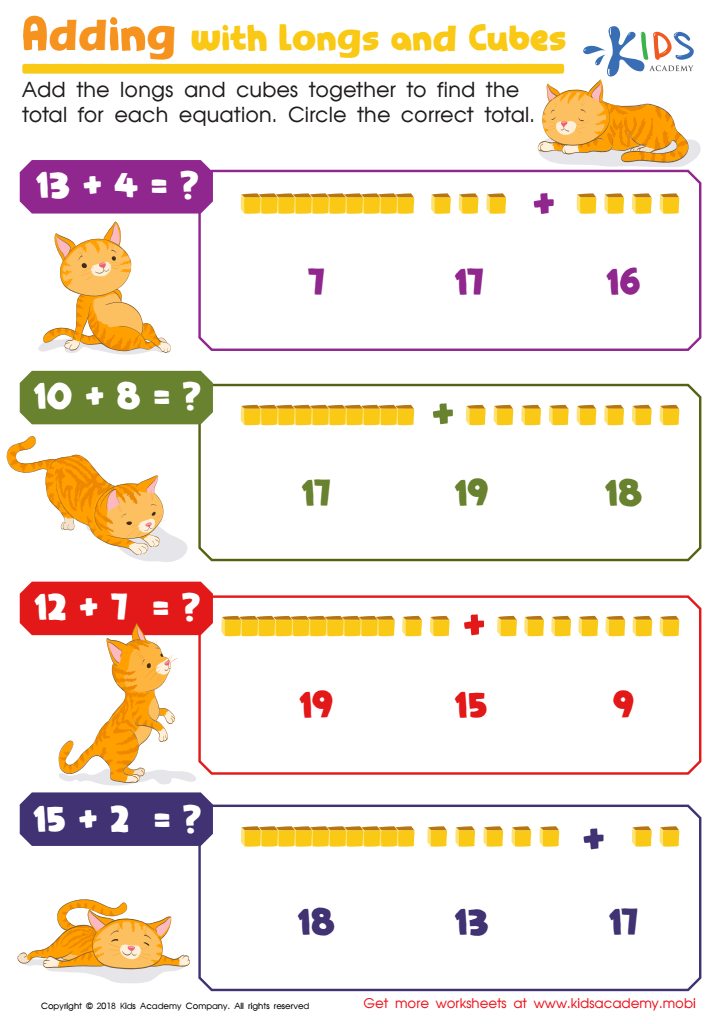
Adding With Longs and Cubes Worksheet
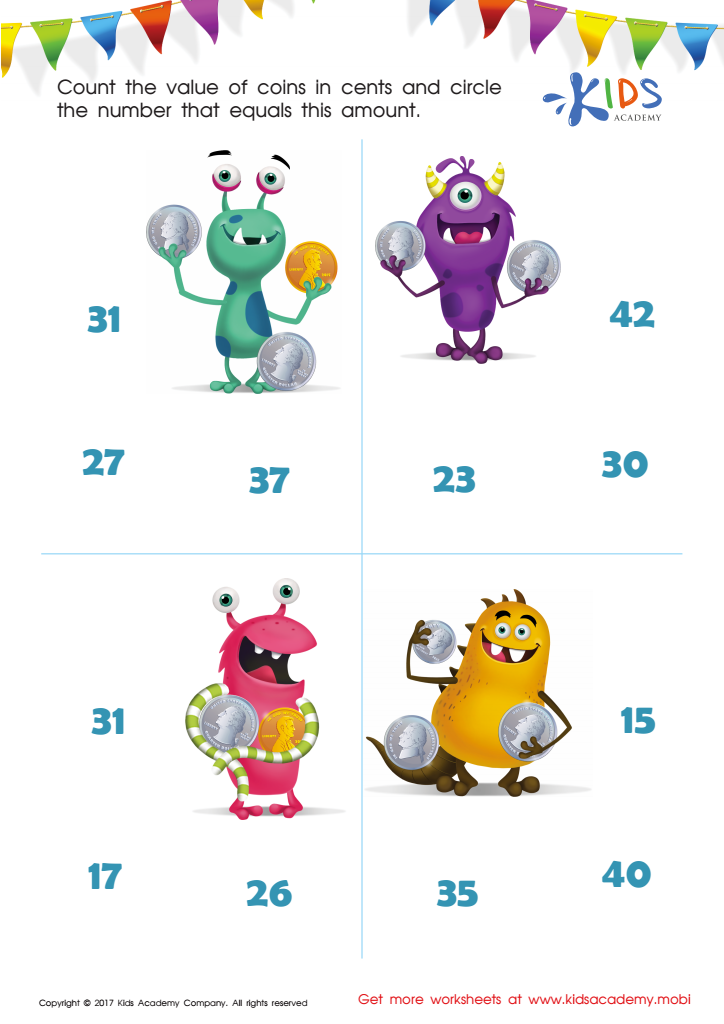
How Many Coins Money Worksheet
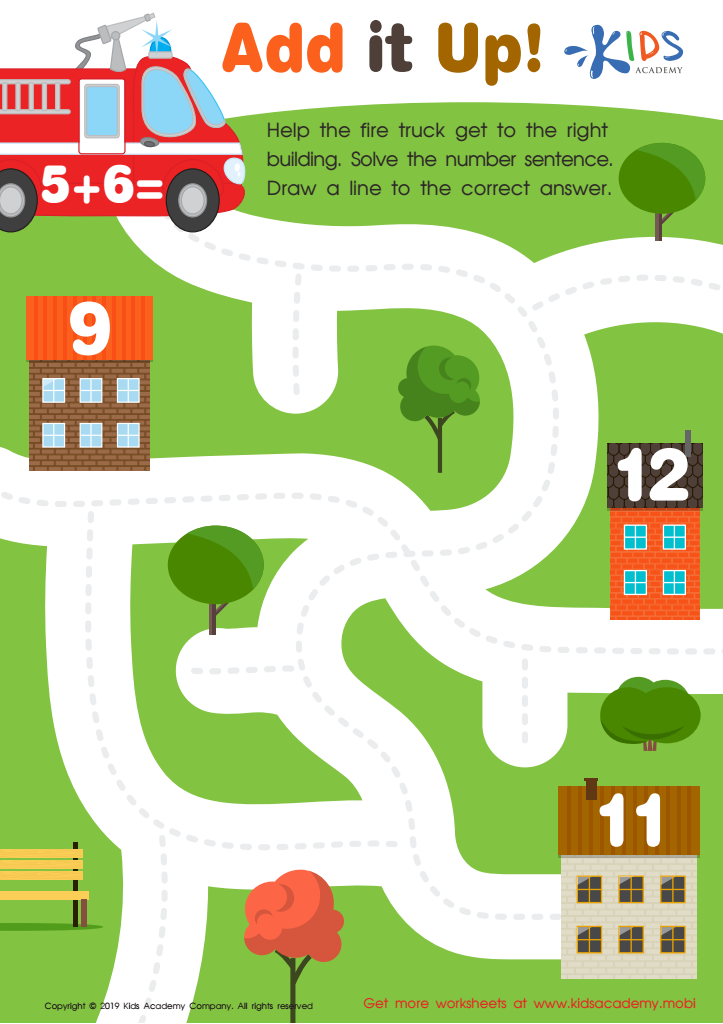
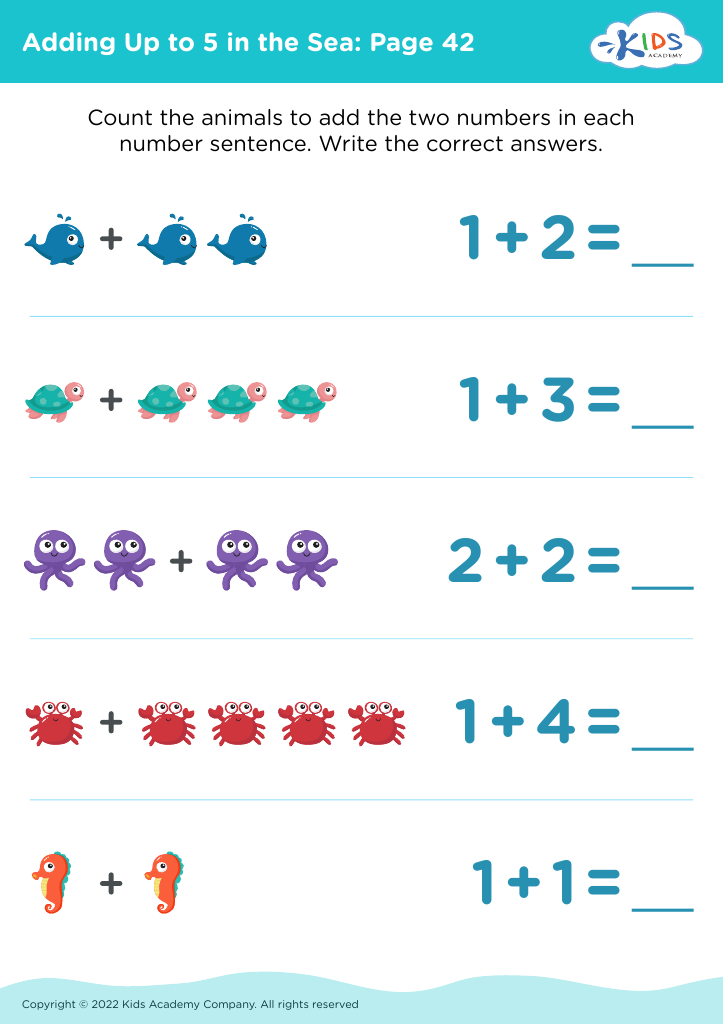
Add it Up Worksheet
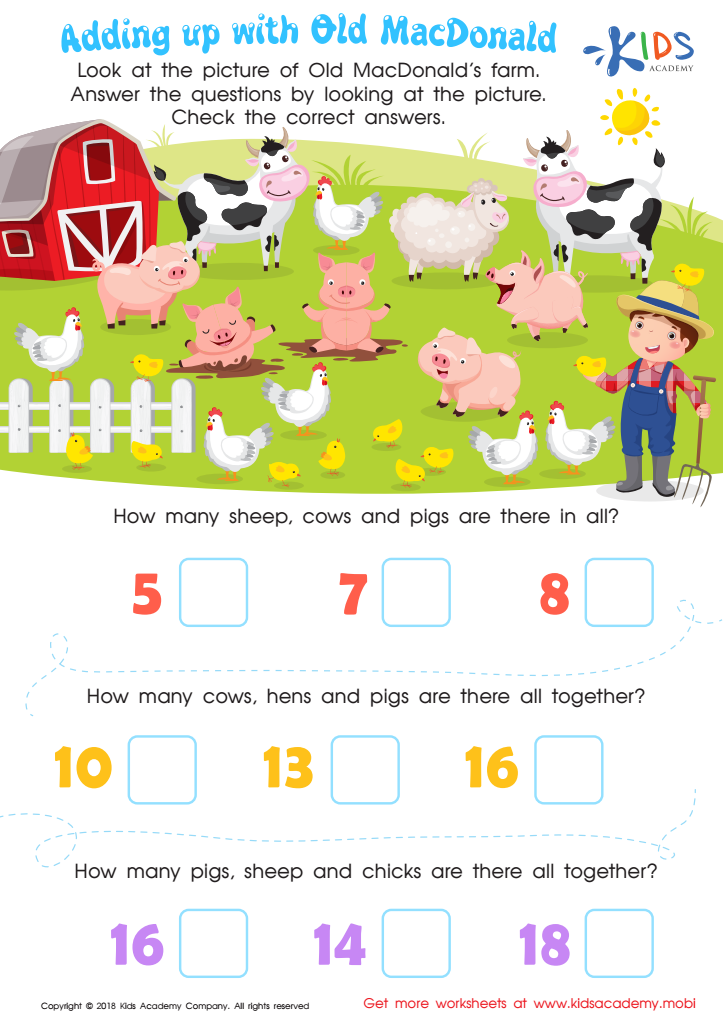
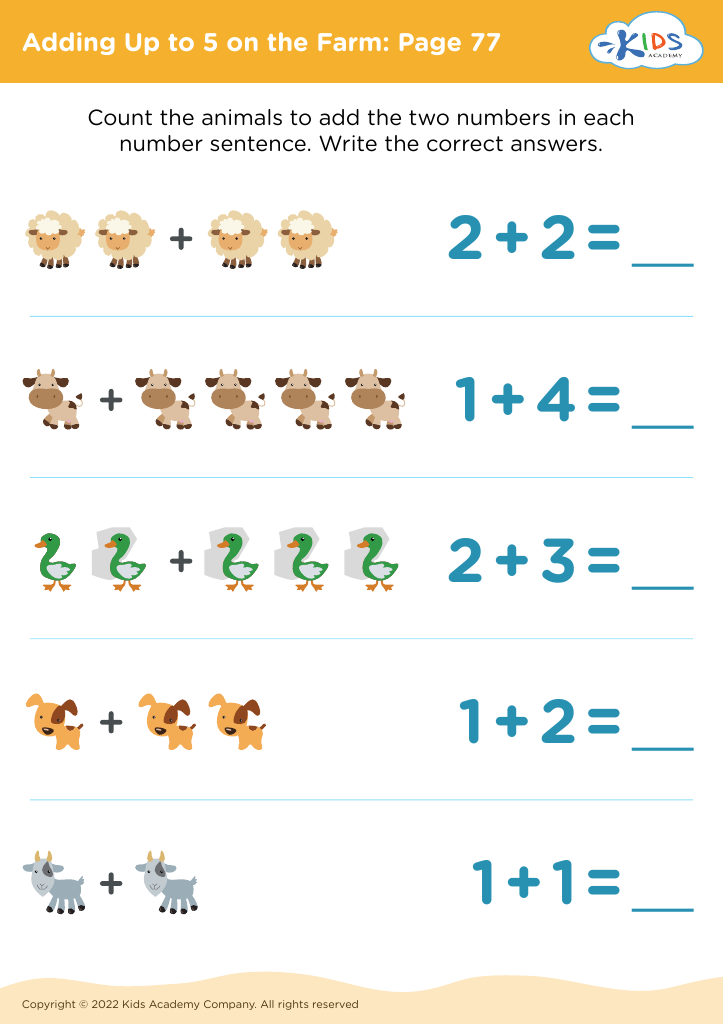
Adding Up with Old MacDonald Worksheet
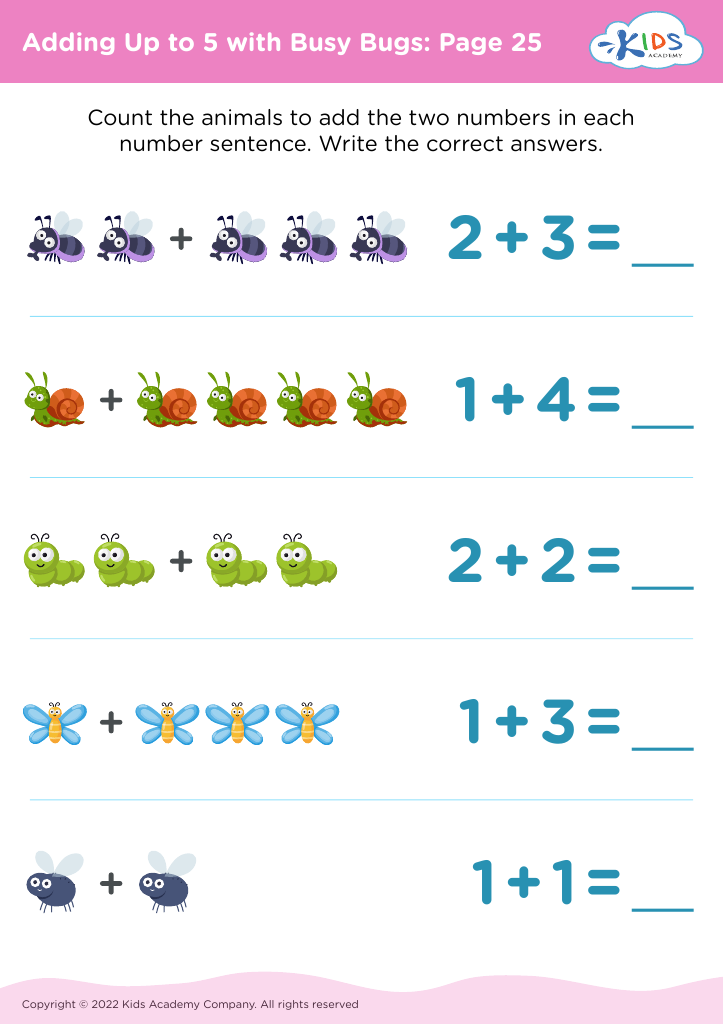
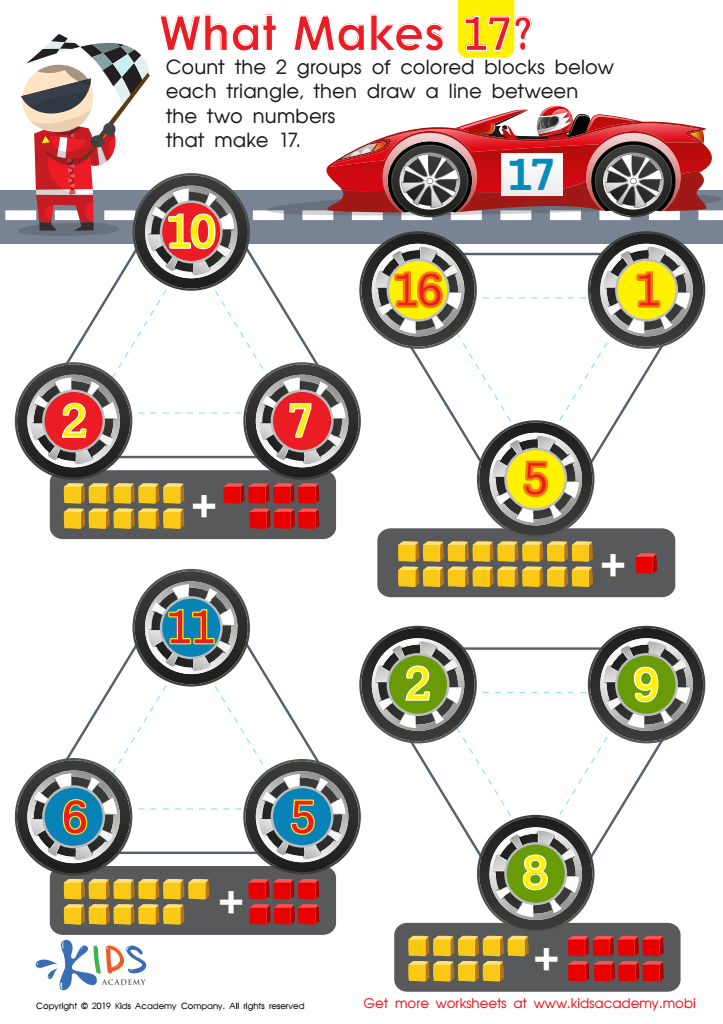
What Makes 17 Worksheet








Addition skills are fundamental to a child's cognitive development and overall academic growth, beginning at an early age. For children aged 3-6, learning basic addition concepts fosters numerical literacy, which is essential for future math proficiency and critical thinking abilities. Early understanding of addition helps children grasp the concept of quantity and sets the foundation for more complex mathematical operations later on.
Parents and teachers should prioritize these skills because they enhance problem-solving capabilities and encourage logical reasoning. Engaging children in fun addition activities, such as using tangible objects like blocks or toys, makes learning enjoyable and interactive. Moreover, early math skills are closely linked to later academic success; children who develop these skills early on often perform better in school, thus boosting their self-confidence.
Additionally, the social aspect of learning addition—through games and group activities—can enhance social skills and teamwork. Providing positive reinforcement when children master simple addition encourages a love of learning. Therefore, nurturing addition skills in early childhood not only sets the stage for future mathematical understanding but also contributes to a child's holistic development, paving the way for lifelong learning and success.








