Matching skills Worksheets for Ages 3-6
28 filtered results
-
From - To
Discover a fun and interactive way to boost your child's development with our "Matching Skills Worksheets for Ages 3-6." Expertly designed by early childhood educators, these worksheets are perfect for improving cognitive abilities, visual perception, and fine motor skills. Kids will enjoy engaging in activities that involve matching shapes, colors, patterns, and more, fostering foundational skills essential for higher learning. Ideal for preschool and kindergarten children, our colorful, age-appropriate worksheets make learning an exciting adventure. Help your child make connections and build confidence with materials tailored to their developmental needs. Start exploring now and see your little one thrive!
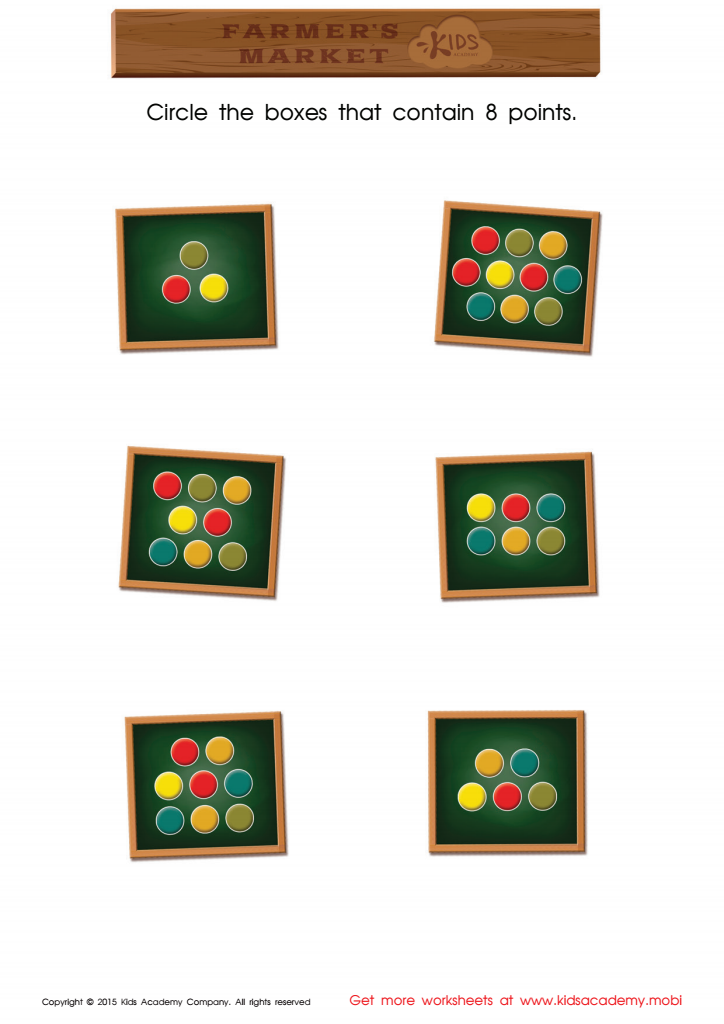
Count and Match Points 8 Math Worksheet
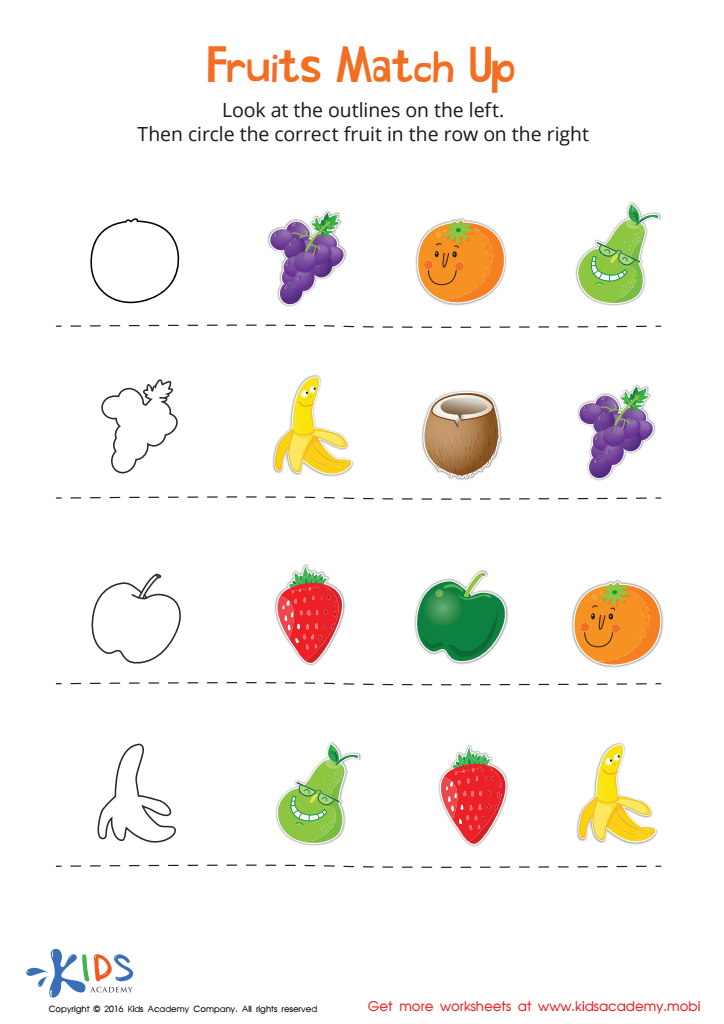
Fruits Match Up Worksheet
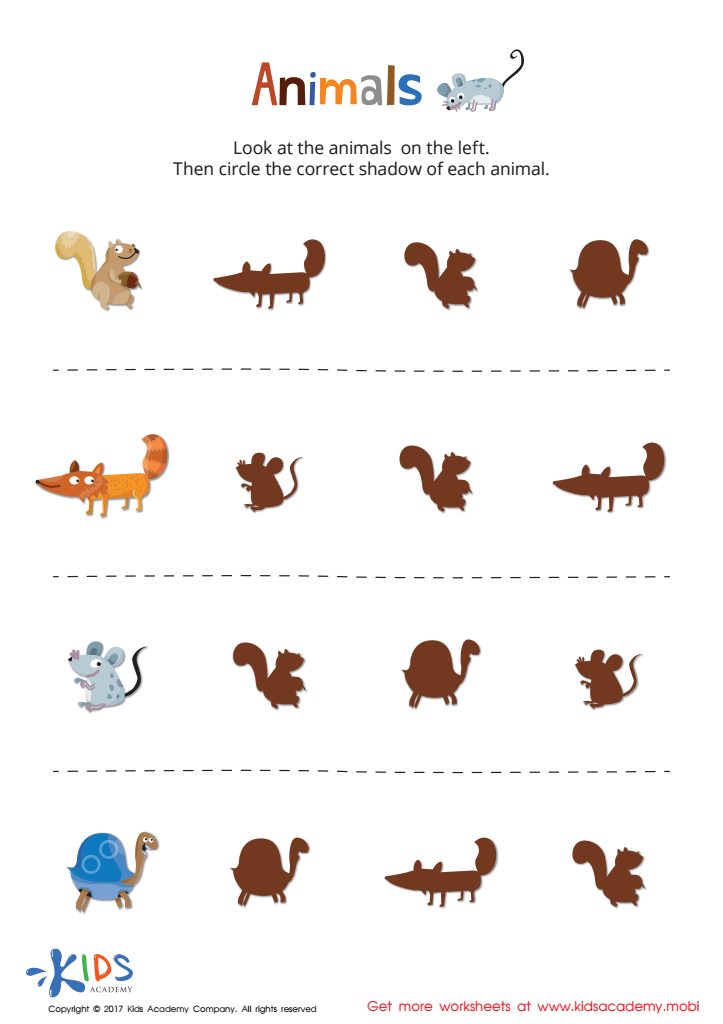
Animal Shadows Sorting Worksheet
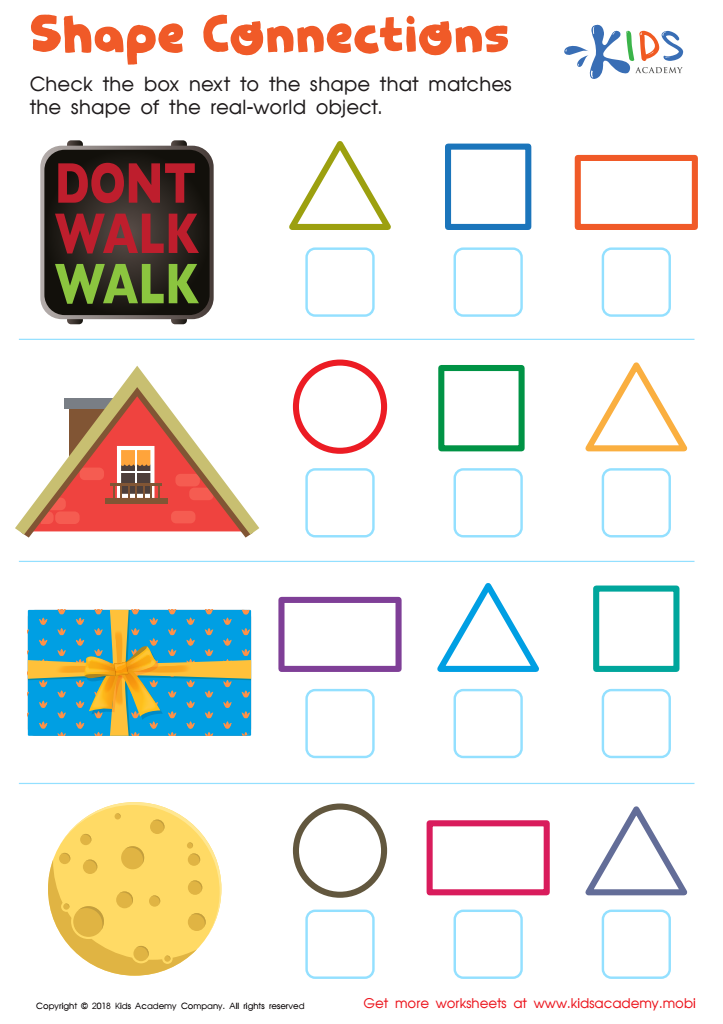
Shape Connections Worksheet
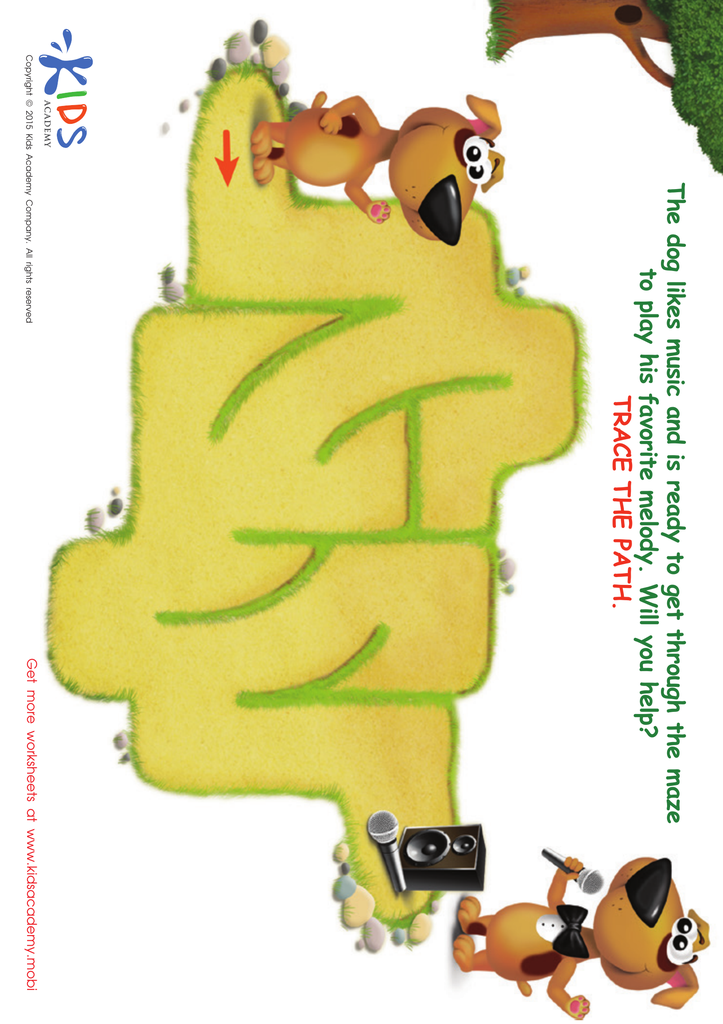
Singer Maze Worksheet
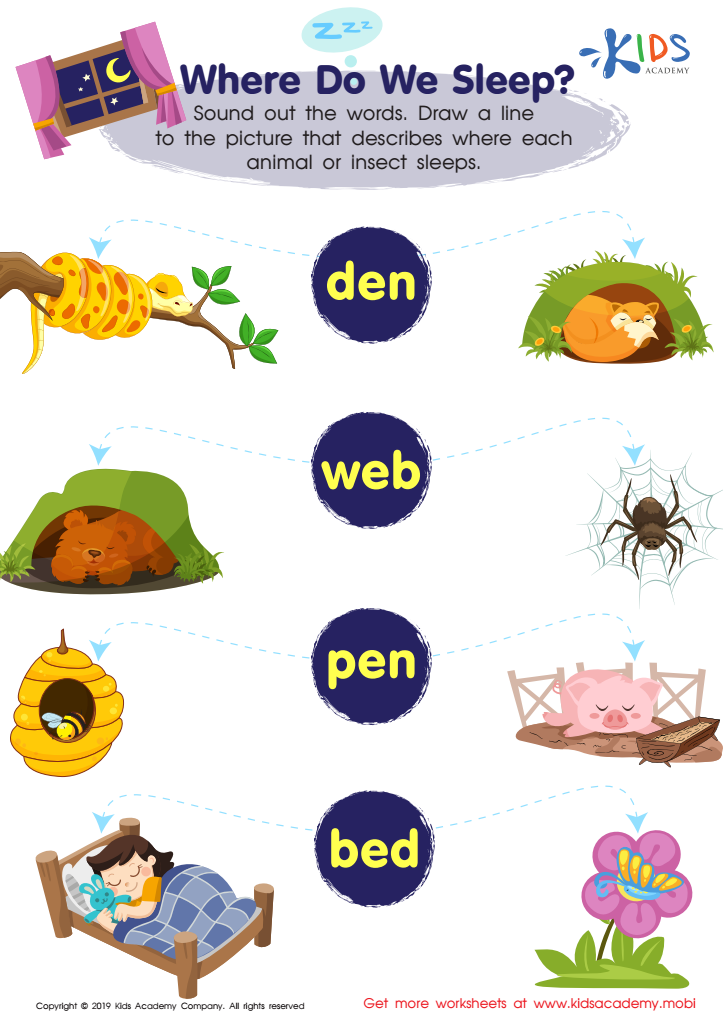
Where Do We Sleep Worksheet
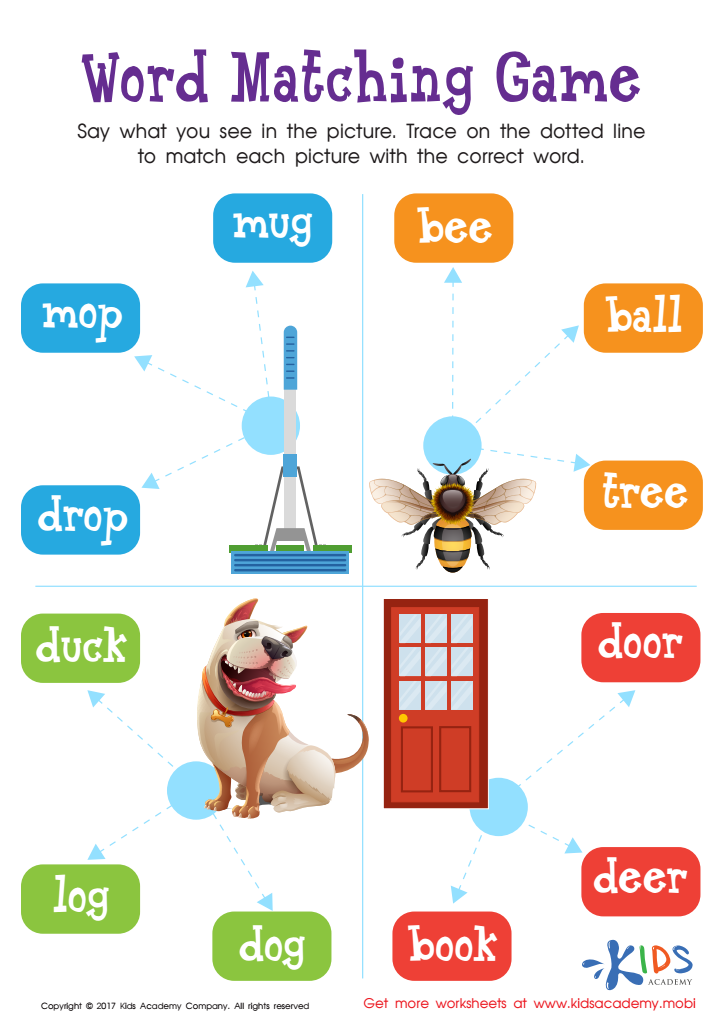
Word Matching Game Worksheet
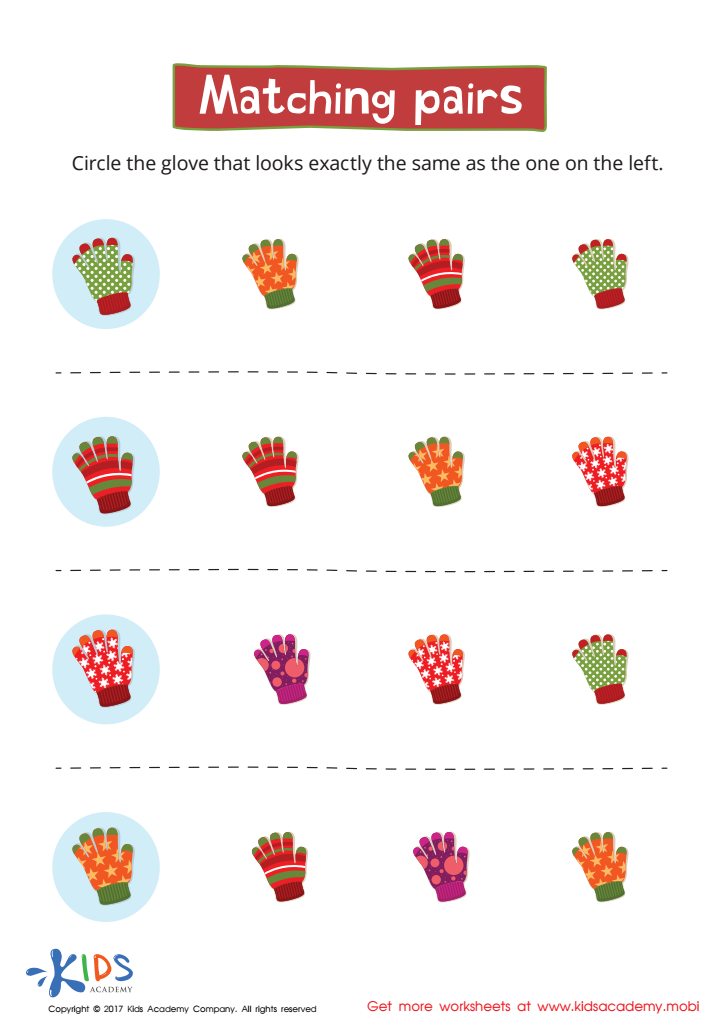
Matching: Matching Pairs Worksheet
Animal Prints Match-Up Worksheet
Math Matching Game: Monsterв's Socks Worksheet
Food Match Up Worksheet
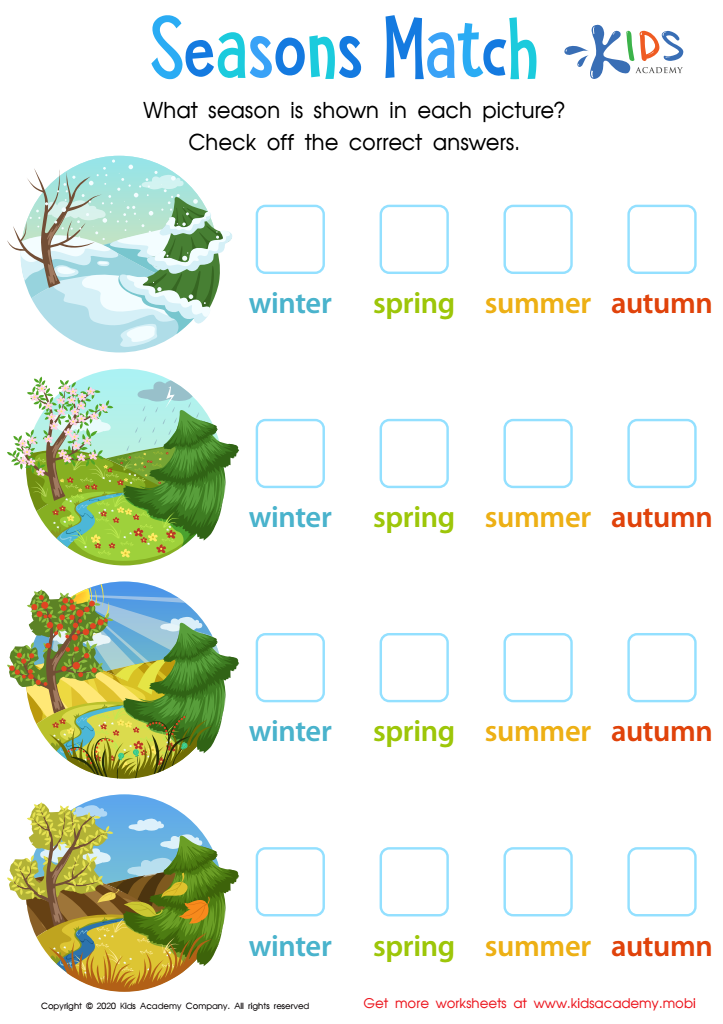
Seasons Match Worksheet
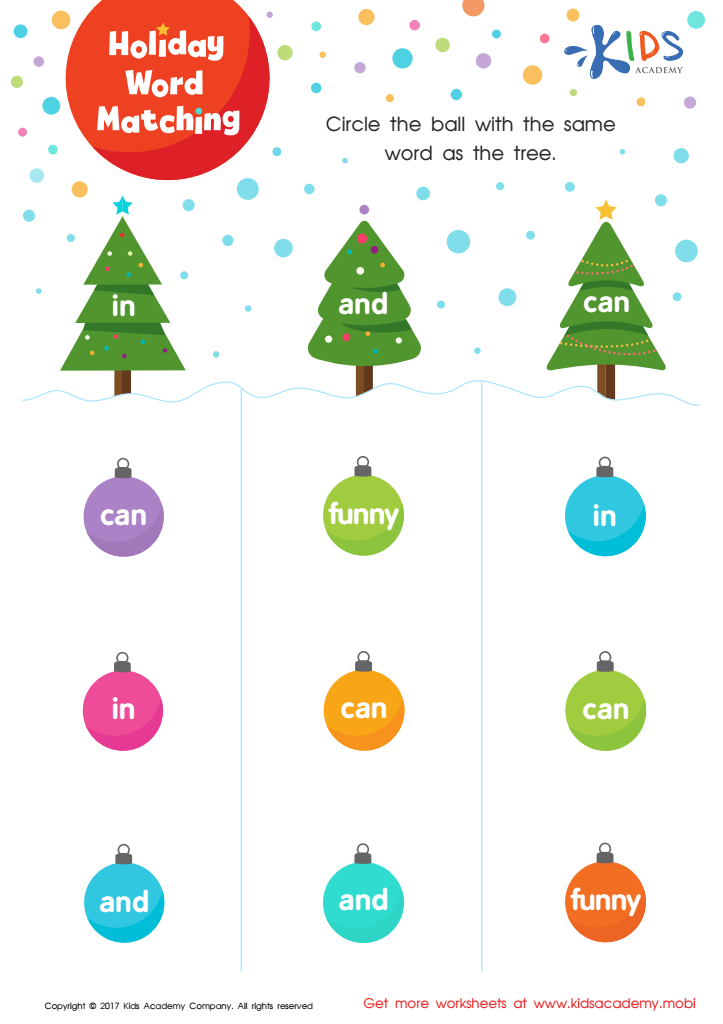
Holiday Word Matching Worksheet
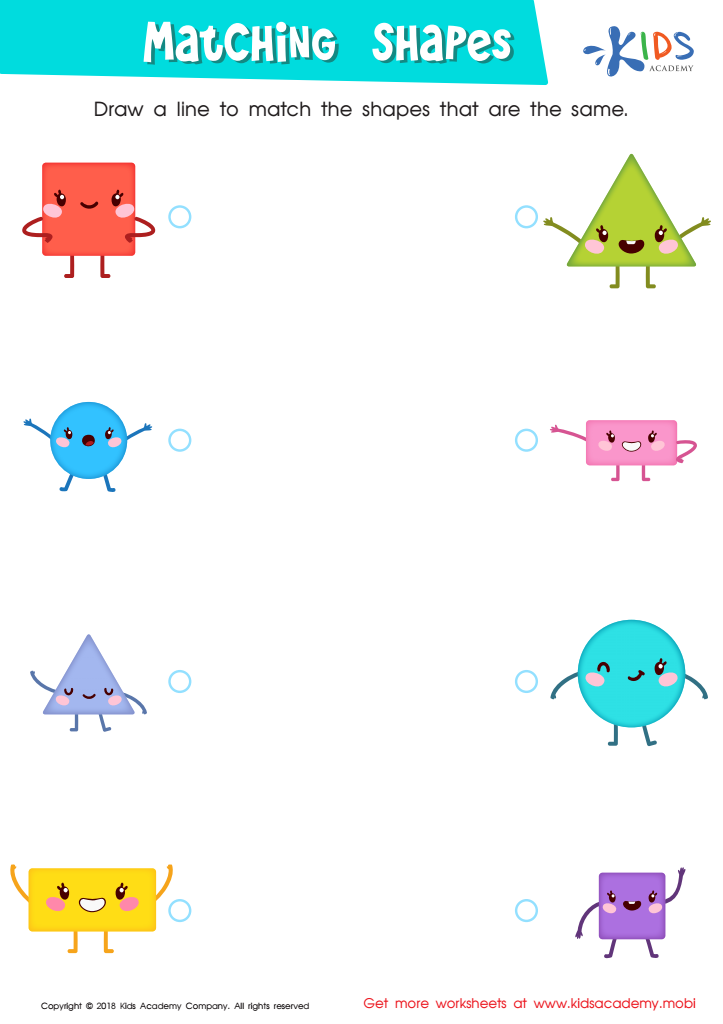
Matching Shapes Worksheet
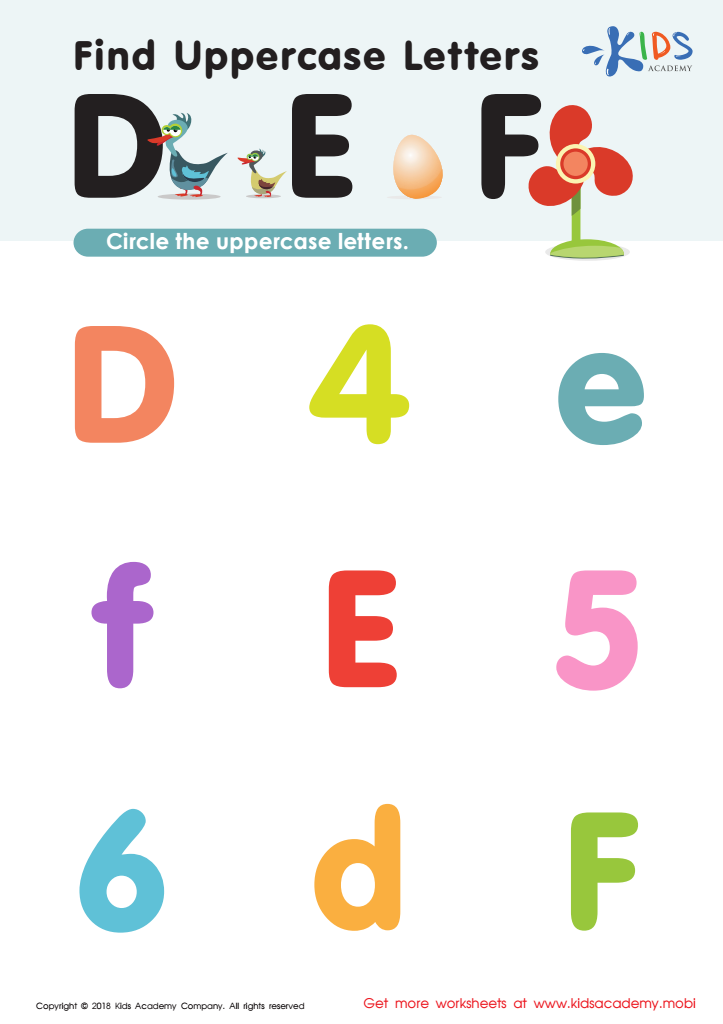
Find Uppercase Letters D, E, and F Worksheet
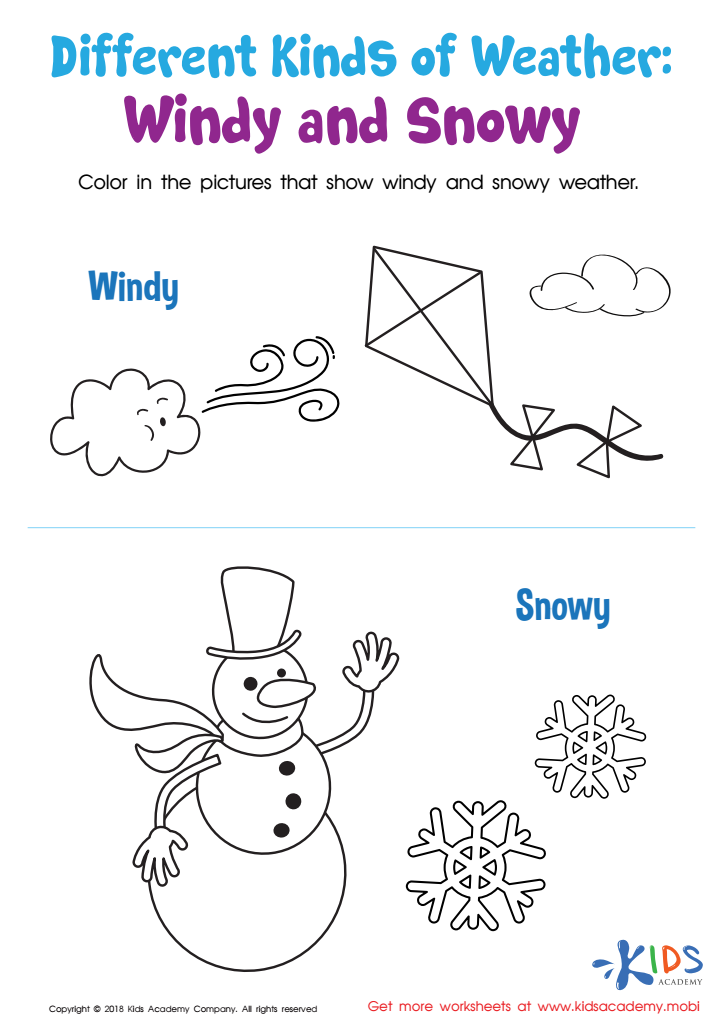
Different Kinds of Weather: Windy and Snowy Worksheet
 Assign to My Students
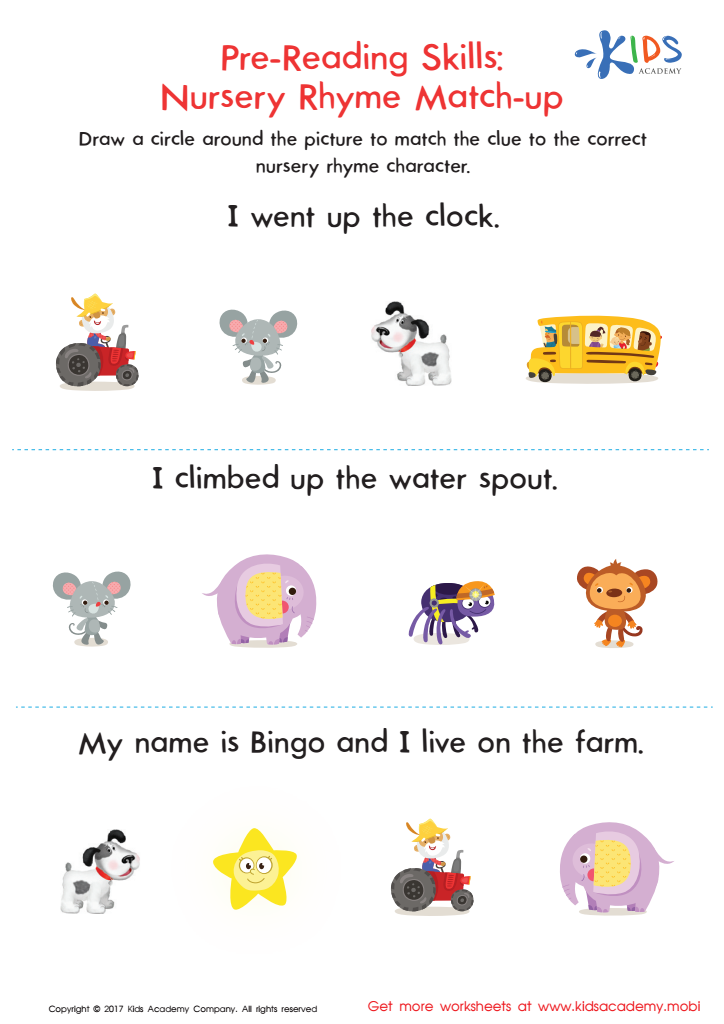
Nursery Rhyme Match–Up Worksheet
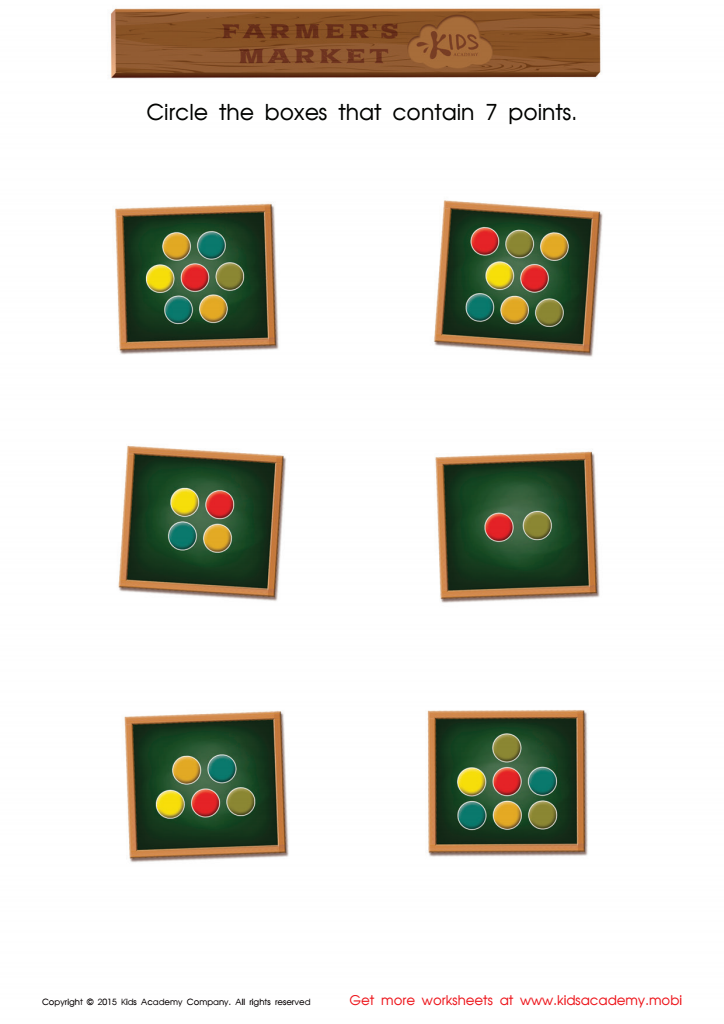
Count and Match Points 7 Math Worksheet
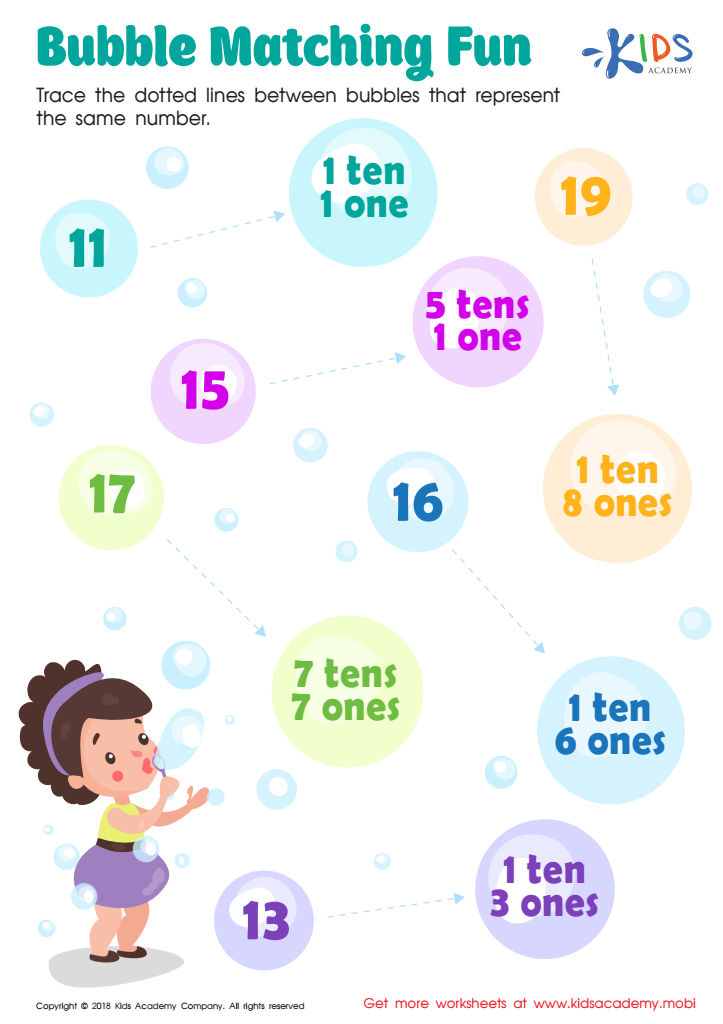
Bubble Matching Fun Worksheet
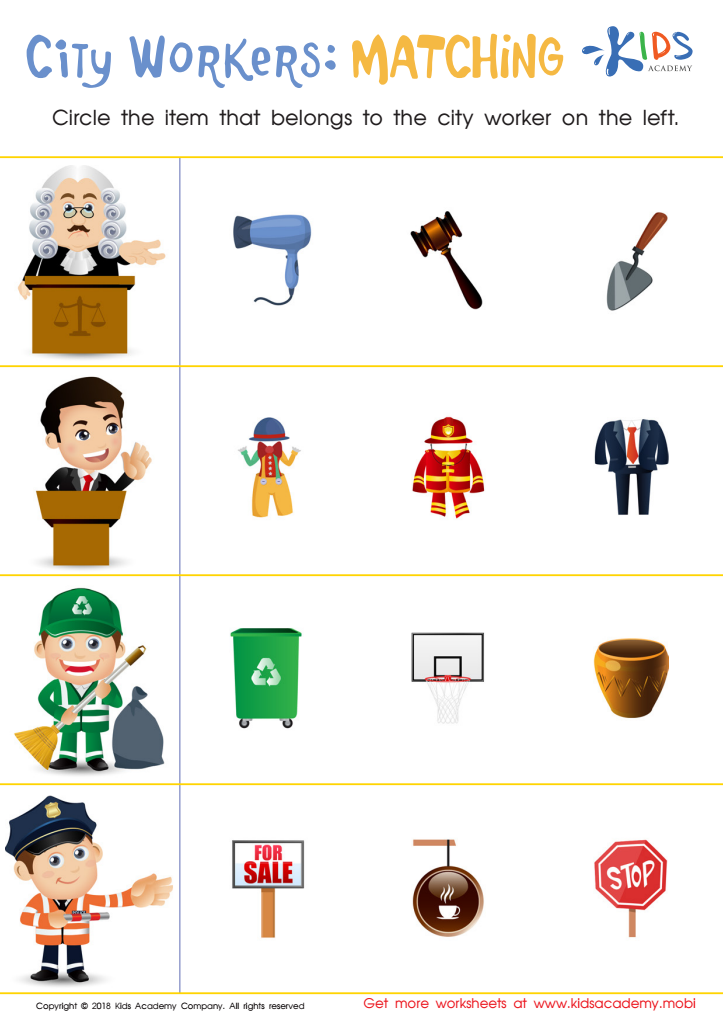
City Workers: Matching Worksheet
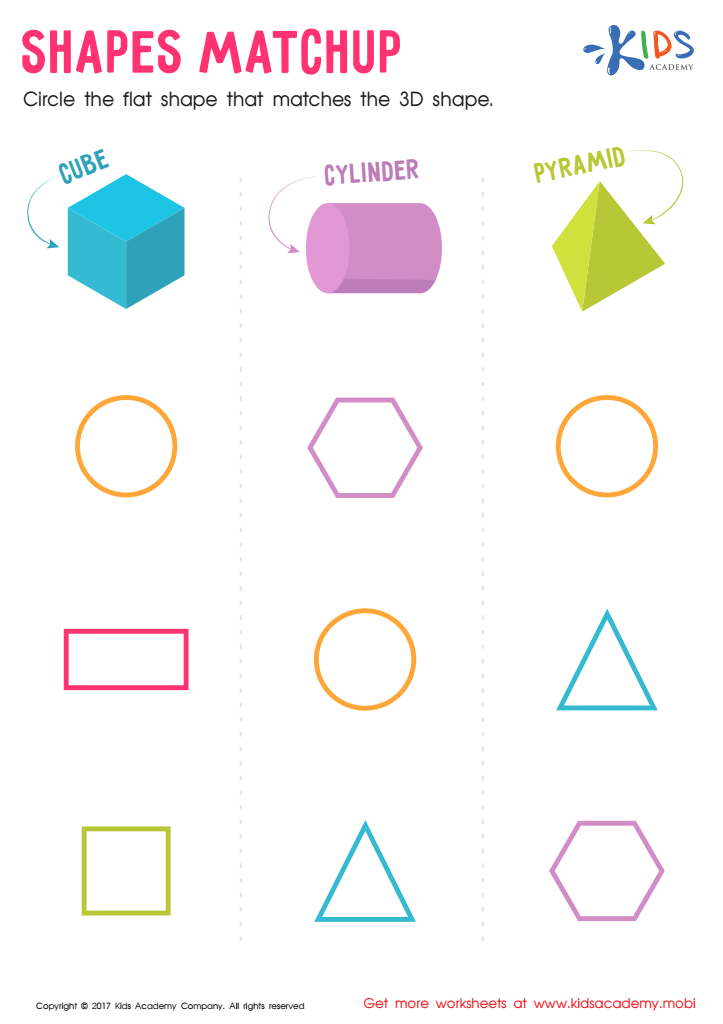
Shapes Matchup Worksheet
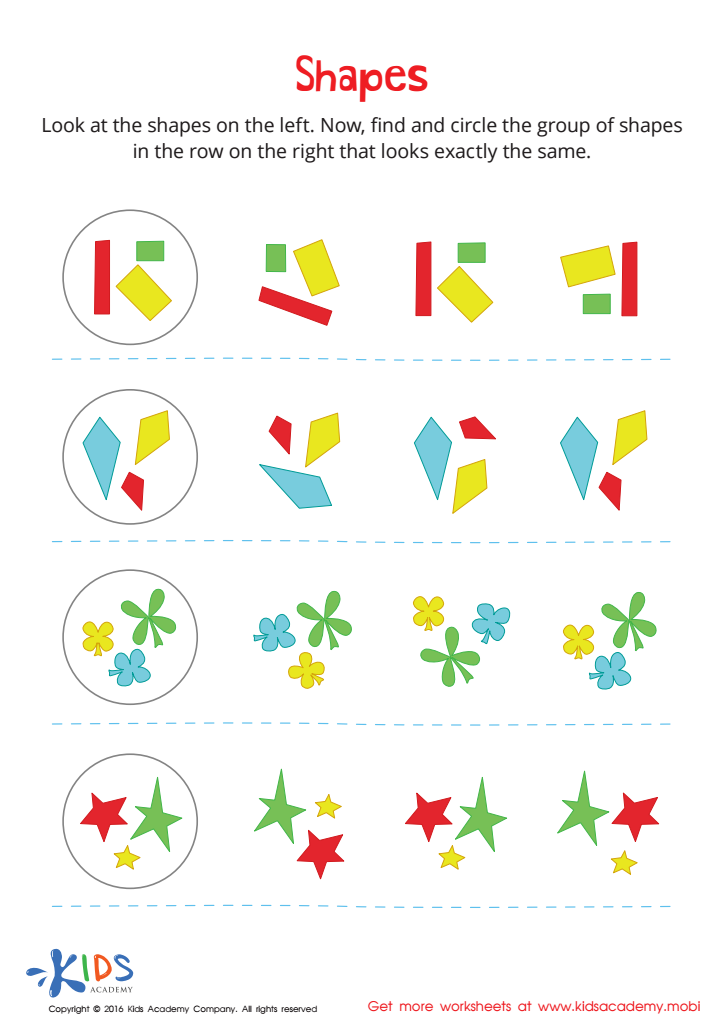
Shapes Worksheet
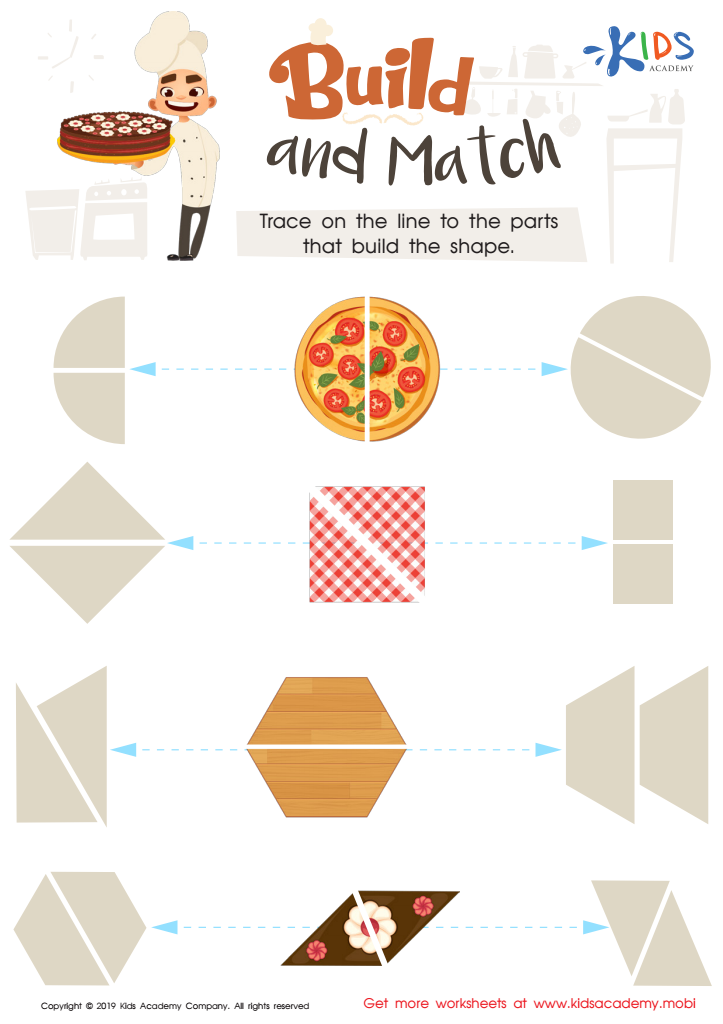
Build and Match Worksheet







Matching skills for children aged 3-6 are critically important as they provide foundational cognitive abilities essential for later academic and real-life success. Parents and teachers should care about nurturing these skills because matching activities help children develop attention to detail and improve their observational skills. For instance, when children match shapes, colors, or objects, they learn to notice similarities and differences, a key skill in problem-solving and logical thinking.
Moreover, matching activities enhance memory retention. As children remember item features to find pairs or groups, they reinforce their visual and cognitive memories. This ability is fundamental in learning to read and understand mathematical concepts, where recognizing patterns is crucial.
Additionally, matching exercises foster early literacy and numeracy. Identifying matching letter pairs or number sets inevitably introduces young children to the fundamentals of the alphabet and basic counting. It can also support the development of fine motor skills as children handle and manipulate cards, puzzles, or matching toys.
From a social-emotional perspective, successfully completing matching tasks boost children's confidence and encourage a growth mindset. The joy and satisfaction from mastering these activities can motivate children to take on more challenging tasks, setting a positive tone for their educational journey.
In essence, by emphasizing matching skills, parents and teachers lay a robust foundation for a child's cognitive, academic, and emotional development.








