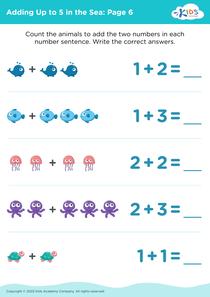
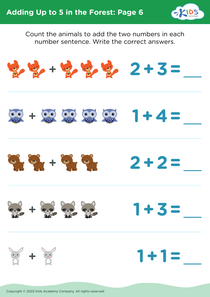
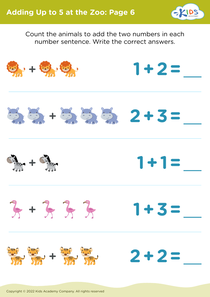
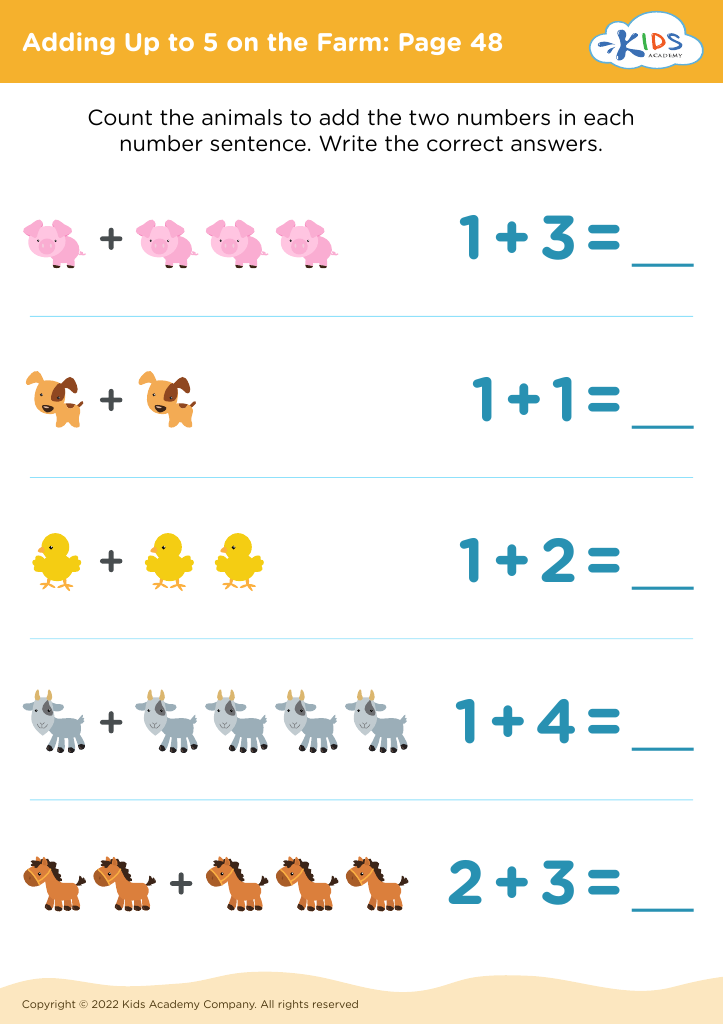
Adding on the Farm Worksheets for Ages 3-6
77 filtered results
Difficulty Level
Grade
Age
-
From - To
Subject
Activity
Standards
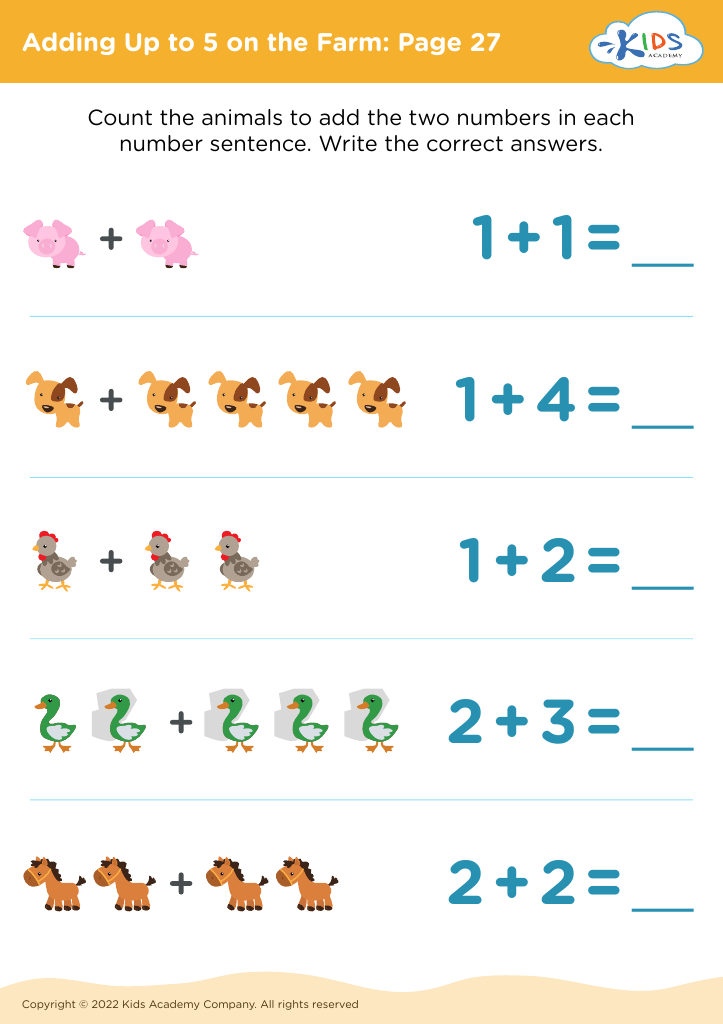
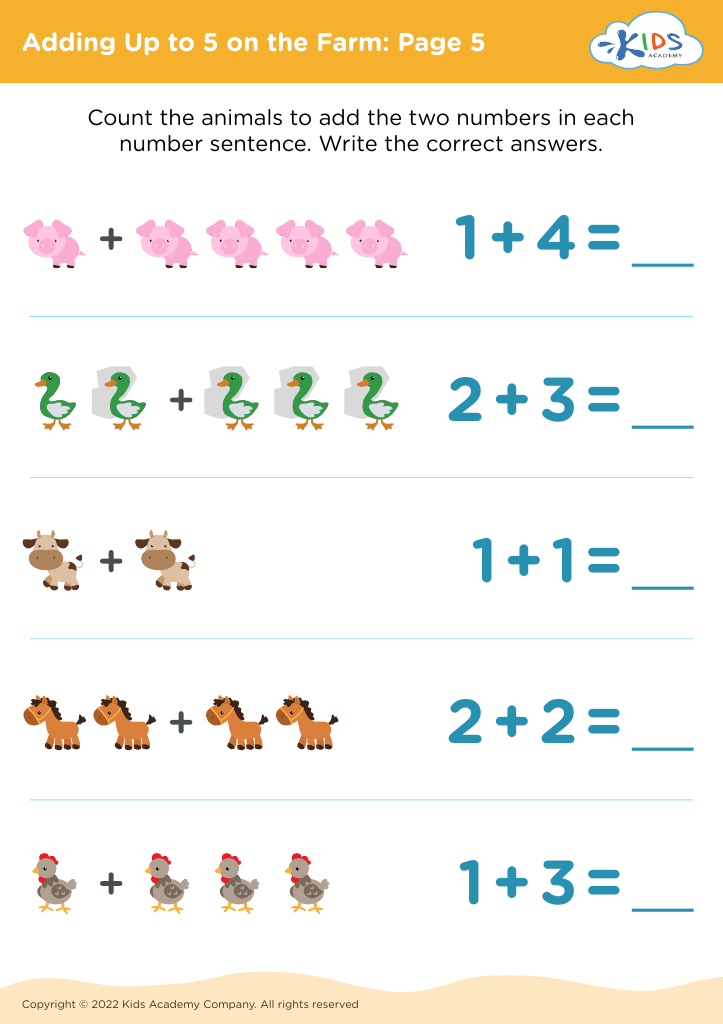
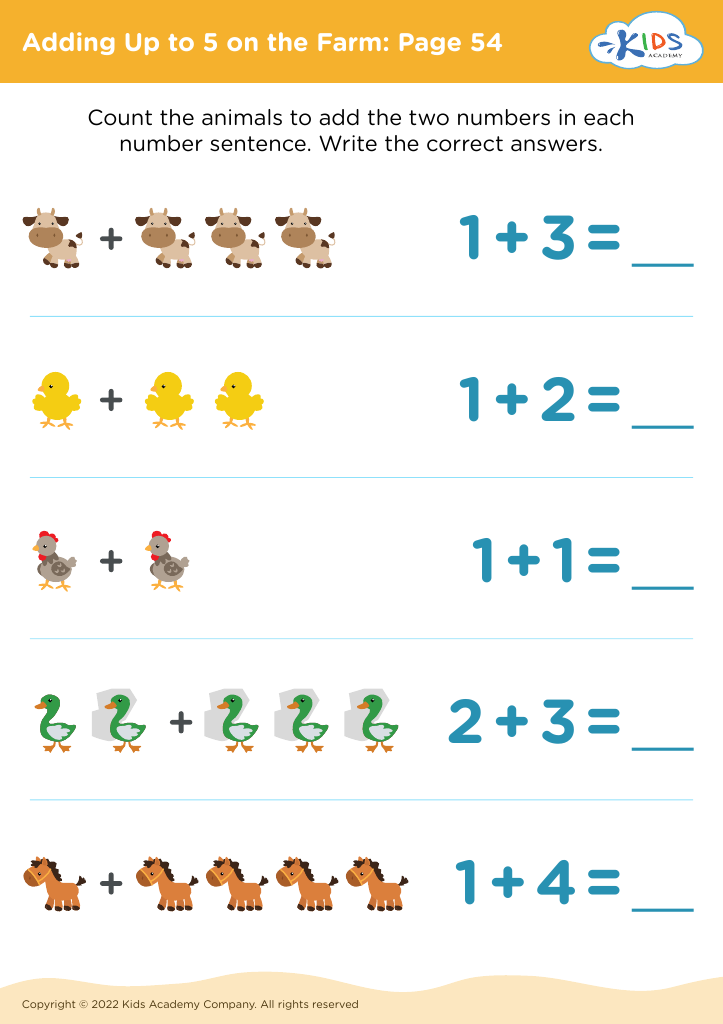
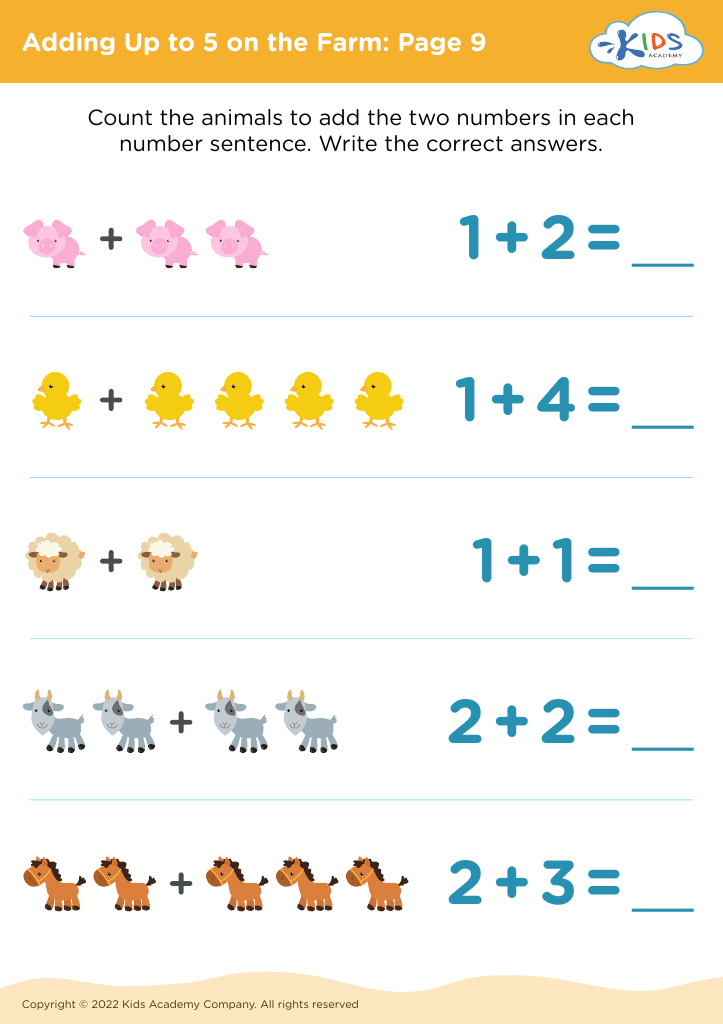
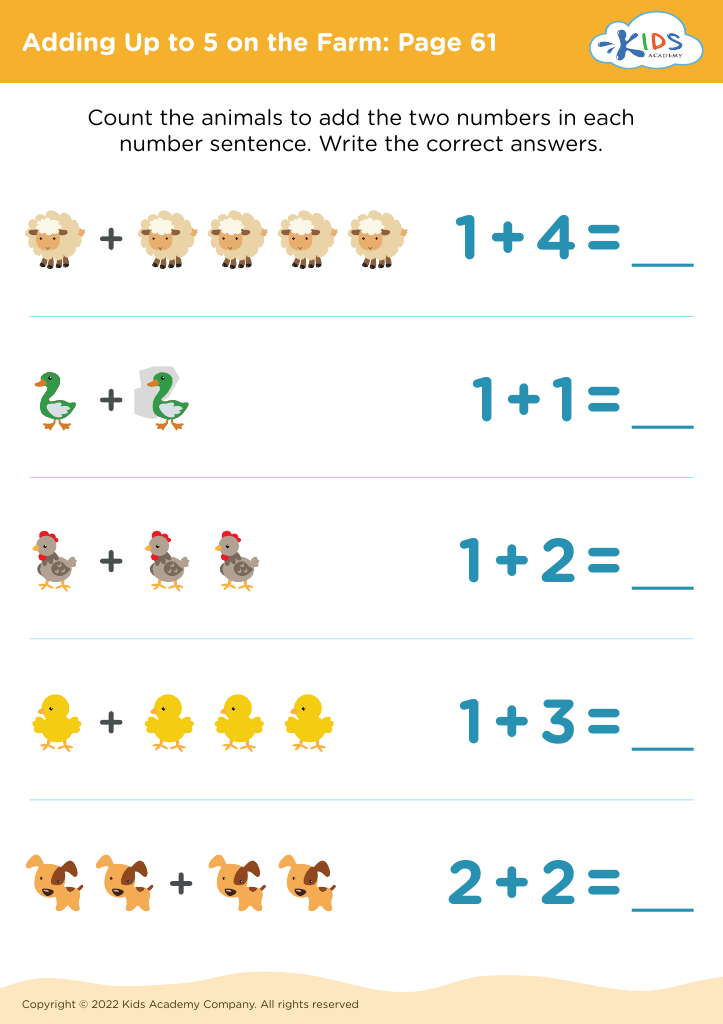
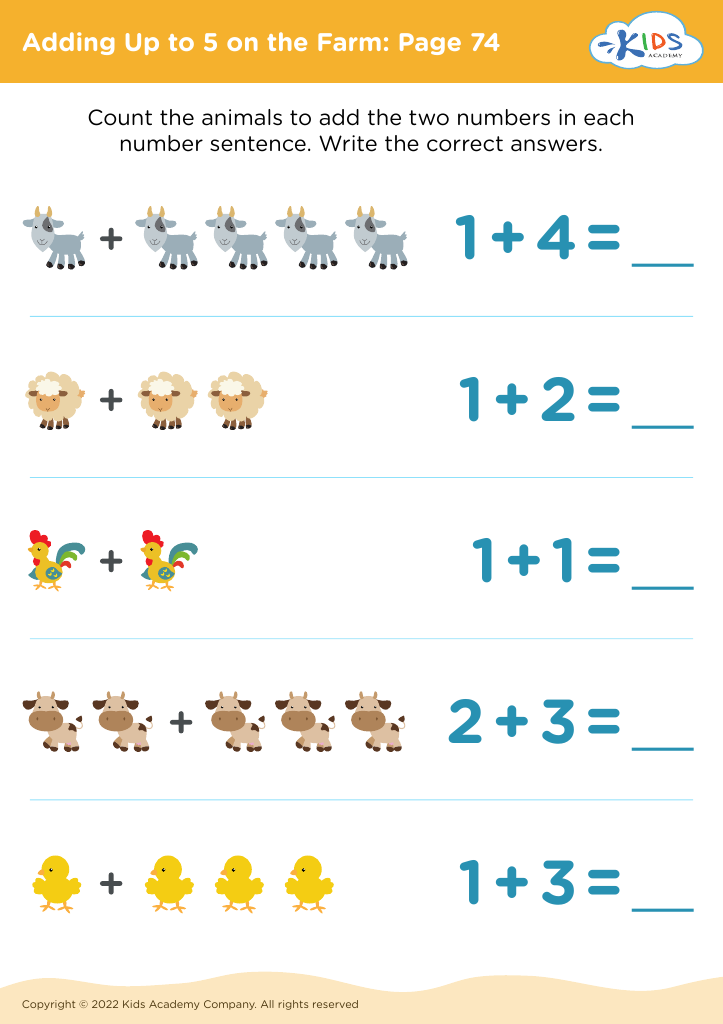
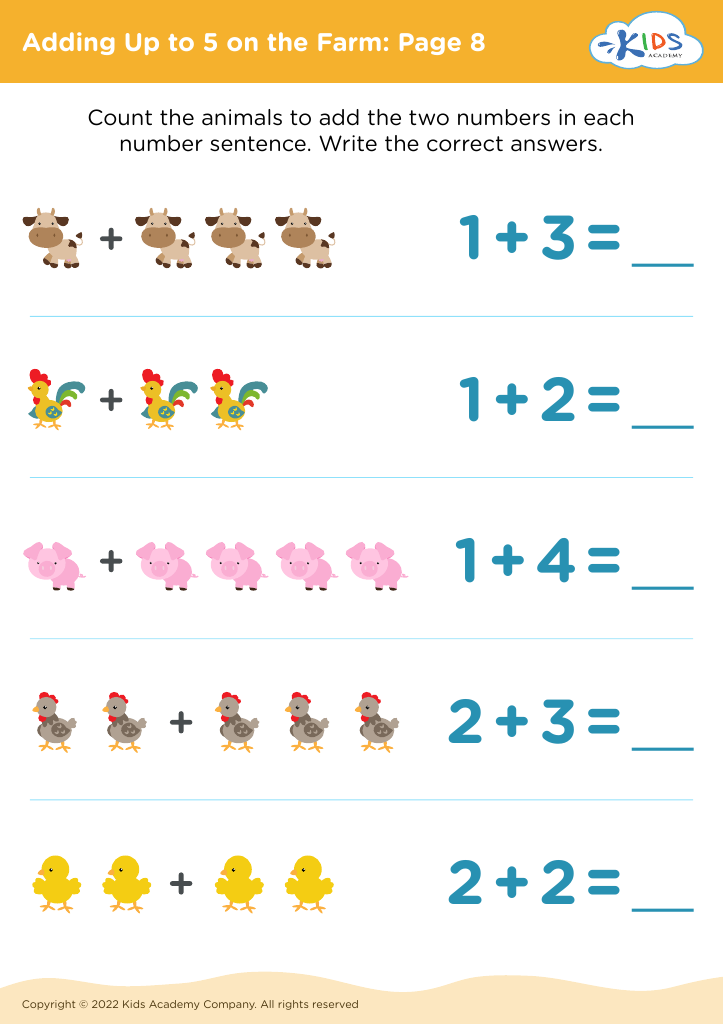
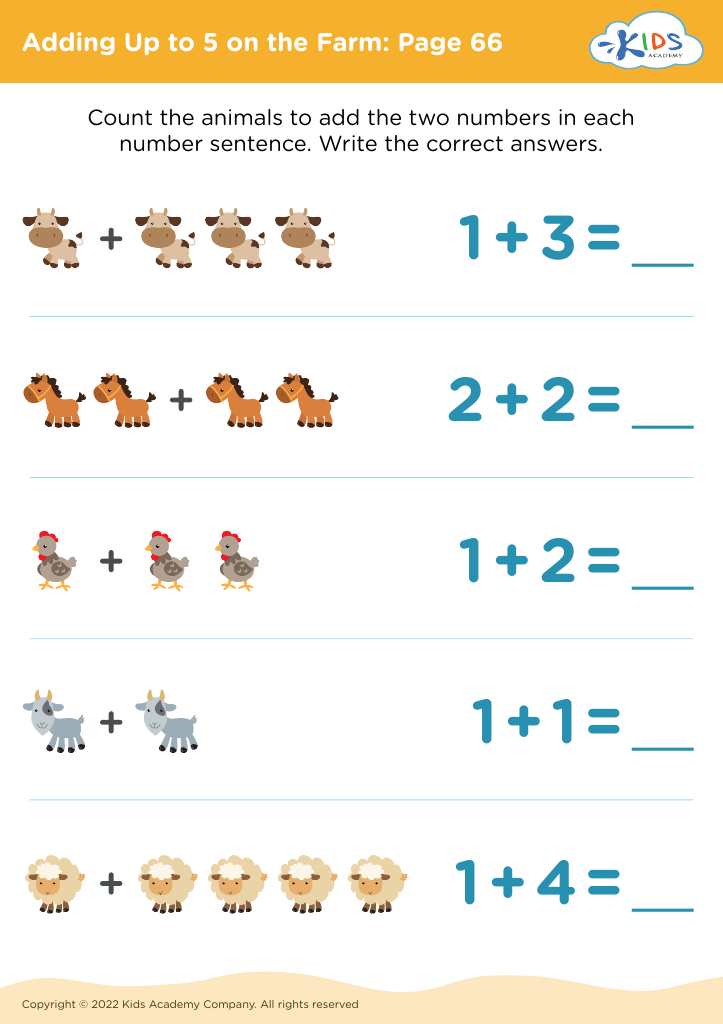
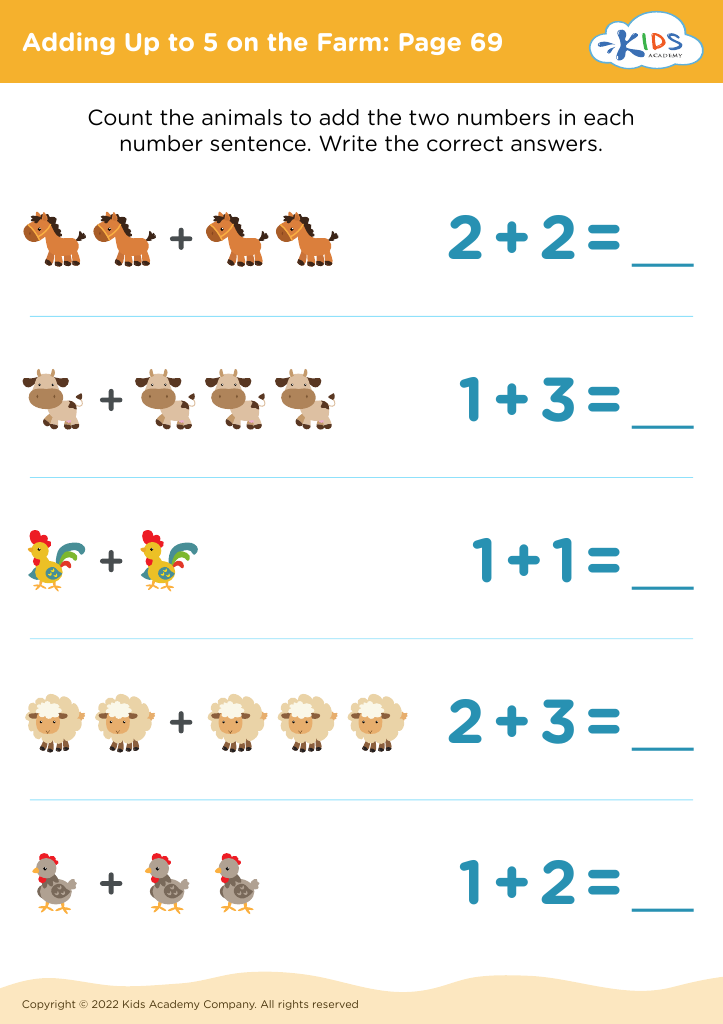
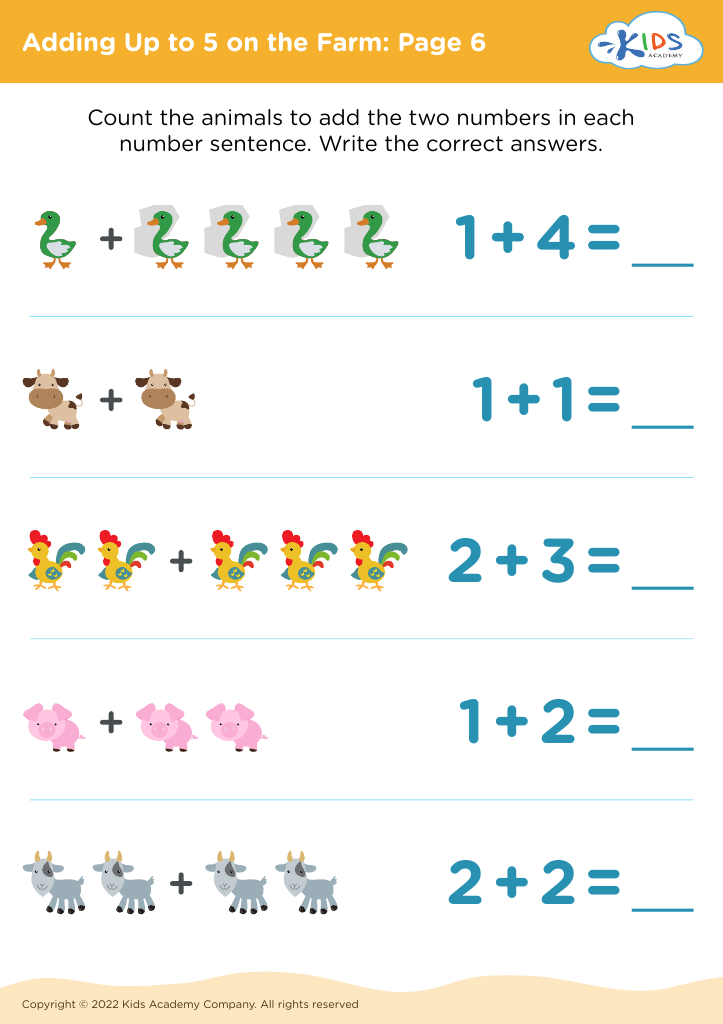
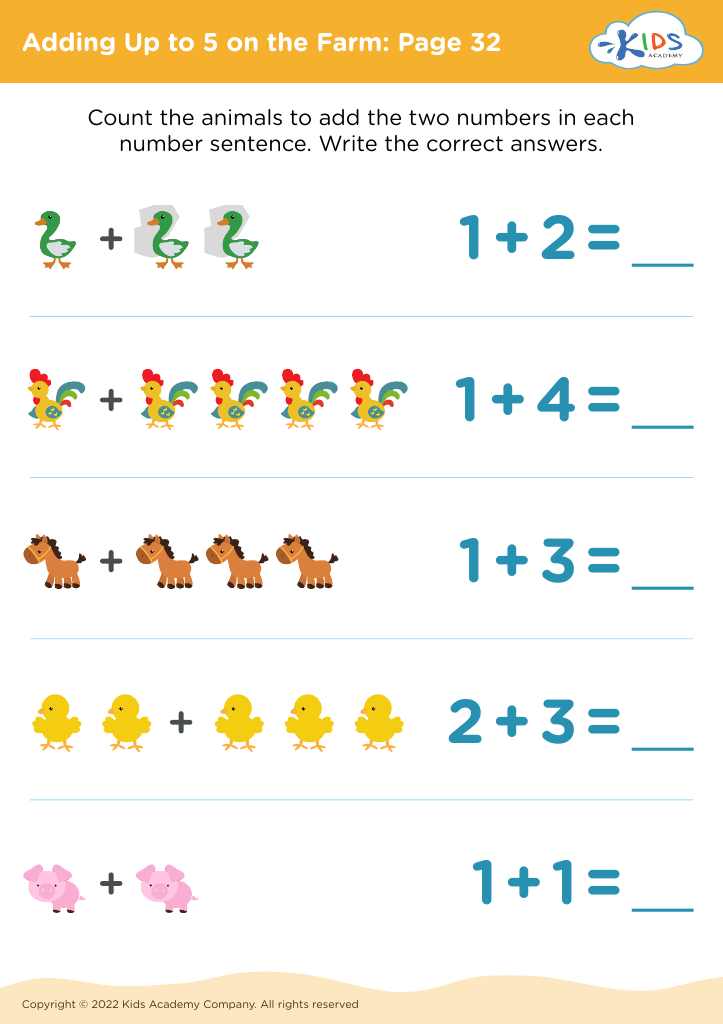
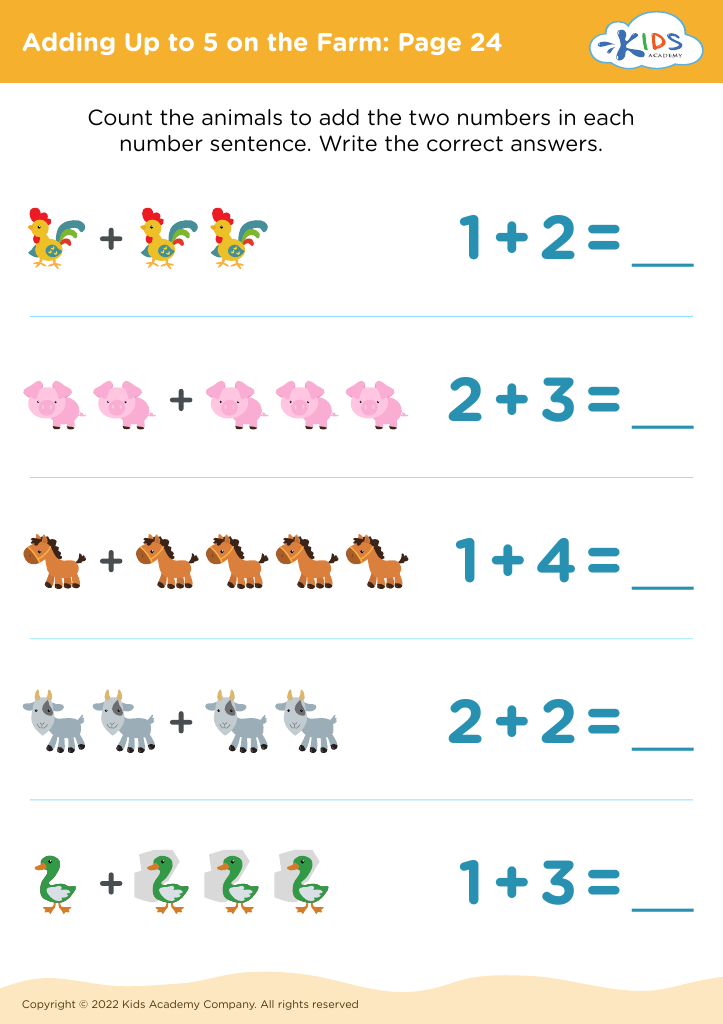
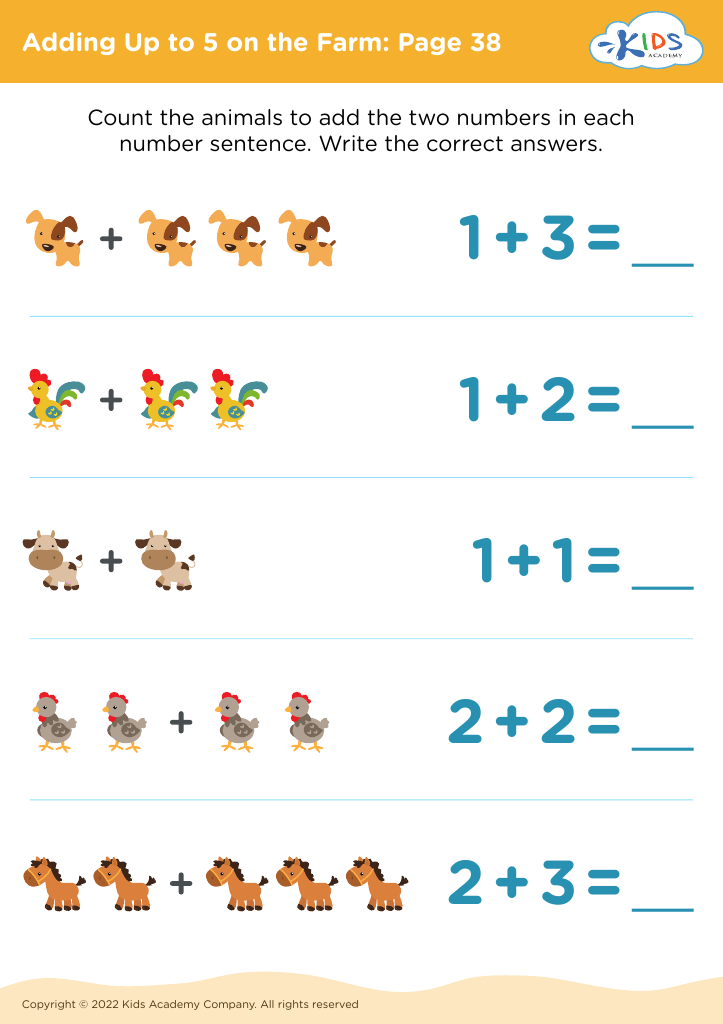
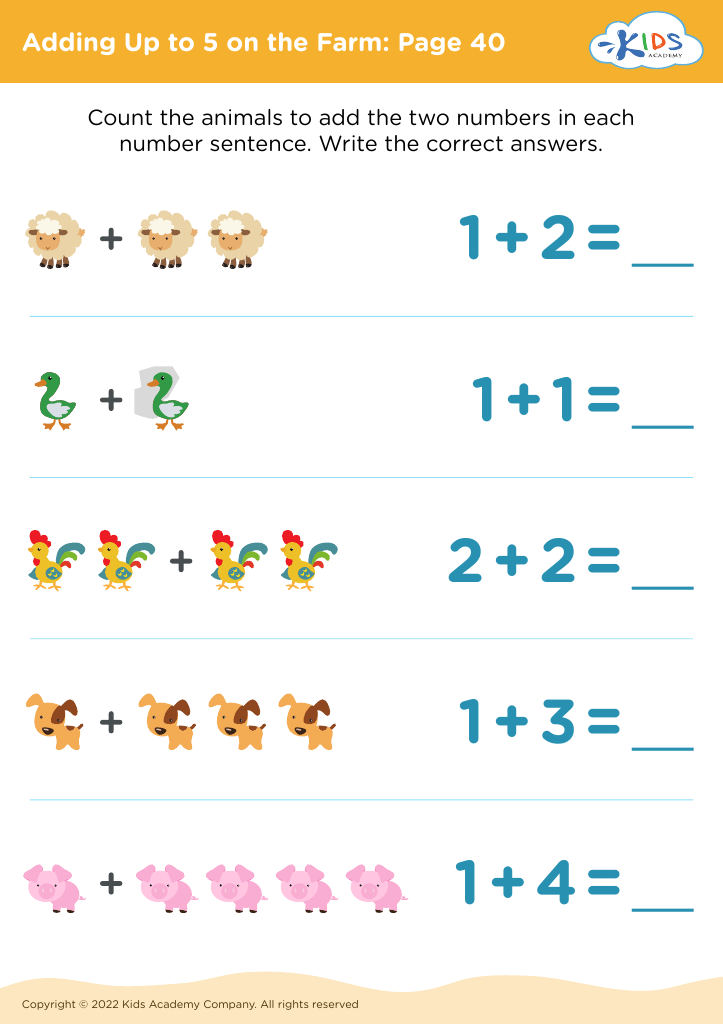
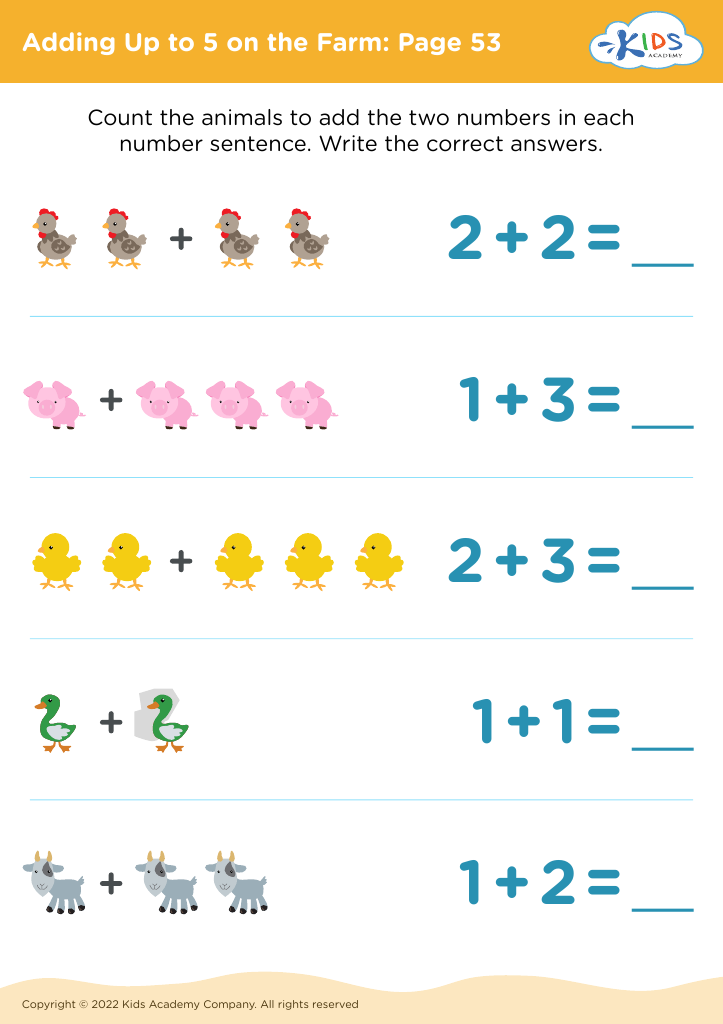
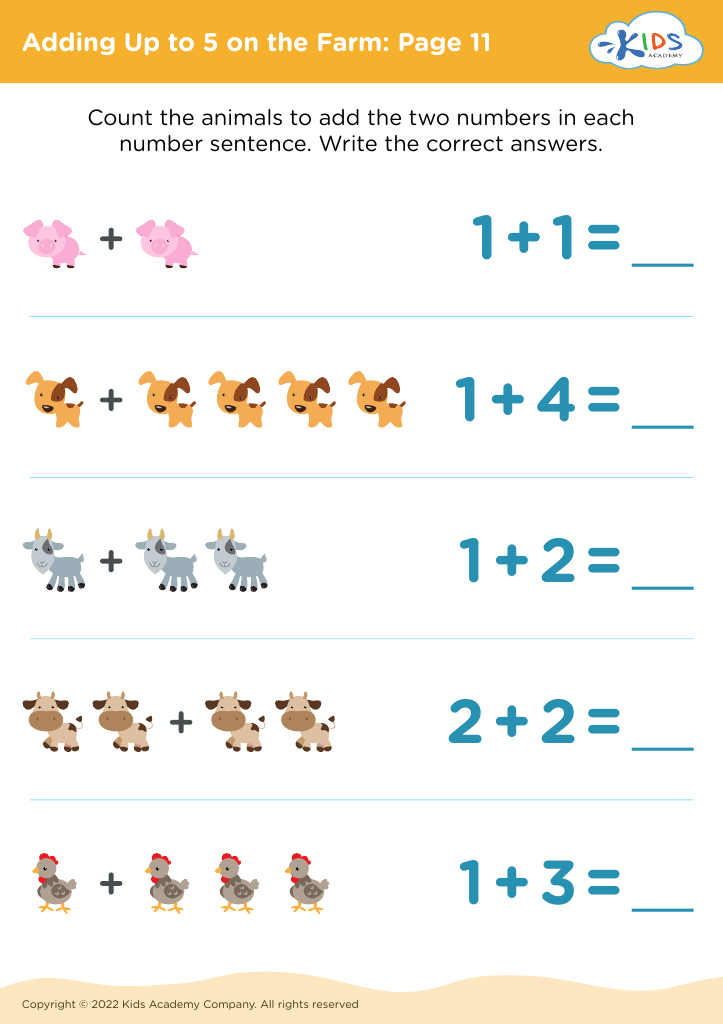
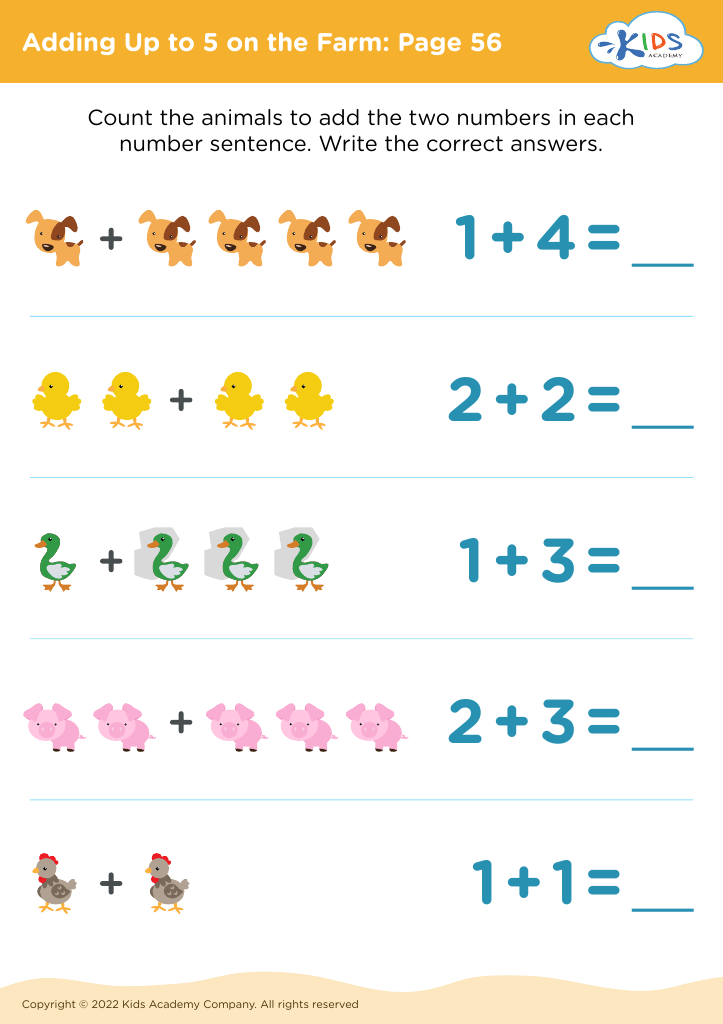
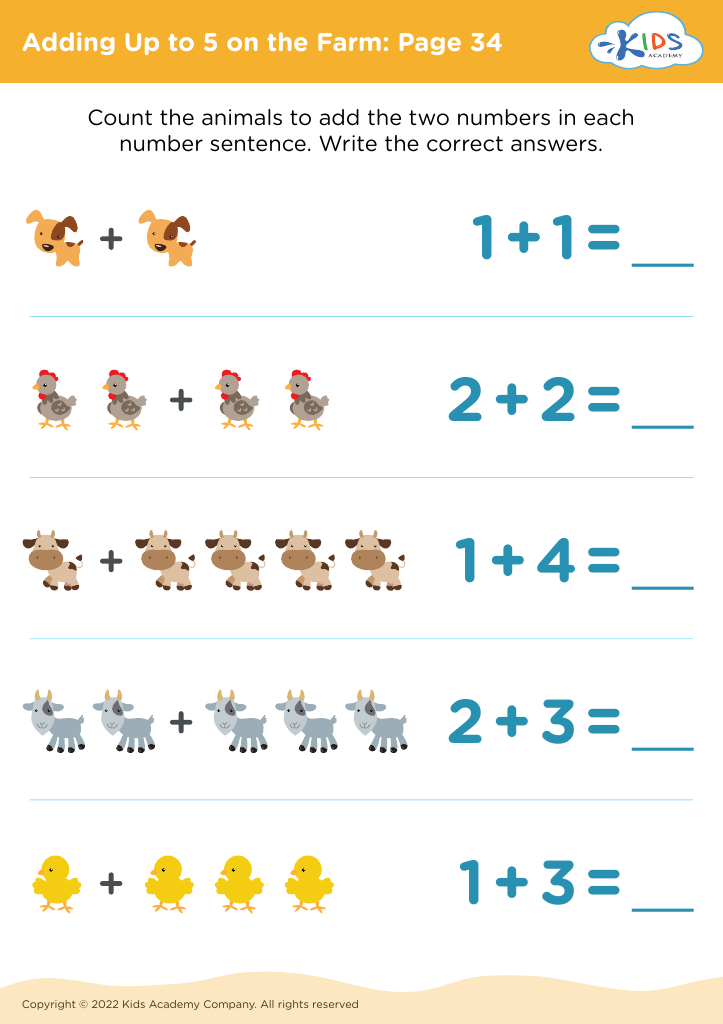
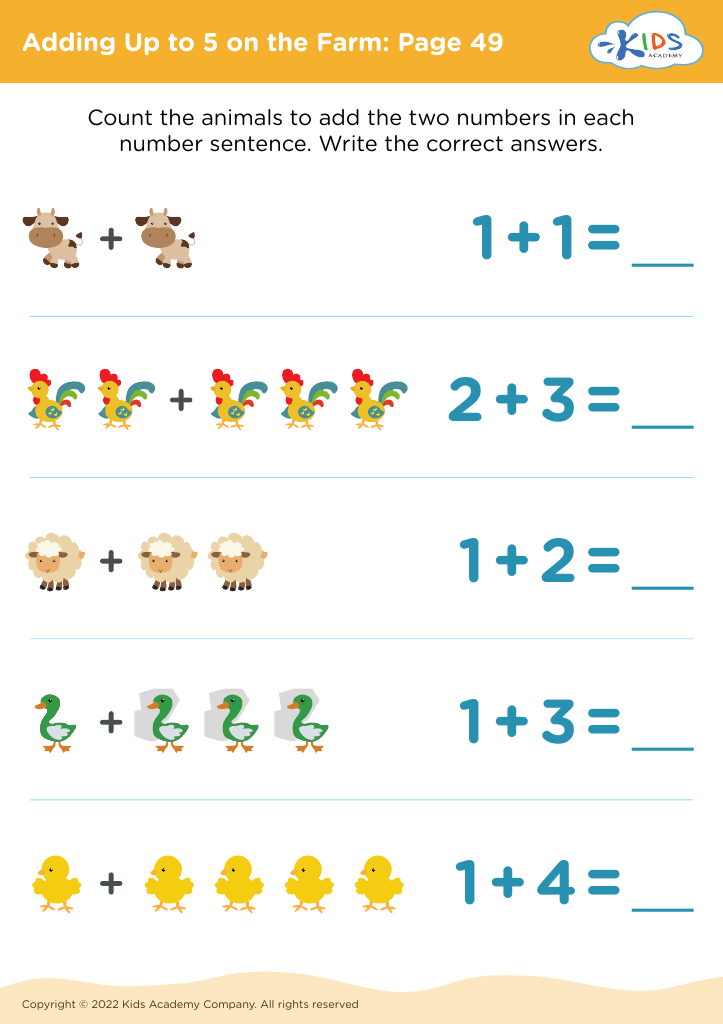
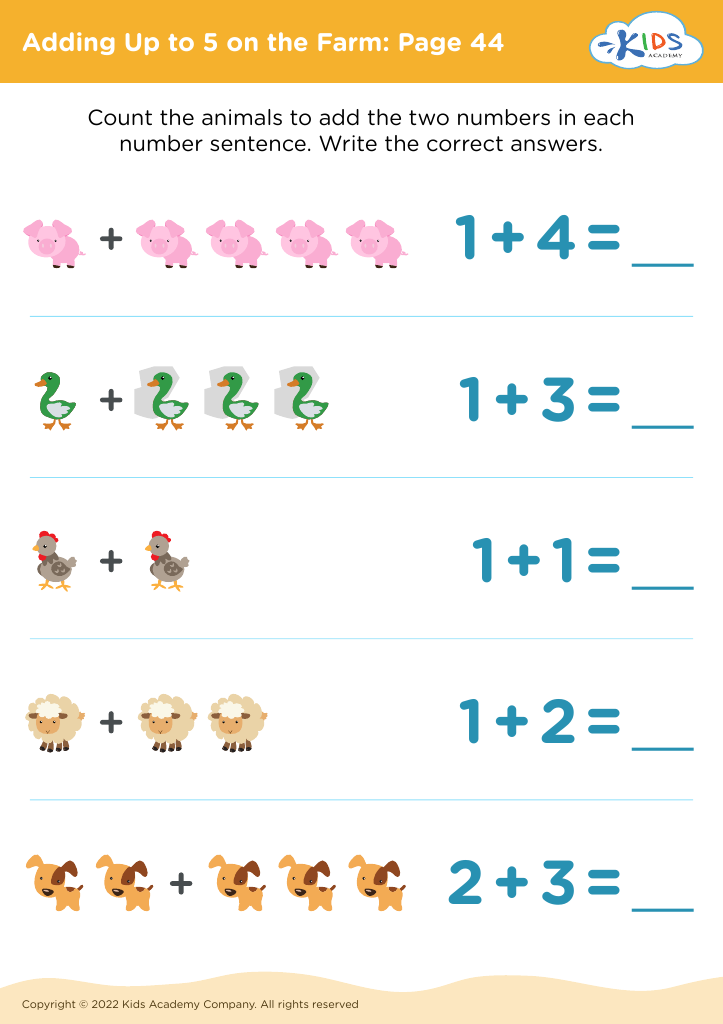
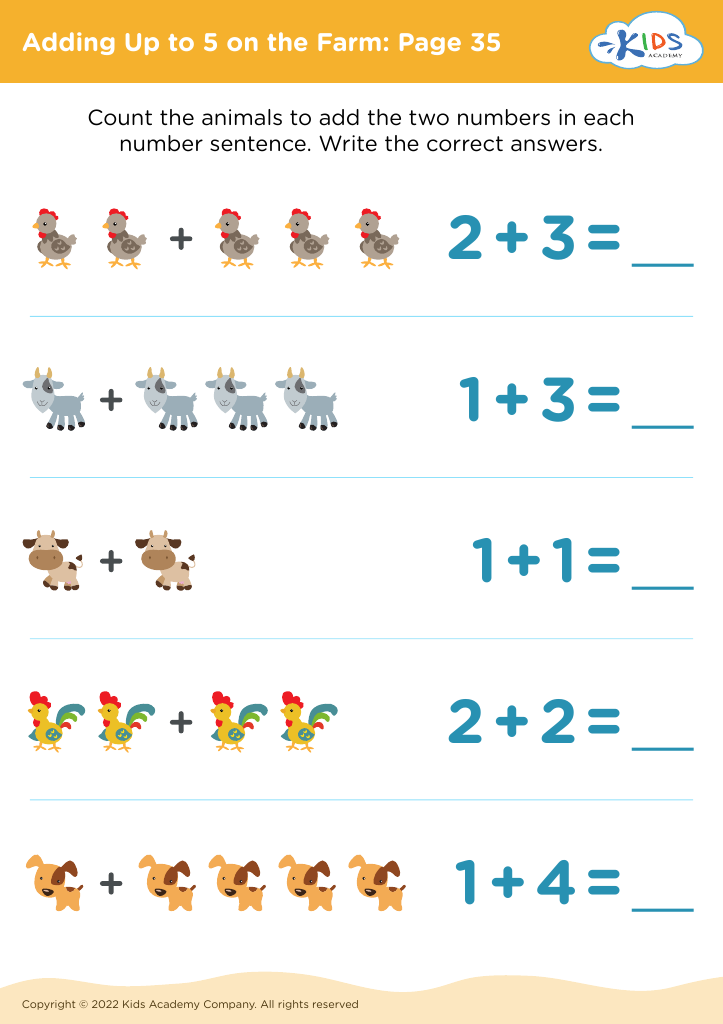
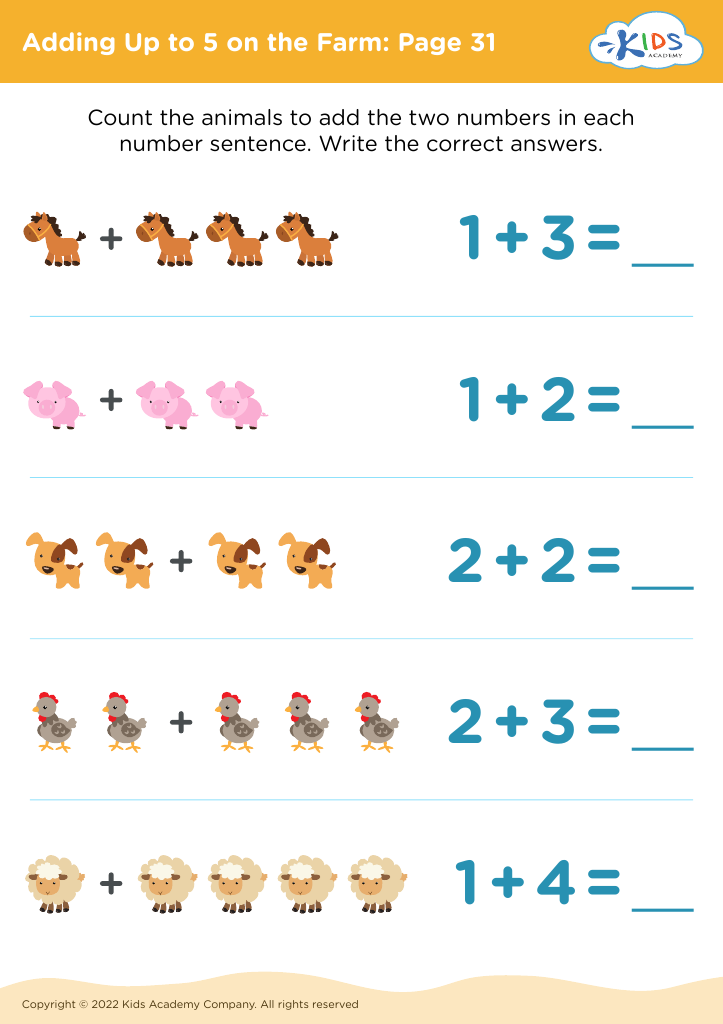
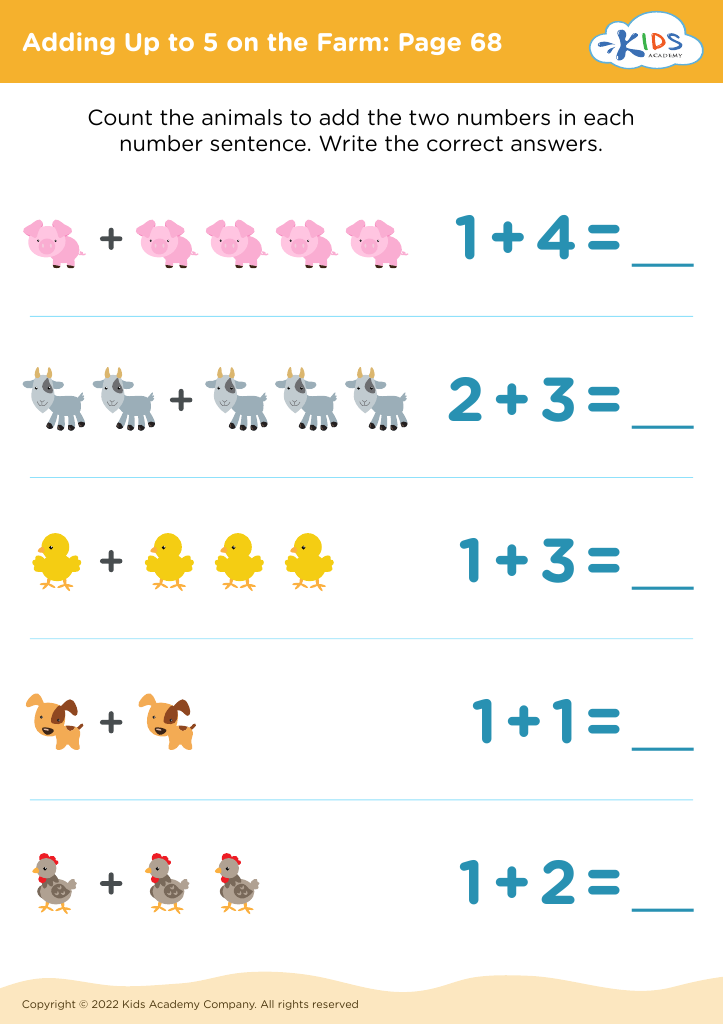
Welcome to our "Adding on the Farm Worksheets for Ages 3-6"! Designed to make learning math fun and engaging, these worksheets introduce young learners to basic addition concepts through vibrant farm-themed illustrations. Children will explore counting and simple addition with adorable farm animals, helping them grasp foundational math skills in an enjoyable way. Each worksheet entails interactive exercises that stimulate critical thinking and reinforce number recognition. Perfect for home or classroom use, these activities are an excellent way to nurture early math abilities while sparking a love for learning. Download now and watch your little ones thrive in math while having a blast on the farm!
Favorites
With answer key
Interactive
Join Kids Academy for Free
Who is primarily going to use this learning content?



"Adding on the Farm" is an engaging educational activity that helps children aged 3-6 master essential math concepts in a fun and relatable way. At this developmental stage, kids are naturally curious about their surroundings, and the farm setting provides a vibrant context for learning.
Parents and teachers should care about such activities because they merge early mathematical skills with imaginative play. By using farm-related characters, animals, and scenarios, children can practice basic addition skills while also exploring themes of counting, numbers, and problem-solving. This hands-on approach makes math tangible and relevant, which enhances understanding and retention.
Additionally, "Adding on the Farm" fosters cognitive development, encouraging critical thinking and reasoning. It promotes collaboration and communication when children work in groups, enhancing social skills through shared learning experiences.
Furthermore, by integrating math into a familiar and enjoyable context, children are more likely to develop a positive attitude towards mathematics, laying a strong foundation for future learning. Ultimately, activities like "Adding on the Farm" not only support academic growth but also nurture a love for learning, making them invaluable to parents and teachers invested in holistic early childhood development.