Comparing shapes Geometry Worksheets for Ages 3-6
3 filtered results
-
From - To
Introducing our "Comparing Shapes Geometry Worksheets for Ages 3-6" – fun and engaging tools designed to boost your child's early math skills! These colorful, interactive worksheets make learning shapes exciting, focusing on identifying, differentiating, and comparing various shapes. Tailored for preschool and kindergarten children, our activities help enhance critical thinking, fine motor skills, and shape recognition. Perfect for both classroom and at-home learning, these worksheets provide a solid foundation for future geometry concepts. Give your little learners a head start in math with our expertly crafted, easy-to-use worksheets. Unlock the joy of learning today!
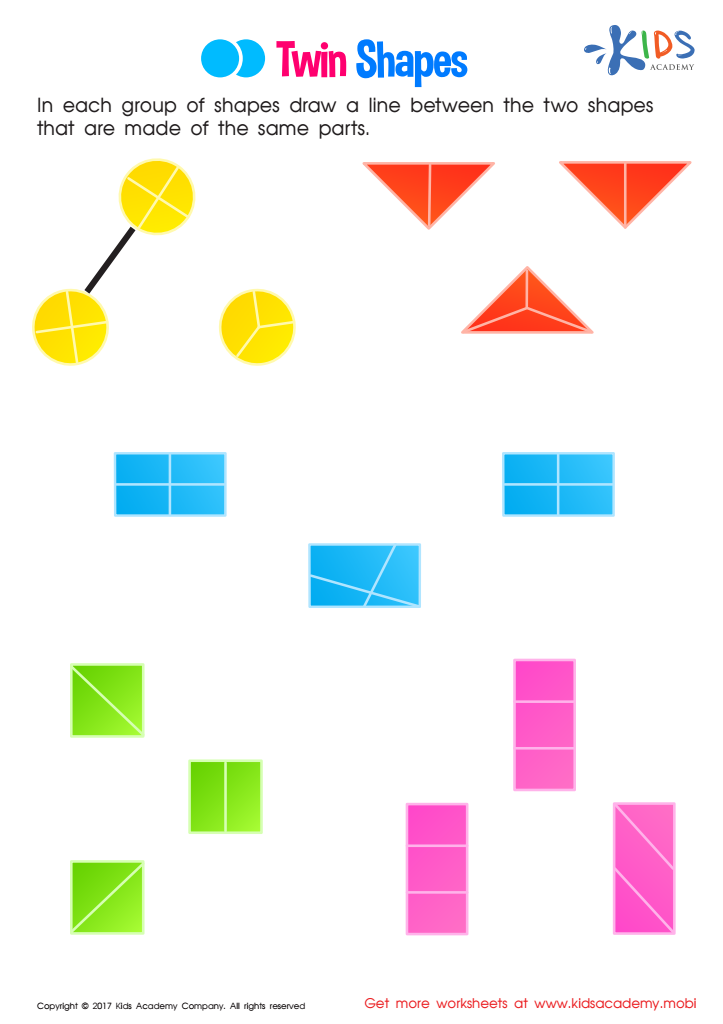
Twin Shapes Worksheet
 Assign to My Students











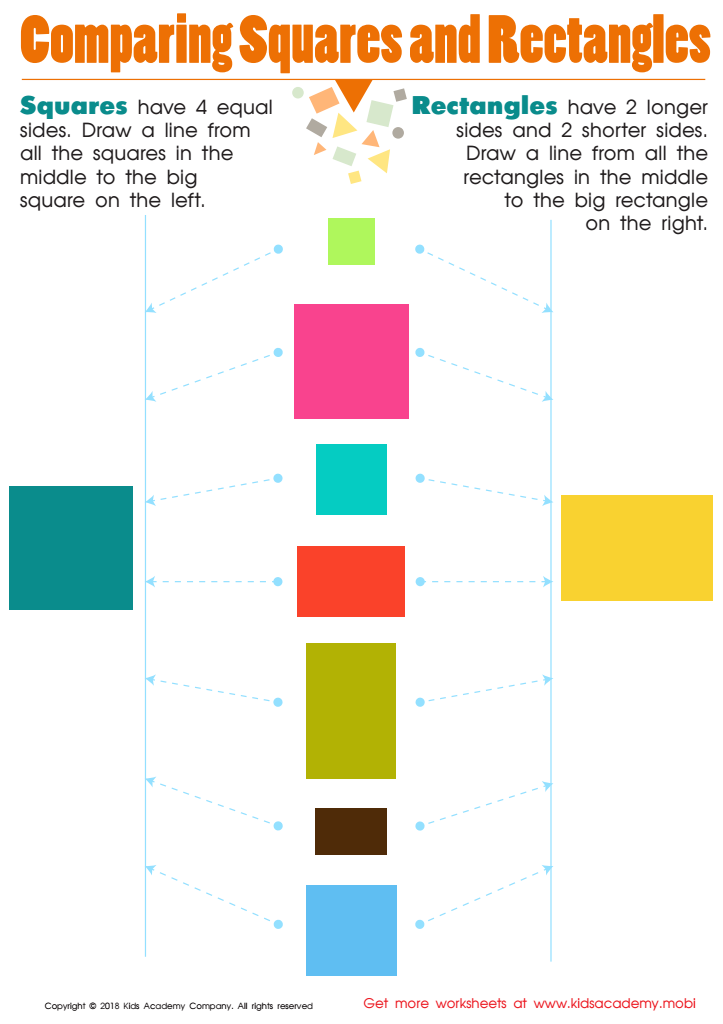
Comparing Squares Rectangles Worksheet
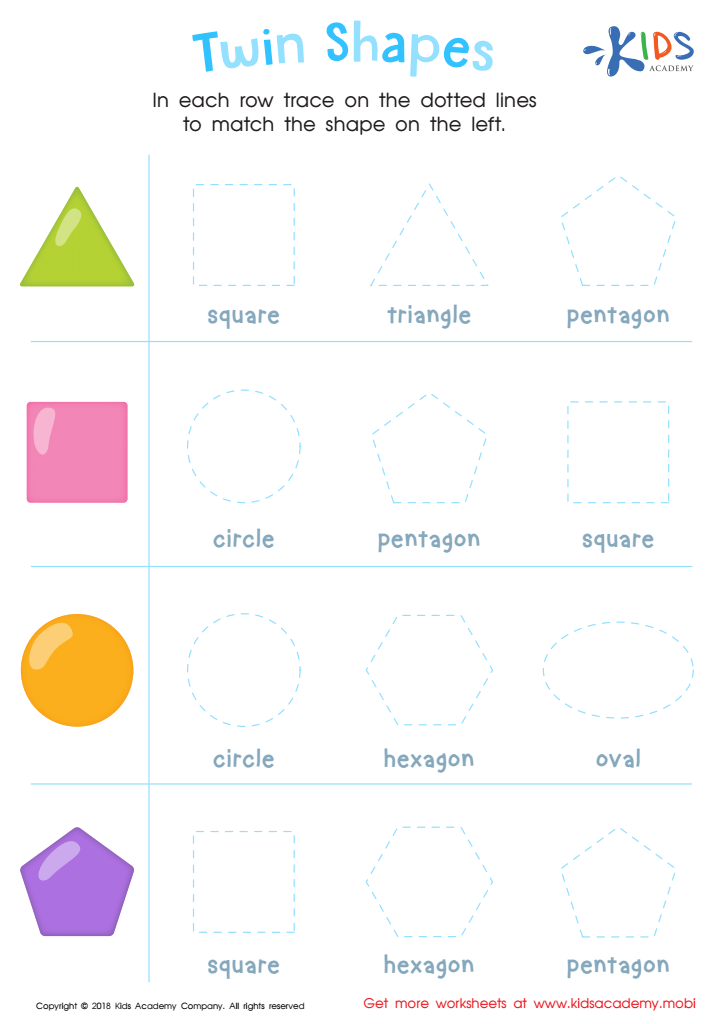
Twin Shapes Dot-to-Dot Worksheet








Comparing shapes in geometry is essential for young children aged 3-6 because it lays the foundation for critical thinking and problem-solving. This skill is fundamental in early development and supports cognitive growth, aiding children in understanding shapes, sizes, and spatial relationships. Engaging in comparing shapes activities enhances visual perception and spatial awareness, crucial for everyday tasks and future academic success.
When parents and teachers encourage children to observe and describe how shapes are alike and different, they promote observational skills and descriptive language. This form of exploration helps with vocabulary development and communication, as children learn to articulate their thoughts and findings. It also builds a base for more complex mathematical concepts, fostering early numeracy skills.
Moreover, comparing shapes ties into numerous real-life applications. Recognizing and categorizing objects by shape help children make sense of their environment, contributing to their overall cognitive development. It nurtures early problem-solving abilities, a foundation for logical thinking and reasoning.
Furthermore, these activities are engaging and can be turned into playful, interactive learning experiences that captivate young minds, keeping them interested and motivated. Understanding geometric concepts at a young age not only supports math readiness but also inspires confidence and curiosity in learning.








