Animal identification Numbers Worksheets for Ages 3-6
4 filtered results
-
From - To
Discover our fun and engaging Animal Identification Numbers Worksheets designed for ages 3-6! These printable activities blend number recognition and counting with adorable animal illustrations, making learning both interactive and enjoyable. Perfect for home or classroom use, these worksheets help young children develop essential math skills while fostering a love for nature. Each page challenges kids with exciting tasks, from matching animals to their corresponding numbers to simple addition and subtraction exercises involving animals. Enhance your child's early math education and inspire a lifelong interest in learning with our delightful and effective worksheets. Download yours today!
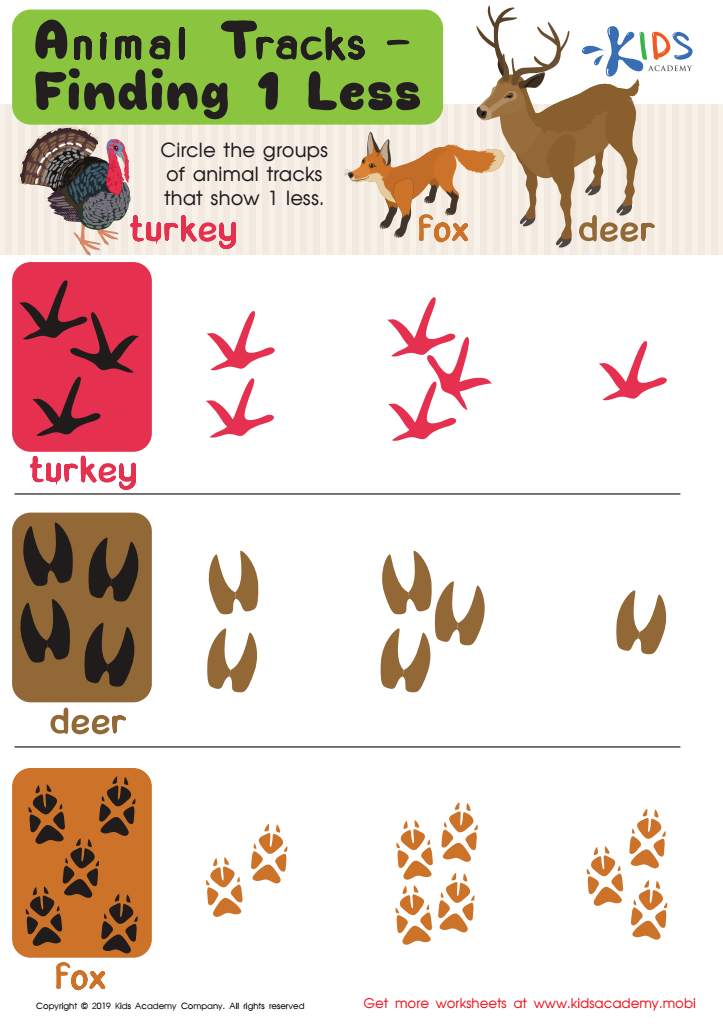
Animal Tracks: Find 1 Less Worksheet
 Assign to My Students
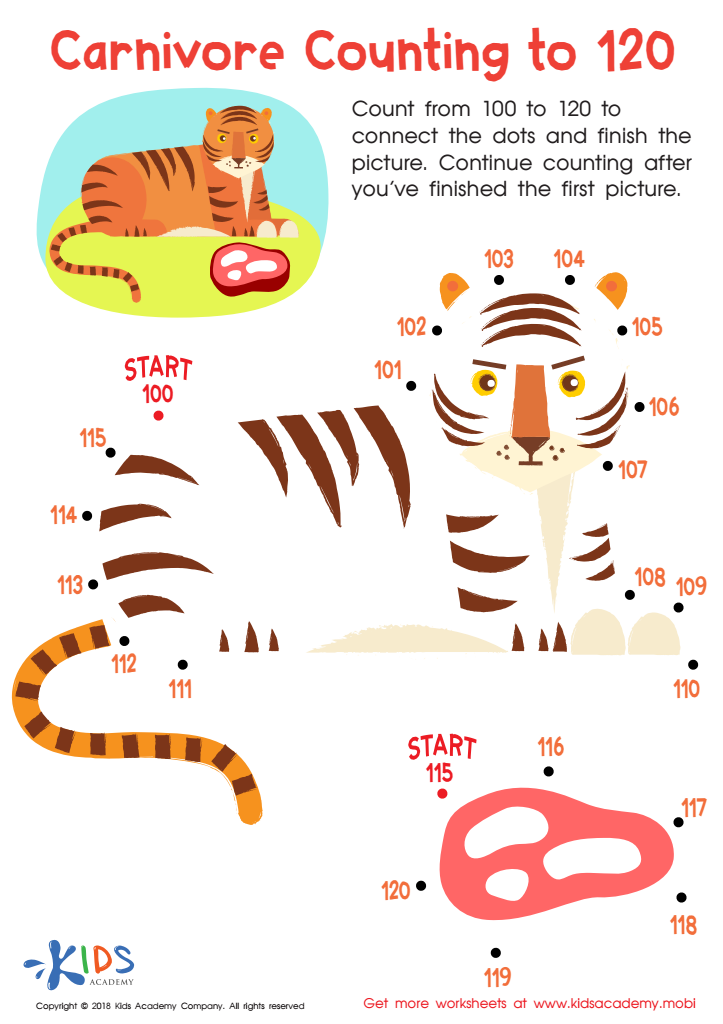
Carnivore Counting to 120 Worksheet
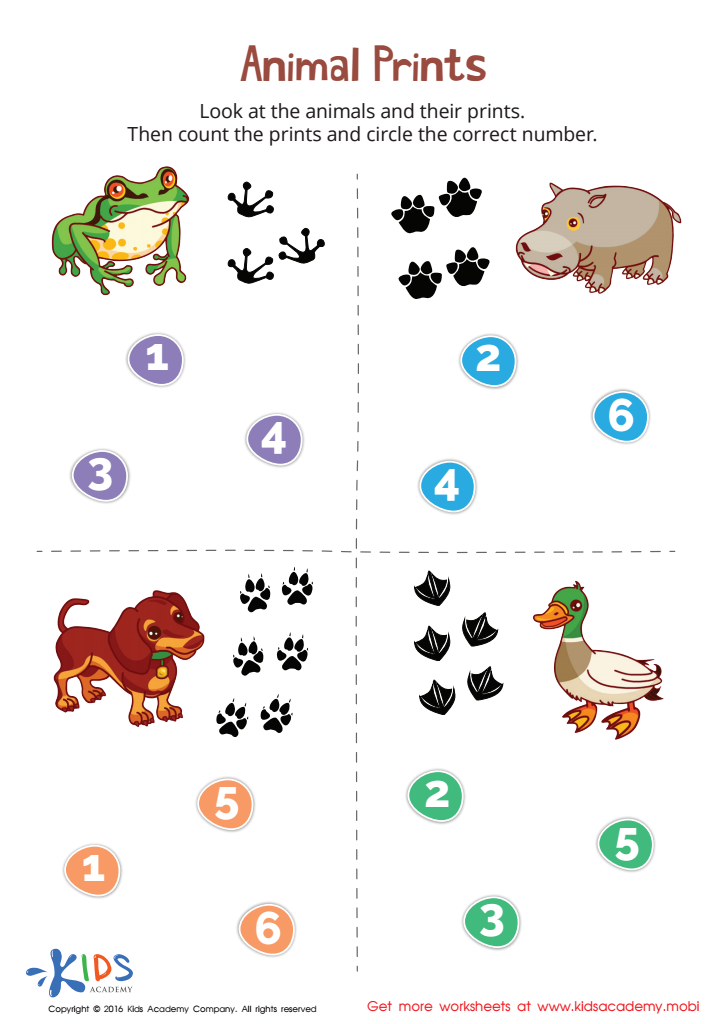
Animal Prints Match-Up Worksheet
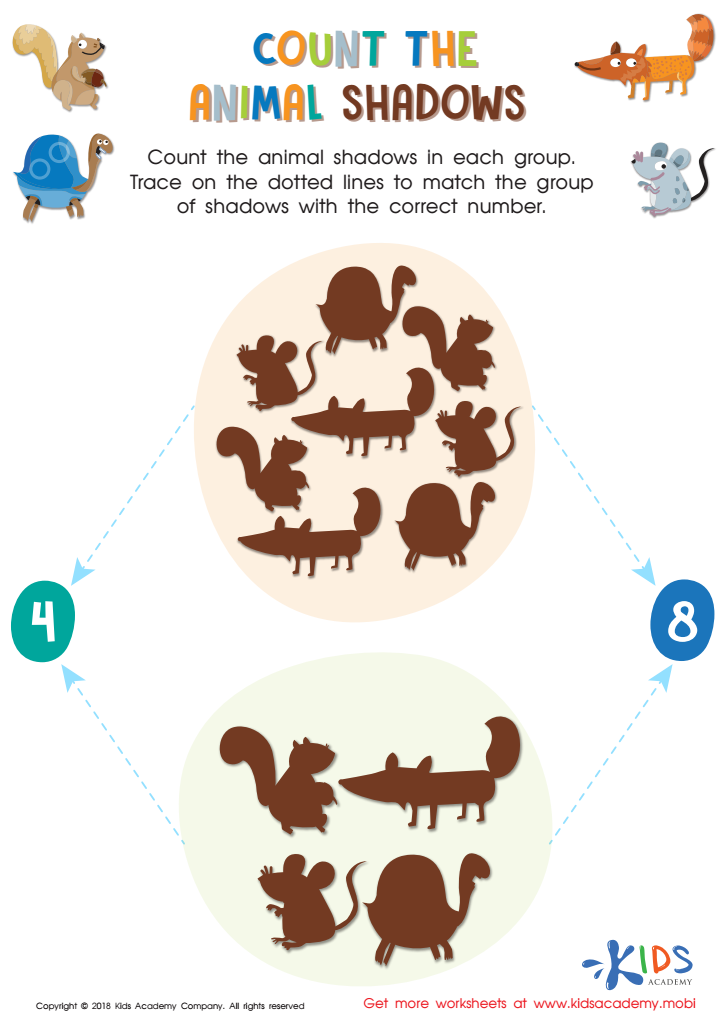
Count the Animal Shadows Worksheet








Animal identification numbers are a fantastic educational tool for young children aged 3-6, providing numerous developmental benefits. Using these numbers in learning activities can reinforce early numeracy skills, such as counting, number recognition, and basic arithmetic. When children associate a number with a specific animal, it leverages their natural curiosity and love of animals to make learning more engaging and fun.
Furthermore, animal identification numbers introduce children to the world of wildlife and nature. Learning about different animals, their characteristics, and the numbers associated with them can spark curiosity about the natural world, fostering a lifelong love and respect for animals and the environment.
From a developmental perspective, this type of learning supports cognitive development by enhancing memory and recall. It also promotes language skills, as children learn the names and attributes of various animals while counting them. Social skills are encouraged when children interact and collaborate with peers during these activities, promoting teamwork and communication.
For both parents and teachers, animal identification numbers are versatile and easy to integrate into various educational formats, whether through books, games, or hands-on activities. This holistic approach nurtures a well-rounded development in young children, combining educational fun with foundational skills that prepare them for more advanced learning.








