Understanding subtraction Numbers Worksheets for Ages 3-6
4 filtered results
-
From - To
Welcome to our "Understanding Subtraction Numbers Worksheets" designed specifically for young learners ages 3-6! These engaging and interactive worksheets provide a fun way for children to grasp basic subtraction concepts. Through colorful visuals and playful scenarios, kids will develop essential math skills, enhance problem-solving abilities, and build confidence in their numerical understanding. Our thoughtfully created activities make learning subtraction enjoyable, allowing children to practice counting backward and recognizing the relationship between addition and subtraction. Perfect for teachers and parents alike, these worksheets are a valuable resource to support early childhood education. Start exploring subtraction with us today!
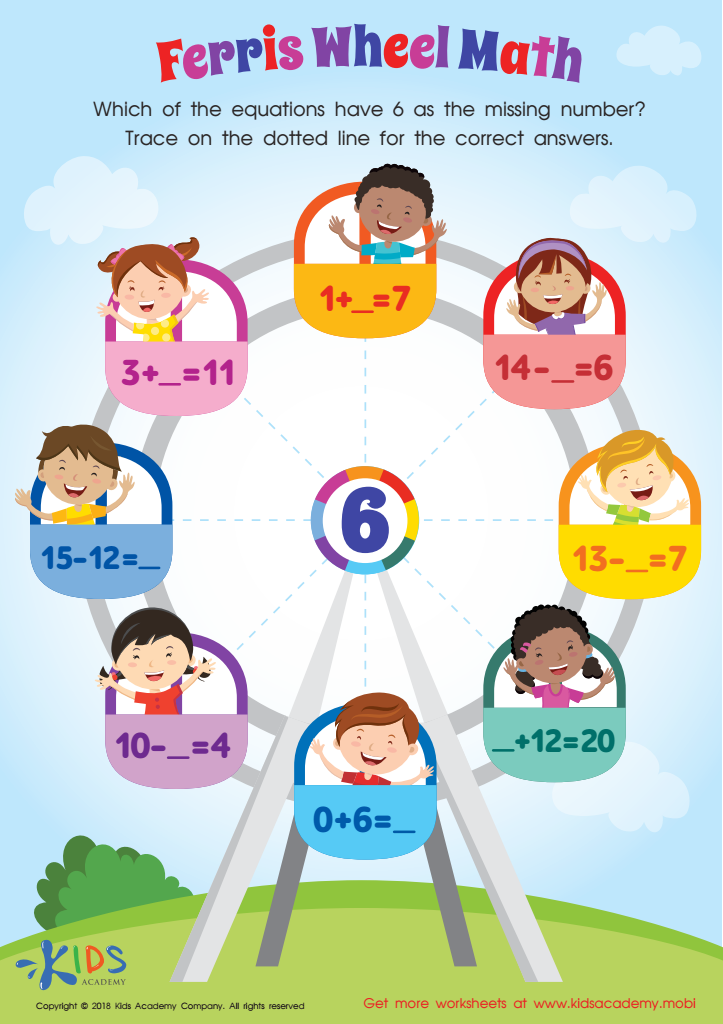
Missing Number: Ferris Wheel Math Worksheet
 Assign to My Students
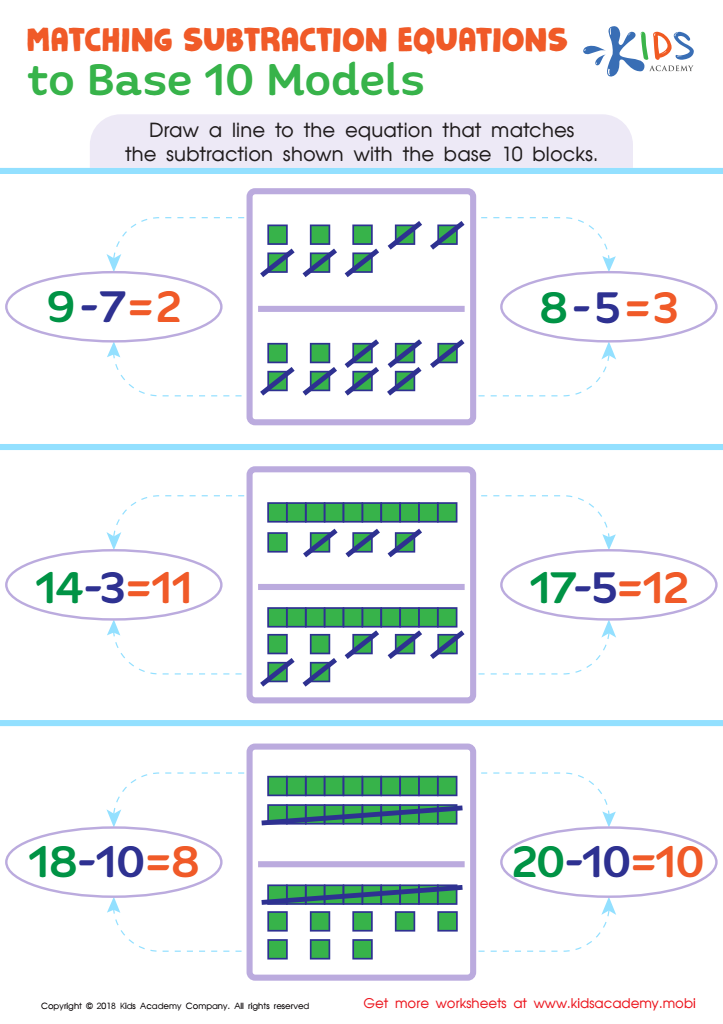
Matching Subtraction Equations To Base 10 Models Worksheet
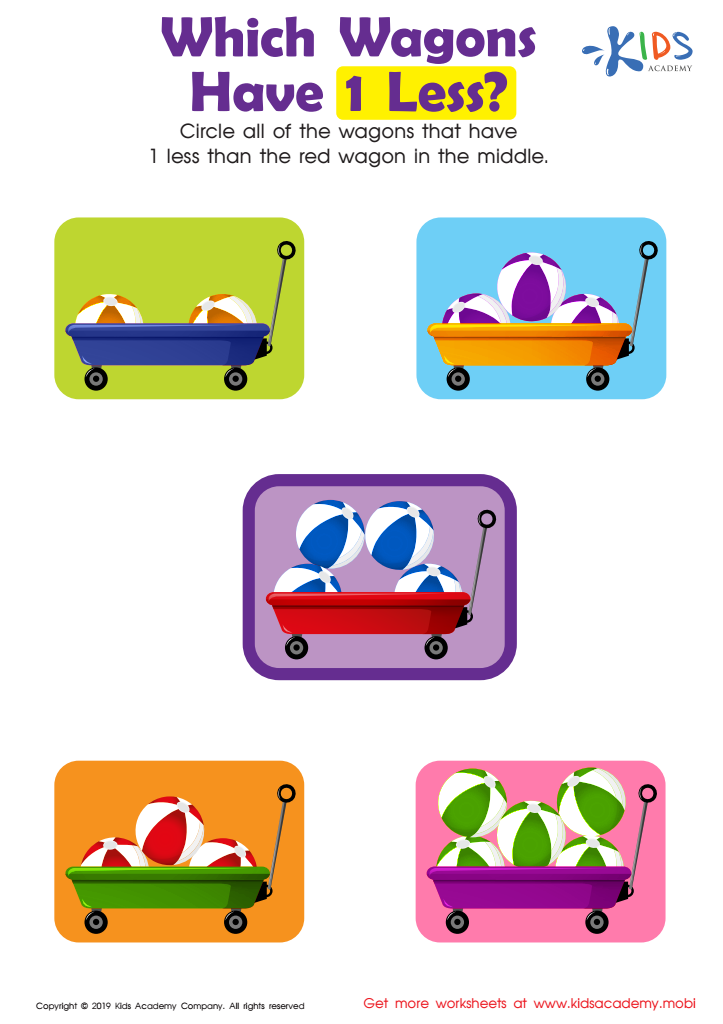
Which Wagons Have 1 Less? Worksheet
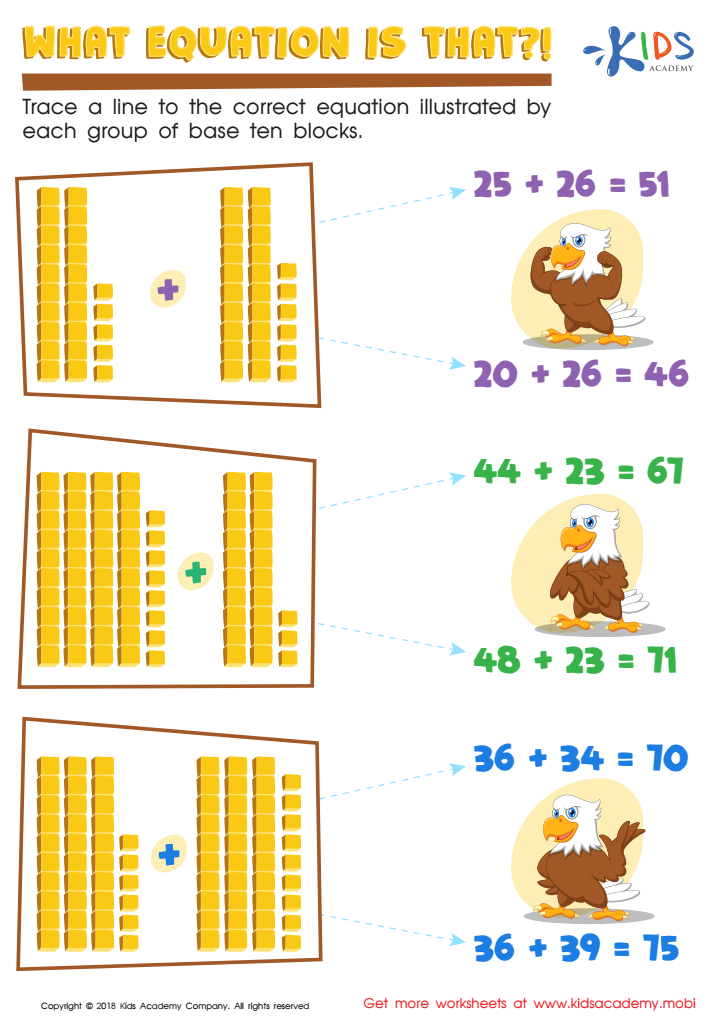
What Equation Is That? Worksheet




.jpg)



Understanding subtraction numbers for children aged 3-6 is crucial for several reasons. First, early mathematics laying a solid foundation helps children develop critical thinking skills and logical reasoning, which are essential for later academic success. At this age, children are naturally curious and learn best through play, making it the perfect time for them to explore subtraction in a fun and engaging manner.
Second, mastering subtraction allows children to grasp important concepts such as comparing quantities, problem-solving, and understanding relationships between numbers. This knowledge aids in their overall cognitive development and gives them confidence in their mathematical abilities.
Moreover, fostering mathematical skills early on can positively influence a child's attitude toward learning and school. When parents or teachers actively engage in teaching subtraction through games, stories, or hands-on activities, they create a supportive learning environment. This involvement also reinforces the importance of mathematics in everyday life, making it relatable and enjoyable.
Lastly, by understanding subtraction, children are better prepared to tackle more complex arithmetic as they advance in their education, setting them up for long-term success in math and beyond. Thus, investing time and effort in teaching subtraction at an early age is vital for holistic development.








