Check out this FREE Trial Lesson on Math for age 3-6!

X

Favorites
With answer key
Interactive
  • 3-6
  • Basic Addition Skills
  • Math
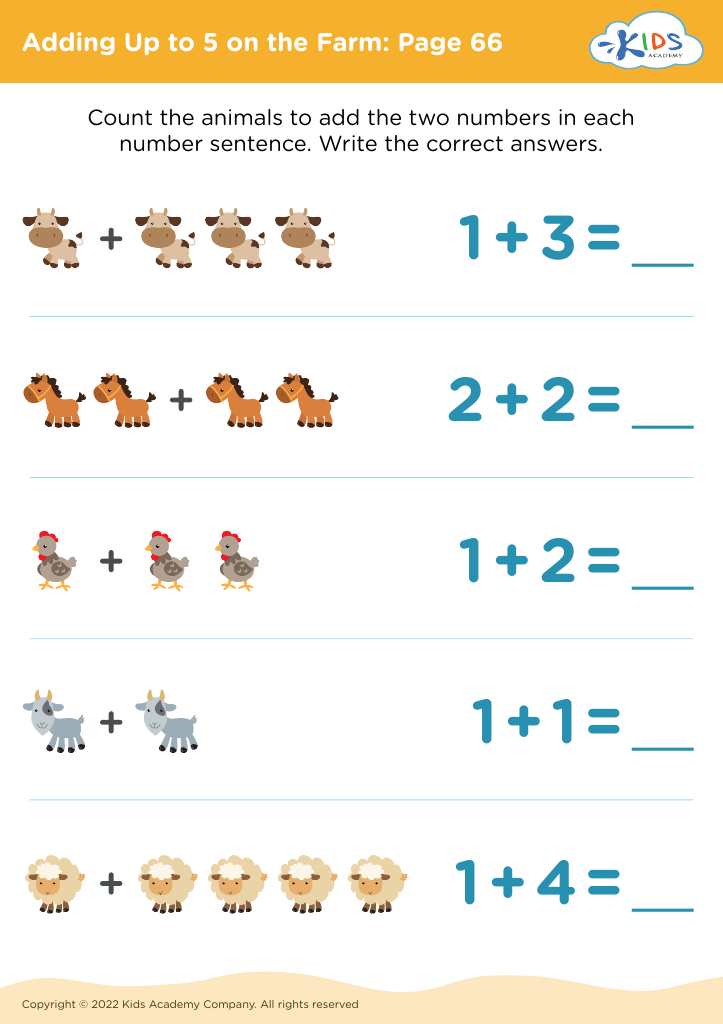
Adding Up to 5 on the Farm: Page 66
Worksheet
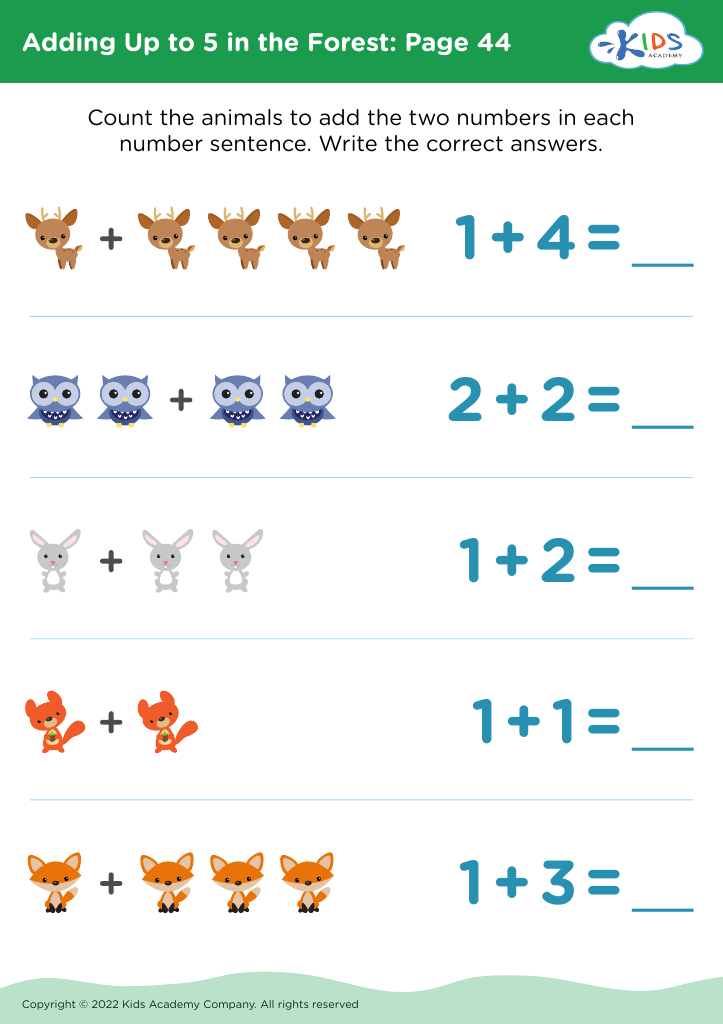
Adding Up to 5 in the Forest: Page 44
Worksheet
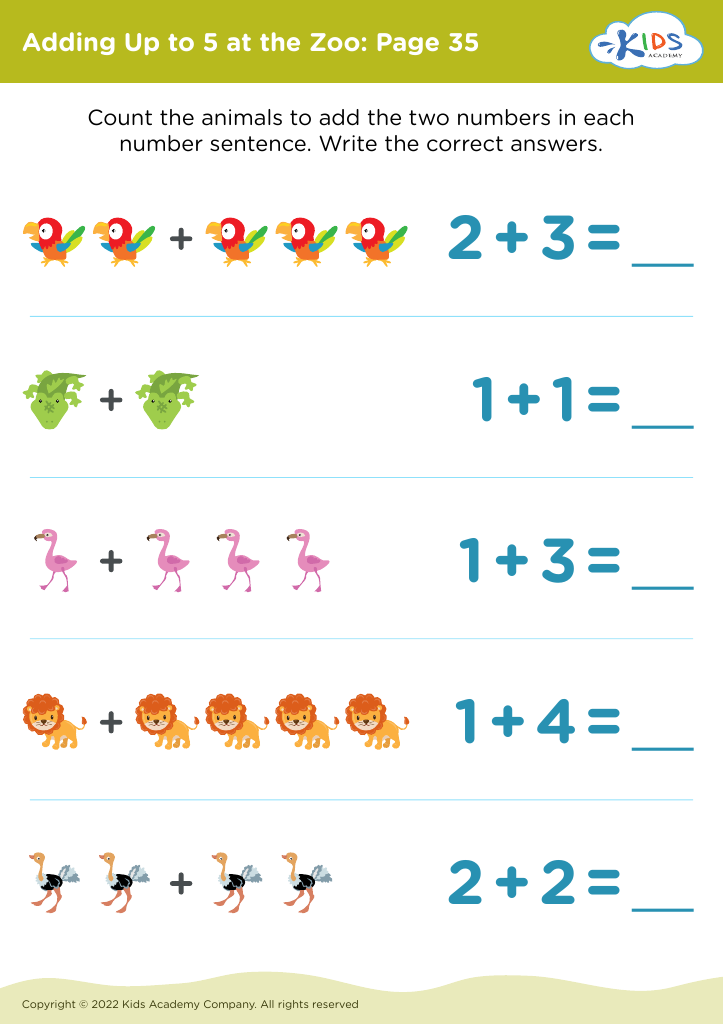
Adding Up to 5 at the Zoo: Page 35
Worksheet
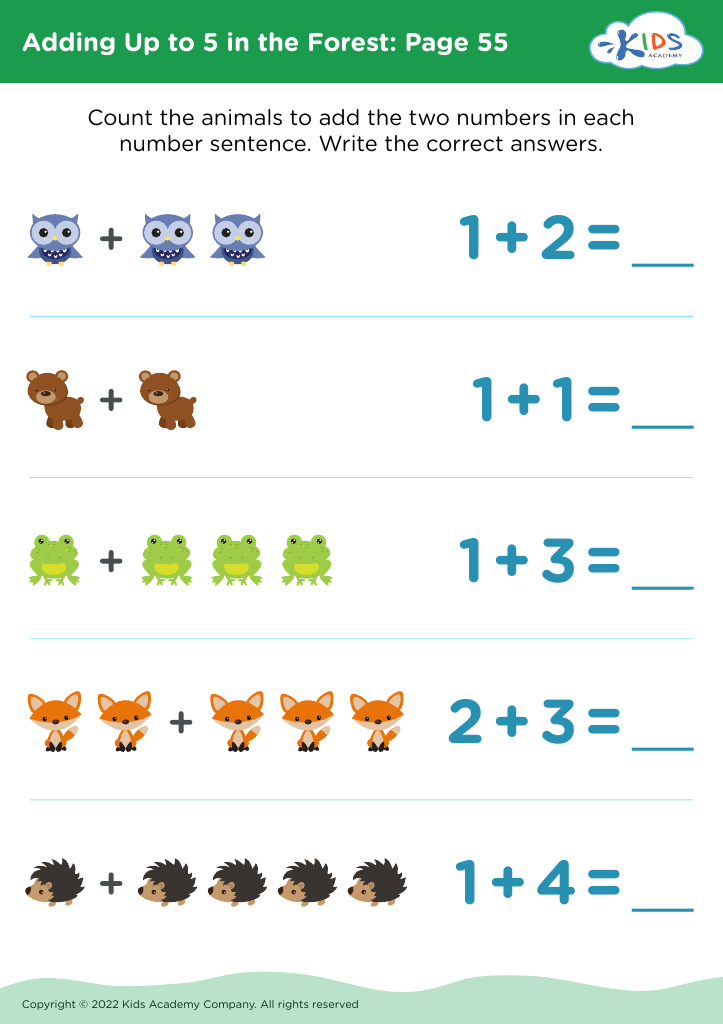
Adding Up to 5 in the Forest: Page 55
Worksheet
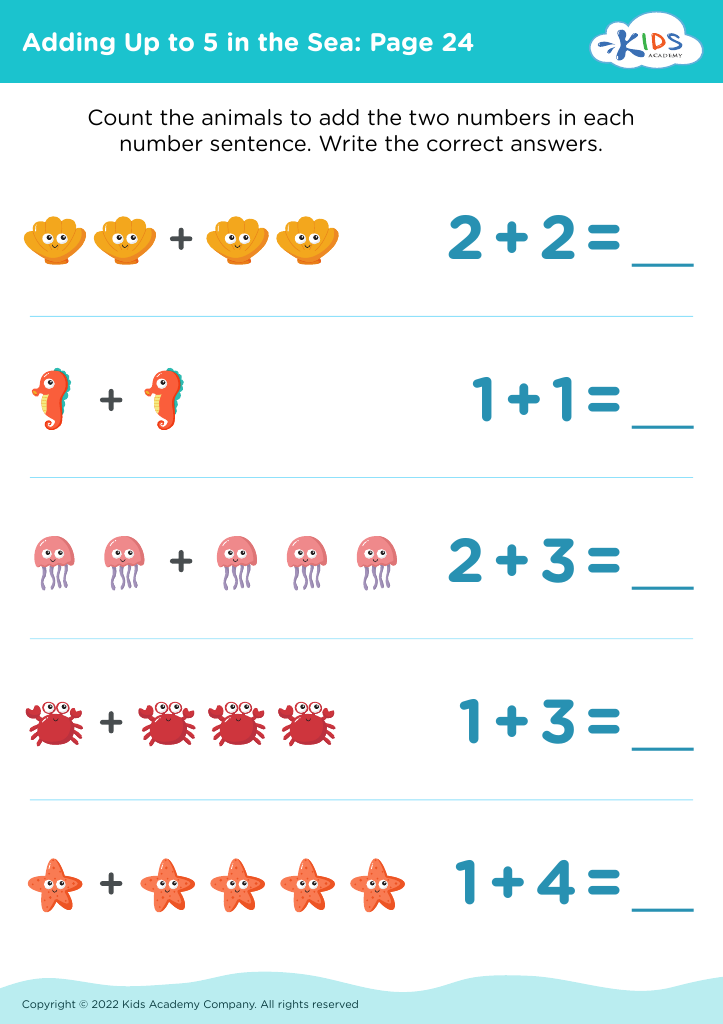
Adding Up to 5 in the Sea: Page 24
Worksheet
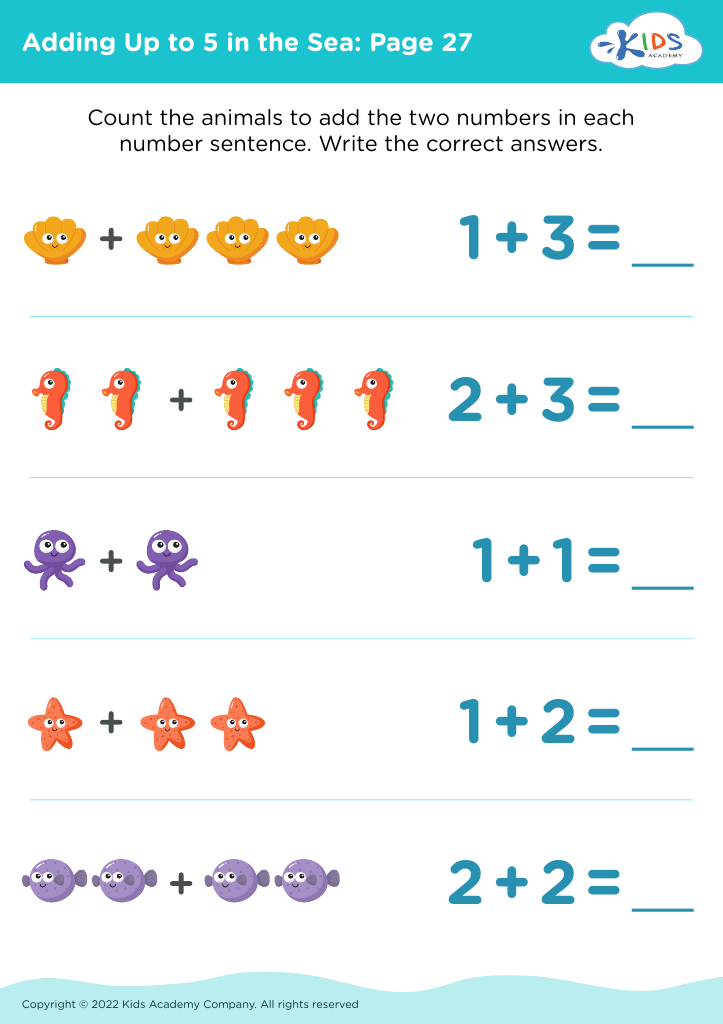
Adding Up to 5 in the Sea: Page 27
Worksheet
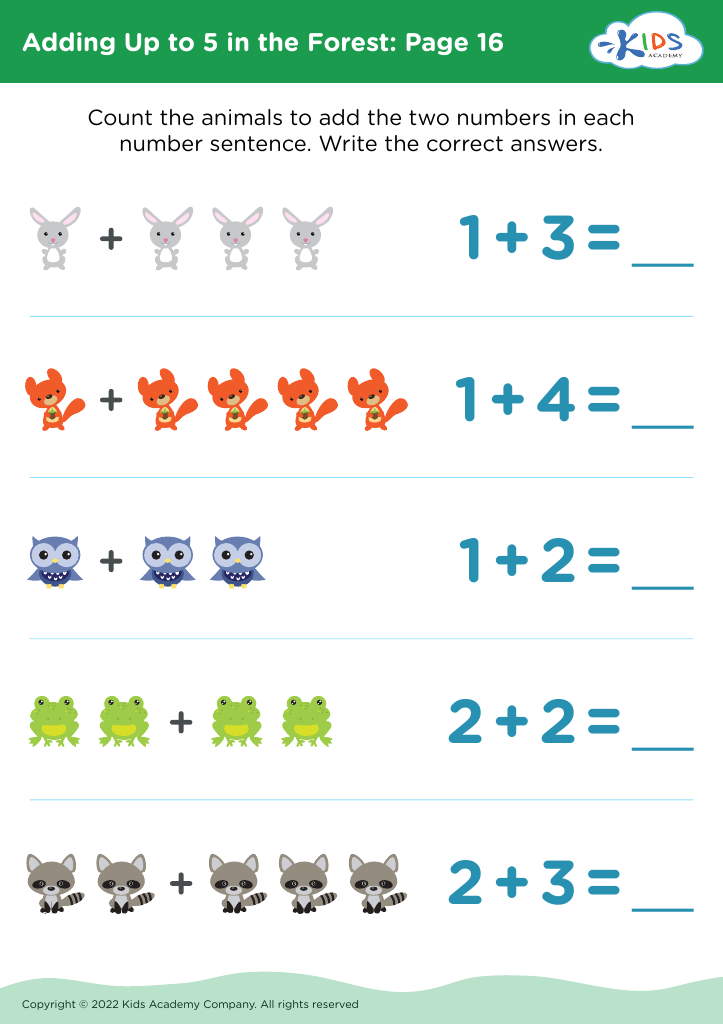
Adding Up to 5 in the Forest: Page 16
Worksheet
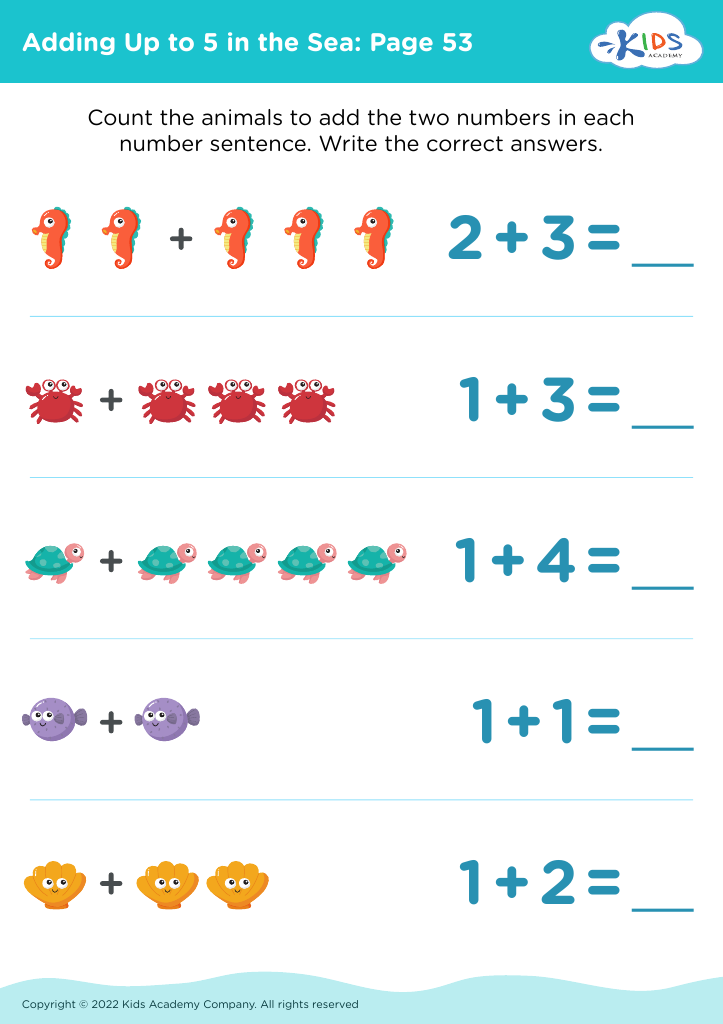
Adding Up to 5 in the Sea: Page 53
Worksheet
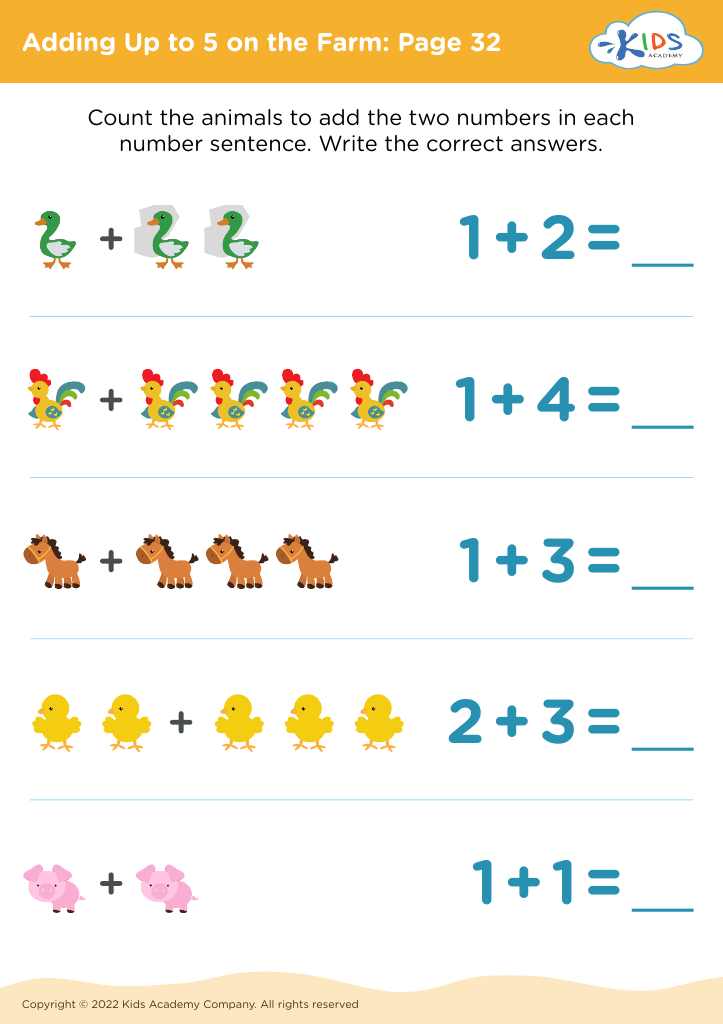
Adding Up to 5 on the Farm: Page 32
Worksheet
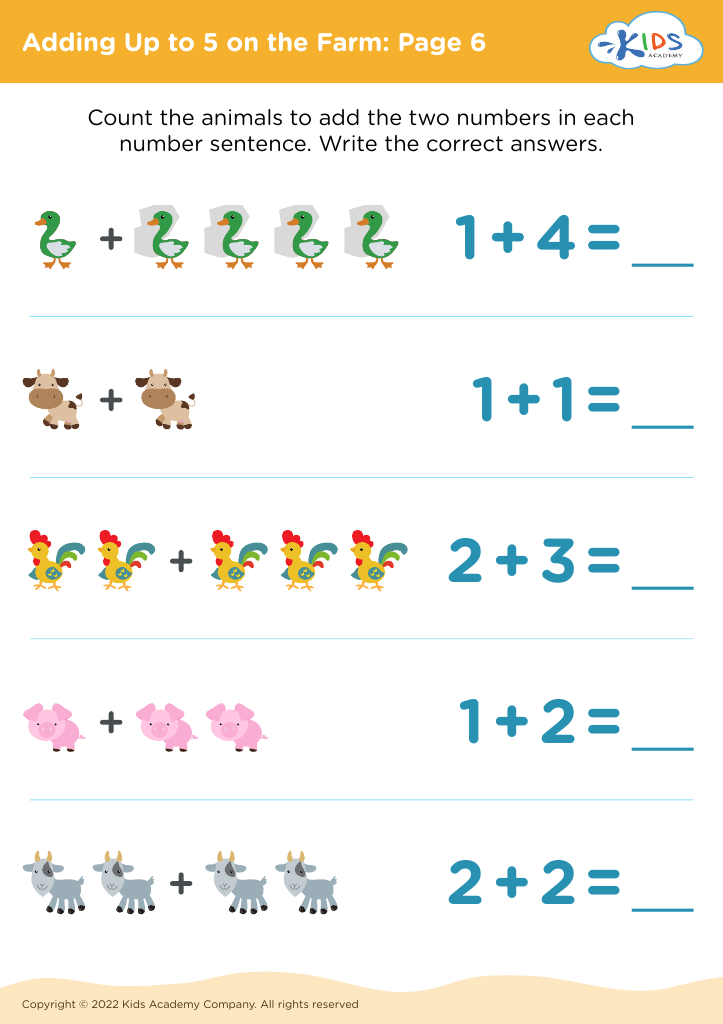
Adding Up to 5 on the Farm: Page 6
Worksheet
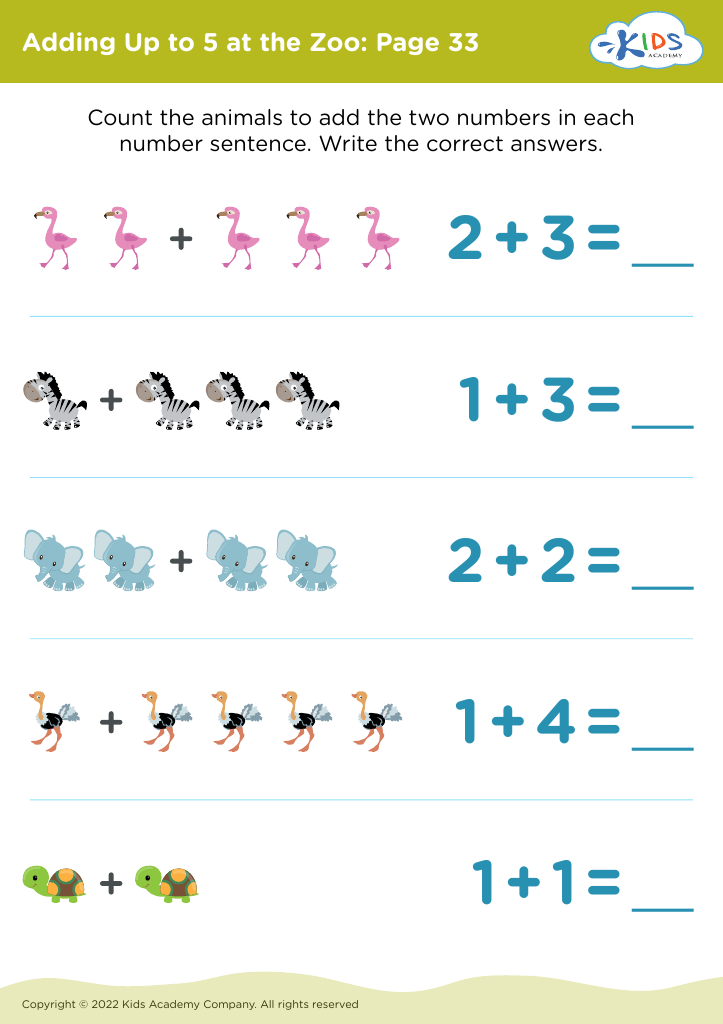
Adding Up to 5 at the Zoo: Page 33
Worksheet
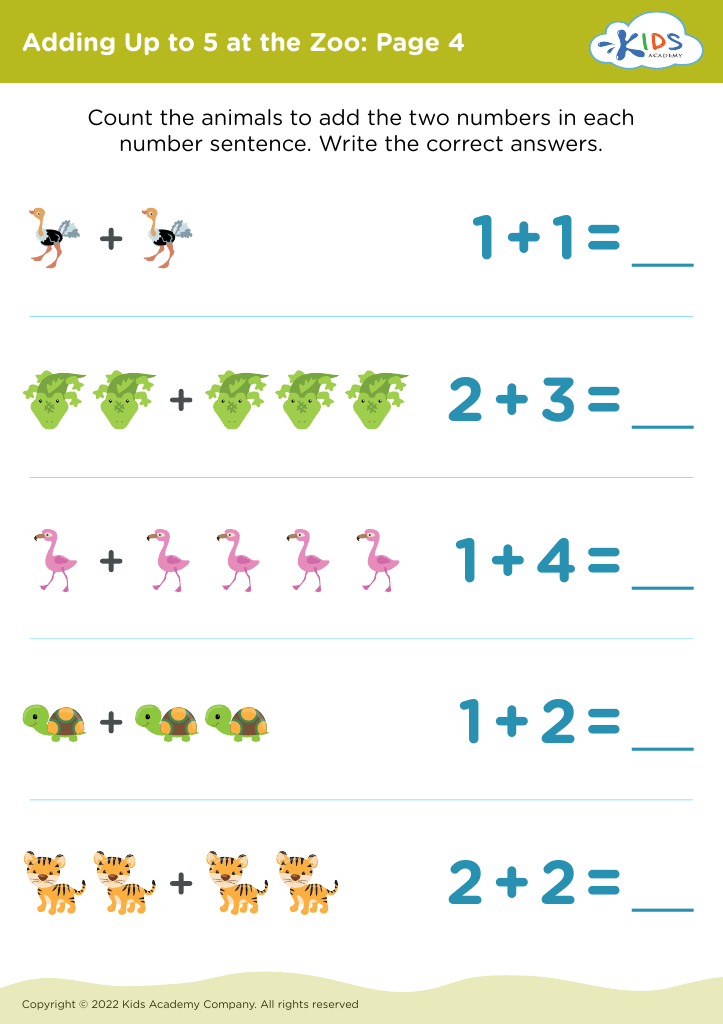
Adding Up to 5 at the Zoo: Page 4

Adding Up to 5 at the Zoo: Page 4

Adding Up to 5 at the Zoo: Page 4
Worksheet
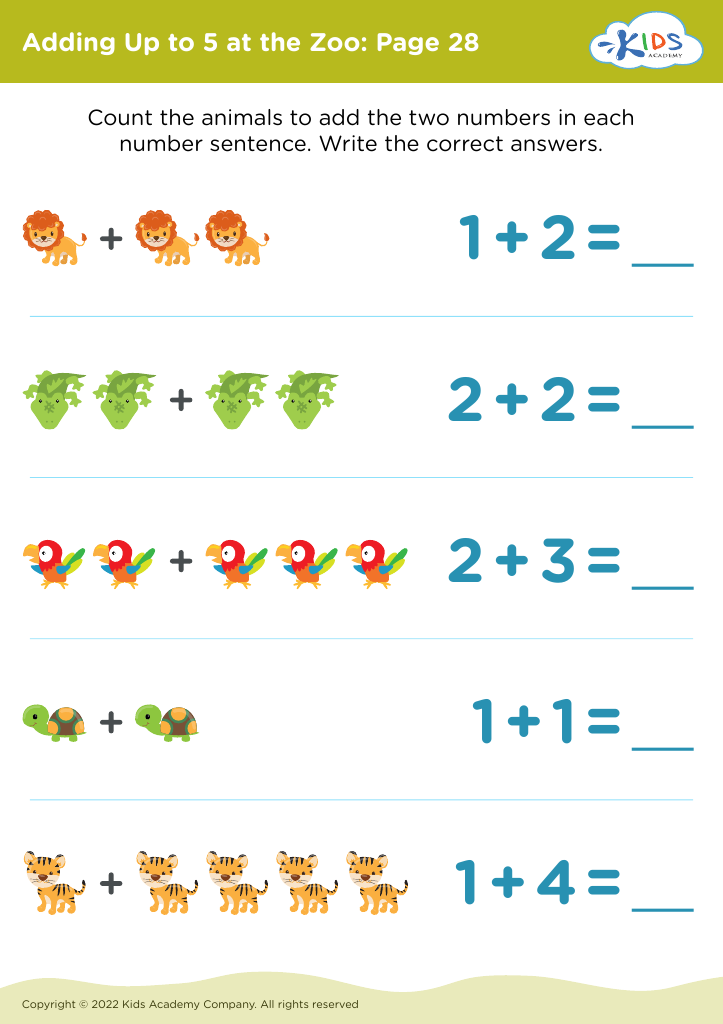
Adding Up to 5 at the Zoo: Page 28
Worksheet
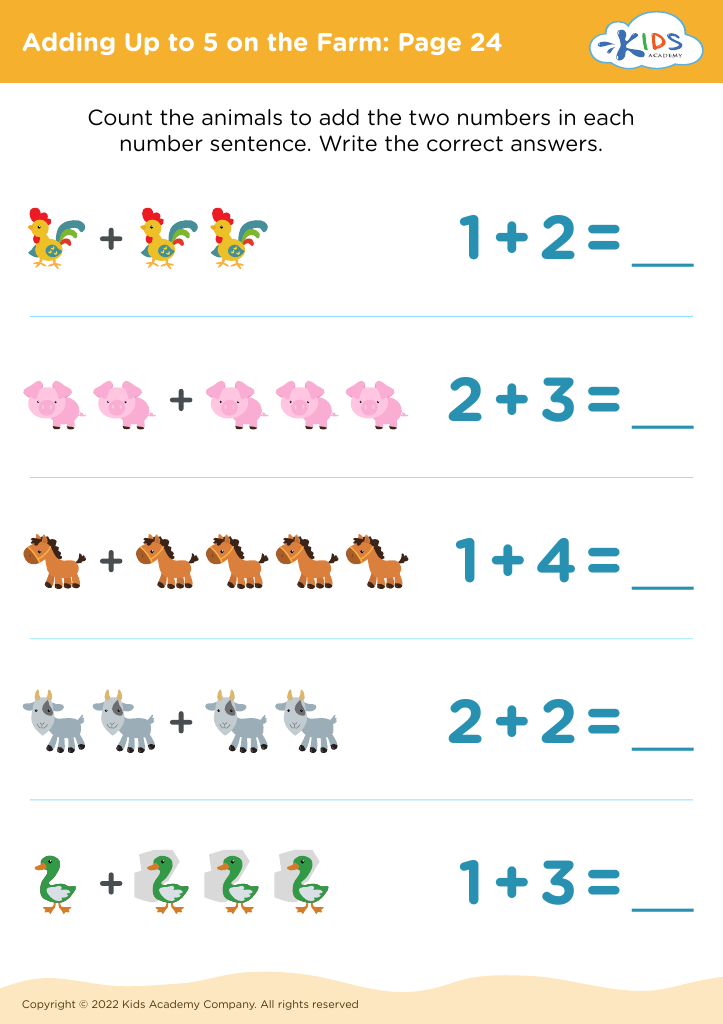
Adding Up to 5 on the Farm: Page 24
Worksheet
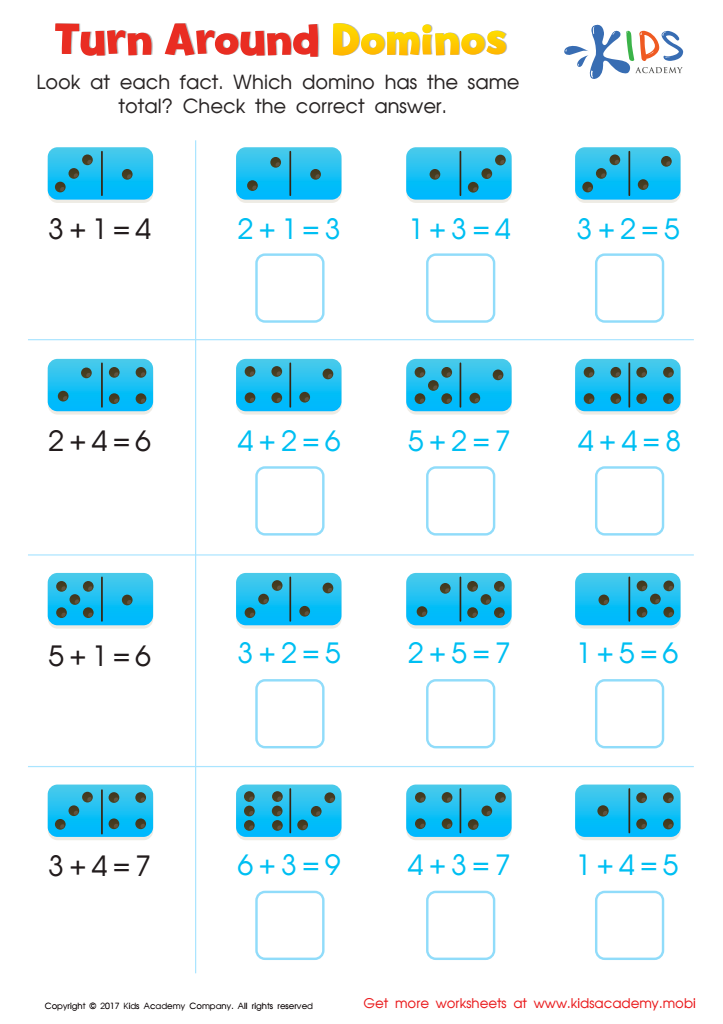
Turn Around Dominos Worksheet

Turn Around Dominos Worksheet

Encourage your child to flex their mental muscles with this math worksheet. Look through the left side's dominos and their values and then check the three boxes on the right. Ask your child if any of the right box's dominos are similar. This requires focus and careful observation.
Turn Around Dominos Worksheet
Worksheet
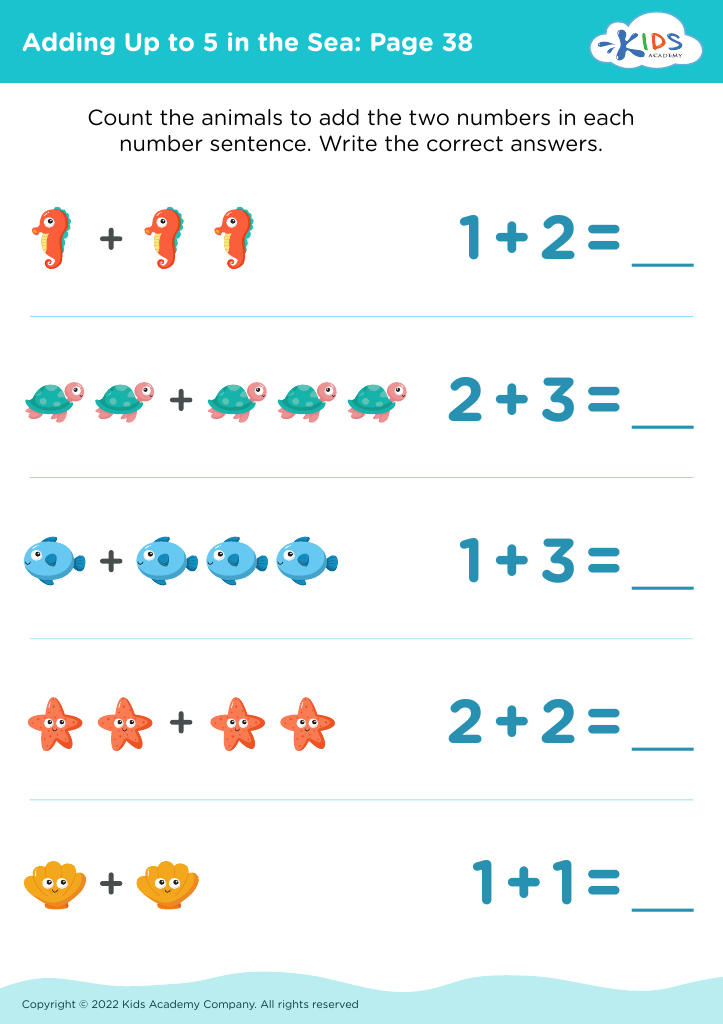
Adding Up to 5 in the Sea: Page 38
Worksheet
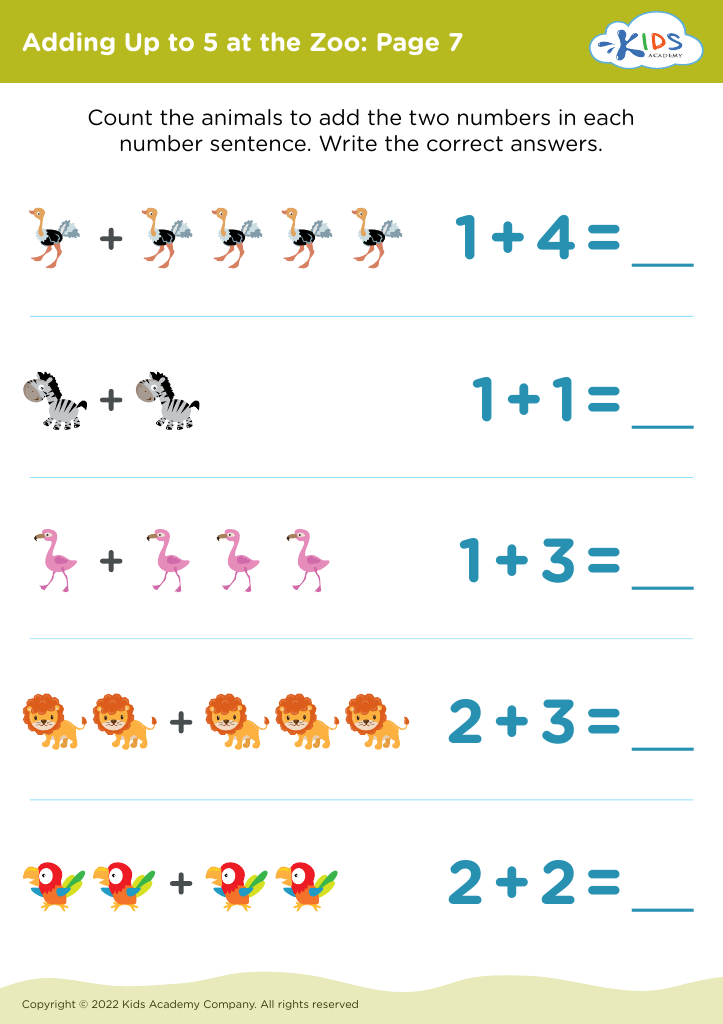
Adding Up to 5 at the Zoo: Page 7

Adding Up to 5 at the Zoo: Page 7

Adding Up to 5 at the Zoo: Page 7
Worksheet
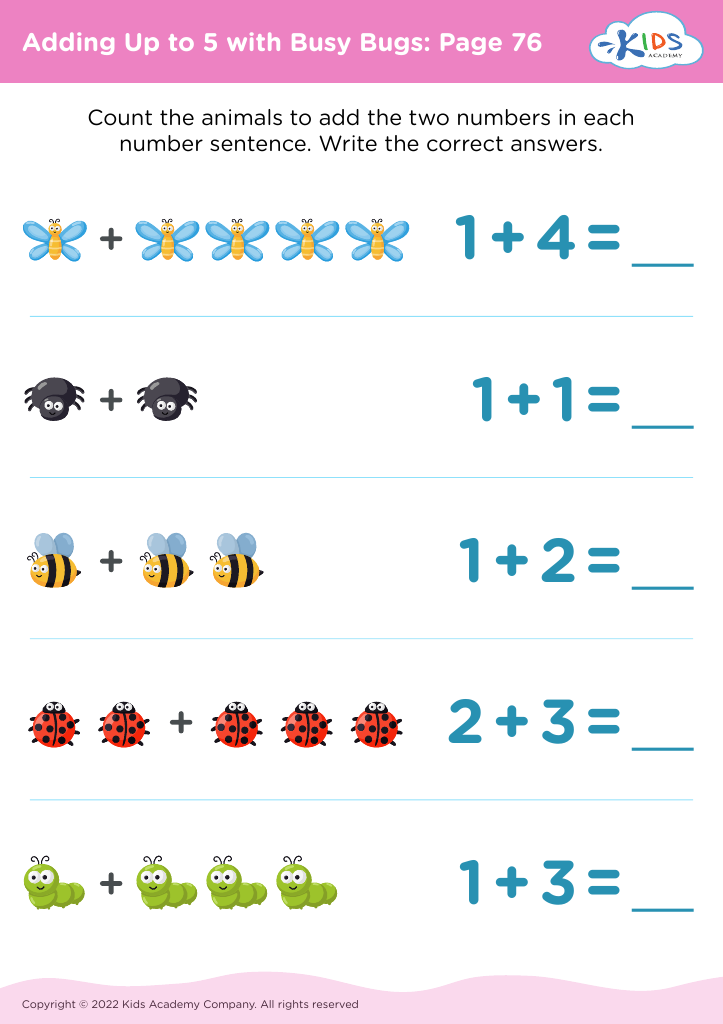
Adding Up to 5 with Busy Bugs: Page 76
Worksheet
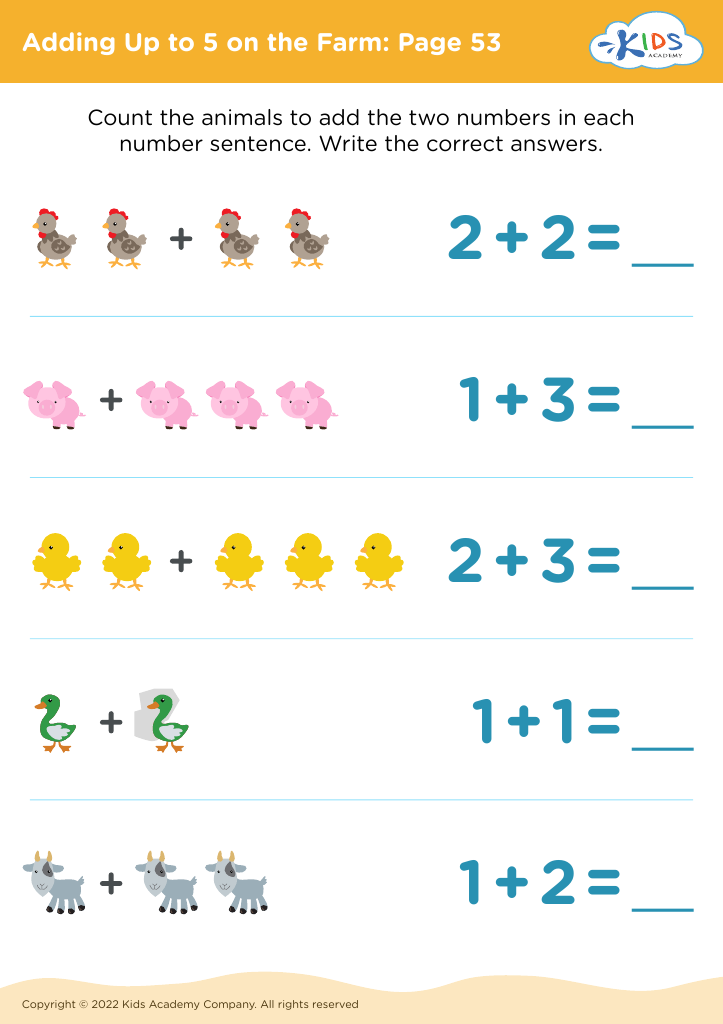
Adding Up to 5 on the Farm: Page 53
Worksheet
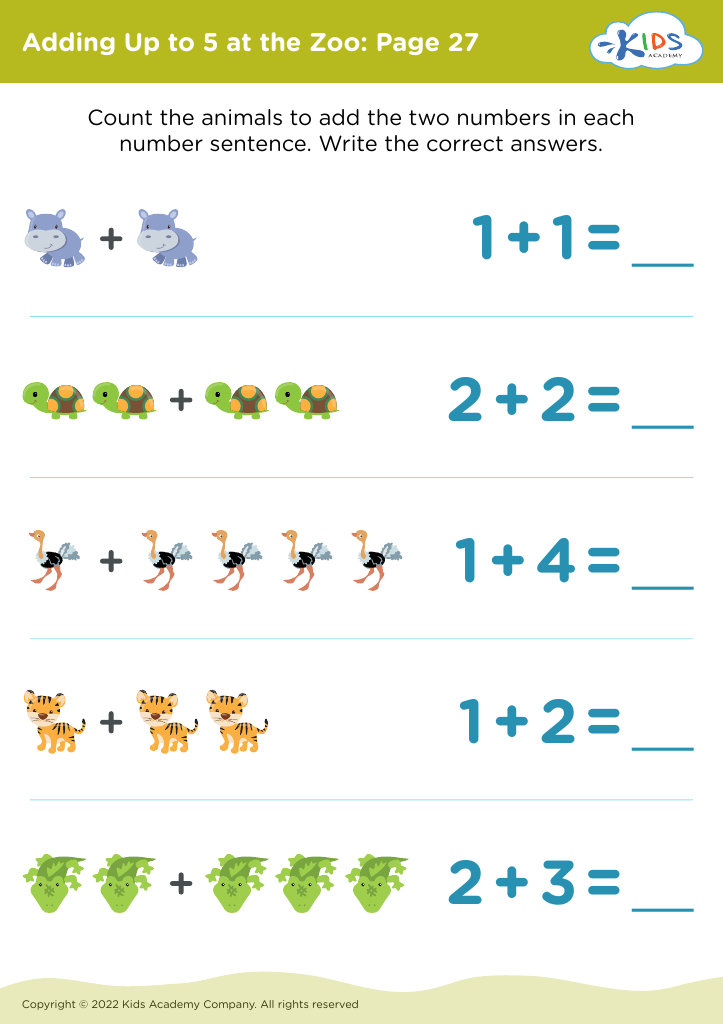
Adding Up to 5 at the Zoo: Page 27
Worksheet
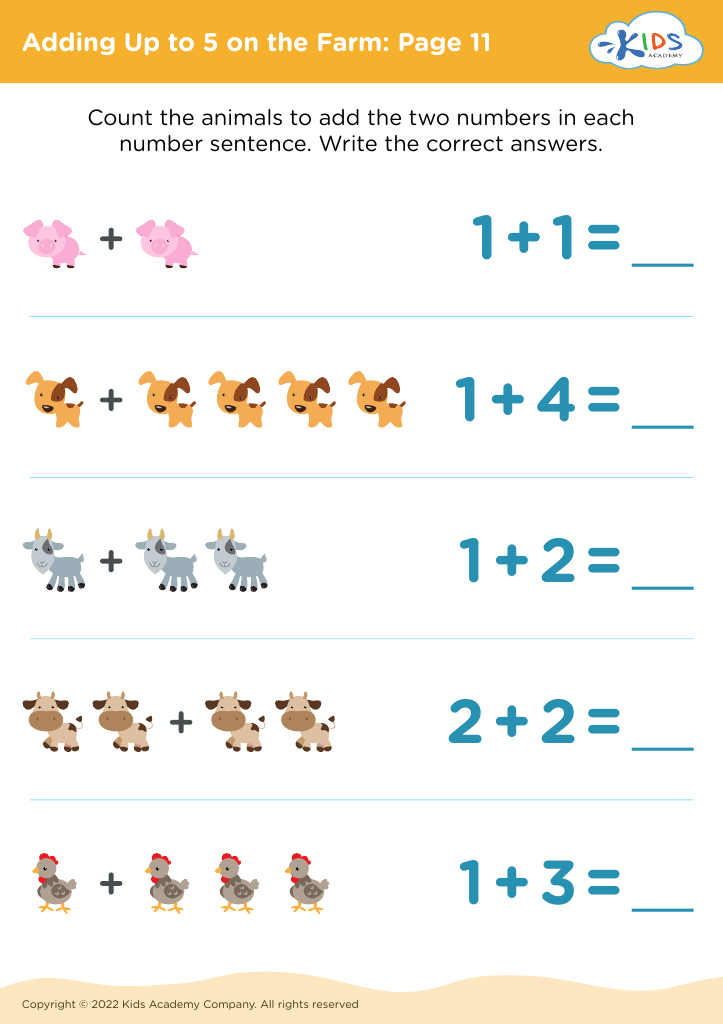
Adding Up to 5 on the Farm: Page 11
Worksheet
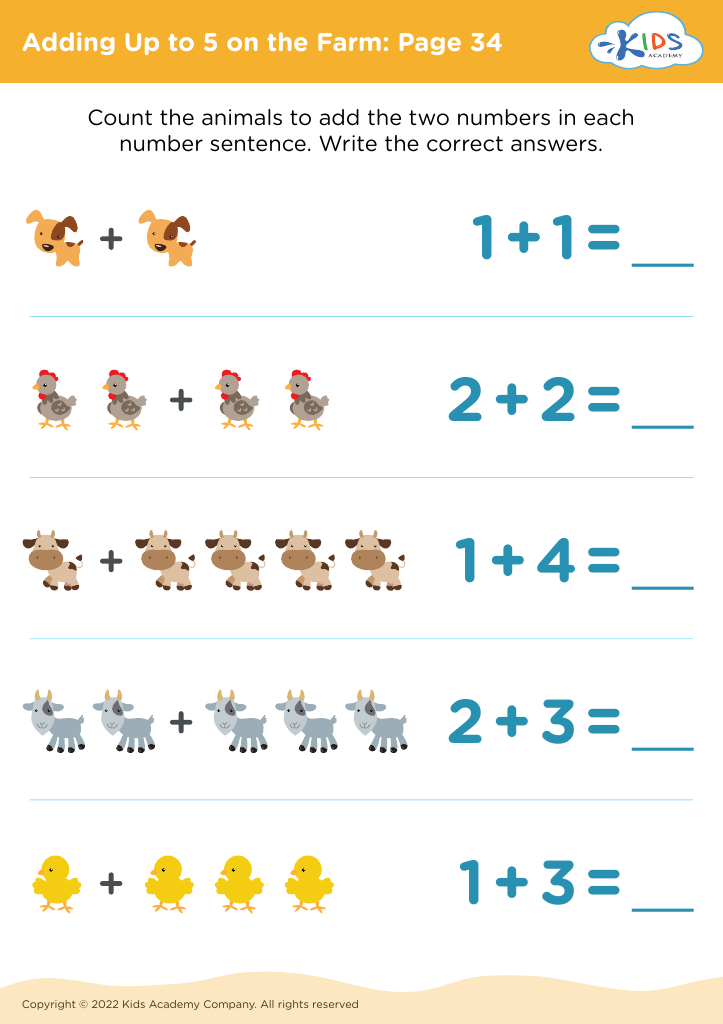
Adding Up to 5 on the Farm: Page 34
Worksheet
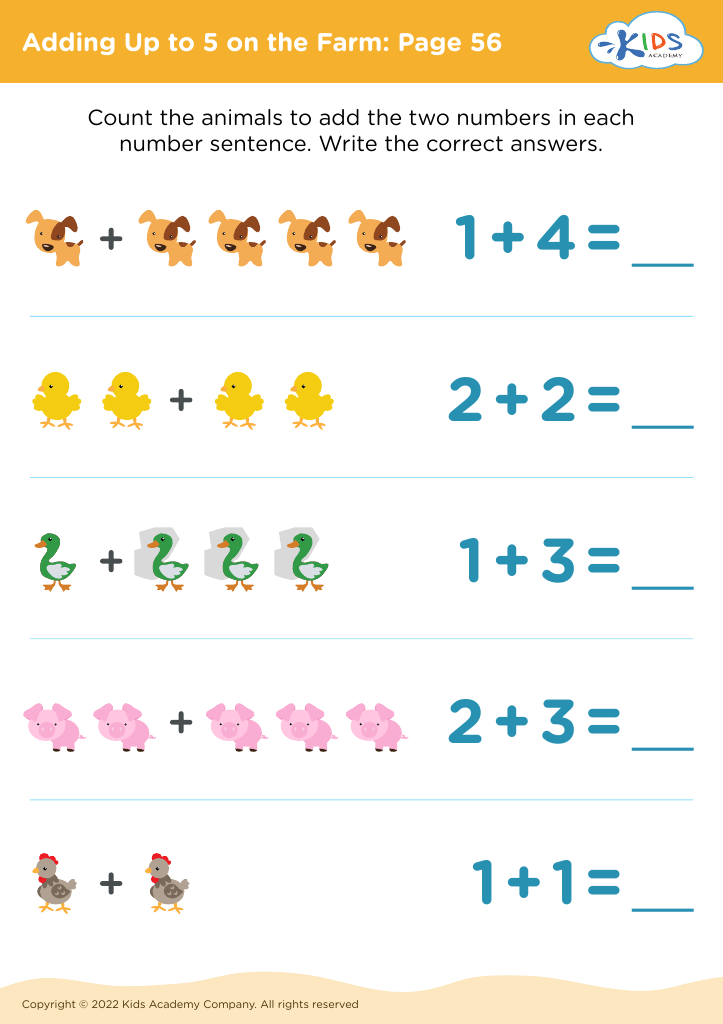
Adding Up to 5 on the Farm: Page 56
Worksheet
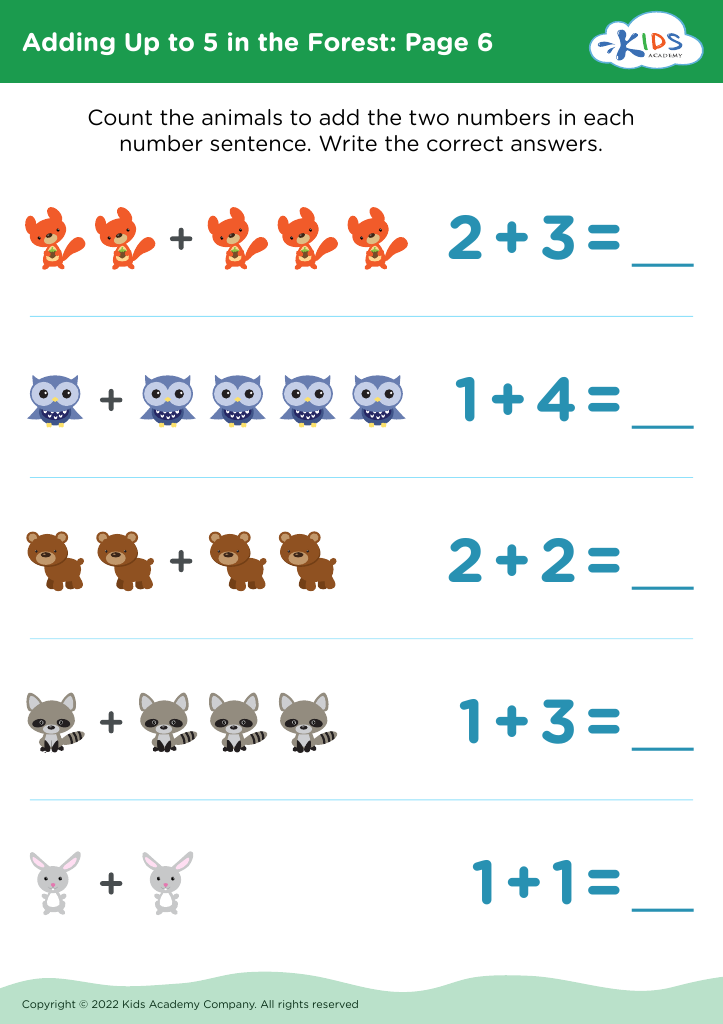
Adding Up to 5 in the Forest: Page 6
Worksheet


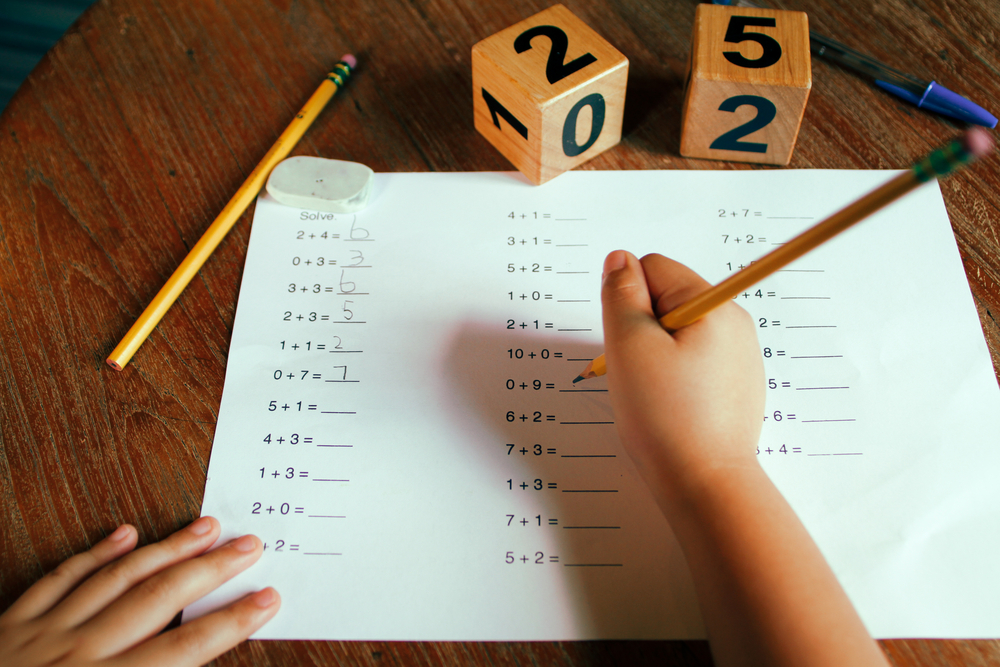
Basic addition skills are crucial for children aged 3-6 as they lay the foundation for future mathematical understanding and problem-solving abilities. At this tender age, children are naturally curious and eager to learn. Introducing them to basic addition not only enhances their cognitive skills but also develops their logical thinking and analytical abilities.

As children engage with numbers, they cultivate essential counting skills and number recognition, which are vital as they progress in their education. Understanding basic math concepts builds confidence, and positive early experiences with mathematics can foster a lifelong love for the subject.

Additionally, these skills are integral for daily activities and real-world situations, such as sharing objects and managing quantities. They encourage social and emotional skills as well, as children learn about cooperation, taking turns, and resolving conflicts during mathematical play.

By promoting basic addition skills, parents and teachers give children a critical advantage, preparing them for more advanced concepts in the future. Ultimately, prioritizing early math education enriches a child's overall learning experience, supports their academic growth, and equips them with essential life skills.