Understanding tens Math Worksheets for Ages 3-6
4 filtered results
-
From - To
"Understanding Tens Math Worksheets for Ages 3-6" offer children a fun and engaging way to grasp the concept of tens and units. Designed for early learners, these worksheets use colorful visuals and interactive exercises to teach foundational math skills. By organizing objects into groups of ten, kids develop number sense and learn to count efficiently. Perfect for both classroom and home use, these printable worksheets support young minds in mastering early math principles while bolstering their confidence. Help your child build a strong mathematical foundation with our expertly crafted and age-appropriate tens worksheets.
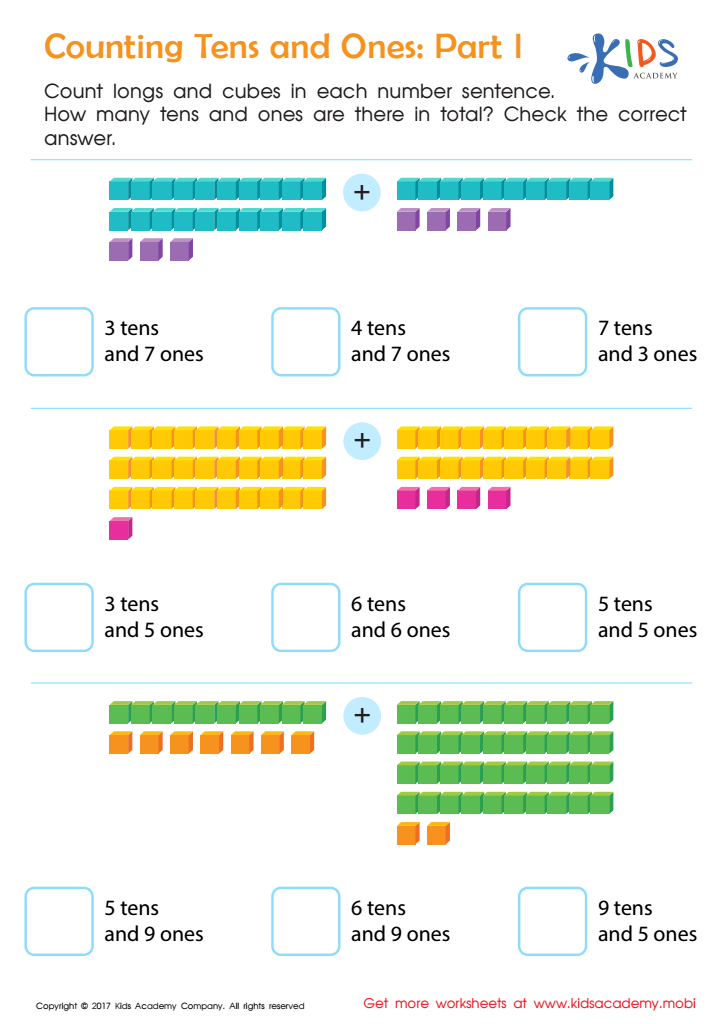
Counting Tens and Ones: Part 1 Worksheet
 Assign to My Students
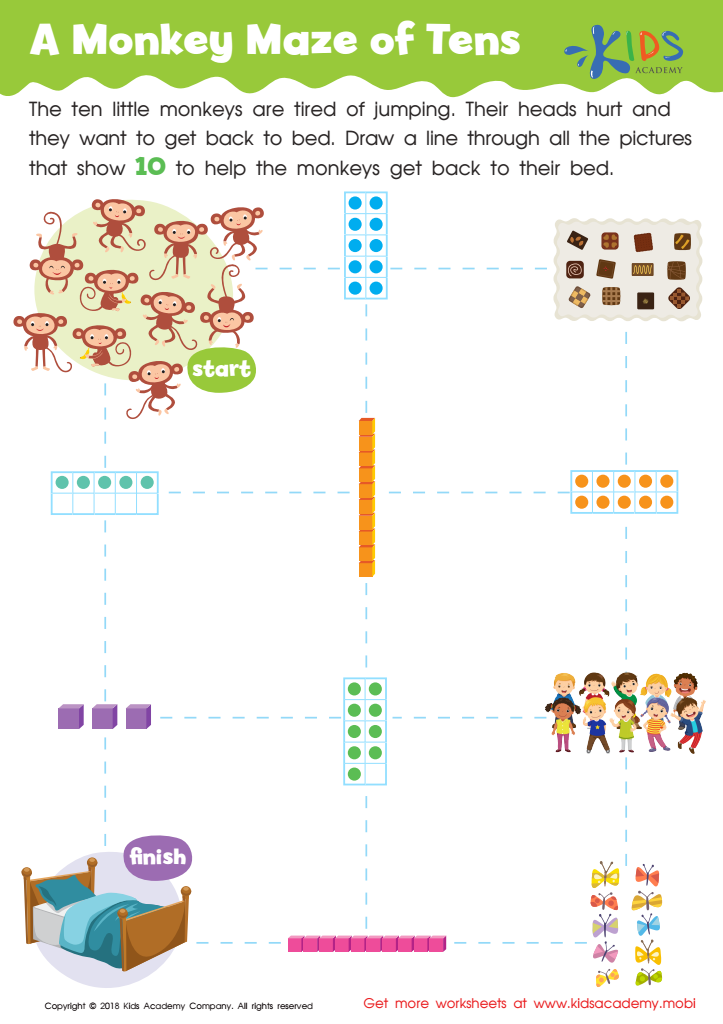
A Monkey Maze of Tens Worksheet
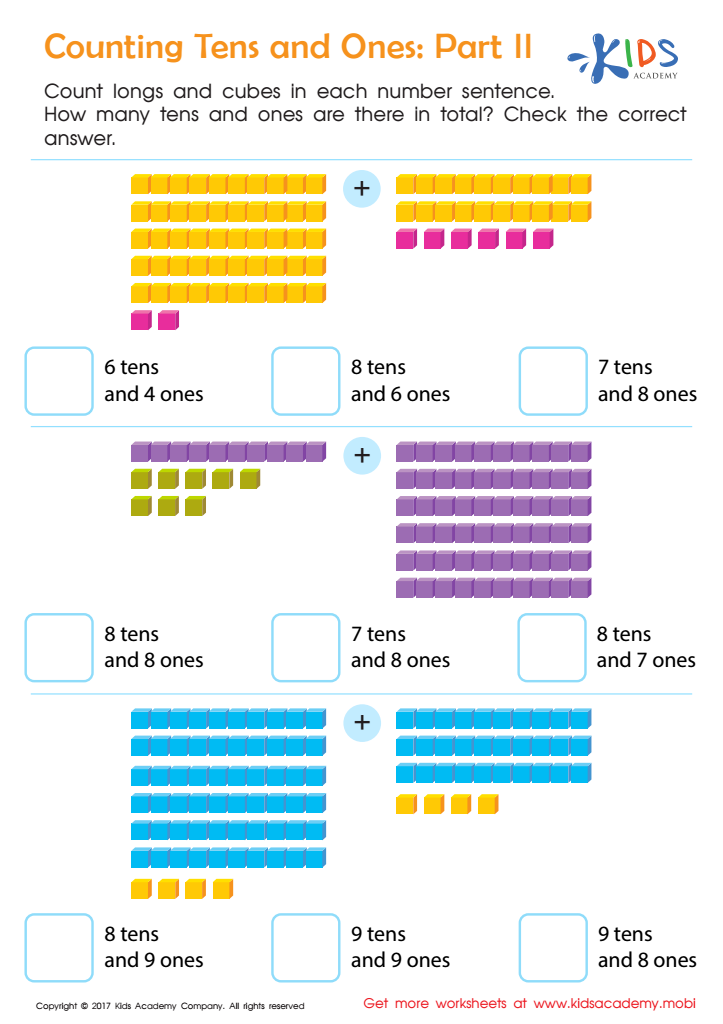
Counting Tens and Ones: Part 2 Worksheet
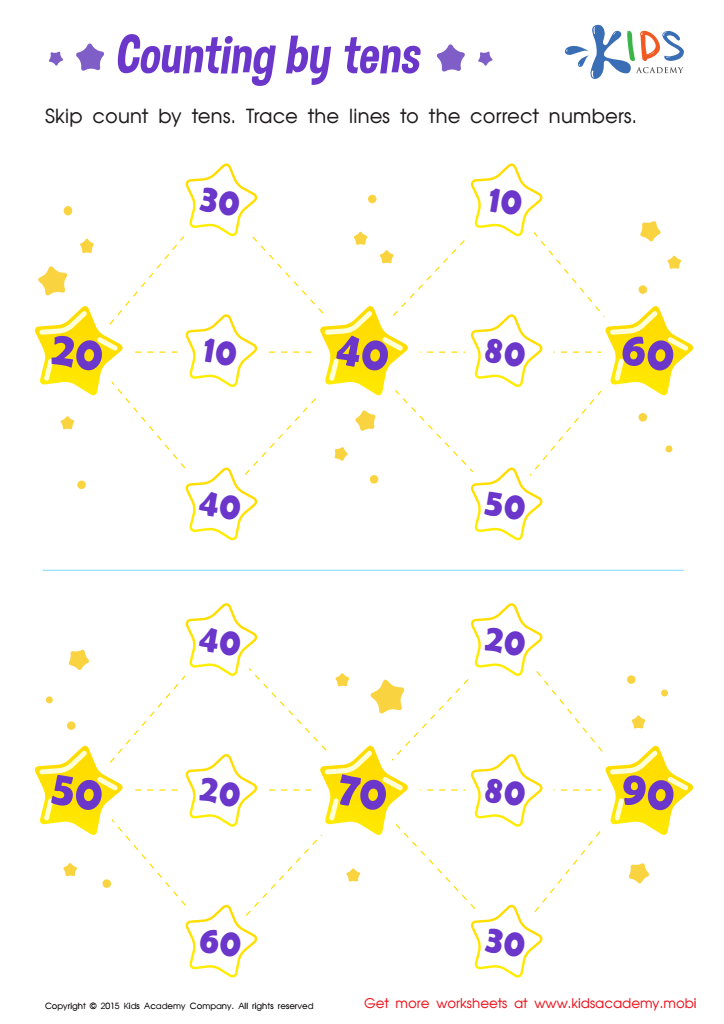
Learn Dozens: Counting by Tens Printable







Understanding the concept of tens is foundational for young children aged 3-6 as it builds the basis for essential math skills they will need throughout their educational journey. Learning about tens helps children grasp the idea of place value, which is crucial for understanding and performing arithmetic operations like addition, subtraction, multiplication, and division.
When parents and teachers support the understanding of tens, they are fostering a deeper comprehension of how numbers work. For children, this means recognizing that numbers are composed of groups of ten, making it easier to understand larger numbers and how they are structured. For example, knowing that the number 34 consists of three tens and four ones simplifies the understanding of more complex concepts and enhances number sense.
Moreover, an early understanding of tens can boost a child’s confidence in math, reducing anxiety and making them more likely to enjoy and succeed in future mathematical challenges. This foundational skill can also enhance problem-solving abilities and logical thinking from a young age, creating a positive attitude towards learning overall.
By prioritizing understanding tens, parents and teachers lay the groundwork for a child's educational success, making complex mathematical concepts more accessible and instilling lifelong learning habits.








