Identifying story elements Reading Worksheets for Ages 3-6
3 filtered results
-
From - To
Introduce your young learners to the magic of storytelling with our "Identifying Story Elements Reading Worksheets for Ages 3-6." These engaging, brightly colored worksheets are designed to help children recognize fundamental story elements like characters, settings, and plot. Perfectly tailored for early readers, these activities enhance comprehension and boost critical thinking skills in a fun, interactive way. Suitable for both classroom and home use, our worksheets make learning to read an exciting adventure, laying a strong foundation for future reading success. Ignite your child's imagination and foster a love for reading with Kids Academy's expert-crafted resources!
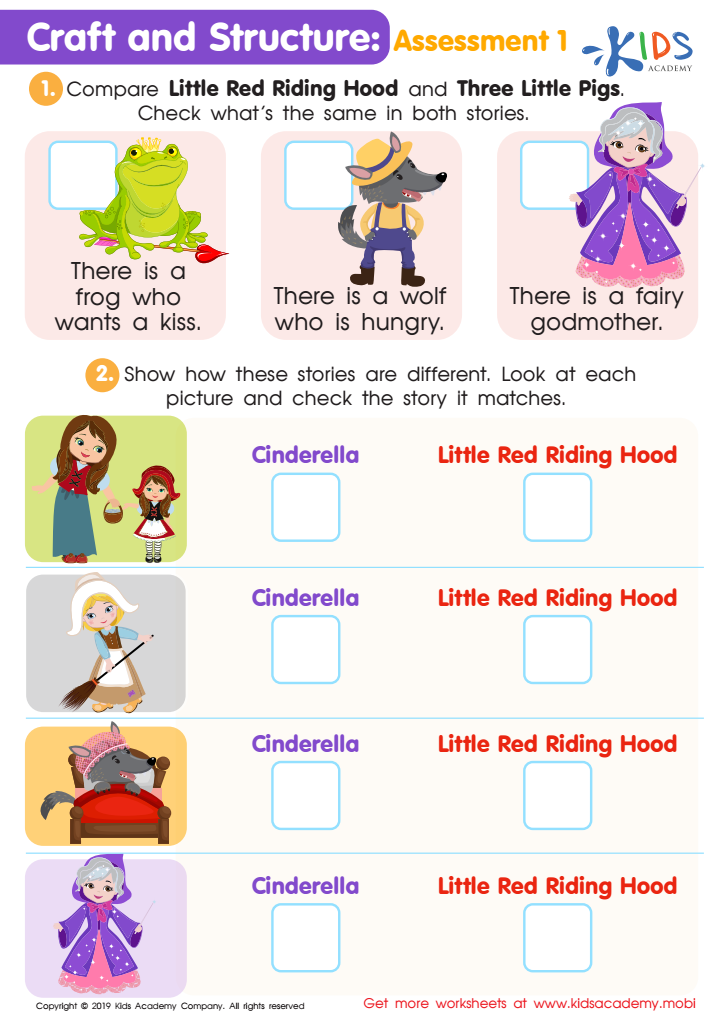
Craft and Structure: Assessment 1 Worksheet
 Assign to My Students
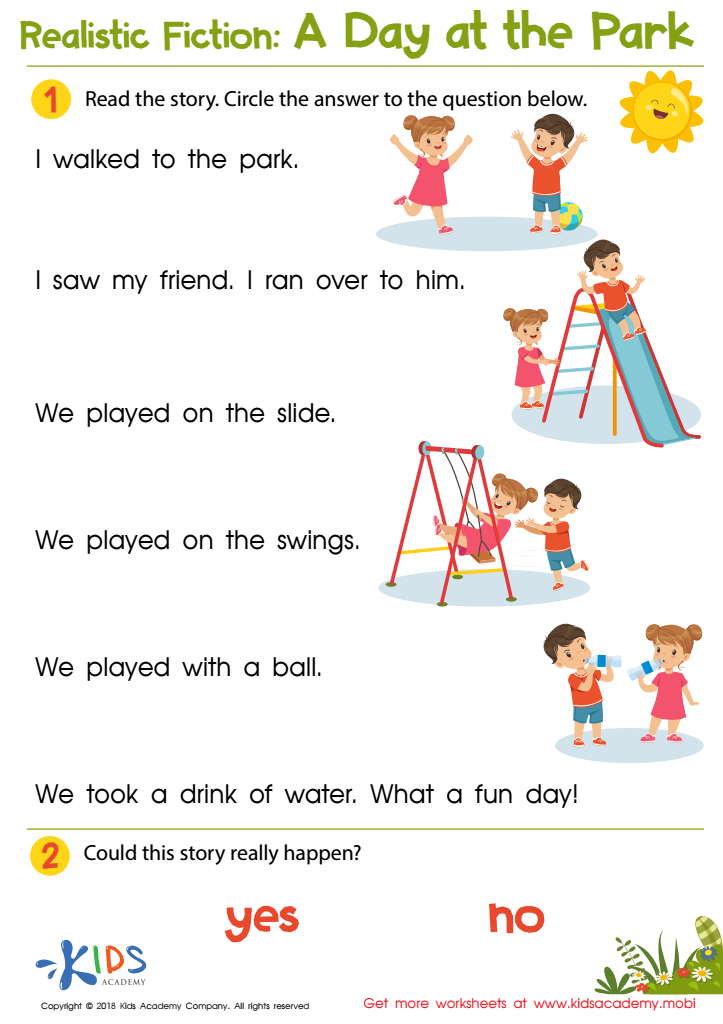
A Day at the Park Worksheet
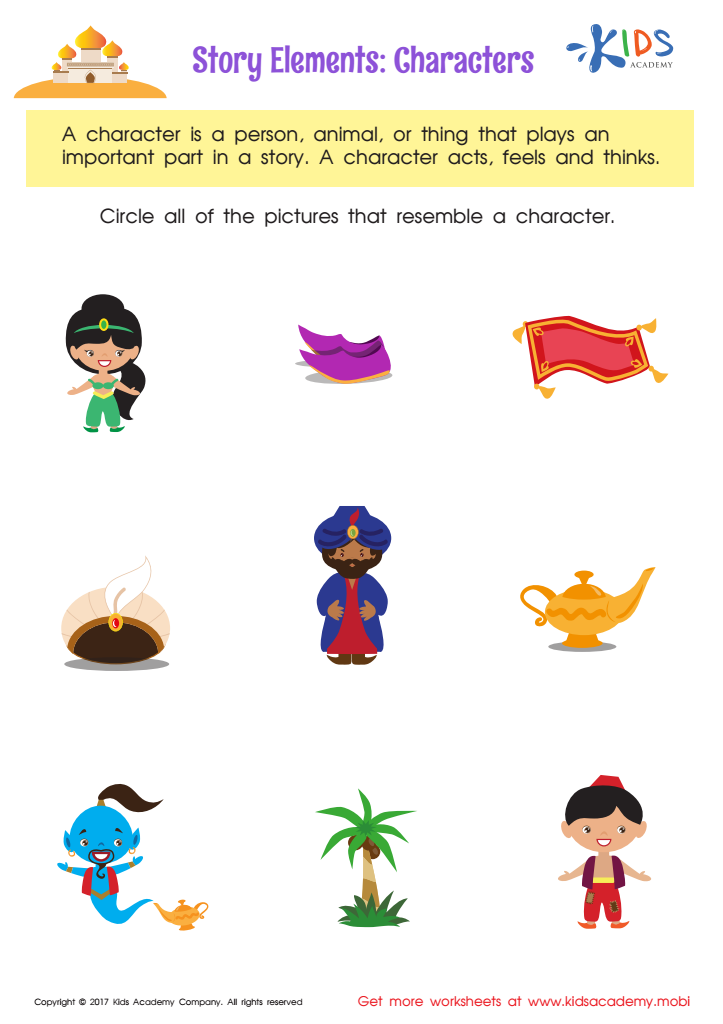
Story Elements Printable








Identifying story elements (such as characters, setting, plot, conflict, and resolution) in reading activities for children aged 3-6 is crucial for several reasons. Firstly, it nurtures their comprehension skills. Understanding who is involved in a story, where it takes place, and what happens boosts their ability to grasp the narrative and its meaning, laying a strong foundation for future reading activities.
Secondly, discussing these elements aids in vocabulary development. When children learn words like "character" or "setting," they become better equipped to express and understand complex ideas, thus enhancing their language skills.
Focusing on story elements also strengthens critical thinking. By identifying parts of the story, children learn to predict outcomes, recognize causes and effects, and differentiate between main and additional parts of a narrative. These skills are transferable to other academic and life situations.
Moreover, grasping story elements can be an enjoyable and engaging way for children to develop an interest in books and storytelling. When books are a shared adventure with clear, understandable parts, children are more likely to develop a lifelong love of reading.
Lastly, these interactions promote emotional and social intelligence. By discussing characters and their actions, children begin to understand different perspectives, empathy, and human behavior, vital components of emotional development. Engaging with story elements thus yields broad educational and personal benefits, making it essential for parents and teachers to prioritize these activities.








