Filters

12 filtered results

Clear all filters
Favorites
With answer key
Interactive

12 filtered results

Difficulty Level

Grade


Nurture young minds with our expertly designed Critical Thinking Science Worksheets for ages 3-6. At Kids Academy, we offer age-appropriate activities that foster analytical and problem-solving skills through fun, interactive tasks. These printable resources challenge children to observe, inquire, and reason effectively, creating a foundation for lifelong learning. Topics span the basics of physical, natural, and life sciences, encouraging curious young learners to explore the world around them. Our engaging worksheets promote cognitive development, making early education both enjoyable and impactful for preschool and kindergarten students. Jumpstart their scientific journey with Kids Academy!

Check out this FREE Trial Lesson on Science for age 3-6!

Sorting Objects into 3 Categories

Favorites
With answer key
Interactive
  • 3-6
  • Critical Thinking
  • Science
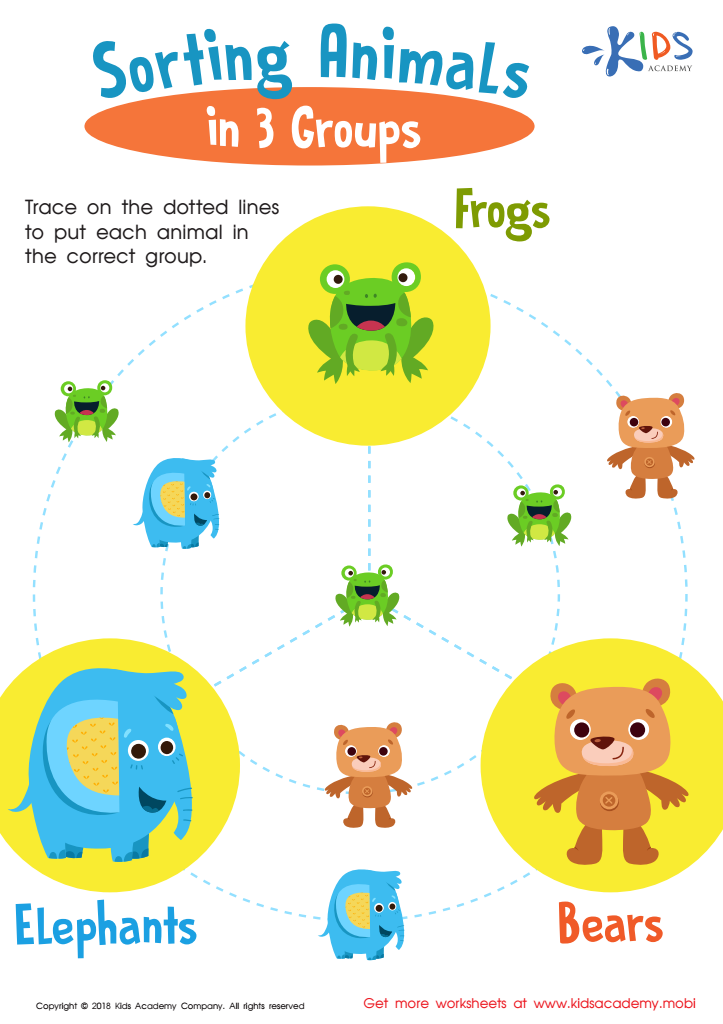
Sorting Animals in 3 Groups Worksheet

Sorting Animals in 3 Groups Worksheet

Let your kids practice and build skills for future Venn Diagrams with this PDF worksheet. They'll trace lines to match and group animals, and learn the differences and similarities of animals by categorizing with pictures and words. Plus, it's a great way to develop fine motor skills.
Sorting Animals in 3 Groups Worksheet
Worksheet
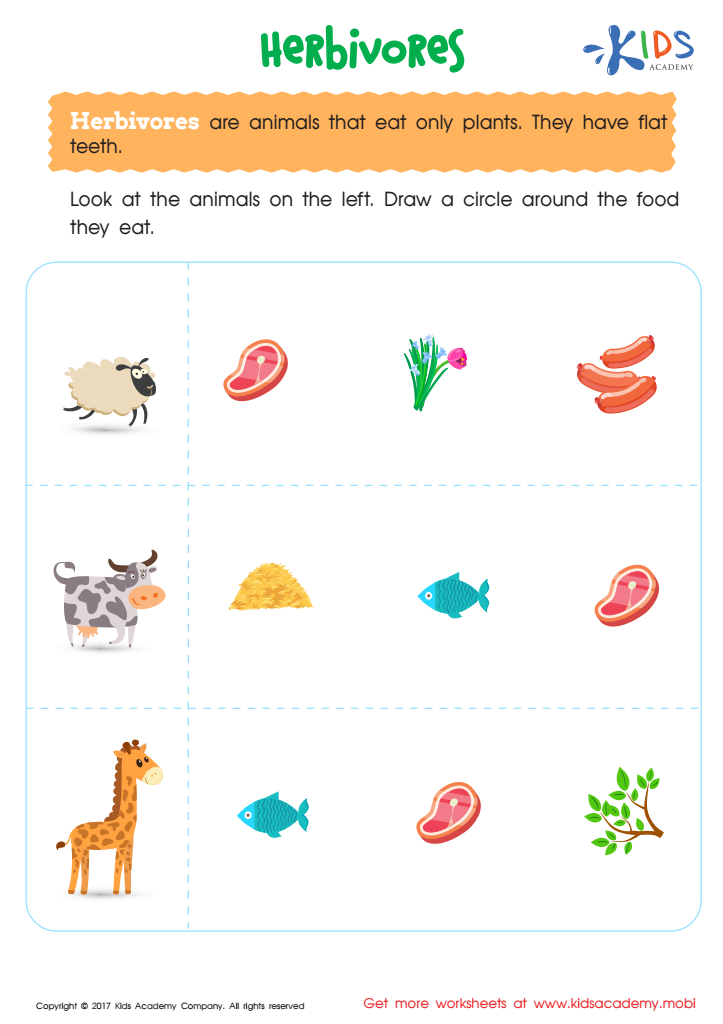
Herbivorous animals worksheet

Herbivores Printable

Strengthen their vocab with these fascinating creatures, as they explore an intriguing aspect of beloved animals.
Herbivores Printable
Worksheet
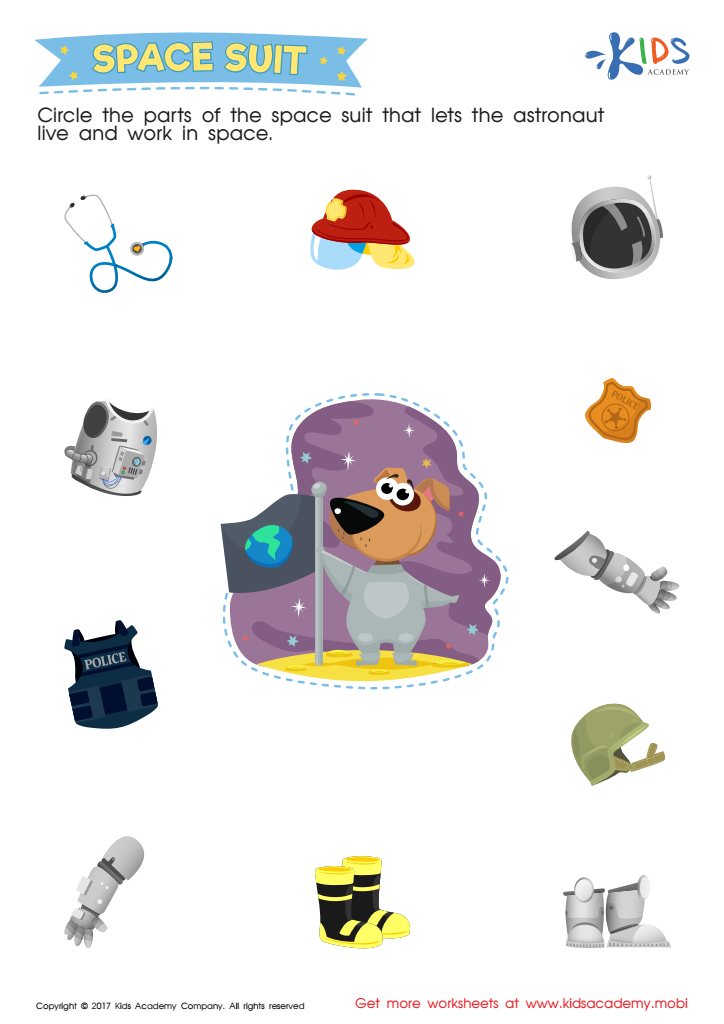
Space Suit Printable Worksheet

Space Suit Printable

Space Suit Printable
Worksheet
Thorns and Spikes Worksheet

Thorns and Spikes Worksheet

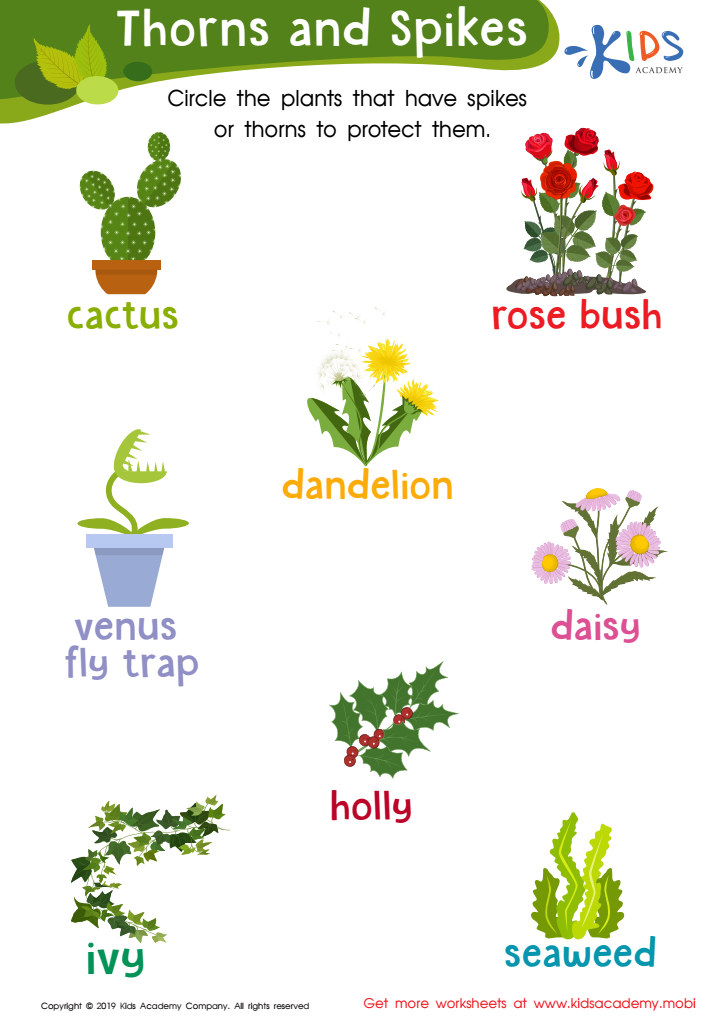
Can your students name and identify the plants and flowers in this worksheet? Ask them to read out the names and circle the ones with spikes or thorns. Help them appreciate nature's beauty and understand how plants protect themselves.
Thorns and Spikes Worksheet
Worksheet
Guess the Season Worksheet

Guess the Season Worksheet

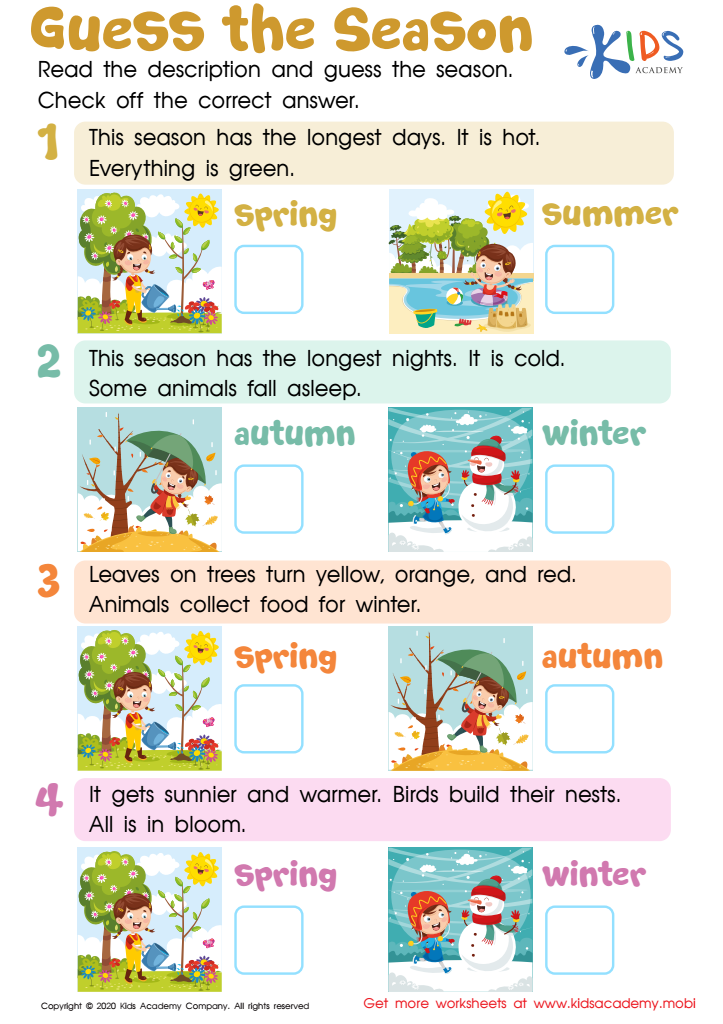
Winter and summer bring different weather! Help kids recognize the changes with this free Kids Academy PDF worksheet. Students read each description, look at the pictures, and check the box next to the season depicted. Make learning fun and easy with interactive activities.
Guess the Season Worksheet
Worksheet
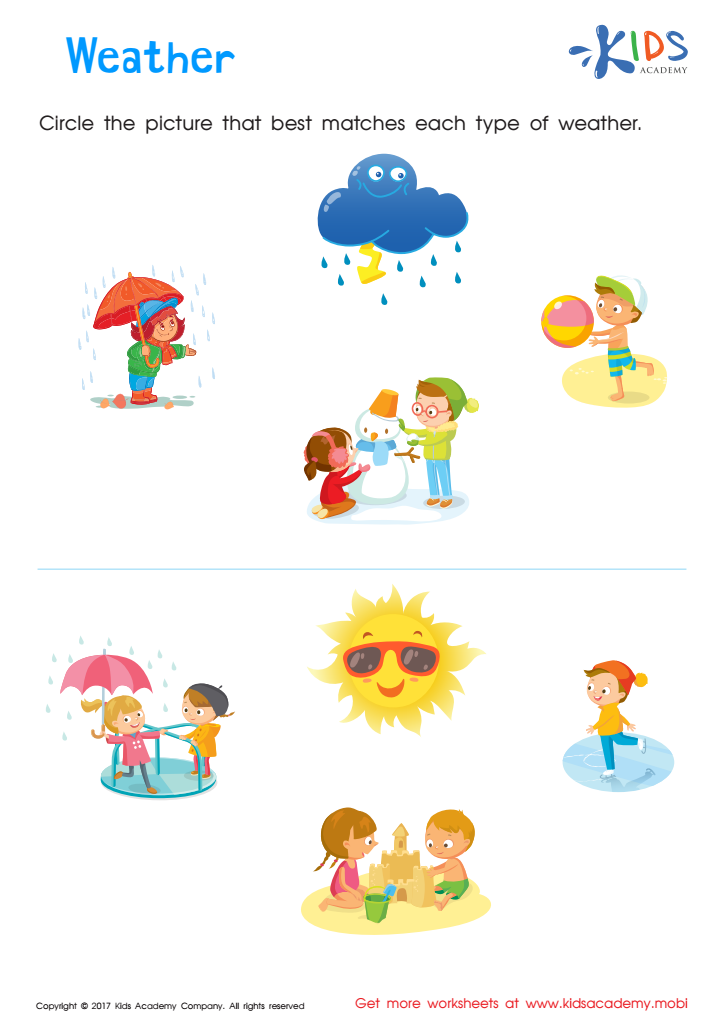
Types of Weather Worksheet

Weather Worksheet

Weather Worksheet
Worksheet
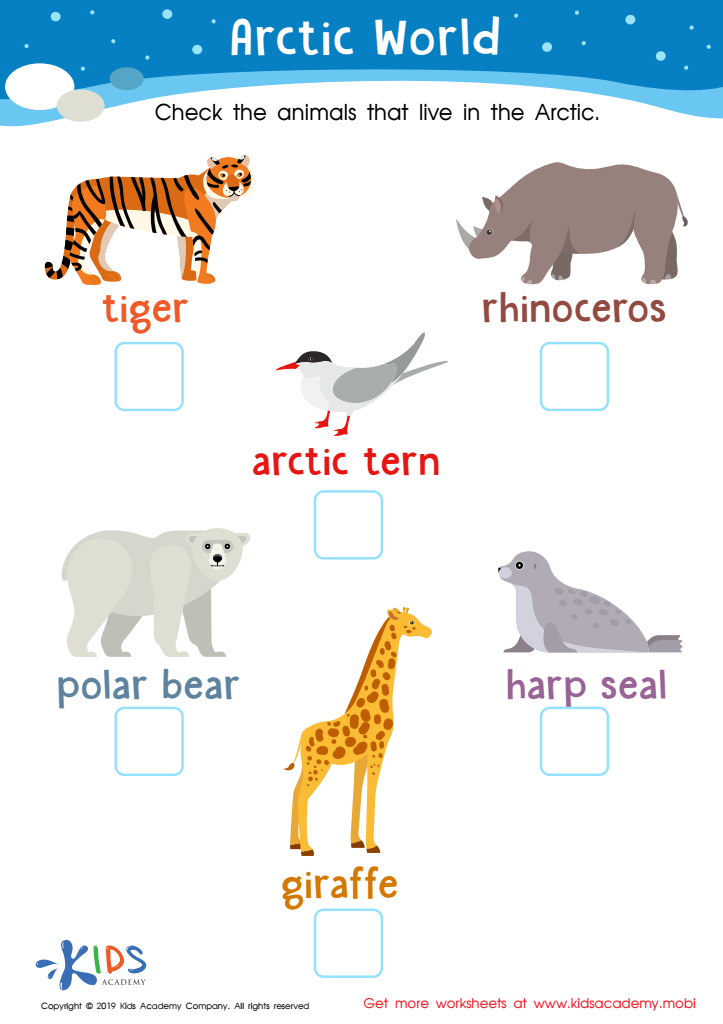
Arctic World Worksheet

Arctic World Worksheet

Ask your students if they know where the Arctic is located and what lives there. If not, use a world atlas to show them. The Arctic is very cold and snow-covered; native animals have adapted to survive the harsh conditions. Look at the animals in the worksheet and help your students decide which ones live in the Arctic.
Arctic World Worksheet
Worksheet
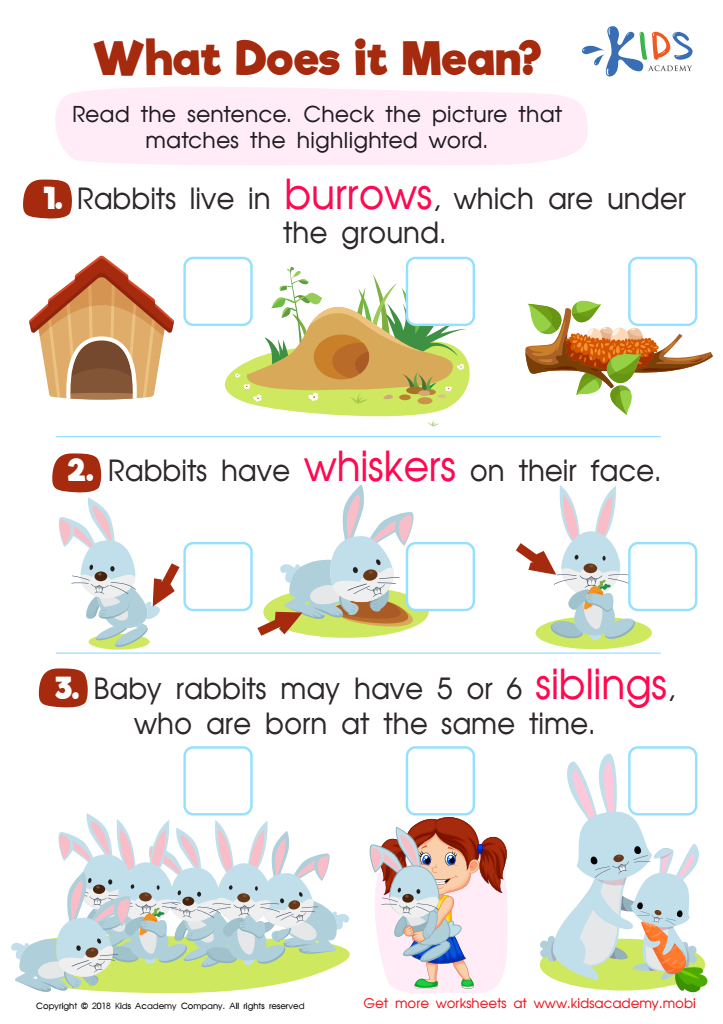
What Does It Mean? Worksheet

What Does It Mean? Worksheet

Teach your child to use context clues with this engaging Kids Academy worksheet. Read the sentences and find the pink-highlighted word. Use the other words in the sentence to figure out the meaning, then check the box next to the picture that represents it.
What Does It Mean? Worksheet
Worksheet
Animals and Plants: Assesment 2 Worksheet

Animals and Plants: Assessment 2 Worksheet
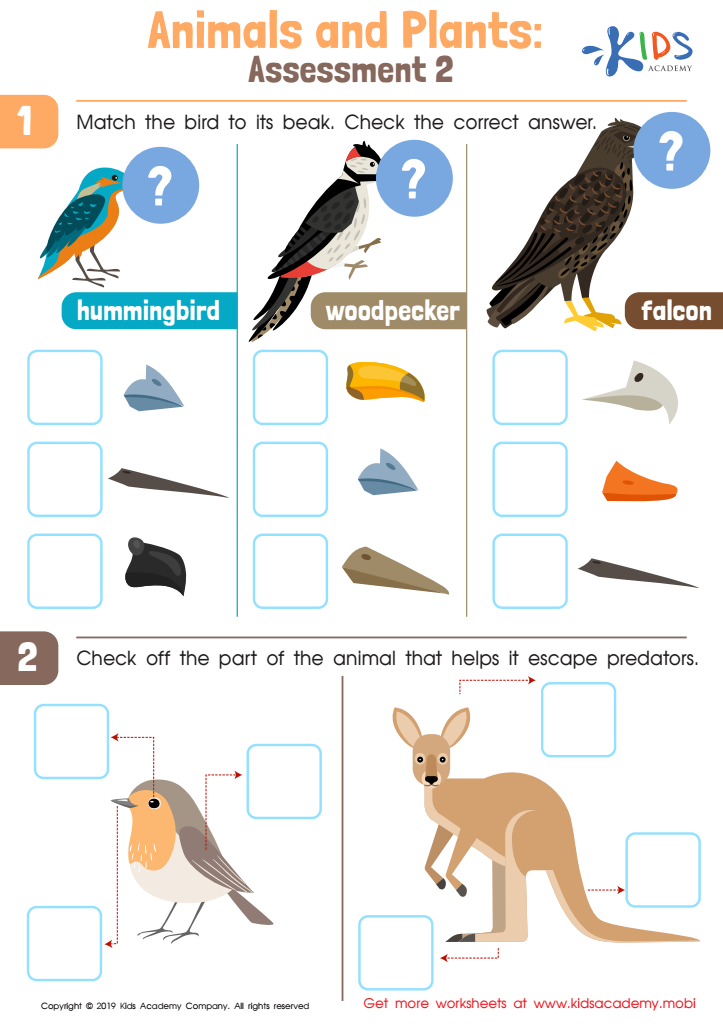
This free PDF is ideal to quickly test your child's knowledge of animal adaptations. They'll select the right beak patterns for hummingbird, woodpecker and falcon, and identify which parts of animals help them escape predators. It's easy to assess your kid's understanding.
Animals and Plants: Assessment 2 Worksheet
Worksheet
Animal Nests Worksheet

Animal Nests Worksheet

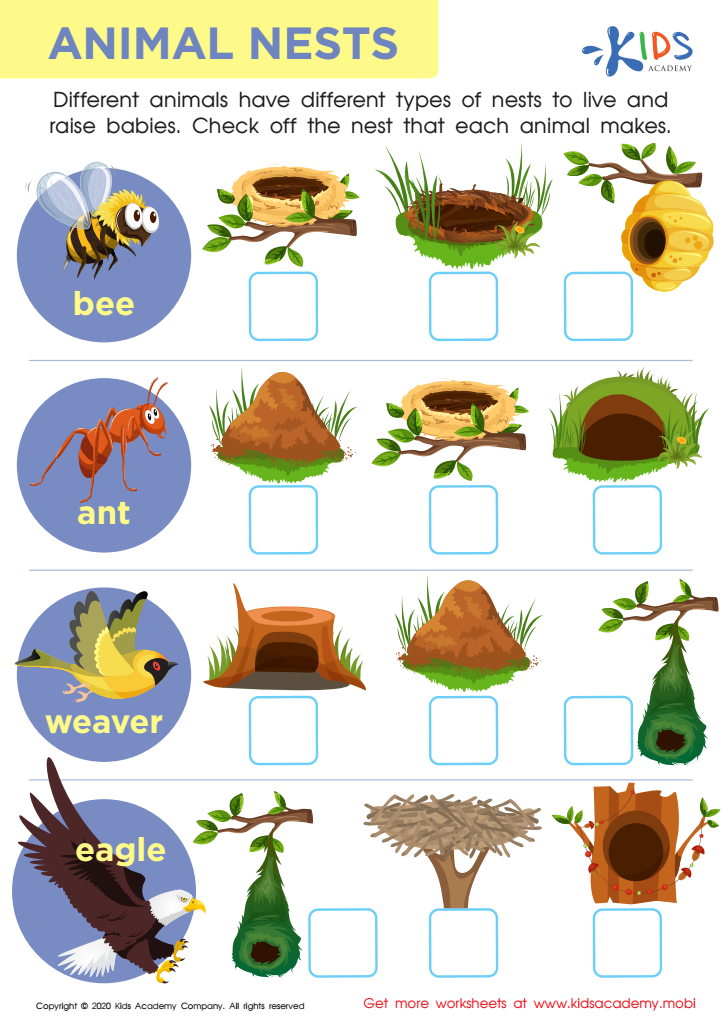
Animals need homes to sleep and stay safe. Look at the animal on the left and examine the nests and hives to the right. Check off the correct one for each animal to complete the worksheet! From birds to bees, it's a great way to show different types of homes animals make!
Animal Nests Worksheet
Worksheet
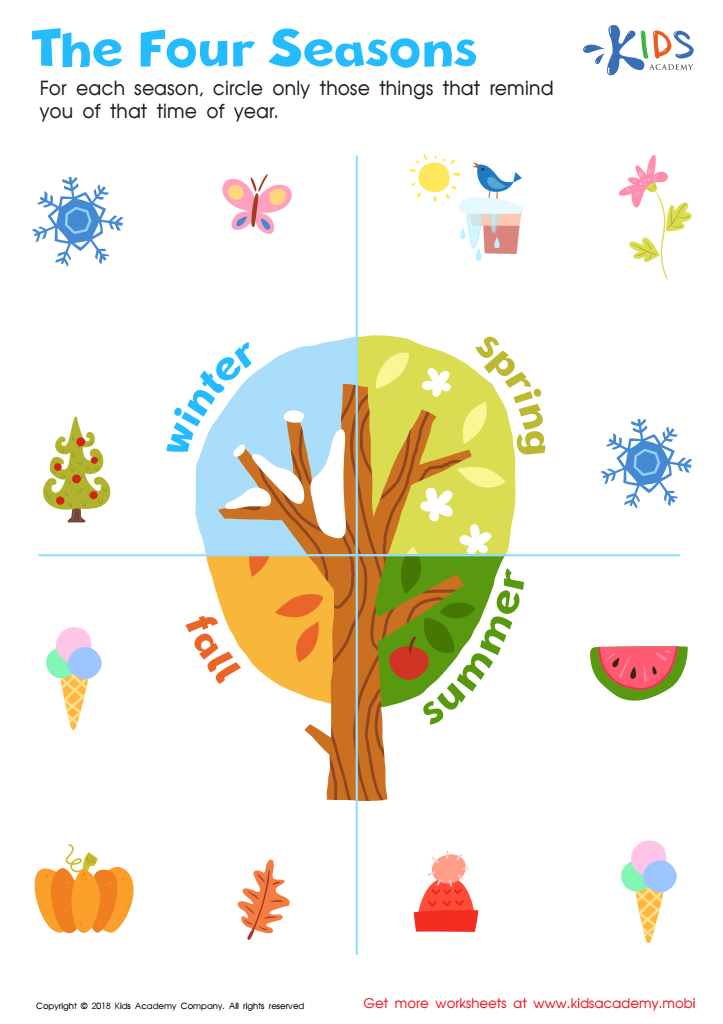
The Four Seasons Worksheet
The Four Seasons Worksheet

Tell your child to circle things that remind them of each season. The tree has four squares, one for each season. Some things in each square match the season, others don't. Ask if any are out of place. Help them circle only items that remind them of that season.
The Four Seasons Worksheet
Worksheet
Animals and Plants: Assesment 1 Worksheet

Animals and Plants: Assessment 1 Worksheet

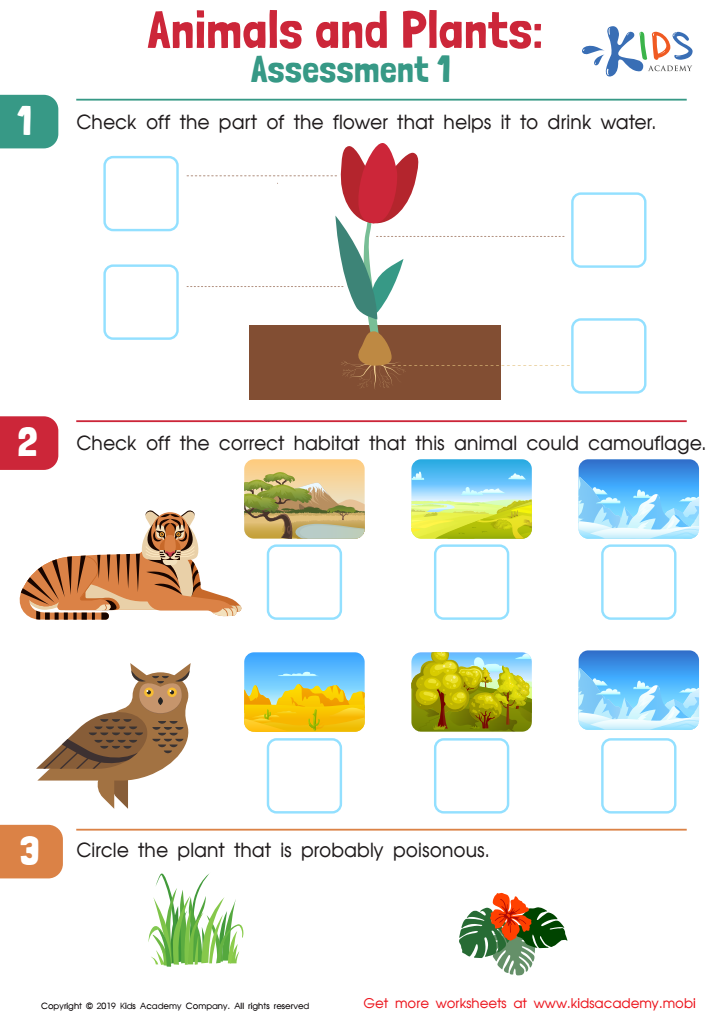
Do you want to easily assess your child's understanding of basic science concepts? This colorful PDF offers a free opportunity for them to test their knowledge about parts of a flower, poisonous plants, animal habitats and more! Bright pictures make it fun and easy for you to see what they know.
Animals and Plants: Assessment 1 Worksheet

Worksheet


Critical thinking science for ages 3-6 is essential as it lays the cornerstone for lifelong learning and problem-solving. At this young age, children's brains are exceptionally malleable, making it an ideal period for developing critical thinking skills. Parents and teachers who emphasize this growth cultivate curiosity and resilience, fostering a mindset that questions, explores, and understands the world more deeply.

For instance, when children engage in simple scientific experiments or nature explorations, they learn to ask questions like "Why does this happen?" or "What if I try this another way?" These inquiries teach them not just to accept information passively but to analyze, evaluate, and create hypotheses based on evidence.

Moreover, practicing critical thinking bolsters cognitive development and enhances language and social skills. Children learn to articulate their thoughts, listen to others, and build upon ideas collaboratively. This nurturing environment enables young learners to develop robust problem-solving abilities, essential not only for academic success but also for real-world challenges.

Lastly, critical thinking encourages emotional growth. As children evaluate different outcomes, they develop patience and perseverance, understanding that failure is a natural part of the learning process. Therefore, emphasizing critical thinking science helps create well-rounded, adaptable, and intellectually engaged individuals, ready to learn and innovate throughout their lives.