Sequencing Skills Science Worksheets for Ages 3-6
3 filtered results
-
From - To
Discover our engaging Sequencing Skills Science Worksheets, specially designed for children aged 3-6! These colorful and interactive worksheets help young learners develop critical sequencing skills, essential for understanding scientific concepts and fostering logical thinking. Our activities encourage children to arrange events, recognize patterns, and connect ideas through fun, age-appropriate tasks. Each worksheet is crafted to enhance their cognitive abilities while making learning enjoyable. Perfect for use at home or in the classroom, these worksheets make science exploration accessible and enjoyable for early learners. Download and inspire future scientists today with our thoughtfully designed Sequencing Skills Science Worksheets!
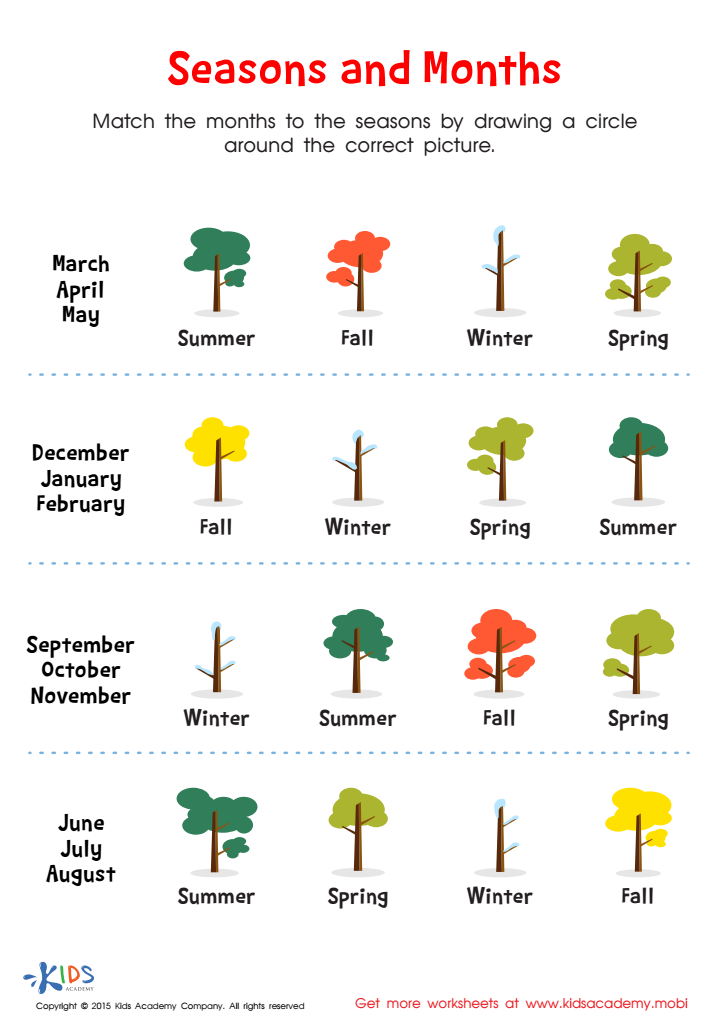
Seasons and Months Worksheet
 Assign to My Students
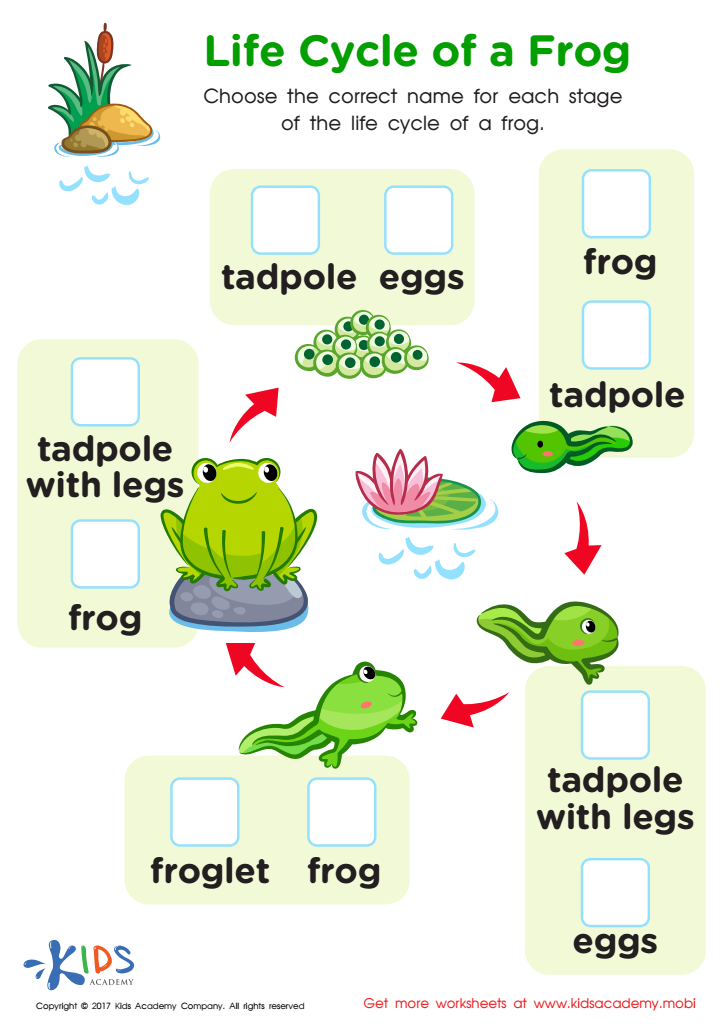
Life Cycle Frog Printable
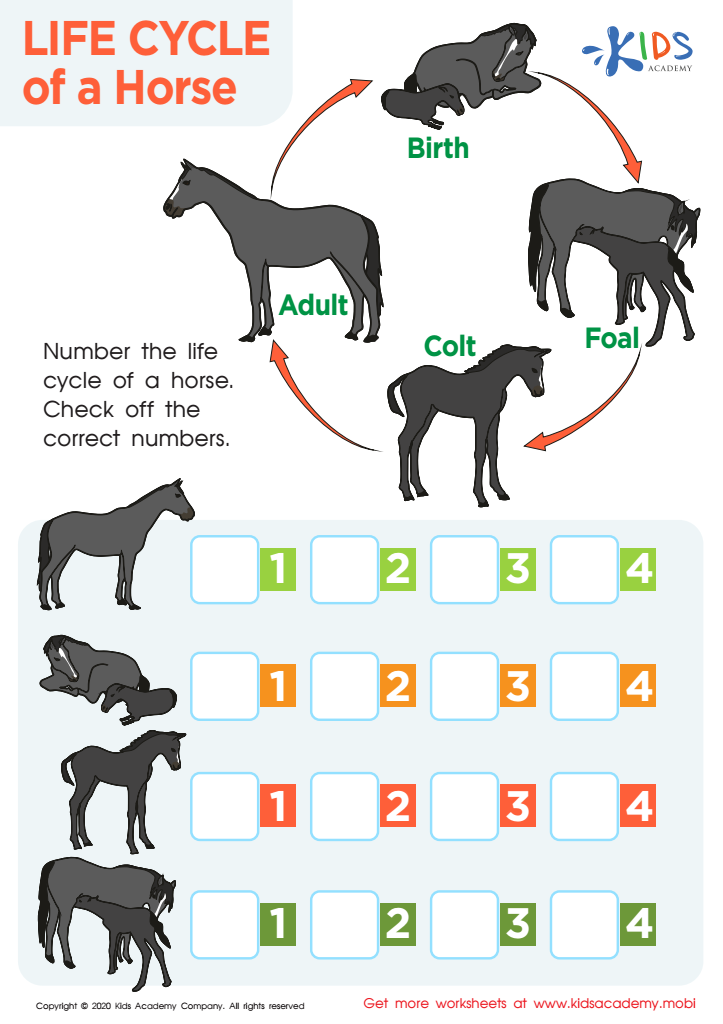
Life Cycle of a Horse Worksheet








Sequencing skills are fundamental in early childhood education, particularly in the context of scientific learning for children aged 3-6. Developing sequencing skills helps children understand and organize information logically, which is essential for grasping scientific concepts. In science, many observations, experiments, and processes need to be arranged in a particular order, such as the lifecycle of a butterfly or the steps in an experiment.
For parents and teachers, fostering these skills in young learners promotes critical thinking, enhances memory, and aids in comprehension. When children learn to sequence events or information, they build a foundation for problem-solving skills that will be valuable throughout their education. This ability to analyze and order information can lead to greater engagement with scientific topics, boosting curiosity and exploration.
Moreover, teaching sequencing within a science framework can make learning more relatable and enjoyable. Fun activities like storytelling, hands-on experiments, and interactive games that require kids to sequence steps can spark interest in science at a young age. As they become proficient in sequencing, children acquire the tools needed for more complex reasoning, preparing them for future academic success and fostering a lifelong love for learning in the sciences.







