Shape Recognition Science Worksheets for Ages 3-6
5 filtered results
-
From - To
Explore our Shape Recognition Science Worksheets designed for children aged 3-6! These engaging and interactive resources help young learners identify and understand various shapes, fostering essential early math and spatial skills. Our worksheets feature colorful illustrations and creative activities tailored to spark curiosity and make learning fun. As kids practice recognizing shapes, they will also enhance their observational skills and develop a solid foundation for future mathematical concepts. Perfect for preschool and kindergarten educators, as well as parents looking to supplement learning at home, these worksheets provide a delightful journey into the world of shapes. Start your child's learning adventure today!
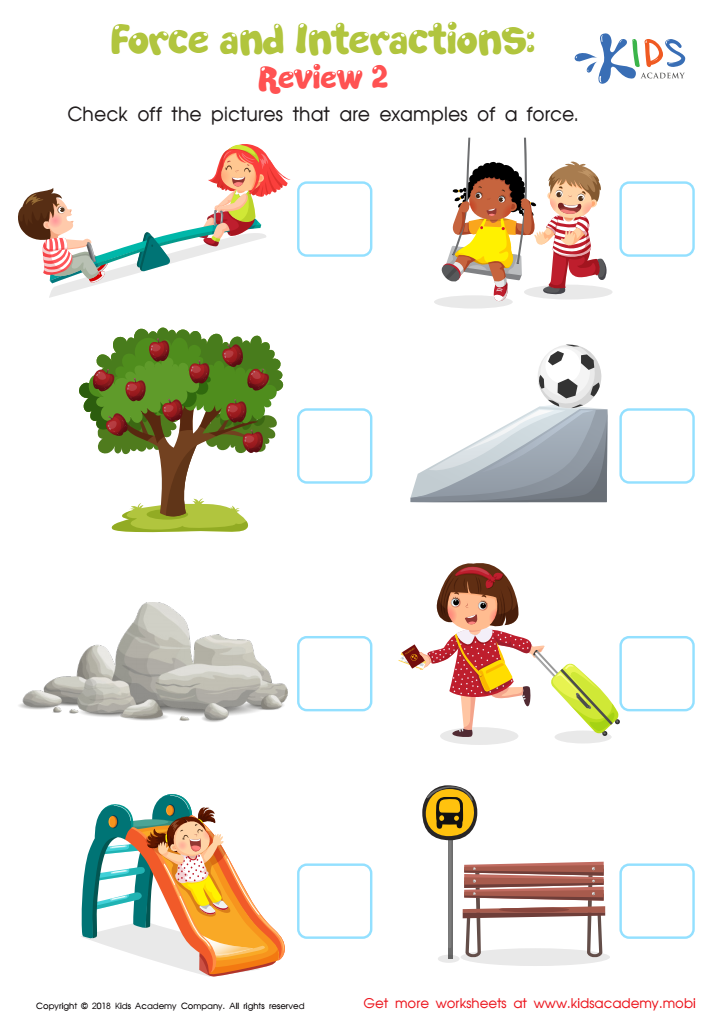
Force and Interactions: Review 2 Worksheet
 Assign to My Students
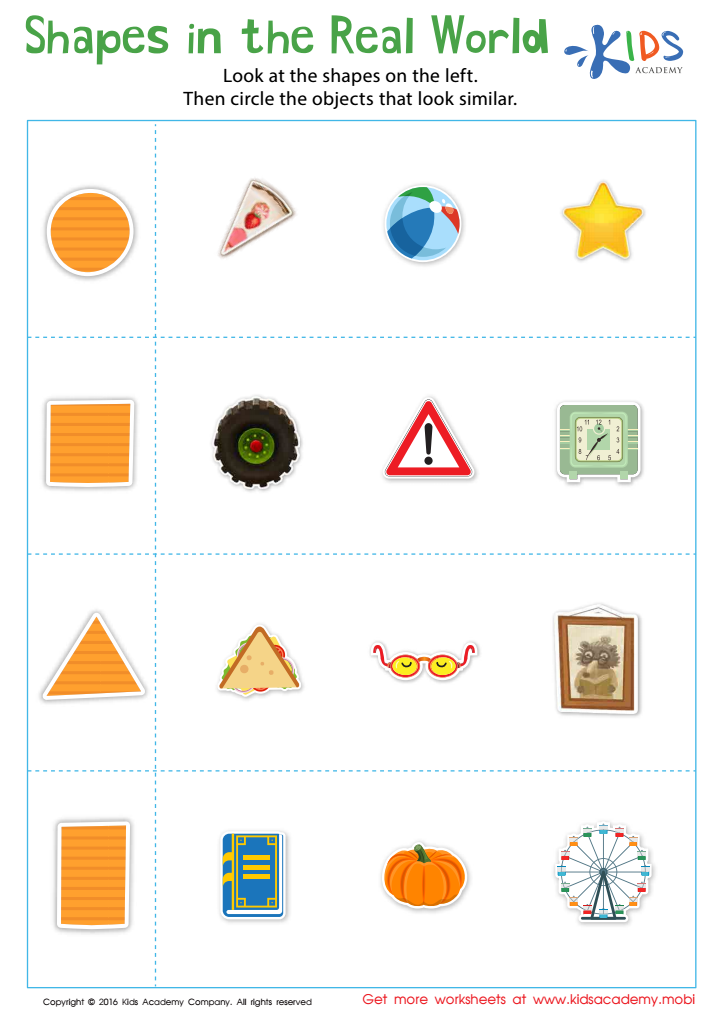
Shapes in the Real World Worksheet
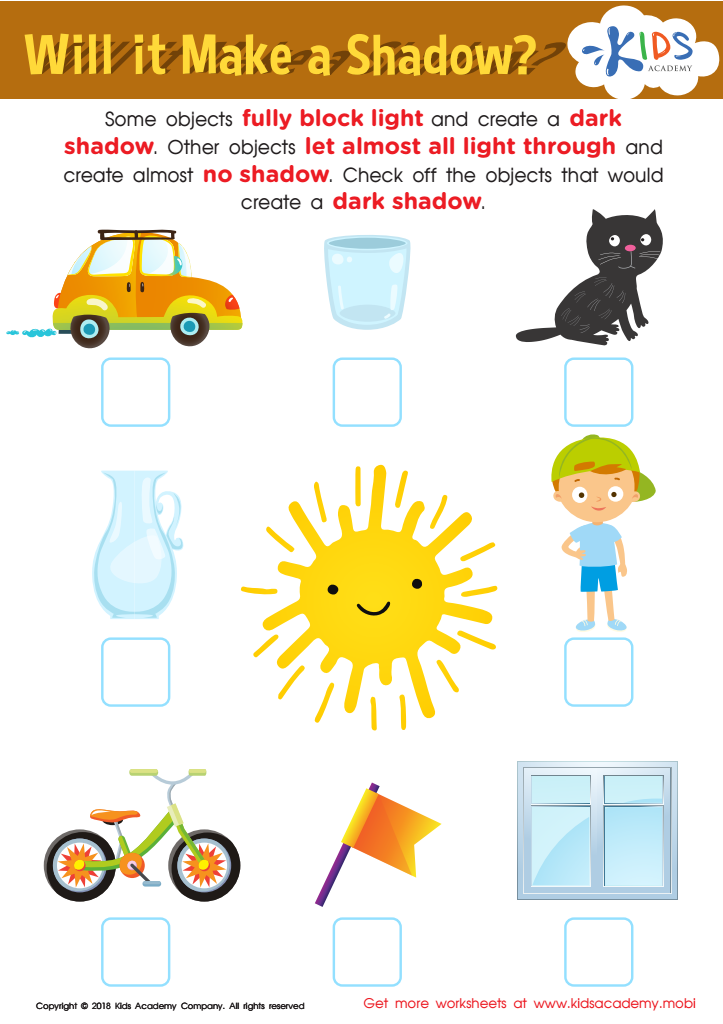
Will It Make a Shadow? Worksheet
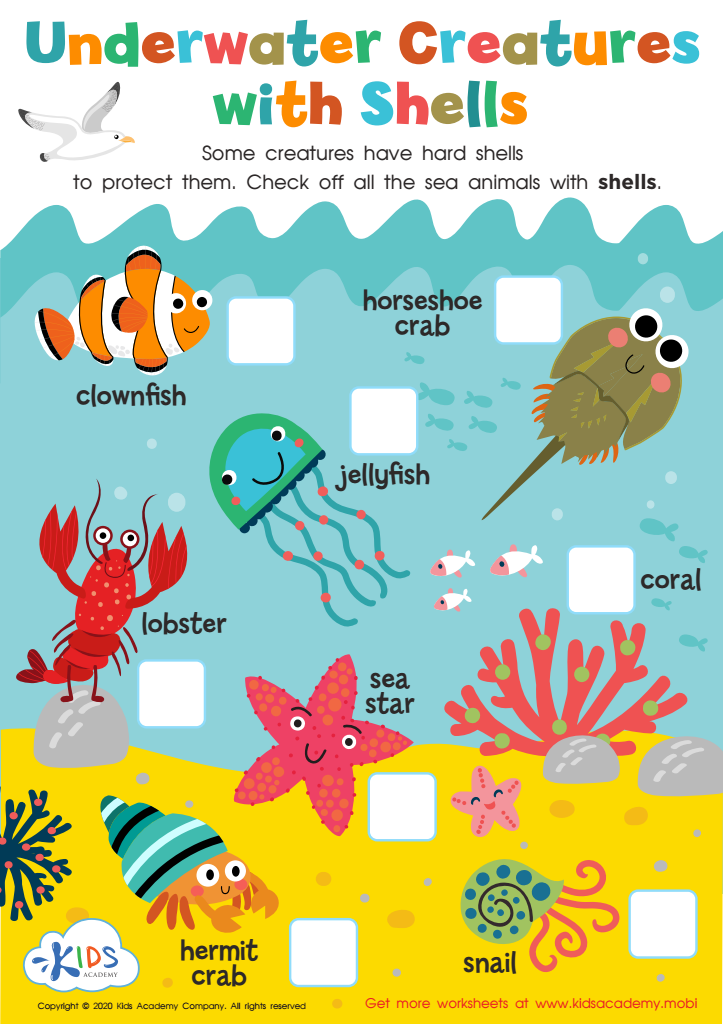
Underwater Creatures with Shells Worksheet
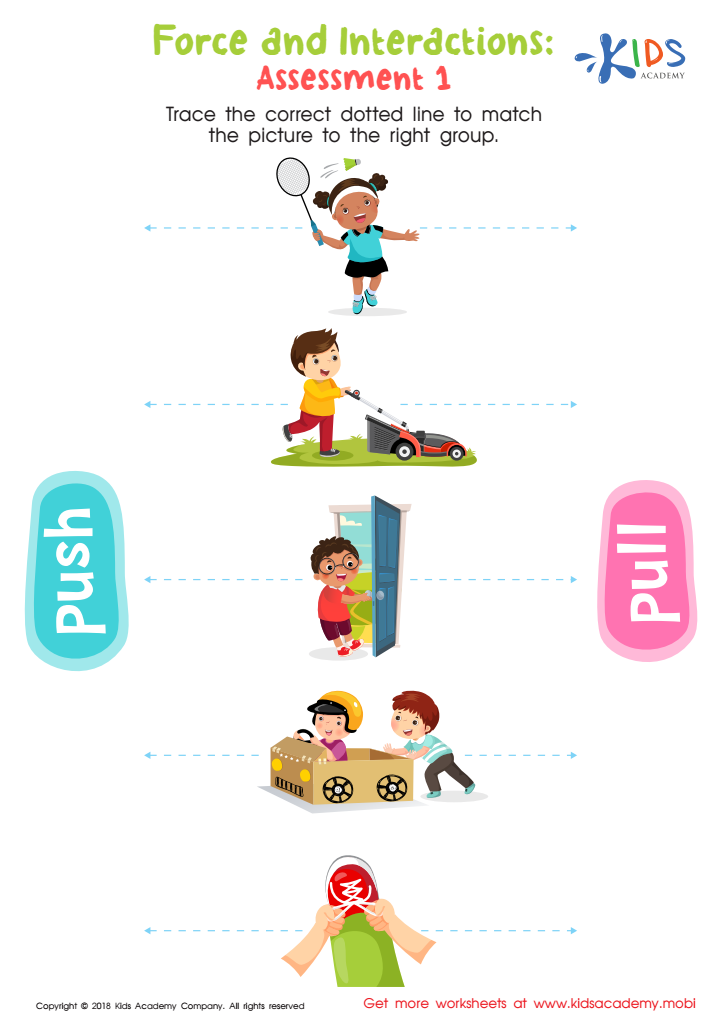
Force and Interactions: Assessment 2 Worksheet


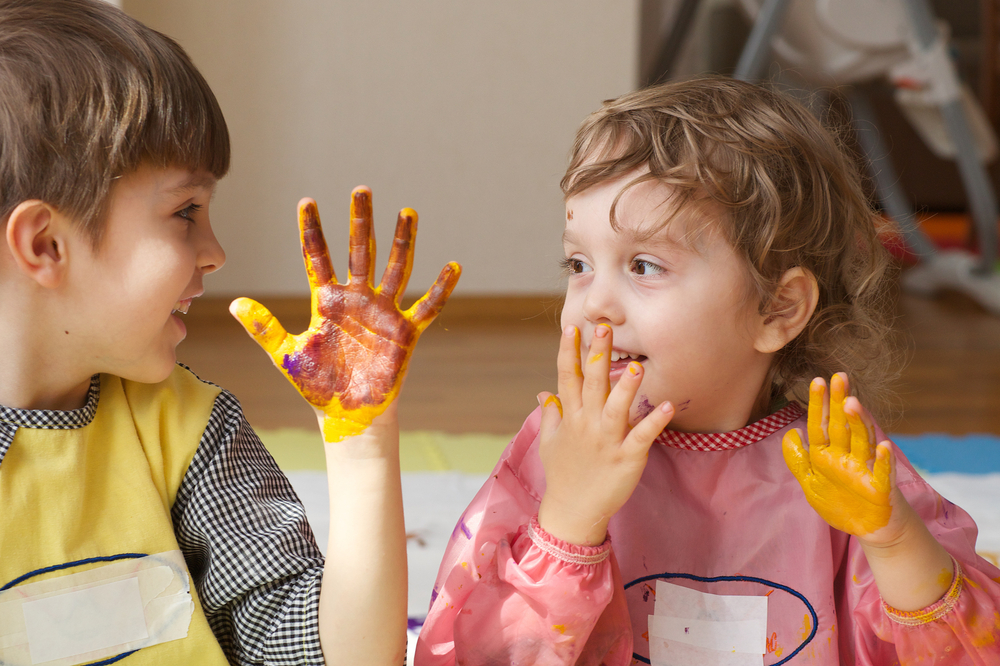




Shape recognition is a fundamental cognitive skill that forms the foundation for more complex mathematical concepts and spatial awareness in young children. For ages 3-6, engaging in shape recognition activities fosters critical early development, promoting not only mathematical proficiency but also cognitive, language, and motor skills. Parents and teachers should care about this crucial area of learning because it enhances a child’s ability to identify, compare, and manipulate shapes, which are essential skills in physics and geometry.
Moreover, shape recognition contributes to problem-solving abilities and logical thinking. As children learn to recognize and categorize shapes, they also engage in discussions about their properties, fostering vocabulary expansion and communication skills. Shapes are all around us in everyday life, and teaching children to recognize them can stimulate their curiosity and observational skills, improving their overall cognitive development.
Furthermore, incorporating shape recognition into fun activities such as art projects, games, and outdoor exploration encourages active learning and promotes social interactions among peers. Overall, by prioritizing shape recognition, parents and teachers provide children with critical tools for future learning, laying the groundwork for academic success and lifelong skills. Thus, understanding shape recognition is pivotal for a child's holistic development in their early years.







