
Understanding ecosystems Science Worksheets for Ages 3-6
5 filtered results
Difficulty Level
Grade
Age
-
From - To
Subject
Activity
Standards
Discover the wonders of our natural world with "Understanding Ecosystems Science Worksheets for Ages 3-6." Tailored for curious young minds, these engaging and interactive worksheets help children explore the basics of ecosystems. Through fun activities and colorful illustrations, kids will learn about different habitats, plants, and animals, fostering early science skills. Perfect for parents and educators, our printable worksheets support hands-on learning, encouraging observation and critical thinking. Ignite your child's curiosity and build a solid foundation in environmental awareness with our age-appropriate resources. Start your young learner's journey into the world of ecosystems today!
Favorites
With answer key
Interactive
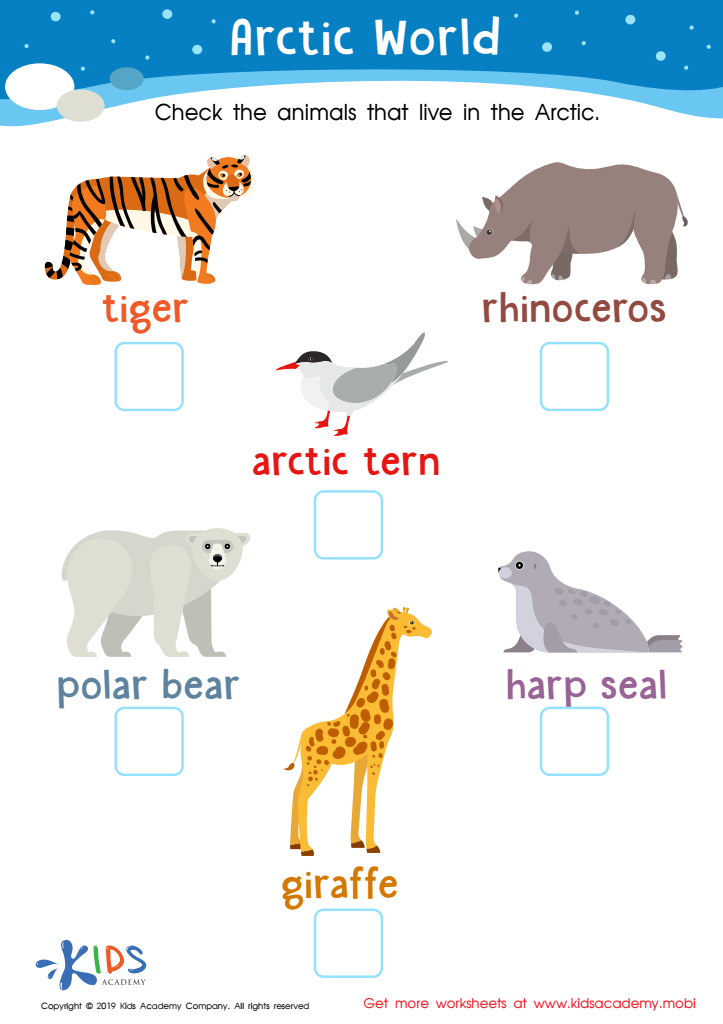
Arctic World Worksheet
Ask your students if they know where the Arctic is located and what lives there. If not, use a world atlas to show them. The Arctic is very cold and snow-covered; native animals have adapted to survive the harsh conditions. Look at the animals in the worksheet and help your students decide which ones live in the Arctic.
 Assign to My Students
Arctic World Worksheet
Worksheet
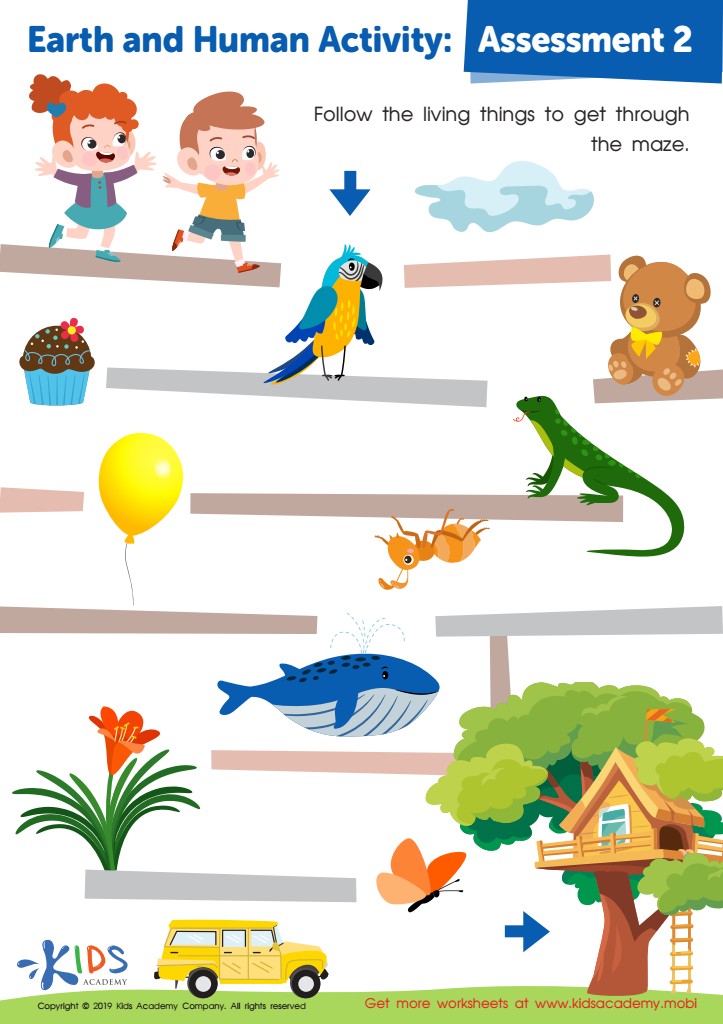
Earth and Human Activity: Assessment 2 Worksheet
Earth is alive with birds, trees, insects, and animals. Explain to your kids that the environment on Earth supports life. Ask for examples, then use the worksheet pictures to help them identify living things and complete the maze.
Earth and Human Activity: Assessment 2 Worksheet
Worksheet
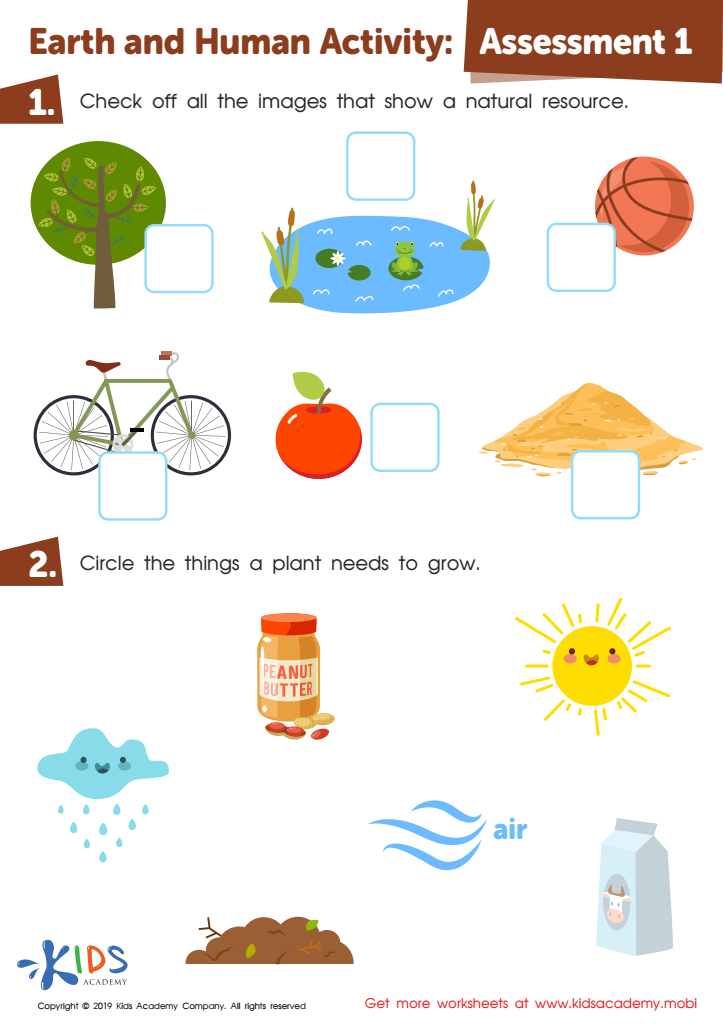
Earth and Human Activity: Assessment 1 Worksheet
Natural resources are gifts from Mother Nature that exist without man-made intervention. We use them to make essential items we use daily. Ask your kids for examples and have them check off images of natural resources on this worksheet.
Earth and Human Activity: Assessment 1 Worksheet
Worksheet
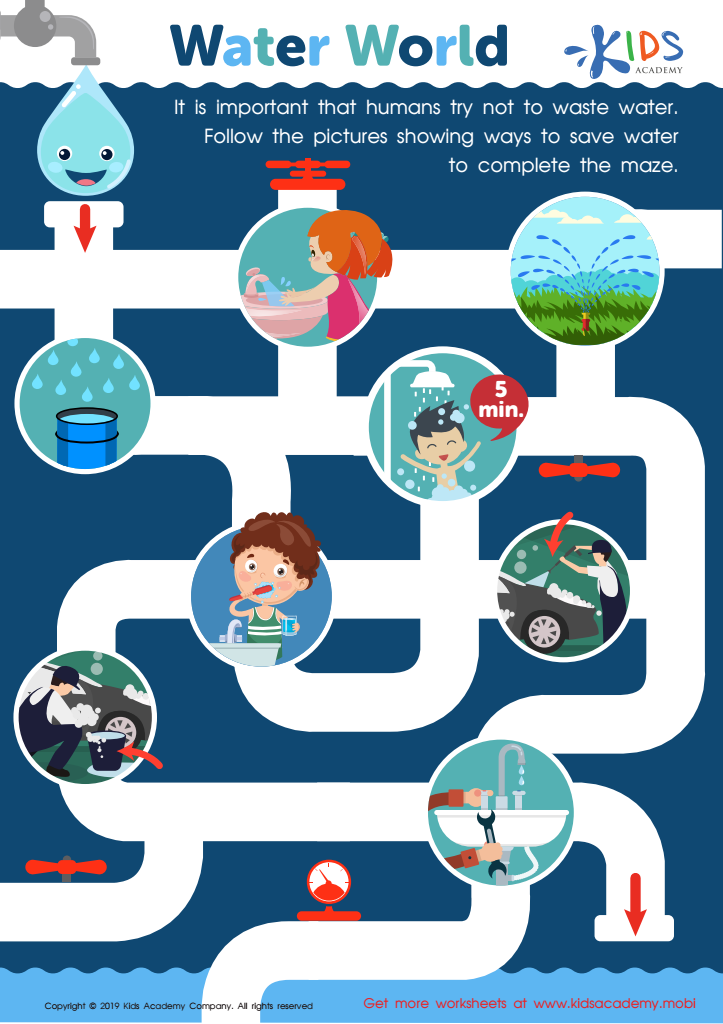
Water World Worksheet
Water is a vital necessity for living. Our bodies depend on it to stay healthy and survive. When we don't drink enough water, we become thirsty and run the risk of getting sick. Luckily, our planet is full of water and natural sources to stay hydrated. To prevent water waste, use this worksheet to teach your students how to conserve it and complete the maze.
Water World Worksheet
Worksheet
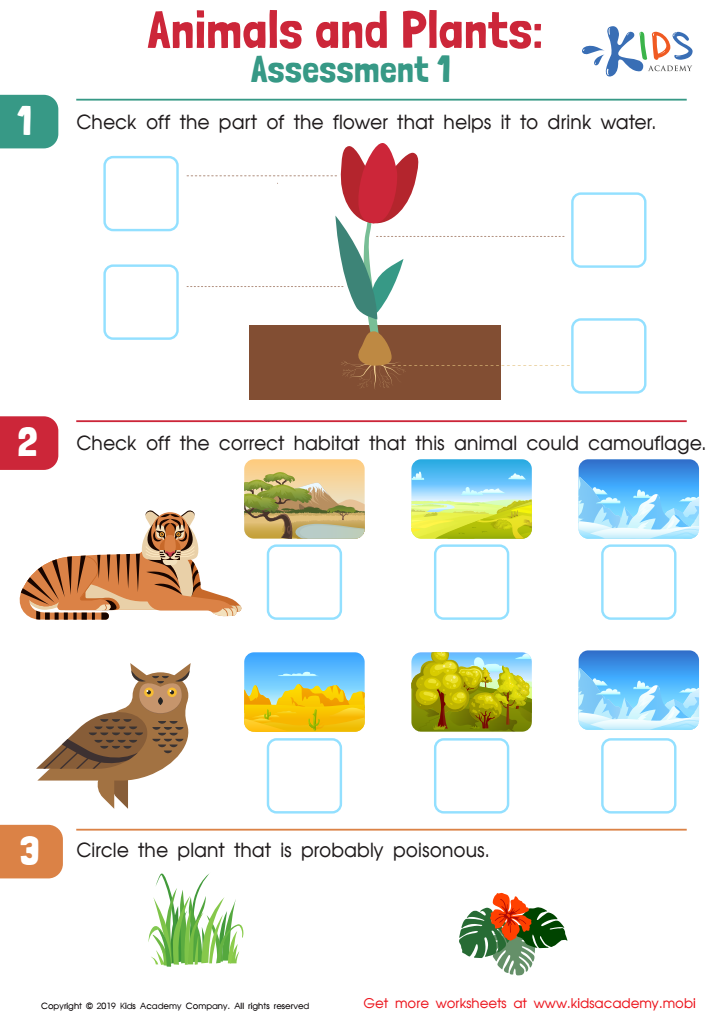
Animals and Plants: Assessment 1 Worksheet
Do you want to easily assess your child's understanding of basic science concepts? This colorful PDF offers a free opportunity for them to test their knowledge about parts of a flower, poisonous plants, animal habitats and more! Bright pictures make it fun and easy for you to see what they know.
Animals and Plants: Assessment 1 Worksheet
Worksheet
Join Kids Academy for Free
Who is primarily going to use this learning content?




%20(1).jpg)



Understanding ecosystems is vital for young children as it lays a foundation for future learning and responsible living. For parents and teachers, introducing this concept to ages 3-6 can have lifelong benefits.
Firstly, early exposure to nature education fosters curiosity and increases engagement with the natural world. This formative stage is when children are most receptive and capable of absorbing new information enthusiastically. Observing plants, animals, and their interactions can spark a child’s interest in science and learning in general.
Secondly, discussing ecosystems instills environmental awareness and responsibility. Kids learn that they are part of a larger system and that their actions have impacts. Early lessons on themes like recycling, conserving water, and protecting habitats can cultivate environmentally conscious behaviors from a young age.
Moreover, understanding ecosystems helps in the cognitive and emotional development of children. Exploring various components of ecosystems – such as plants, animals, and weather – enhances observational skills, critical thinking, and reasoning. Spiritually, being in nature reduces stress and builds empathy.
Teachers and parents thus have a unique opportunity to nurture a sense of wonder and care for the Earth. This basic understanding sets children on a path to becoming responsible, informed, and compassionate individuals who value the environment.







