Categorizing objects Physical Science Worksheets for Ages 3-6
3 filtered results
-
From - To
Explore our engaging "Categorizing Objects" Physical Science Worksheets designed for children aged 3-6! These fun and interactive worksheets help young learners develop essential cognitive skills by identifying and sorting various objects based on different attributes. Perfect for early education settings, our resources encourage critical thinking and enhance understanding of the physical world. Each worksheet features vibrant illustrations and age-appropriate activities, making learning enjoyable and effective. Whether at home or in the classroom, these printables foster creativity while building a foundation for future scientific concepts. Introduce your little ones to the joy of exploring and categorizing their surroundings with our worksheets today!
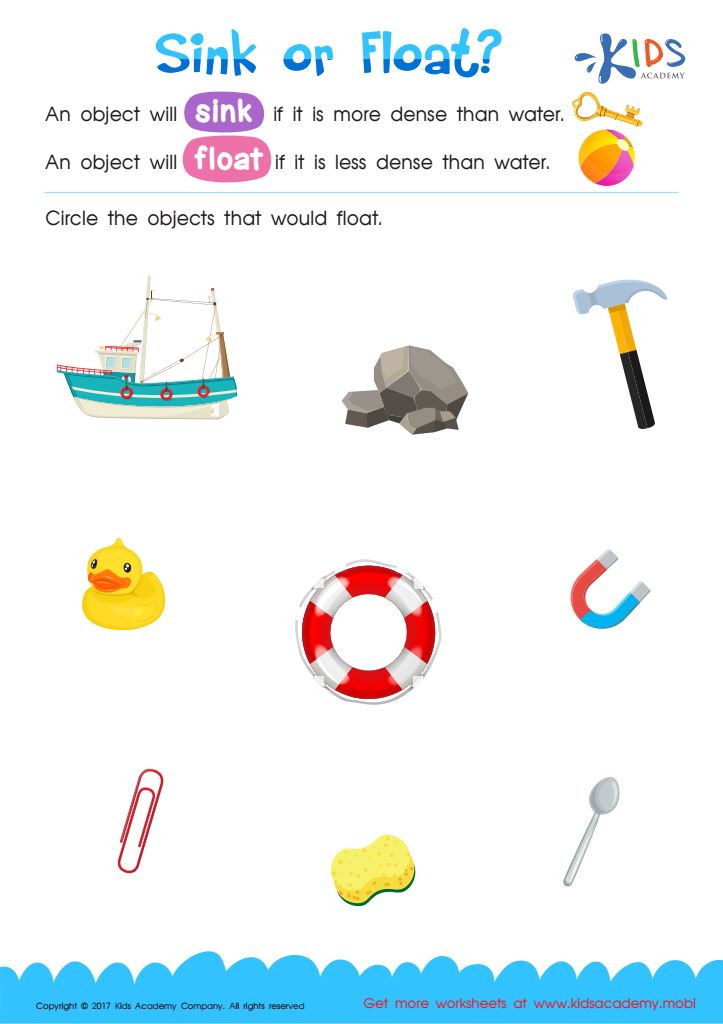
Sink or Float Printable
 Assign to My Students
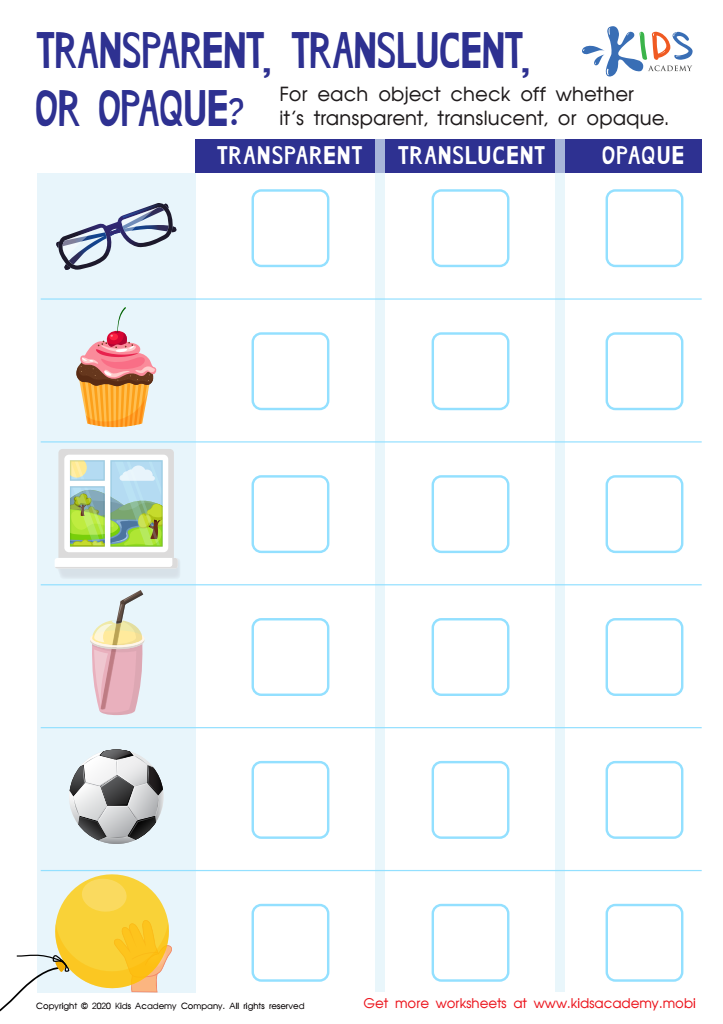
Transparent, Translucent, or Opaque Worksheet
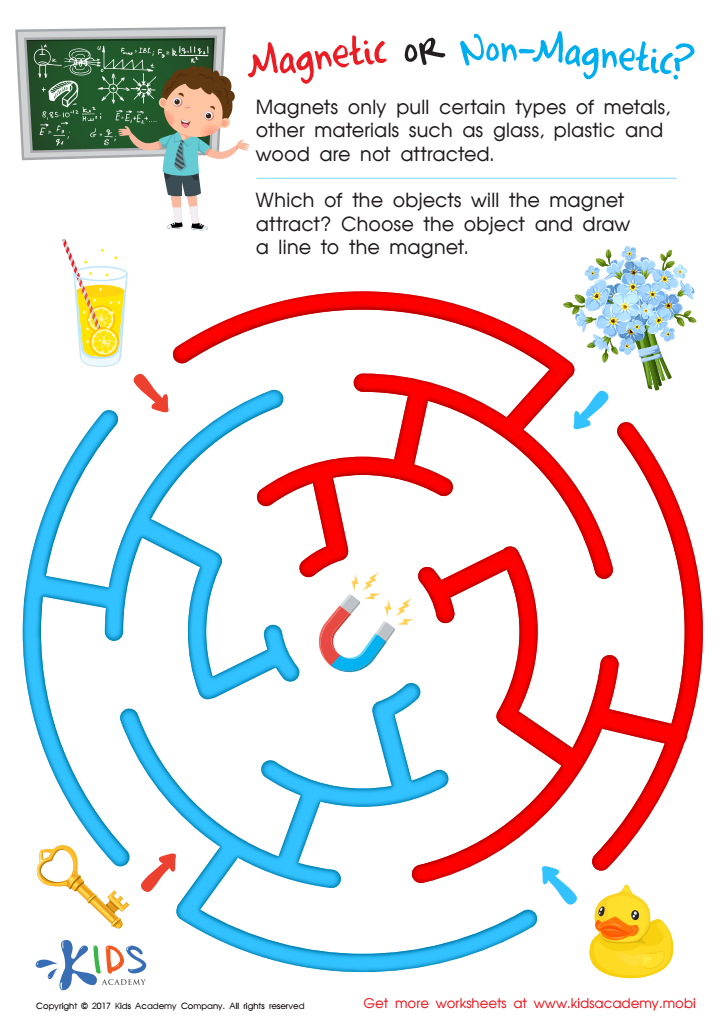
Magnetic or Non–Magnetic Worksheet


.jpg)




Understanding how to categorize objects is crucial for children ages 3-6 as it lays the foundation for their cognitive development and problem-solving skills. During this stage, children begin to make sense of the world around them. When they engage in categorization, they learn to notice similarities and differences among objects, which enhances their critical thinking abilities.
Parents and teachers should care about promoting this skill because it helps children develop essential organizational skills that will serve them later in life. Categorization encourages vocabulary growth, as children learn new words to describe the different groups they identify, such as colors, shapes, or sizes.
Moreover, categorizing objects supports early math skills by introducing concepts like counting, sorting, and patterns. By handling various materials and sorting them, children naturally explore mathematical concepts in a hands-on way.
Additionally, categorization fosters creativity: as children classify objects, they begin to see connections that inspire imaginative play and storytelling.
Ultimately, nurturing these skills in early learning environments not only enhances academic readiness but also boosts confidence and self-esteem as children learn and explore. Engaging with categorization activities equips young learners with vital tools for lifelong learning.







