Understanding life cycles Plants and Animals Worksheets for Ages 3-6
3 filtered results
-
From - To
"Understanding Life Cycles: Plants and Animals Worksheets for Ages 3-6" by Kids Academy offers engaging, age-appropriate resources designed to teach young learners about the fascinating growth and development of living creatures. Featuring vibrant illustrations and simple activities, these printable worksheets make it easy for children to grasp concepts like plant germination, butterfly metamorphosis, and frog life cycles. Ideal for both classroom and home use, these materials help instill a sense of wonder and curiosity in young minds while building foundational science skills. Nurture your child's love for nature with our fun and educational worksheets!
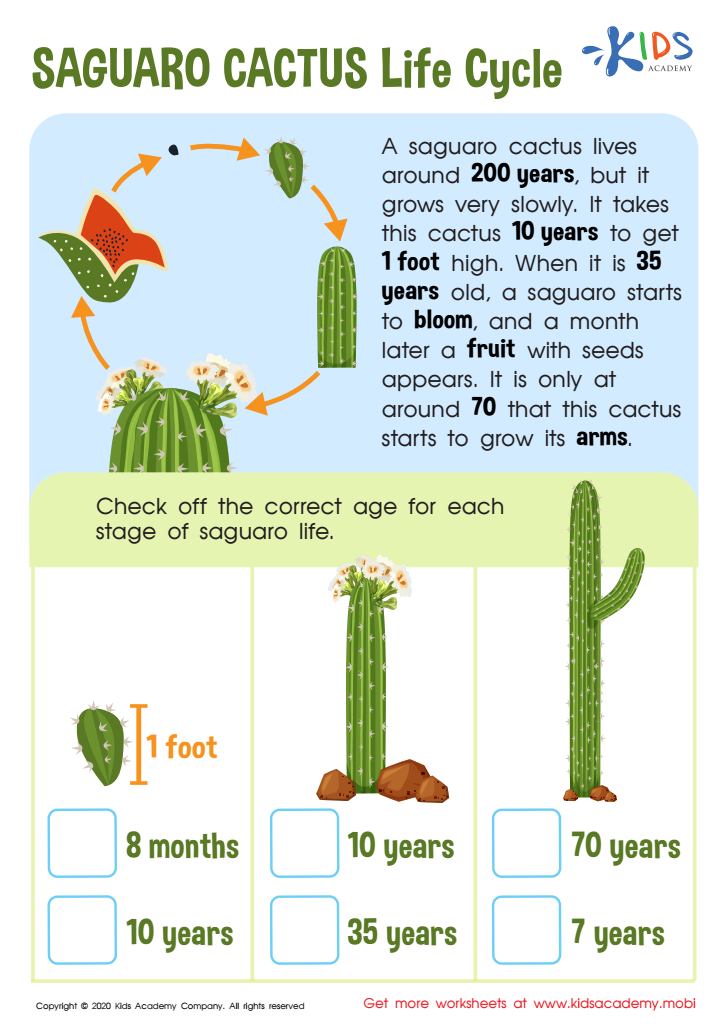
Saguaro Cactus Life Cycle Worksheet
 Assign to My Students











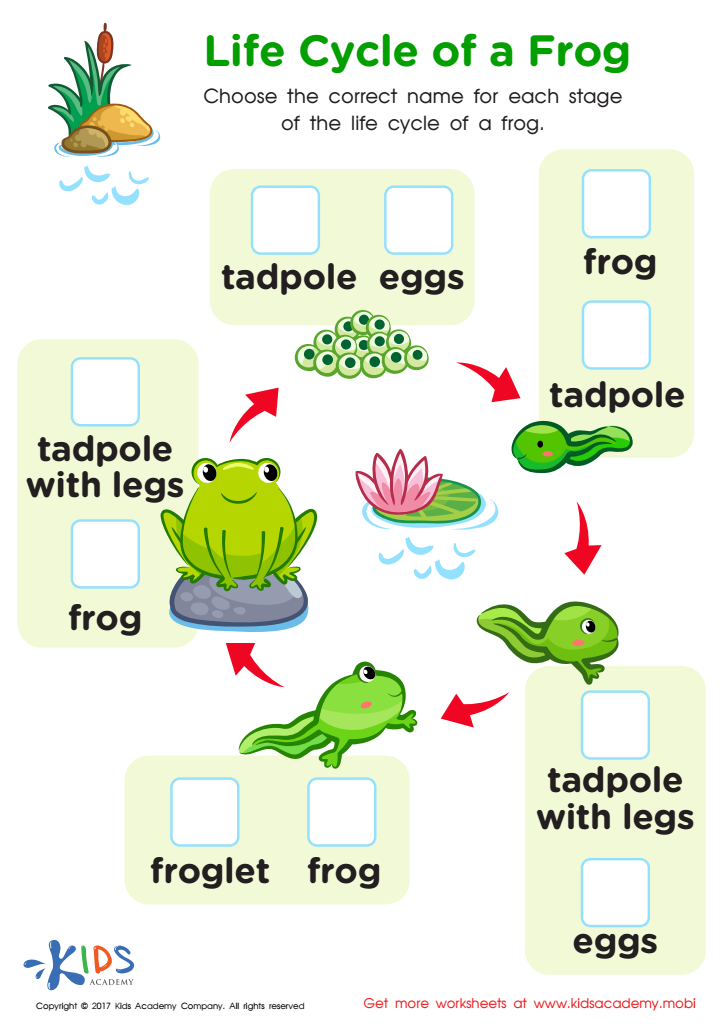
Life Cycle Frog Printable
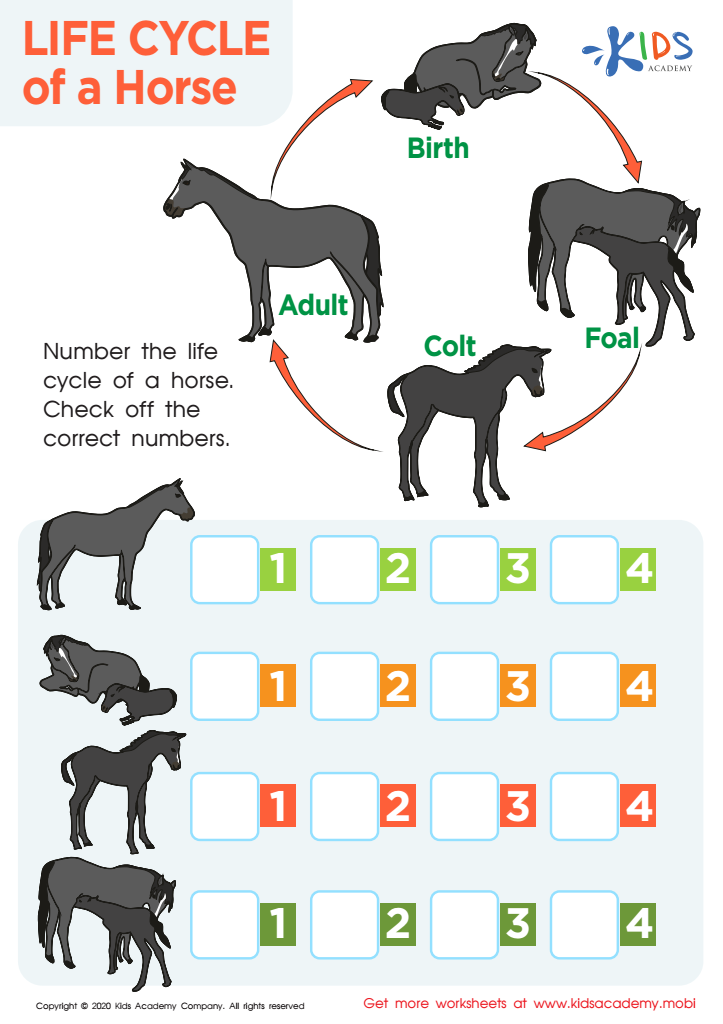
Life Cycle of a Horse Worksheet







Understanding life cycles of plants and animals is crucial for children aged 3-6 as it fosters their curiosity and appreciation for the natural world. During this developmental stage, young learners are naturally inquisitive, often asking "why" and "how" questions. Learning about life cycles taps into this curiosity and helps build foundational science knowledge.
Engaging with life cycles teaches kids about growth, change, and continuity, important concepts that translate to many other areas of learning. For instance, seeing how a caterpillar transforms into a butterfly illustrates transformation and can build patience and the understanding that change takes time. Similarly, observing a seed grow into a plant can nurture responsibility, especially if children are involved in activities like watering or caring for a classroom garden.
Furthermore, these activities help develop observational and critical thinking skills. Children learn to notice details and make connections when they chart plant growth or track the stages of animal development. Emotional and social skills also benefit as kids learn empathy and care for living things.
Inculcating respect for living organisms promotes environmental awareness, an essential value in today’s world. Through hands-on activities and stories about life cycles, young children gain respect for nature and understand their role within it, laying the groundwork for responsible, informed future citizens.








