
Color Identification Alphabet Worksheets for Ages 3-7
5 filtered results
Difficulty Level
Grade
Age
-
From - To
Subject
Activity
Standards
Introduce your little learners to a vibrant world of letters and hues with our Color Identification Alphabet Worksheets for Ages 3-7. These engaging, educational sheets are expertly designed to blend fun with learning, helping children master the alphabet while enhancing their color recognition skills. Ideal for preschool through early elementary ages, each worksheet offers a creative and interactive way to identify letters among delightful images. Perfect for at-home practice or in the classroom, these printables provide a colorful, effective foundation in alphabet familiarity and color differentiation. Spark curiosity and cultivate essential early learning skills with our delightful worksheets!
Favorites
With answer key
Interactive
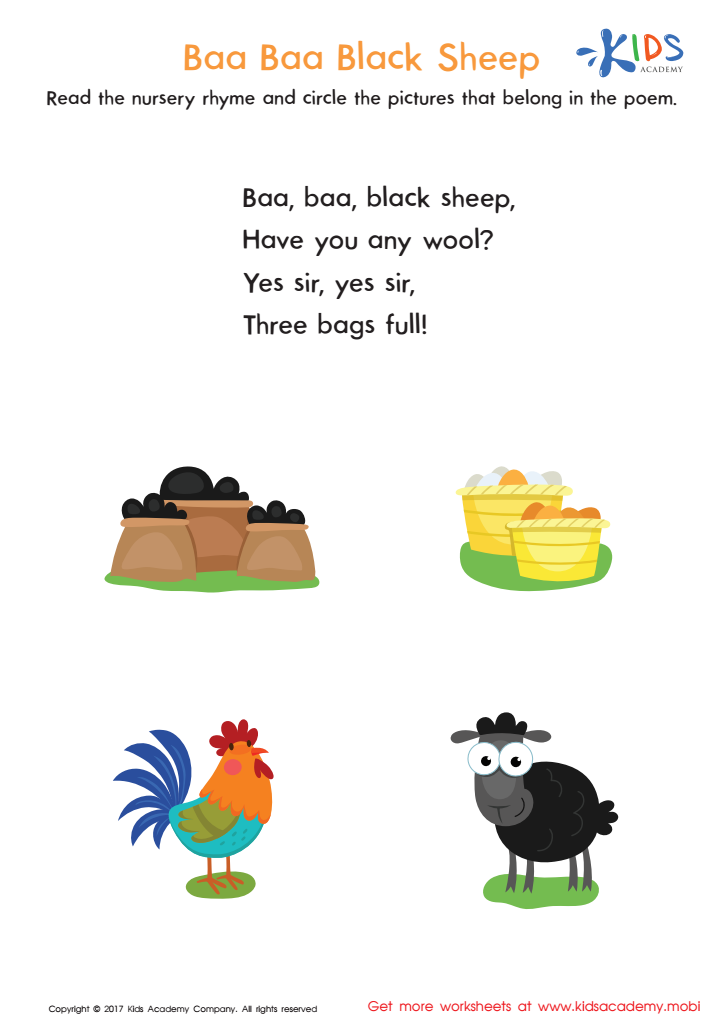
Baa Baa Black Sheep Printable
Jumpstart your child's reading skills with this printable Baa Baa Black Sheep worksheet! Recite the lines with them, then have them select the pictures associated with the poem to test comprehension. Fun and educational!
Baa Baa Black Sheep Printable
Worksheet
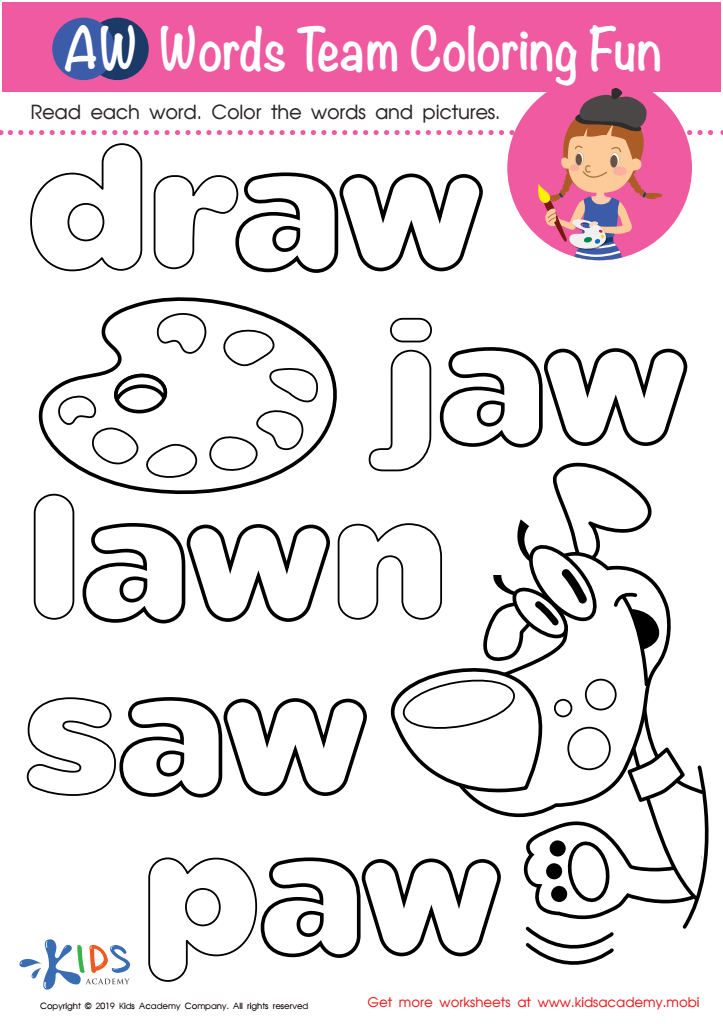
AW Words Team Coloring Fun Worksheet
Coloring words they can read is a blast for little learners! This worksheet offers emerging readers the chance to practice and gain confidence in reading words from the -aw family, while also improving fine-motor and creativity skills. Without knowing it, they'll learn about phonetic teams along the way!
Download (PDF)
 Assign to My Students
Assign to My Students
AW Words Team Coloring Fun Worksheet
Worksheet
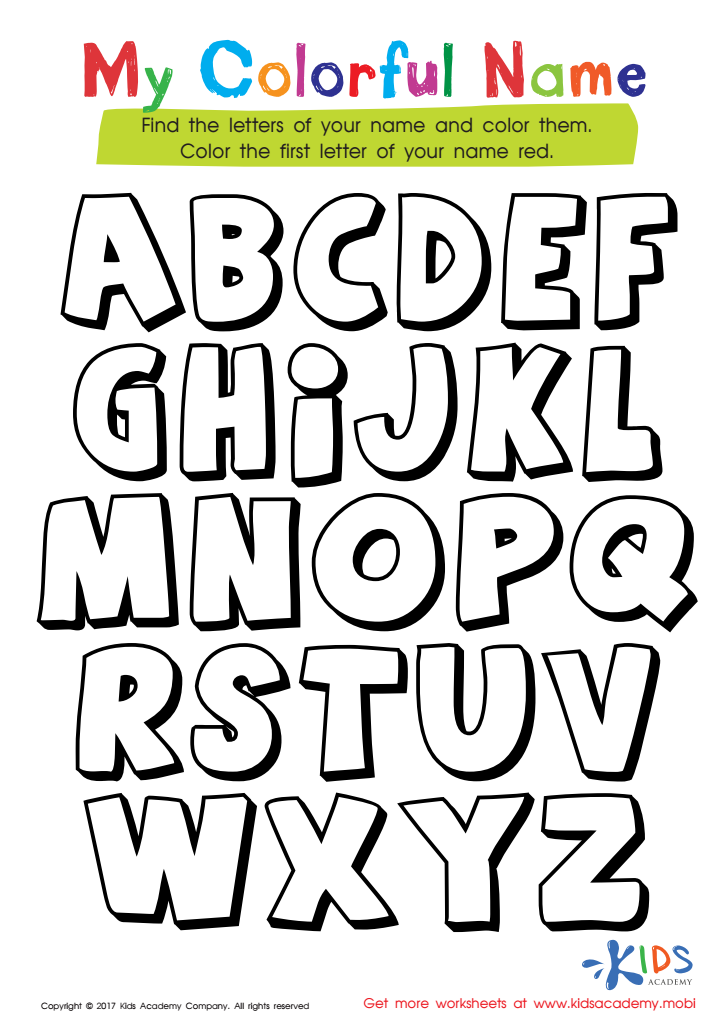
My Colorful Name Worksheet
Writing their names is a milestone for children. With this worksheet, they recall the letters in their name and color the letters one at a time. Spelling and alphabet order are reinforced as they find each letter. Use this fun printable to help kids learn to write their names!
Download (PDF)
Assign to My Students
Assign to My Students
My Colorful Name Worksheet
Worksheet
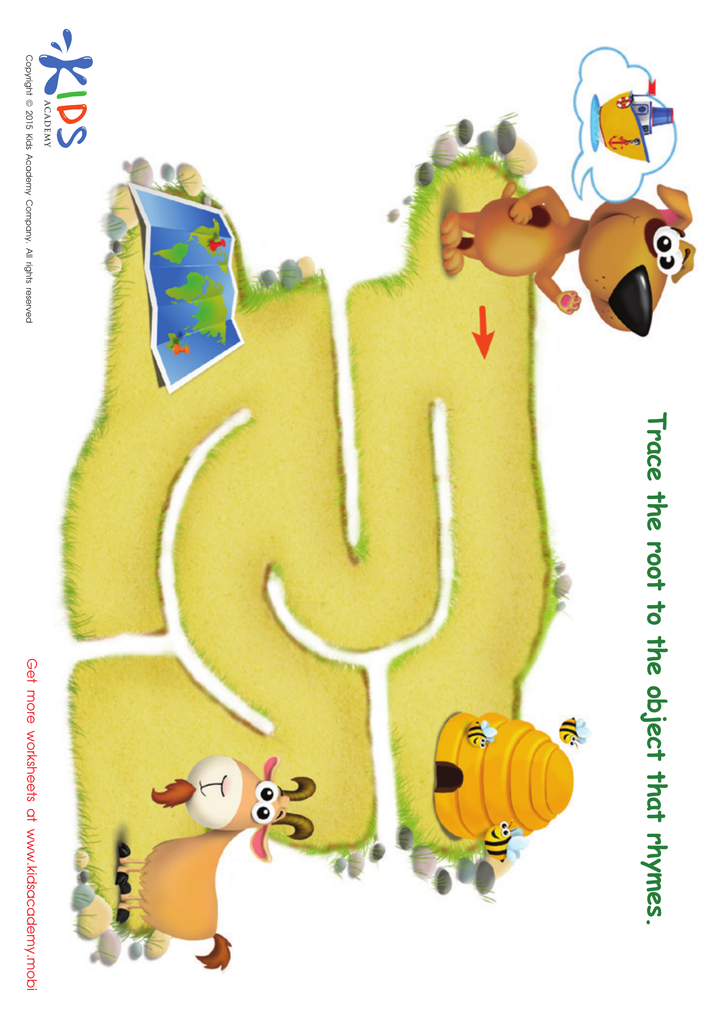
Boat Rhyming Words Worksheet
Help your preschooler complete the maze and rhyme with their favorite pooch! Draw a line from the dog to the matching item - is it a hive, a map or a goat? This fun activity lets them name the root words of pictures, and listen for rhymes to help them with phonics and reading.
Boat Rhyming Words Worksheet
Worksheet
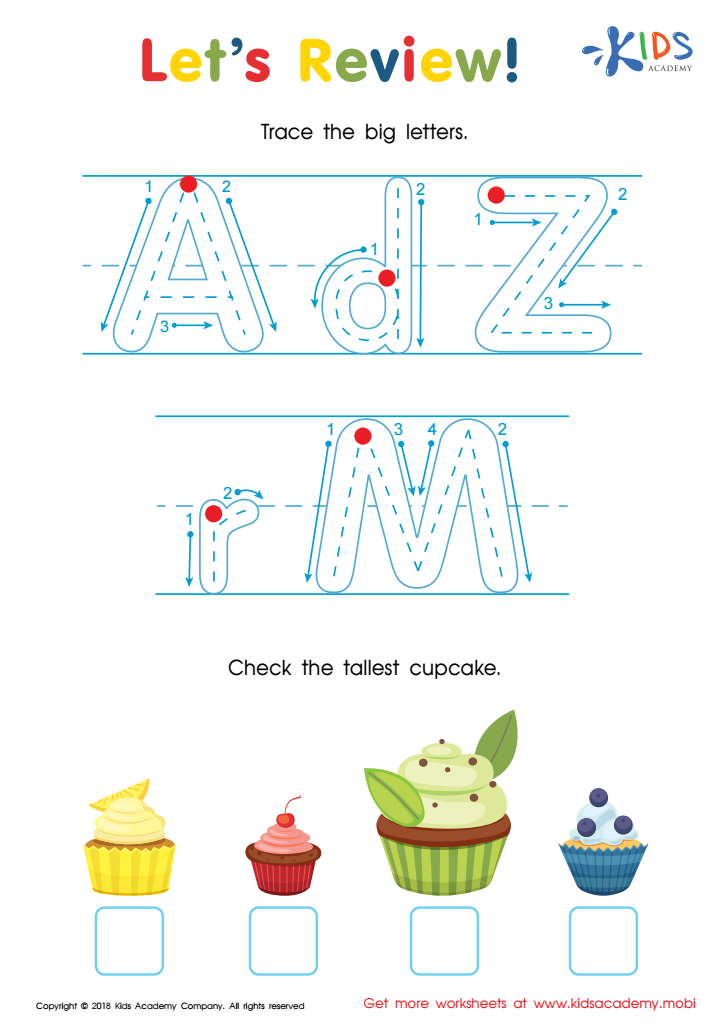
Let's Review! Big Letters Worksheet
Teach your child to read and write big and small letters with Kids Academy's tracing worksheet. Show them how to guide their pencil with each stroke. Reinforce their understanding with fun cupcake pictures and help them choose the tallest one. It's a great way to help them differentiate between uppercase and lowercase letters.
Let's Review! Big Letters Worksheet
Worksheet
Join Kids Academy for Free
Who is primarily going to use this learning content?






Parents and teachers should care about Color Identification Alphabet for ages 3-7 because it forms an essential foundation for early childhood development. First, recognizing and naming colors is a fundamental aspect of a child's cognitive growth. When combined with learning the alphabet, it enhances memory retention by creating associations between different types of information (visual and language elements).
Furthermore, these early literacy activities bolster visual discrimination skills, which are critical for reading and writing. When children distinguish between different colors and letters, they improve their visual perception and attentional capacities. This is essential for recognizing and differentiating letters and words as they progress in reading.
Additionally, learning colors and the alphabet together taps into multiple areas of a child's development. It supports language development, expanding vocabulary as children learn new color names and alphabetic letters. Socially, it encourages interactive play and communication between peers and adults, fostering social skills and emotional bonding.
Moreover, engaging in these activities makes learning fun and multisensory, which helps maintain a child's interest and motivation. Educators can use engaging tools, games, and activities that include color and letter identification to support kinesthetic, auditory, and visual learners, making learning more inclusive and effective.
Therefore, integrating color identification with alphabet learning is an impactful strategy that supports holistic early childhood development.







