Sound identification Alphabet Worksheets for Ages 3-7
5 filtered results
-
From - To
Enhance your child's early literacy with our Sound Identification Alphabet Worksheets, designed for ages 3-7. These engaging worksheets help young learners connect letters with their corresponding sounds, fostering phonemic awareness essential for reading. Featuring vibrant illustrations and interactive activities, each worksheet makes practicing sound identification fun and effective. As children work through these resources, they'll develop confidence in their reading skills while enjoying a hands-on learning experience. Perfect for classrooms or at-home learning, our worksheets cater to various learning styles, ensuring every child can thrive. Start your child's journey to literacy today with our sound identification resources!
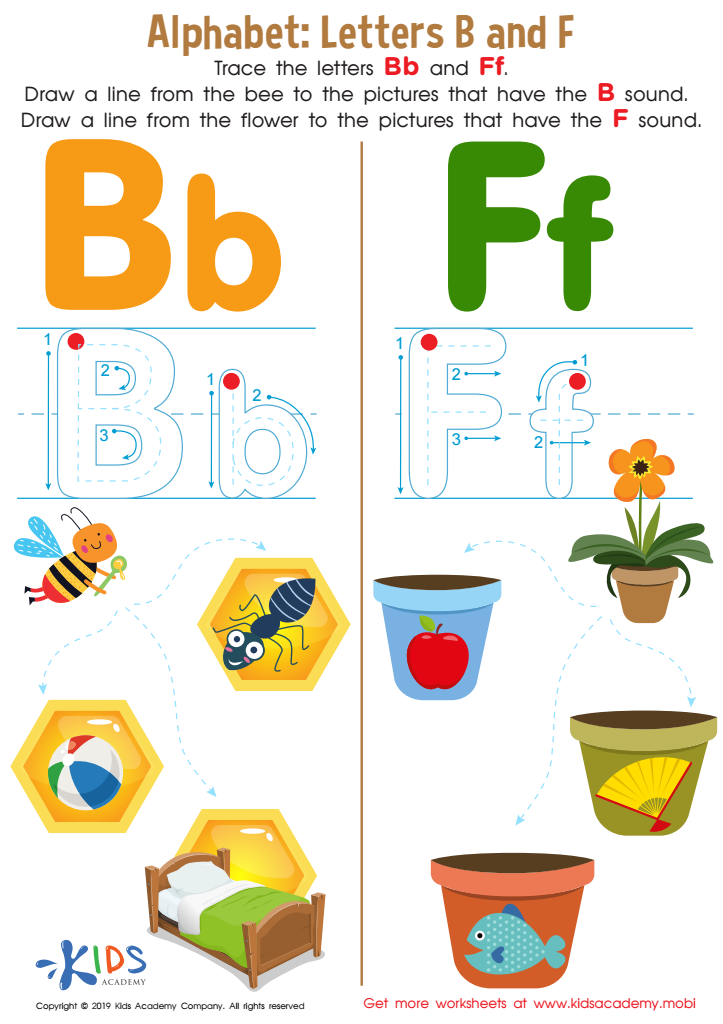
Letters B and F Tracing Worksheet
 Assign to My Students
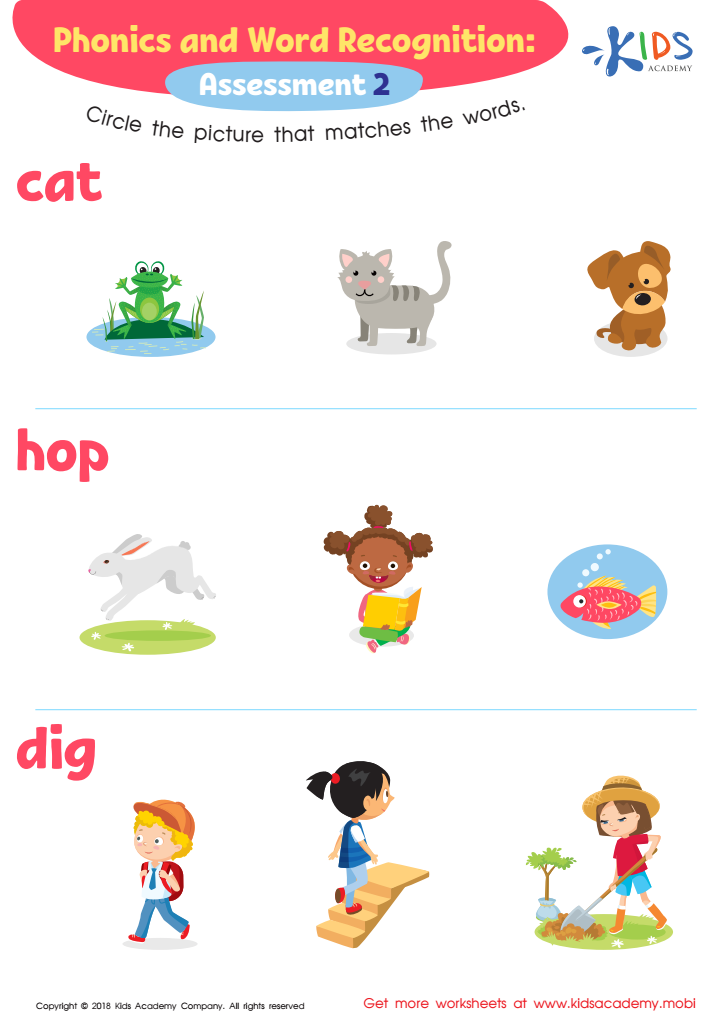
Phonological Awareness: Assessment 2 ELA Worksheet
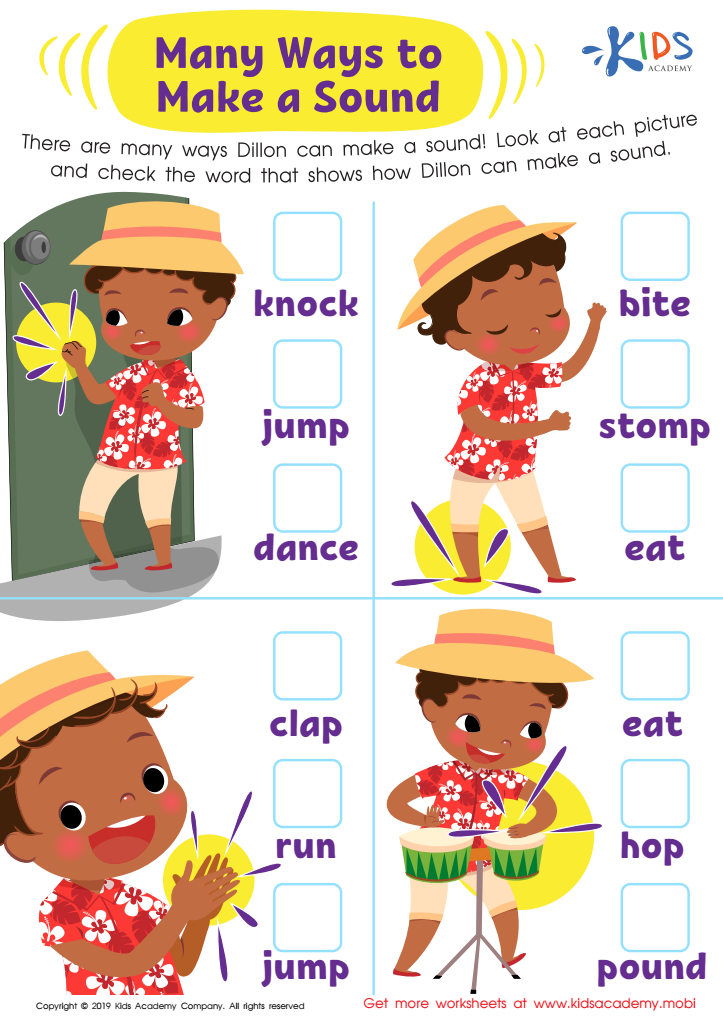
Many Ways to Make a Sound Worksheet
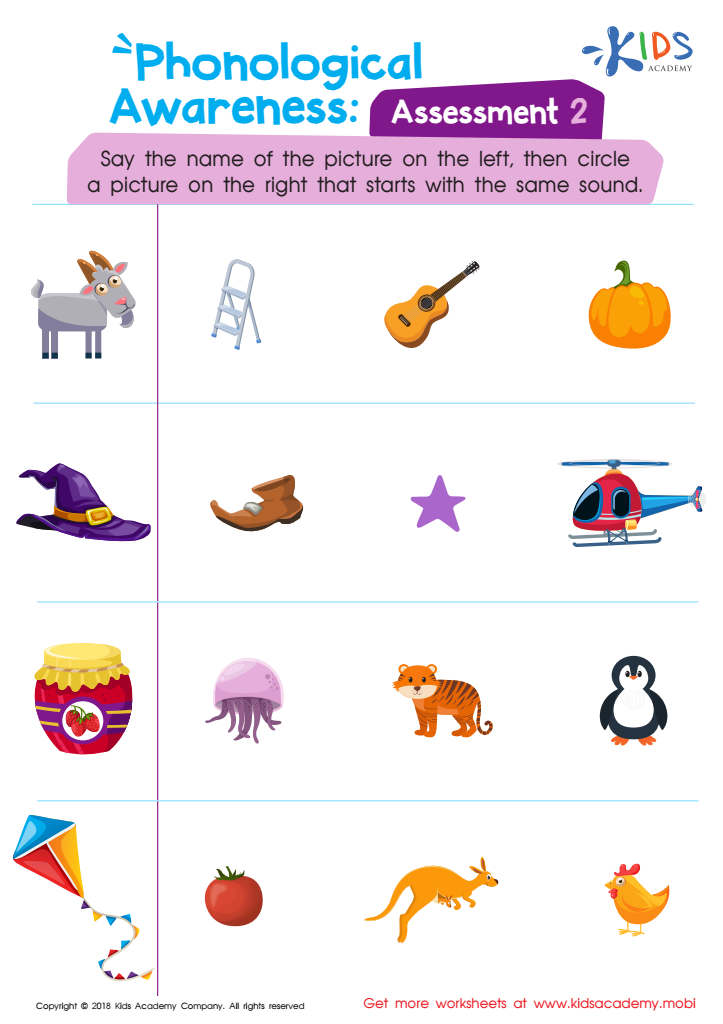
Phonological Awareness: Assessment 2 Worksheet
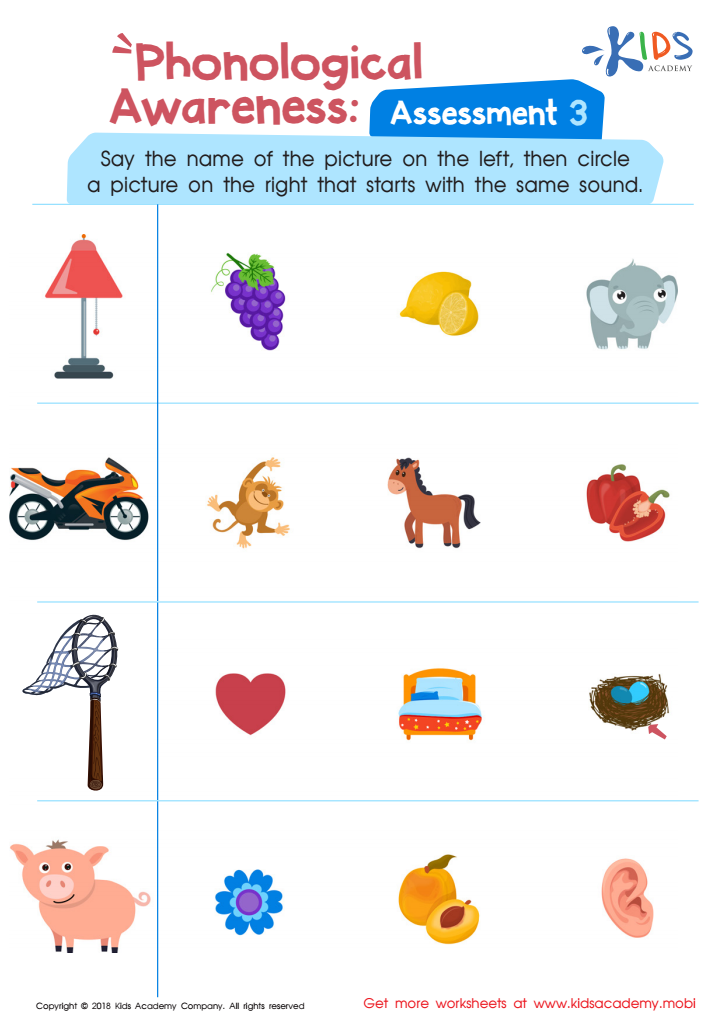
Phonological Awareness: Assessment 3 Worksheet








Sound identification using the Alphabet is crucial for children aged 3-7 as it lays the foundation for literacy development. At this age, children are naturally curious and eager to explore language. Introducing them to sound identification helps them recognize letters and their associated sounds, enabling them to understand the building blocks of words.
Parents and teachers should prioritize this practice because it enhances phonemic awareness, which is essential for reading and writing. When children can identify sounds, they become proficient in decoding words, improving their overall literacy skills. Additionally, sound identification fosters critical thinking and auditory discrimination, skills essential not just in reading, but in everyday communication and learning.
Furthermore, incorporating fun activities such as songs, games, and interactive exercises keeps children engaged while learning. This playful approach not only makes learning enjoyable but also solidifies their understanding of sounds in a practical context.
Encouraging sound identification also promotes confidence as children begin to read independently, paving the way for a lifelong love of books and learning. Ultimately, investing time in sound identification equips young learners with essential skills that will benefit them throughout their educational journey and beyond.







