Critical thinking enhancement Chess Worksheets for Ages 3-7
4 filtered results
-
From - To
Unlock your child’s potential with our Critical Thinking Enhancement Chess Worksheets, designed specifically for ages 3-7! These engaging, interactive worksheets combine the classic game of chess with essential cognitive skill development. Your little ones will have fun learning chess strategies while enhancing their problem-solving abilities and logical reasoning. Perfect for early learners, each worksheet is tailored to introduce concepts in a playful way, helping children build confidence as they develop critical thinking skills. Whether at home or in the classroom, these printable worksheets lay a strong foundation for lifelong learning and strategic thinking. Start your child's chess journey today!
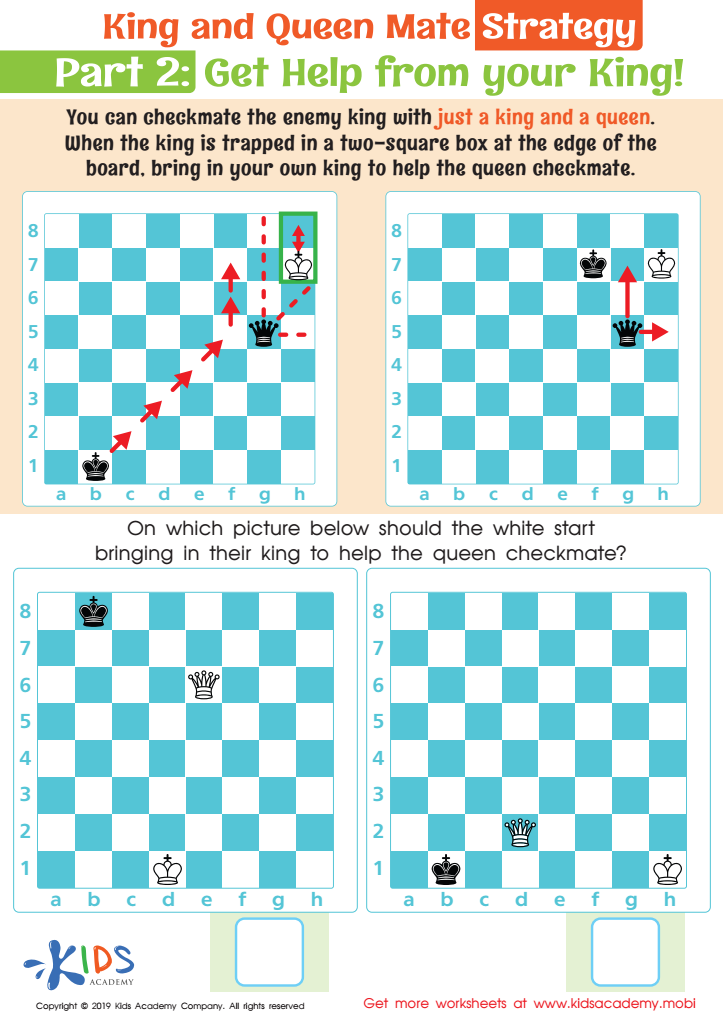
King and Queen Mate Strategy: Part 2 Worksheet
 Assign to My Students
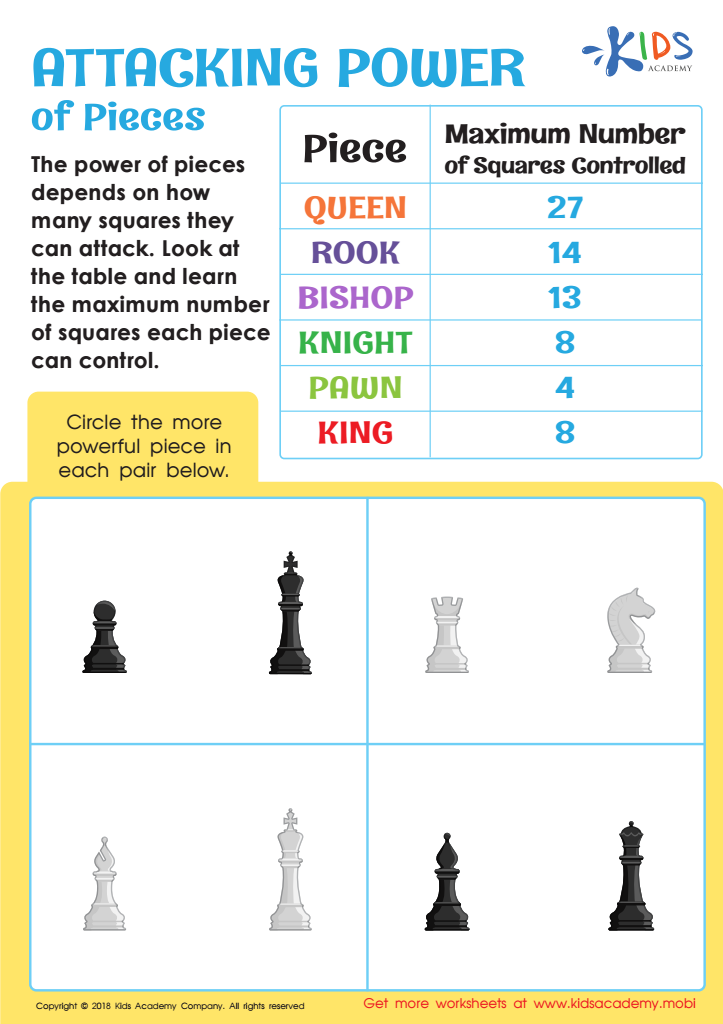
Attacking Power of Chess Pieces Worksheet
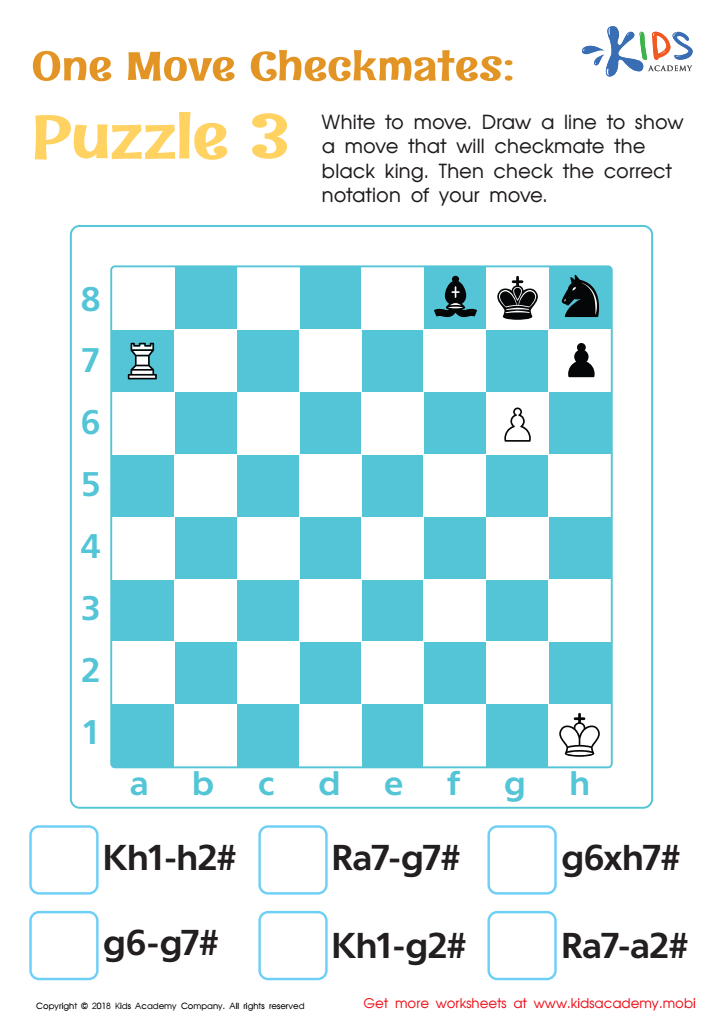
One Move Checkmates: Puzzle 3 Worksheet
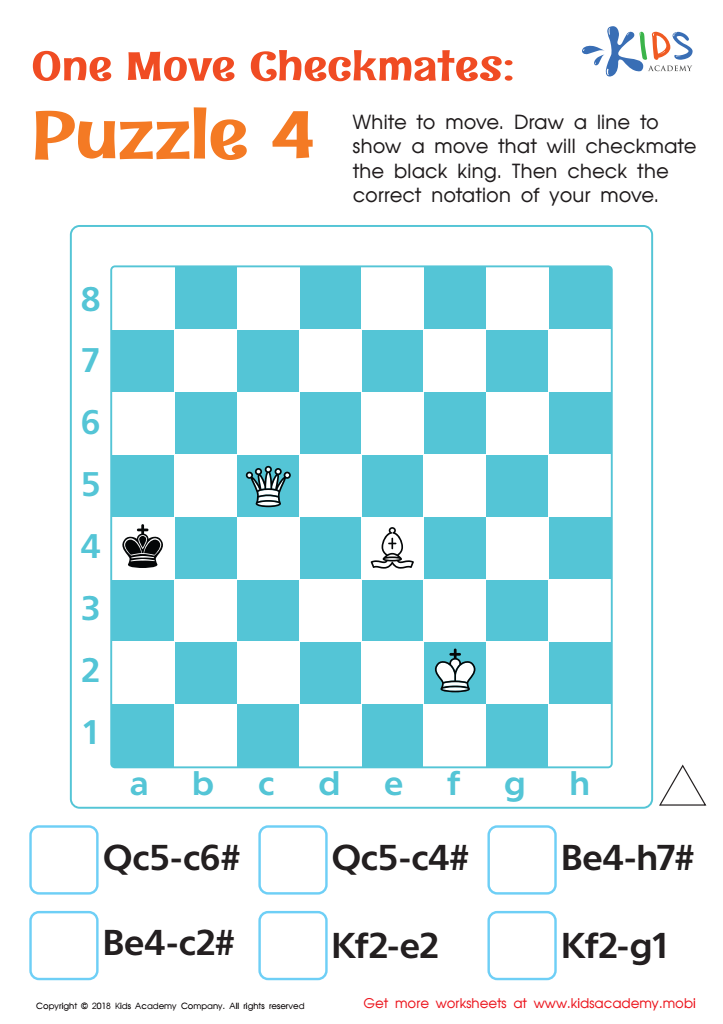
One Move Checkmates: Puzzle 4 Worksheet







Critical thinking is an essential skill that lays the foundation for lifelong learning and problem-solving abilities. Introducing chess to children ages 3-7 significantly enhances their critical thinking skills for several reasons. Firstly, chess encourages strategic thinking and planning as children learn to anticipate the consequences of their moves and consider different possibilities. This analytic approach fosters cognitive development, allowing young learners to make informed decisions in various aspects of life.
Moreover, playing chess enhances spatial awareness and visual perception, as children become adept at recognizing patterns and organizing information. These skills not only improve their game but transfer to academic subjects like mathematics and science. Additionally, chess teaches patience and perseverance, as players learn to navigate challenges and setbacks—a vital skill for emotional resilience.
Furthermore, teachers and parents can use chess as a tool for instilling a sense of fair play and sportsmanship. Engaging with peers through this game bolsters social skills, communication, and teamwork. By incorporating critical thinking chess into teaching strategies or play at home, caregivers can provide an enriching experience that promotes intellectual growth and prepares children for future academic and life challenges. Investing in these capabilities at a young age can have profound, long-lasting benefits.