Number Recognition Chess Worksheets for Ages 3-7
4 filtered results
-
From - To
Welcome to our engaging "Number Recognition Chess Worksheets for Ages 3-7"! Designed to make learning fun, these worksheets blend the exciting world of chess with essential number recognition skills. Our resources provide vibrant illustrations and interactive activities that captivate young learners, helping them identify and understand numbers in an enjoyable way. By integrating chess elements, children not only enhance their mathematical abilities but also develop strategic thinking and problem-solving skills. Perfect for home, preschool, or classroom use, our worksheets cater to various learning styles, ensuring your child gains confidence in their number recognition. Jumpstart your little one's educational journey today!
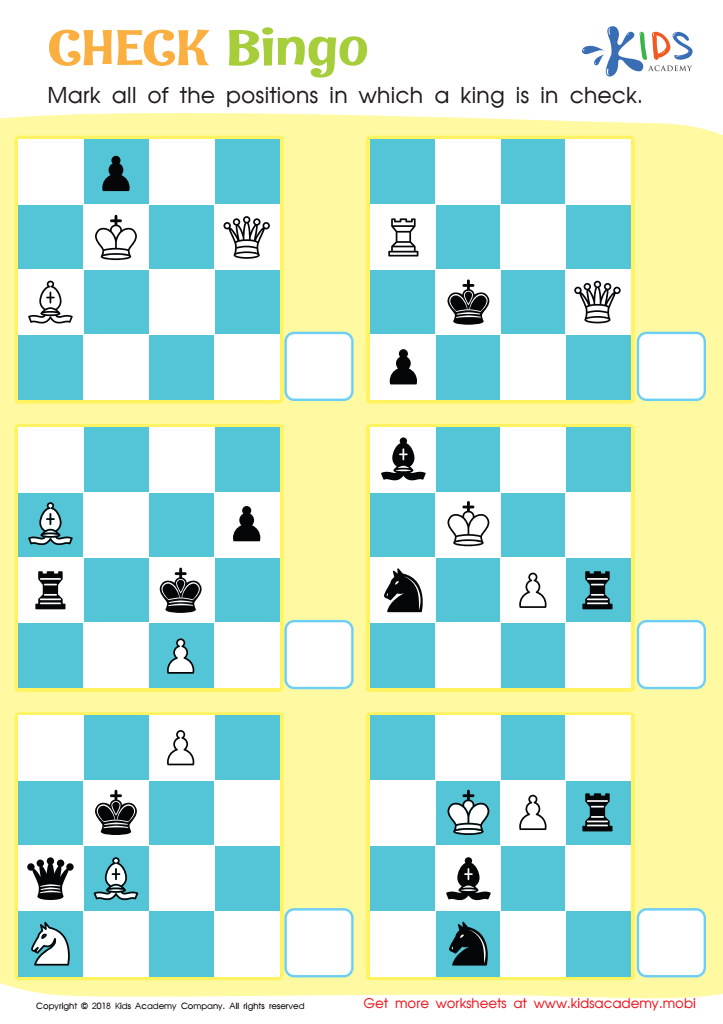
Check Bingo Worksheet
 Assign to My Students
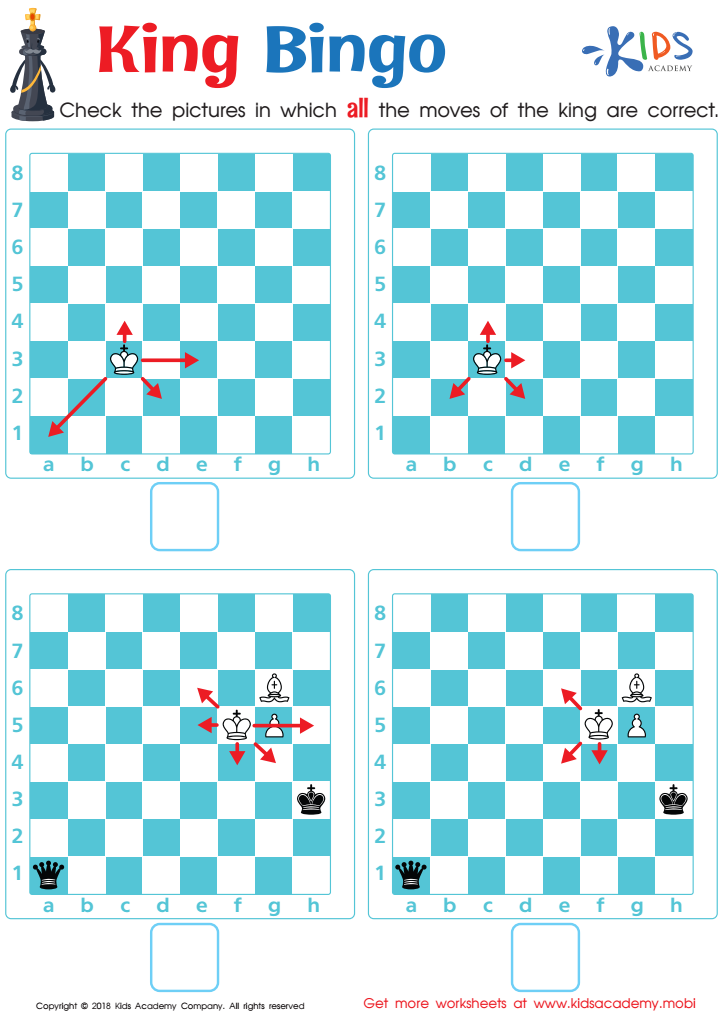
King Bingo Worksheet
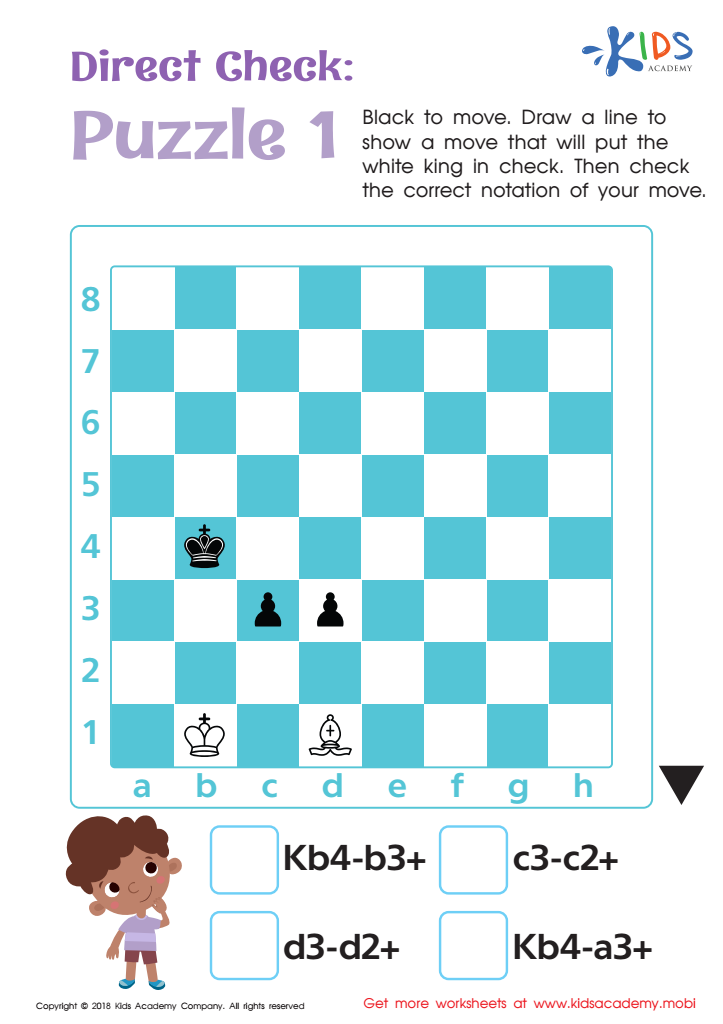
Direct Check: Puzzle 1 Worksheet
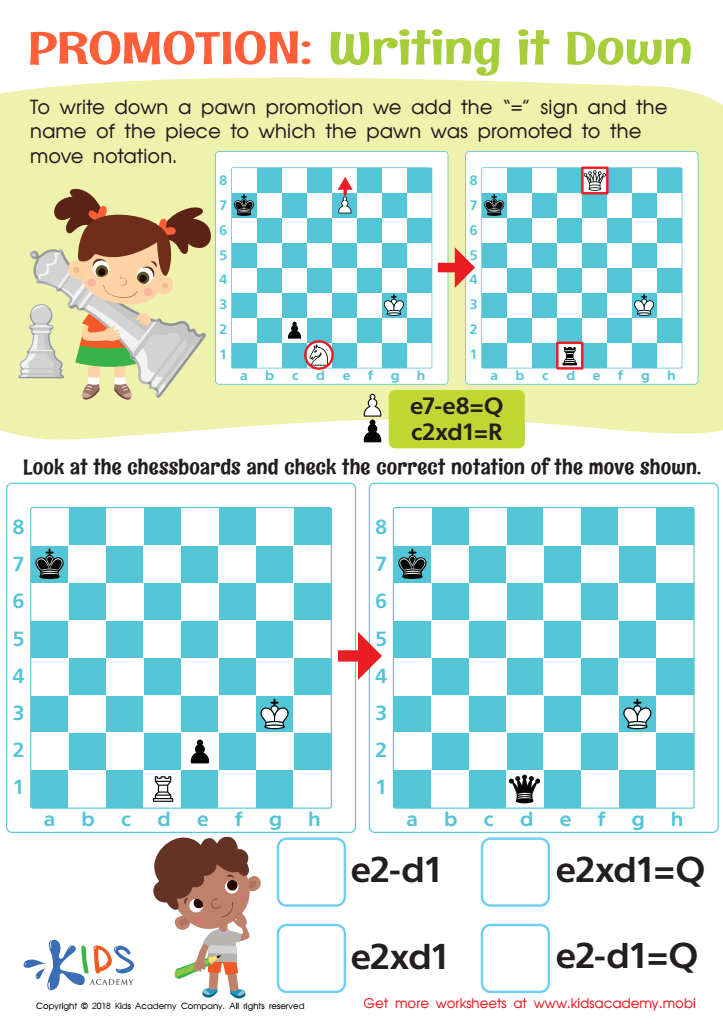
Writing it Down Worksheet






Number Recognition Chess is an innovative educational tool that seamlessly blends the classic game of chess with essential early math skills, particularly number recognition. For parents and teachers of children aged 3-7, this approach offers a dual benefit: enhancing cognitive development while engaging young learners in a fun and interactive way.
Firstly, number recognition is a foundational skill that supports overall literacy and numeracy. By integrating it with chess, children learn to recognize numbers as they keep score, track movements, and manage pieces. This makes learning more context-aware and memorable.
Moreover, chess nurtures critical thinking, problem-solving, and strategic planning capabilities. While children learn to identify numbers, they also cultivate important cognitive skills like patience, concentration, and behavioral regulation. These skills have implications beyond the classroom, positively influencing social interactions and emotional development.
In an age where digital distractions abound, Number Recognition Chess offers a playful yet educational alternative that fosters both intellectual growth and enjoyment. It provides children a head start in math and critical thinking while encouraging a lasting interest in chess. For educators and parents, supporting such initiatives can lay a solid foundation for lifelong learning.