Animal Classification Worksheets for Ages 3-7
7 filtered results
-
From - To
Explore our engaging Animal Classification Worksheets designed specially for kids aged 3-7! These interactive worksheets make learning fun by helping young children differentiate between various types of animals, their habitats, and characteristics. Perfect for early learners, our worksheets use colorful illustrations and simple activities to teach kids about mammals, reptiles, birds, and more, promoting curiosity and understanding of the animal kingdom. With a focus on developing critical thinking and observational skills, these worksheets are an excellent resource for parents and teachers seeking to enhance science and nature education in a fun, hands-on way.
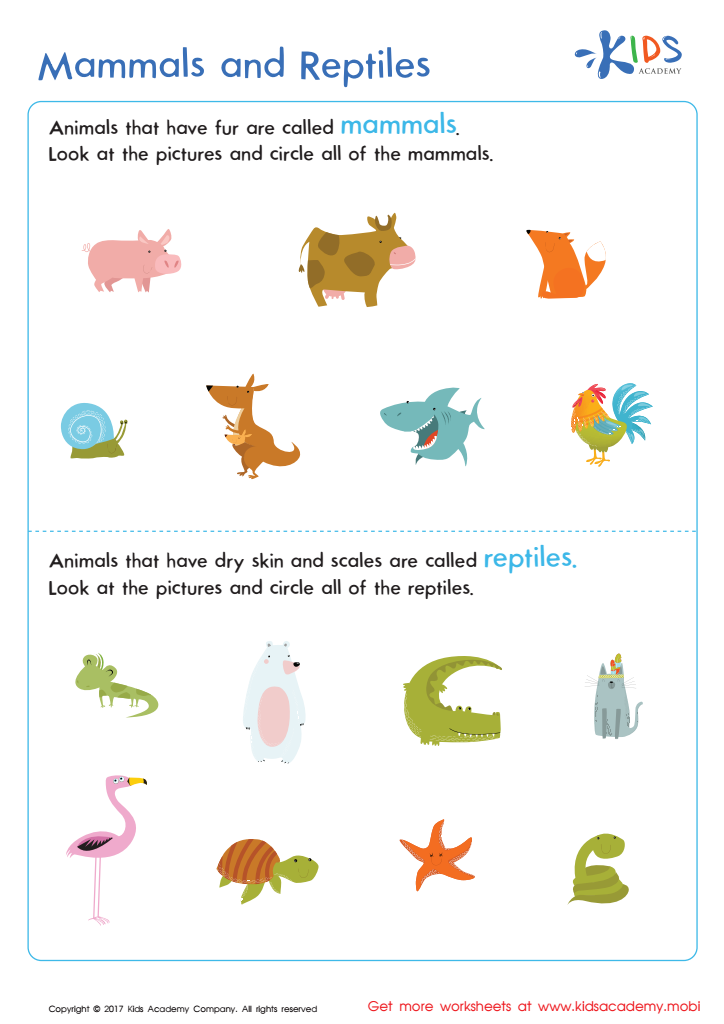
Mammals and Reptiles Worksheet
 Assign to My Students
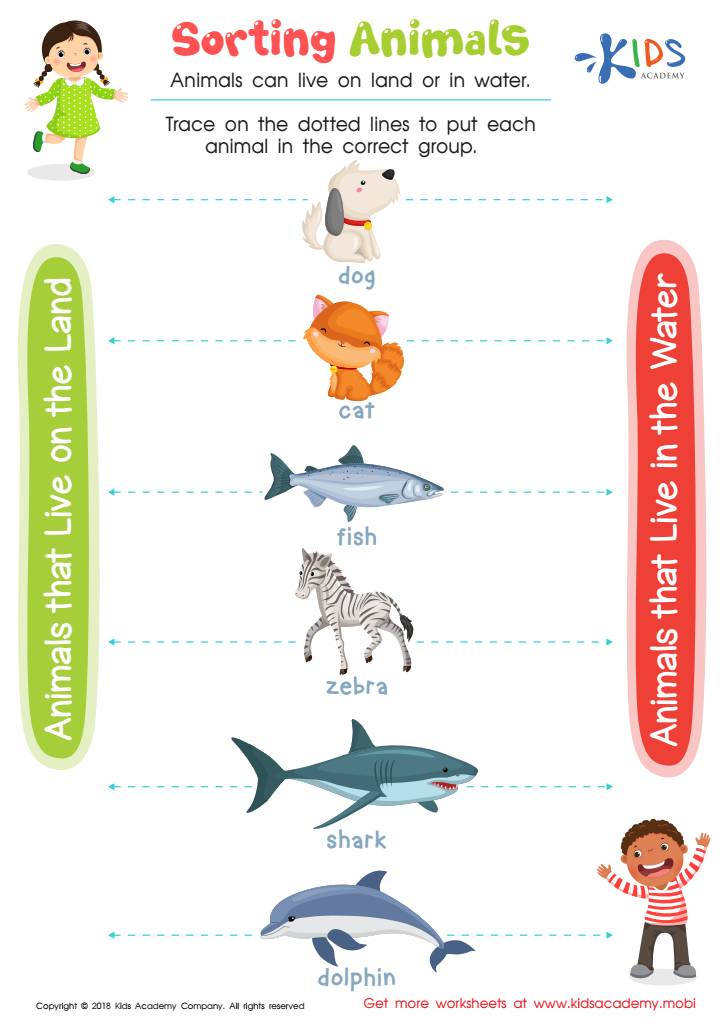
Sorting Animals Worksheet
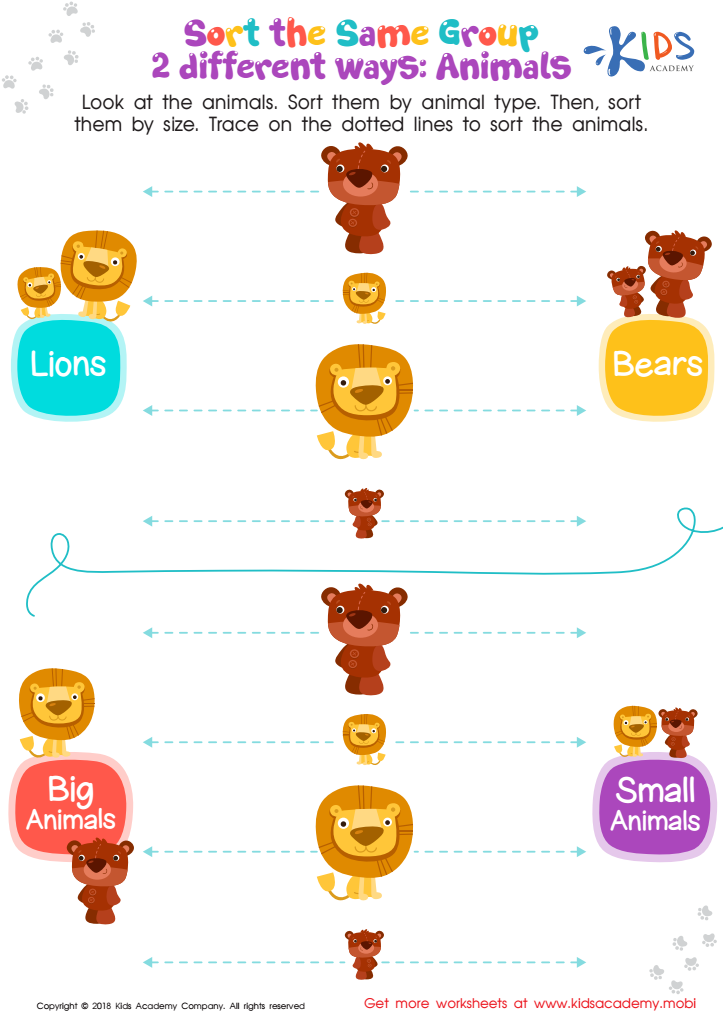
Sort the Same Group 2 Different Ways: Animals Worksheet
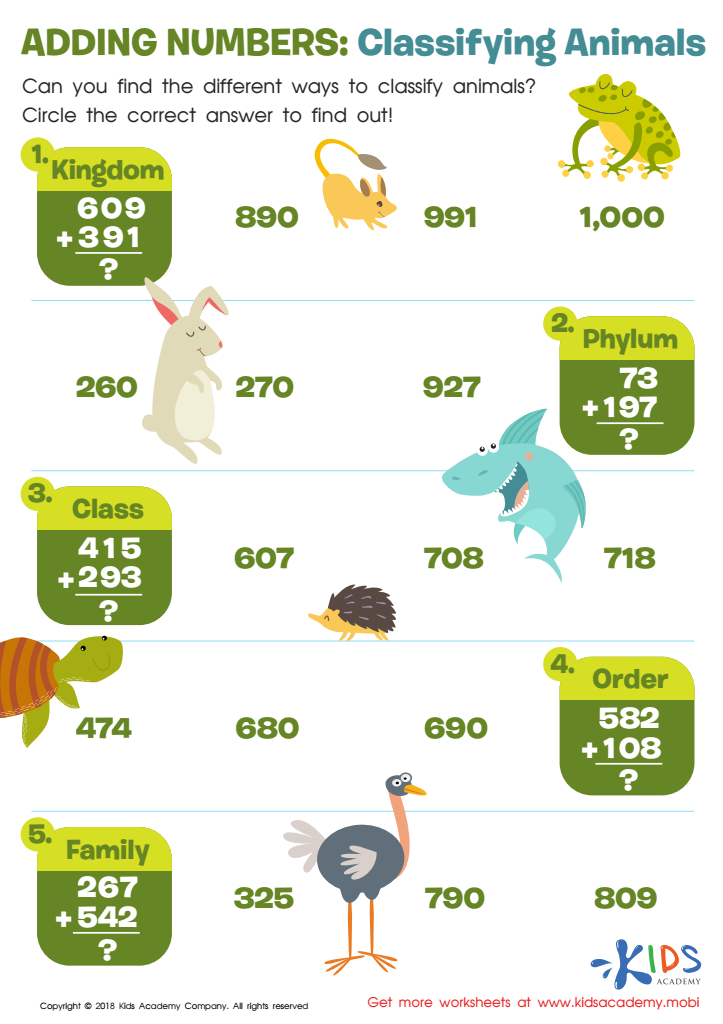
Adding Numbers: Classifying Animals Worksheet
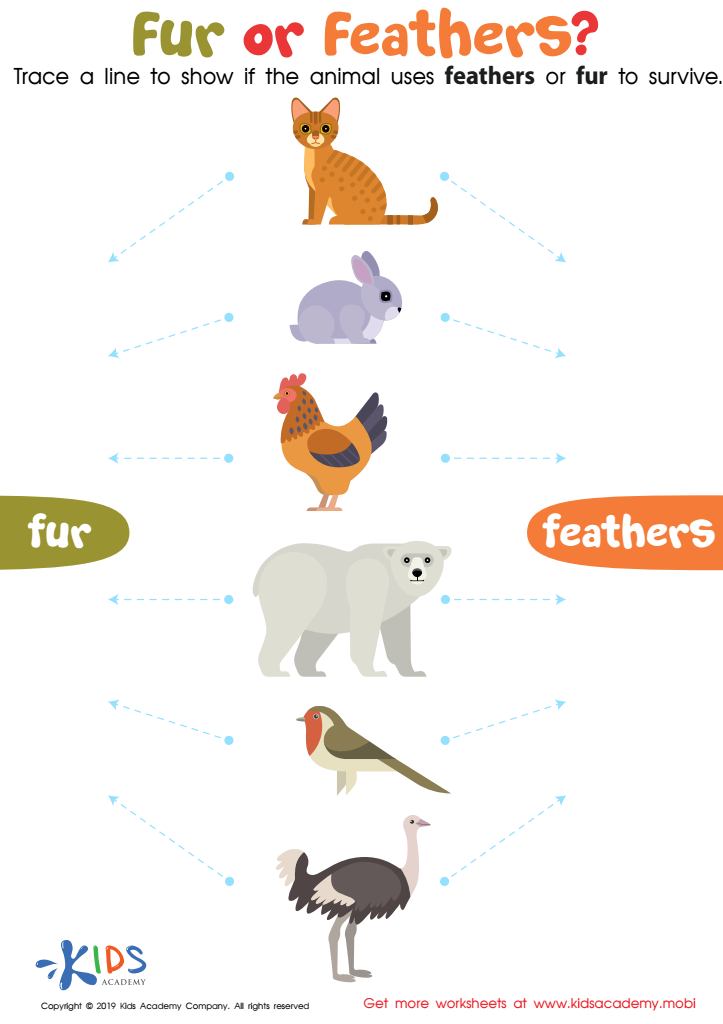
Fur or Feathers? Worksheet
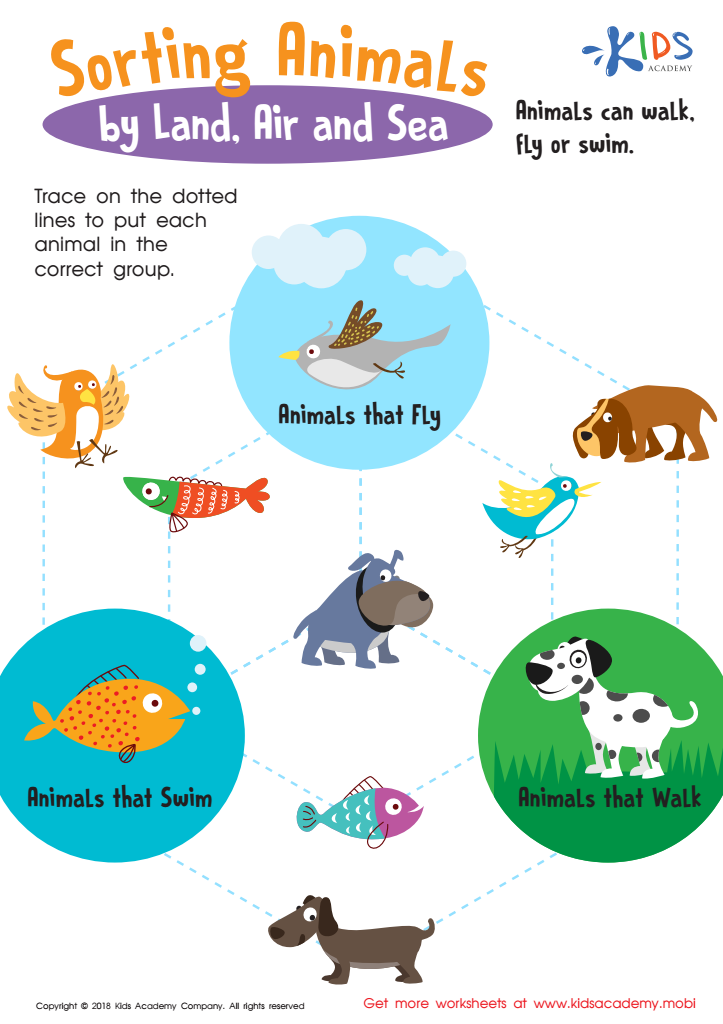
Sorting Animals by Land, Air and Sea Worksheet
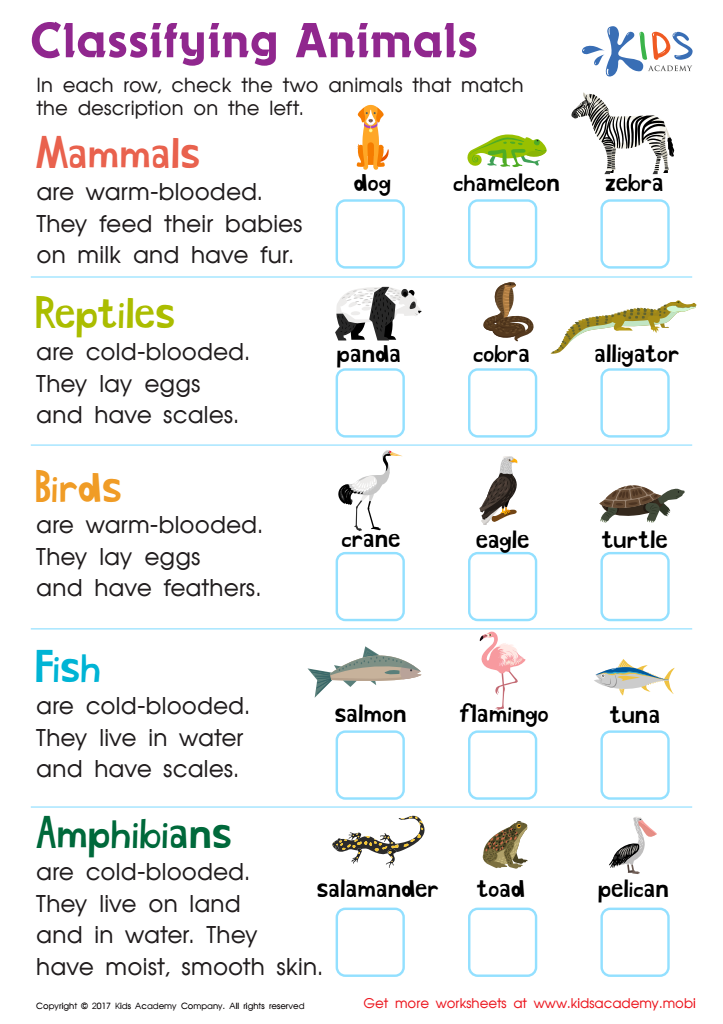
Classifying Animals Worksheet






Understanding animal classification at an early age is valuable because it serves as a foundational element of a child's educational journey. For children aged 3-7, it supports cognitive development by introducing fundamental concepts of categorization, helping them organize and interpret information. This can enhance critical thinking and sorting skills, which are essential for academic success in various subjects.
Moreover, learning about animal classification nurtures curiosity and fosters a connection with the natural world. It encourages children to observe, explore, and ask questions about different living creatures. This innate curiosity can lead to a deeper interest in science, promoting a lifelong love of learning.
For parents and teachers, emphasizing animal classification is helpful in teaching broader concepts such as habitats, ecosystems, and biodiversity. Such knowledge fosters environmental awareness and stewardship from a young age, which is crucial in an era of growing ecological challenges.
Additionally, discussing animals often involves engaging stories and activities that make learning enjoyable and memorable. Incorporating visual aids, hands-on activities, and interactive discussions can create a dynamic learning environment that holds young children's attention and enhances retention.
In summary, teaching animal classification not only builds essential cognitive skills but also ignites a passion for the natural world and prepares children for future academic pursuits.








