Boost critical thinking Worksheets for Ages 3-7
5 filtered results
-
From - To
Welcome to our "Boost Critical Thinking Worksheets for Ages 3-7"! Designed to enhance young minds, these engaging worksheets promote problem-solving and analytical skills through fun activities. Tailored for preschool and early grade learners, our interactive tasks encourage kids to think independently and creatively. Each worksheet is age-appropriate, ensuring that children grasp essential concepts while enjoying the learning process. From puzzles to critical questioning prompts, these resources build a strong foundation for future learning. Perfect for teachers and parents alike, our worksheets make it simple and enjoyable to nurture critical thinking in early learners. Start exploring, and watch your child's skills blossom!

 Assign to My Students

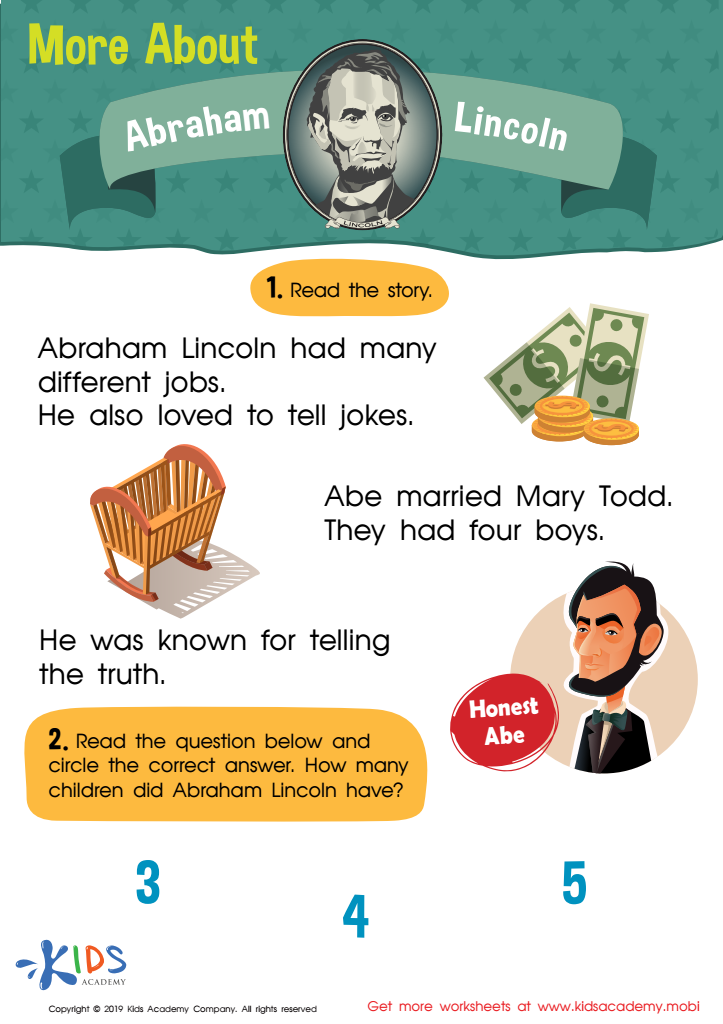
More About Abraham Lincoln Worksheet






Boosting critical thinking skills in children aged 3-7 is essential for their cognitive and social development. At this age, children are naturally curious and eager to explore the world around them. Encouraging critical thinking helps them learn to ask questions, analyze information, and make informed decisions. It fosters creativity, enabling them to think outside the box and approach problems from different perspectives.
When parents and teachers nurture critical thinking, children develop skills that enhance their learning process. This foundational ability aids in problem-solving, allows them to express themselves confidently, and prepares them for complex situations they will face later in life. Moreover, as children learn to reason and evaluate evidence, they become more independent thinkers, capable of forming their own opinions and engaging in thoughtful discussions, which is vital for social interactions and relationships.
Furthermore, skills gained during these formative years contribute to academic success. Developing a strong critical thinking foundation can enhance literacy and numeracy, leading to higher achievement in school. Ultimately, fostering critical thinking at a young age equips children not just for school but for life, preparing them to navigate the challenges of an ever-evolving world. It is a pivotal investment parents and teachers should prioritize.








