Comparative skills Worksheets for Ages 3-7
3 filtered results
-
From - To
Enhance your child's learning with our Comparative Skills Worksheets designed for ages 3-7! Spark curiosity through engaging activities focused on identifying and comparing sizes, lengths, and quantities. Fun illustrations and interactive exercises make it easy for young learners to grasp essential concepts, from figuring out which item is bigger or smaller to understanding more complex comparisons. Perfect for both classroom and home use, these worksheets are crafted to strengthen cognitive development while providing hours of educational fun. Visit Kids Academy to explore a range of comparative skills worksheets that will boost your child's analytical thinking and observational skills.
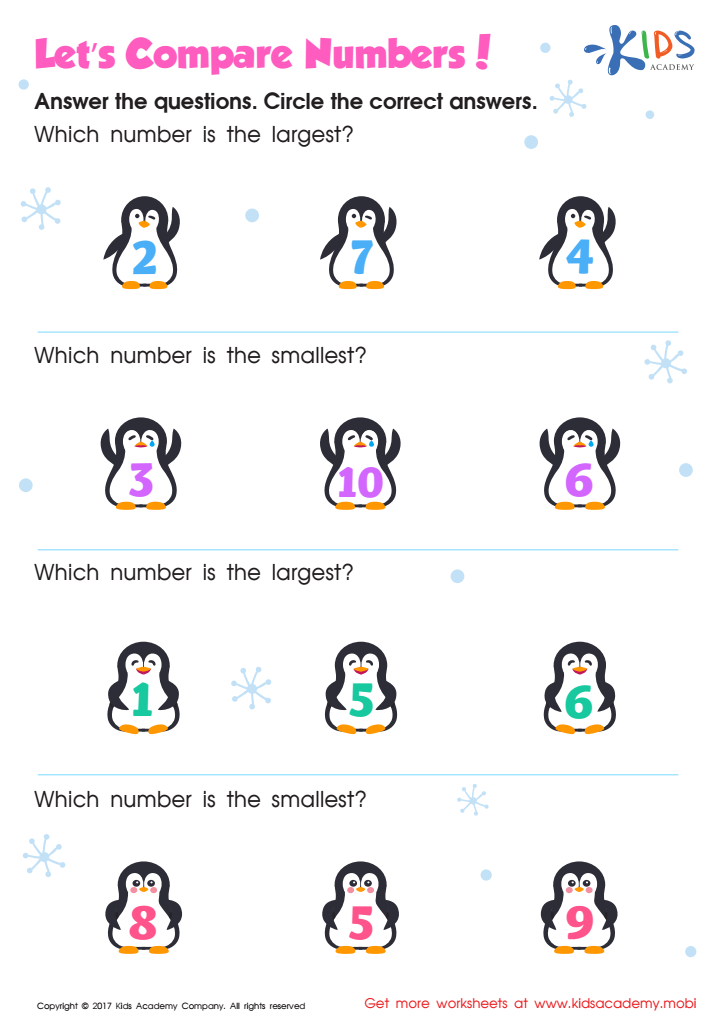
Comparing Numbers 1–10 Worksheet Kindergarten
 Assign to My Students
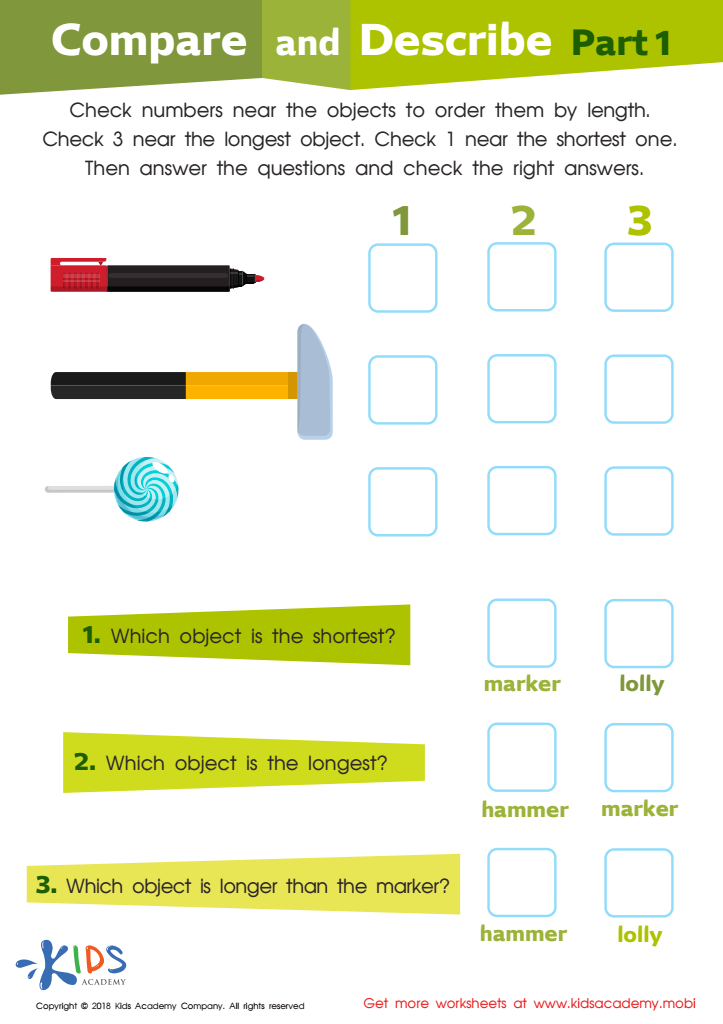
Compare and Describe: Part 1 Worksheet
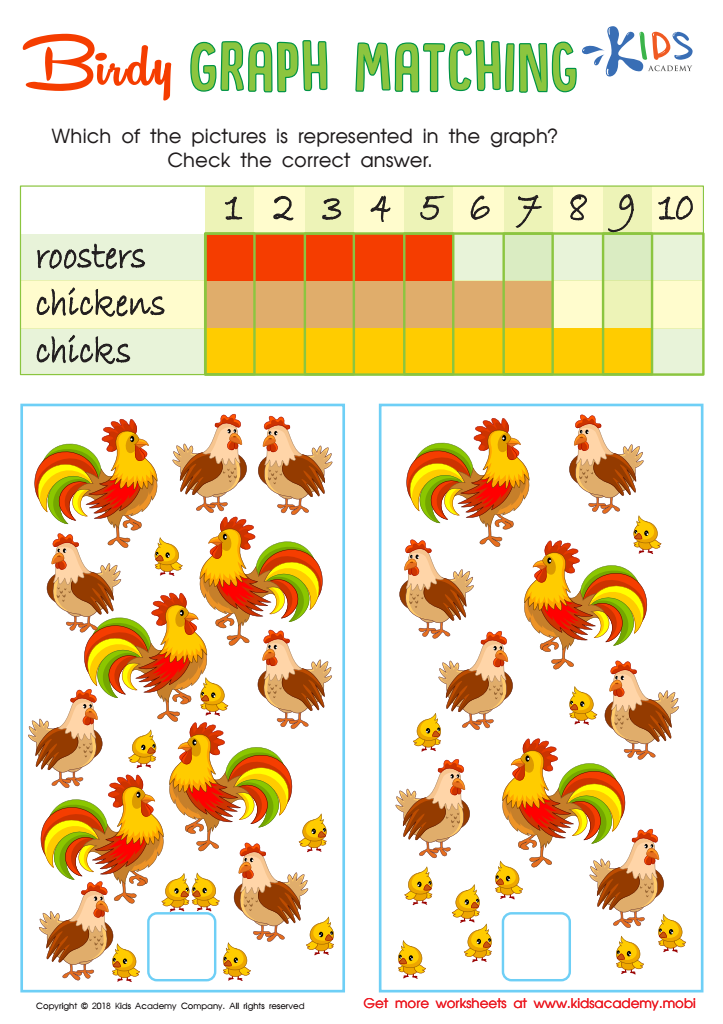
Birdy Graph Matching Worksheet








Comparative skills for children aged 3-7 are fundamental to cognitive development, as they form the basis for critical thinking, problem-solving, and effective communication. When parents and teachers focus on fostering these skills, children gain the ability to evaluate similarities and differences among objects, ideas, and experiences. This comparison process ultimately strengthens a child’s logical reasoning and decision-making abilities.
At a young age, kids naturally observe and question their surroundings. Encouraging comparative skills means guiding this natural curiosity towards structured learning outcomes. For example, comparing sizes, shapes, and colors can enhance early math and science understanding. It encourages categorization and sequencing activities, which are crucial for recognizing patterns and predicting outcomes.
Moreover, comparative skills support linguistic development; as children explain their comparisons, they learn new vocabulary and improve sentence structure. These skills also feed into emotional intelligence, enabling children to empathize by comparing their feelings with others, hence fostering social harmony and cooperative play.
In essence, nurturing comparative skills prepares young learners for more complex academic subjects and equips them with essential life skills. Both parents and teachers play a crucial role in creating a stimulating and supportive environment where these skills can flourish through everyday interactions and structured learning activities.








