Comparing shapes Worksheets for Ages 3-7
6 filtered results
-
From - To
Introduce your little ones to the world of geometry with our "Comparing Shapes Worksheets for Ages 3-7." Designed to enhance their learning skills, these printable worksheets are perfect for young minds eager to explore and compare different shapes. With engaging activities tailored for preschool to early elementary years, your child will easily grasp concepts such as identifying, matching, and differentiating between various shapes. These colorful and interactive worksheets not only make learning fun but also help in developing critical thinking and observation skills. Start your child’s journey into the realm of shapes with these educator-approved resources today!
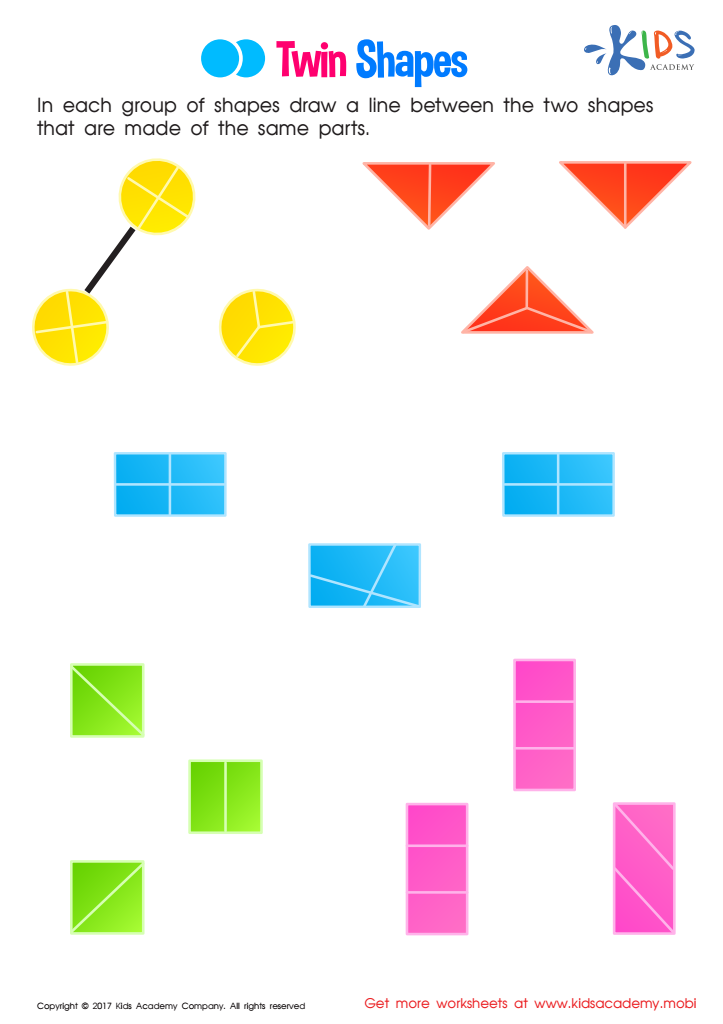
Twin Shapes Worksheet
 Assign to My Students
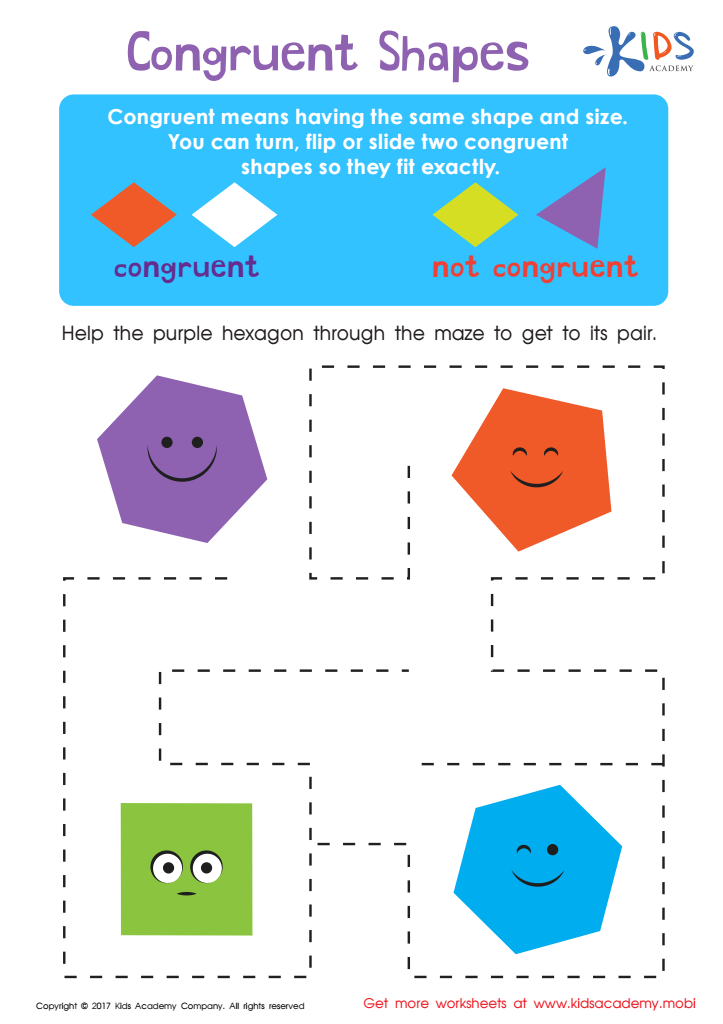
Congruent Shapes Worksheet
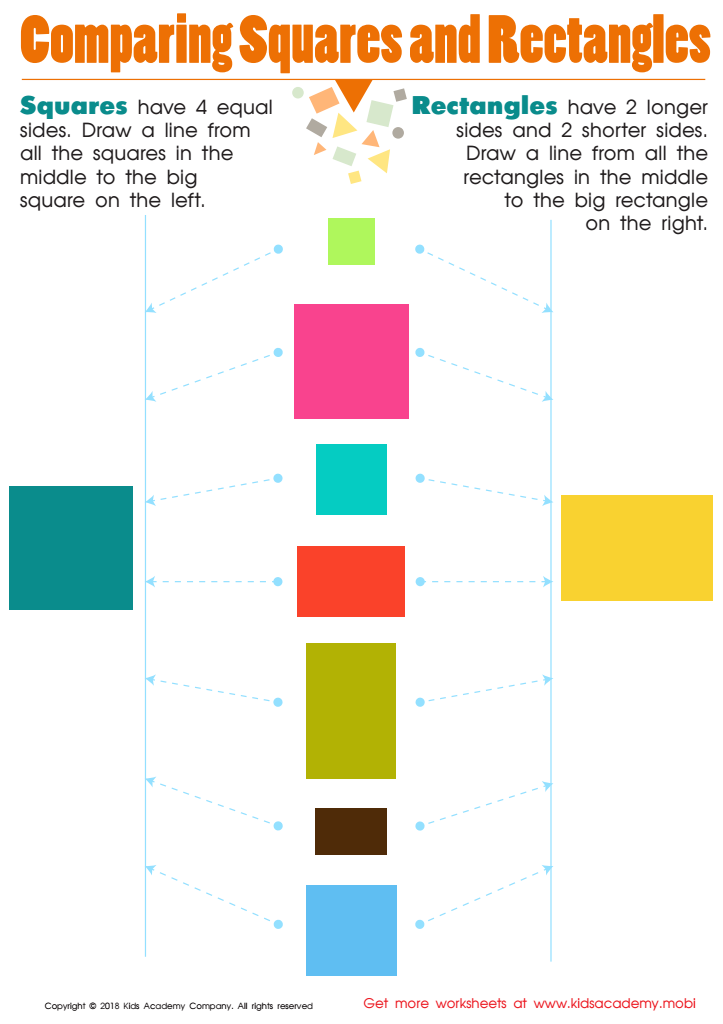
Comparing Squares Rectangles Worksheet
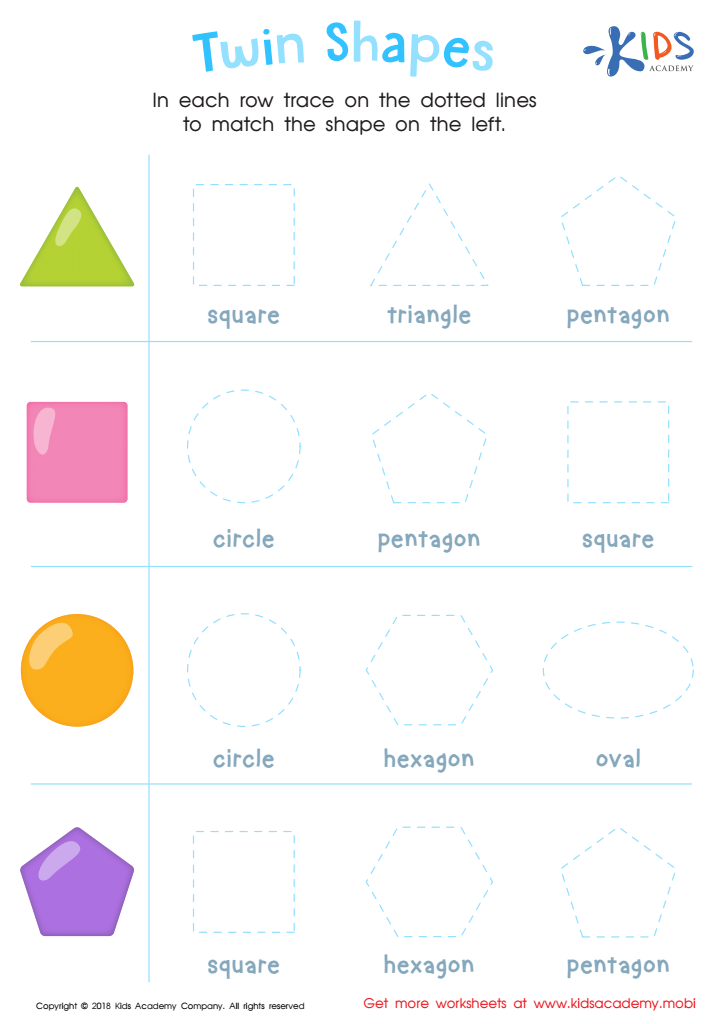
Twin Shapes Dot-to-Dot Worksheet


.jpg)



Comparing shapes is foundational for cognitive and geometric development in children aged 3-7. Engaging in shape comparison enhances early math skills by introducing concepts of sameness and difference, which are crucial for later understanding of more complex mathematical ideas such as symmetry, measurements, and geometry.
When children compare shapes, they develop critical thinking and observational skills. These activities empower them to notice specific attributes like the number of sides, length, curvature, and angles. This observational practice is not just confined to mathematics; it improves their ability to generalize and categorize information, which is valuable across all learning areas.
From a language development perspective, discussing shape attributes enriches a child's vocabulary and descriptive language. Phrases like “this shape has four sides” or “this one is curved” promote the understanding of geometric terms and correct usage in context, aiding communication skills.
Moreover, shape comparison encourages children to engage in problem-solving and logical reasoning. Tasks like sorting and matching shapes into different categories require children to make judgments and decisions, foundational skills for academic success.
Teachers and parents should prioritize comparing shapes because it builds a strong early math foundation, enhances cognitive development, bolsters language skills, and fosters critical thinking. These activities are engaging and can be seamlessly integrated into play, making learning both effective and enjoyable.








