Financial literacy Worksheets for Ages 3-7
6 filtered results
-
From - To
Unlock the world of finance for young learners with our engaging financial literacy worksheets designed for ages 3-7. Our thoughtfully crafted resources introduce essential money concepts, from recognizing coins to understanding how to save and spend wisely. Each worksheet offers fun activities that promote critical thinking, counting skills, and decision-making, ensuring that children grasp the fundamentals of financial responsibility in a playful way. With vibrant illustrations and age-appropriate content, these worksheets make learning about money exciting and accessible for your little ones. Start building a strong financial foundation for their future today with our user-friendly, printable worksheets!
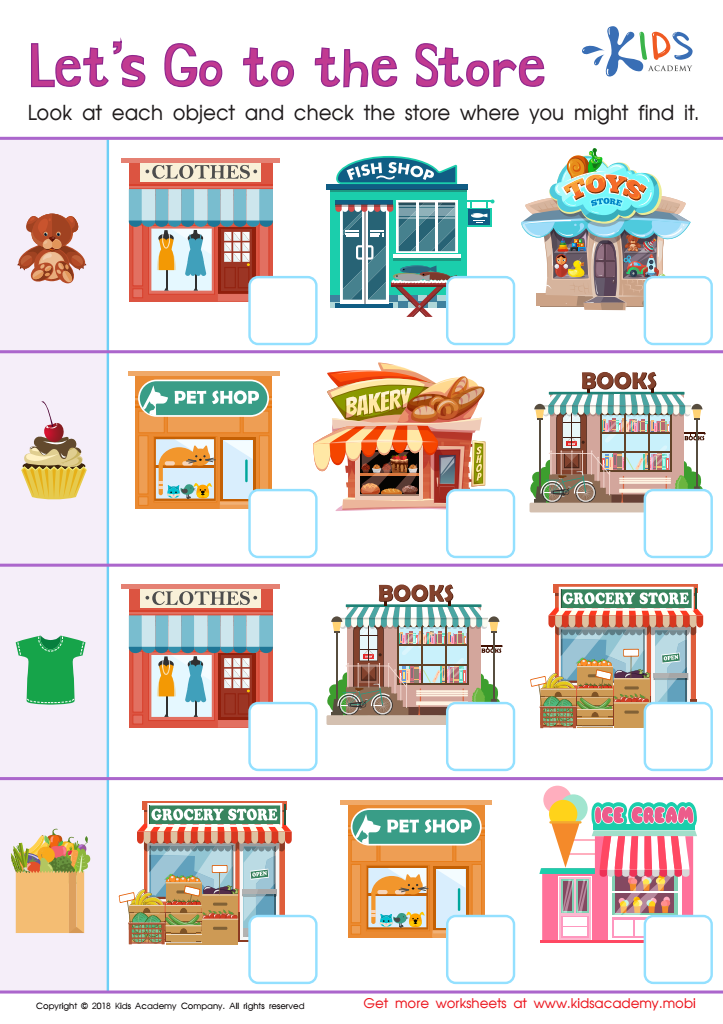
Let's Go to the Store! Worksheet
 Assign to My Students
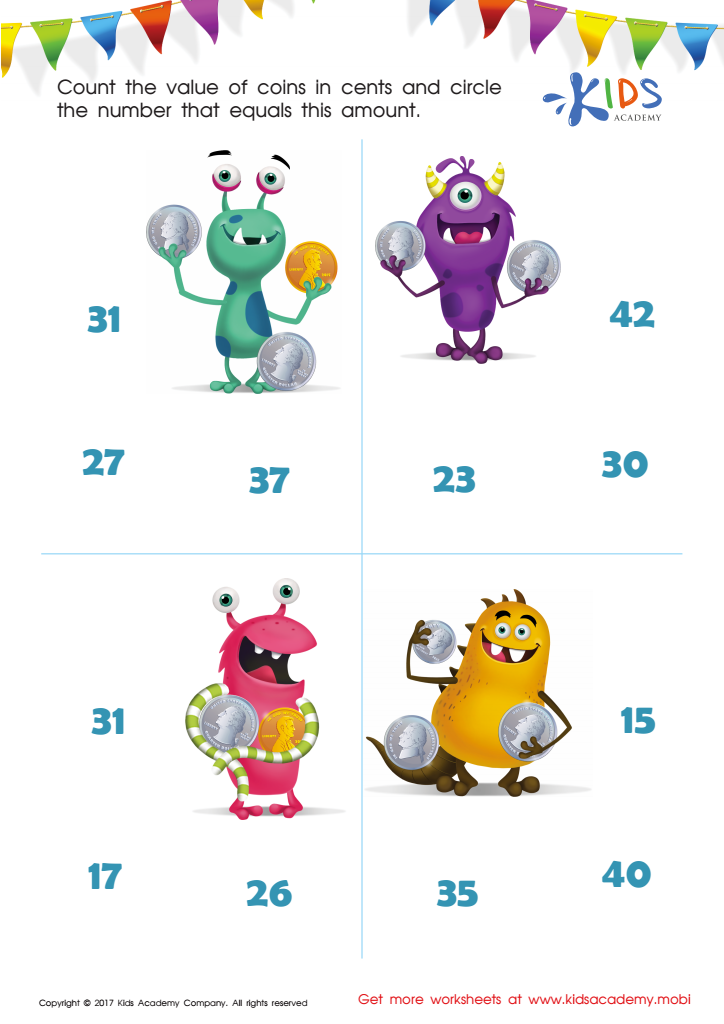
How Many Coins Money Worksheet
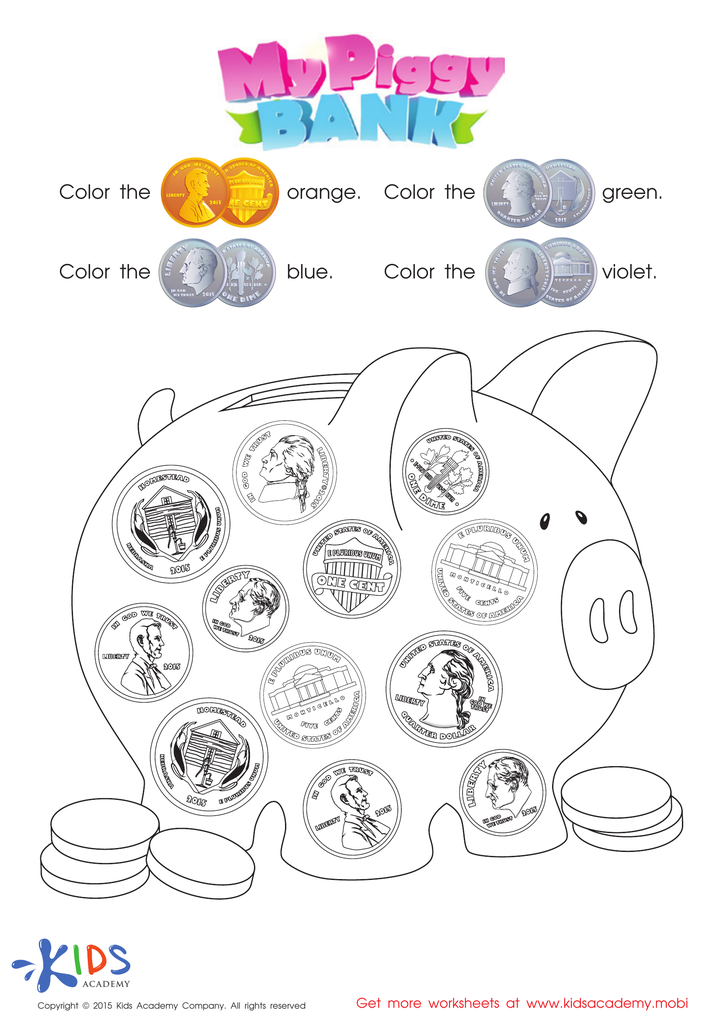
Recognizing Money Money Worksheet
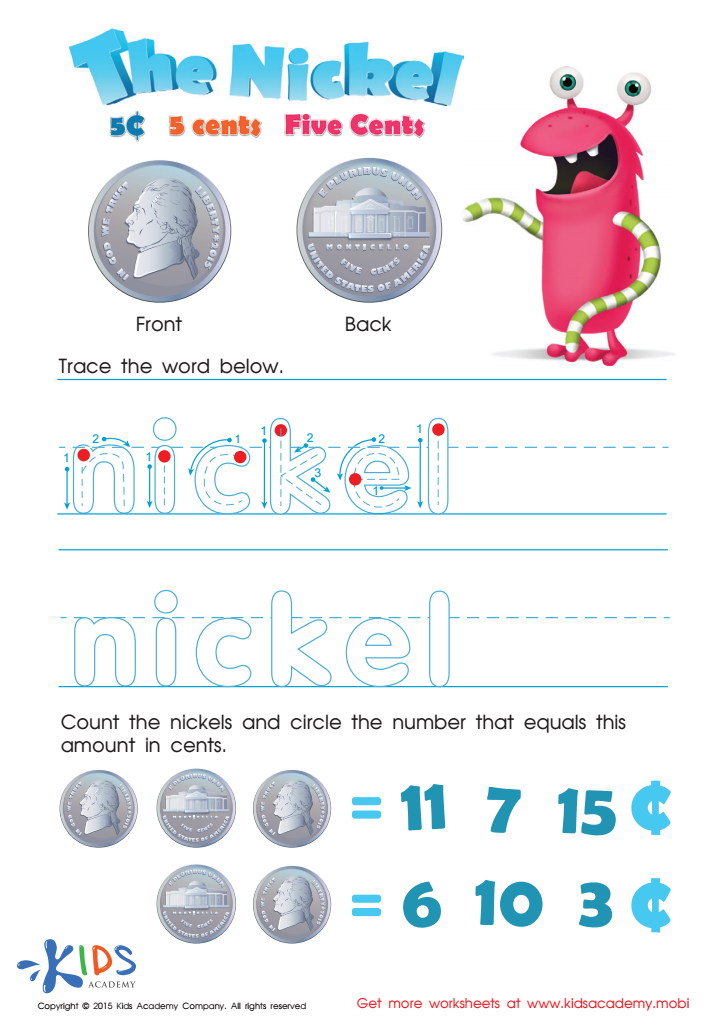
Five Cents or the Nickel Money Worksheet
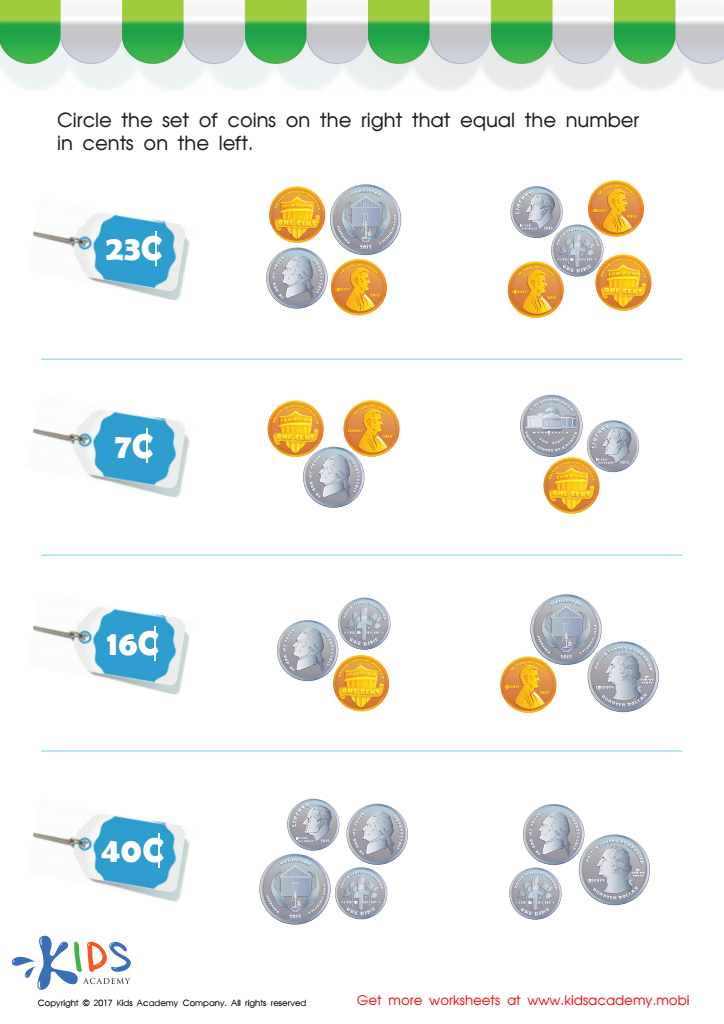
Picking the Coins You Need Money Worksheet
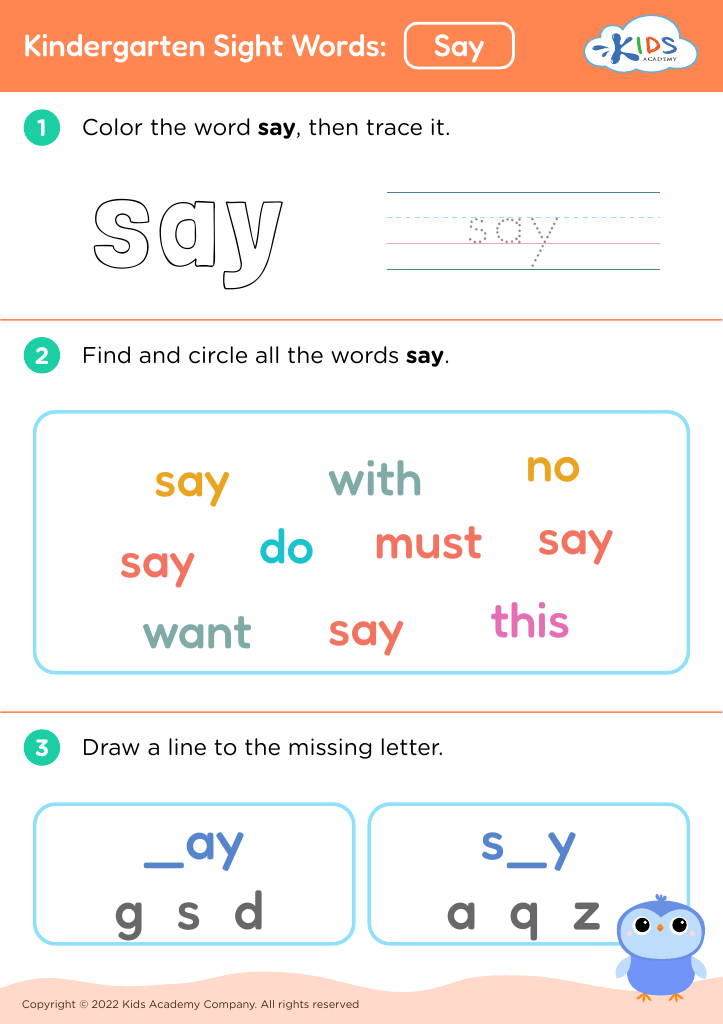


.jpg)



Financial literacy for young children aged 3-7 is crucial for several reasons. First, early childhood is a formative period for developing foundational life skills, including understanding money concepts. By introducing basic financial principles at a young age, parents and teachers can cultivate good money habits and attitudes that will last a lifetime.
At this age, children can grasp simple concepts like saving, spending, and sharing, making it an ideal time for hands-on experiences with money. Using playful activities, like creating a pretend store or using play money, can make learning about finances engaging and relatable for kids. This playful approach not only reinforces math skills but also encourages responsibility.
Furthermore, understanding financial basics can empower children to make informed decisions as they grow older. Early exposure to financial literacy can mitigate unhealthy attitudes toward money and reduce the likelihood of financial mismanagement in adolescence and adulthood.
Finally, fostering financial literacy cultivates critical thinking, problem-solving skills, and an understanding of value—skills that transcend beyond money management and play integral roles in overall personal development. By prioritizing financial literacy in the early years, we set the foundation for economically savvy, confident, and responsible adults.








